
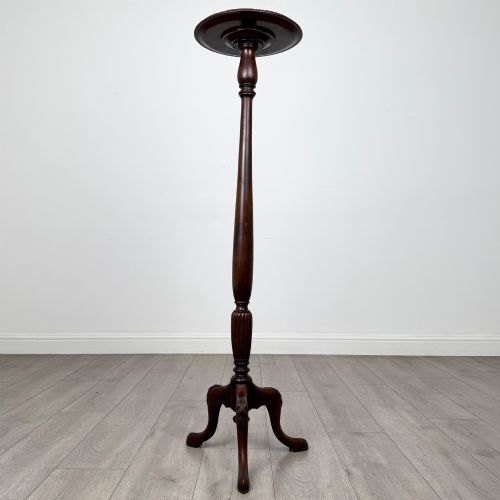
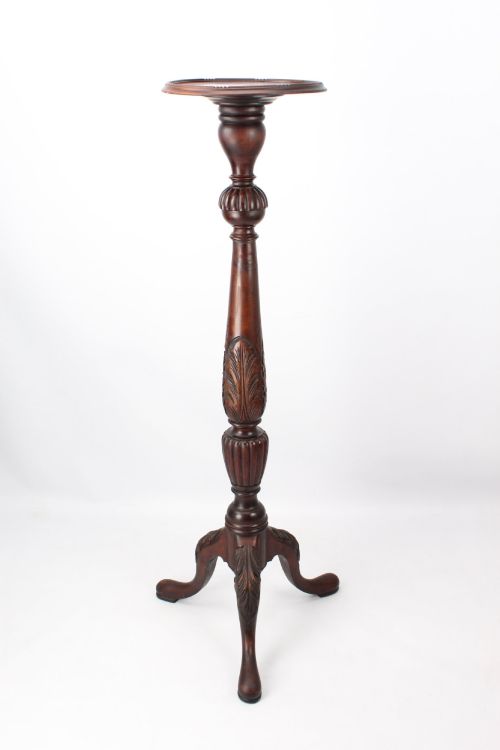
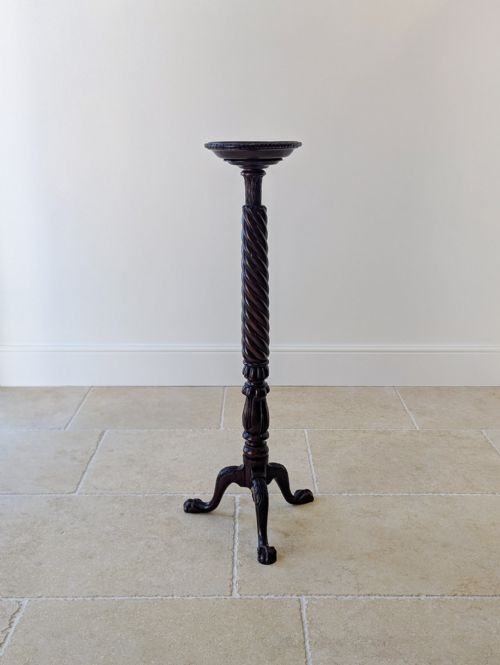
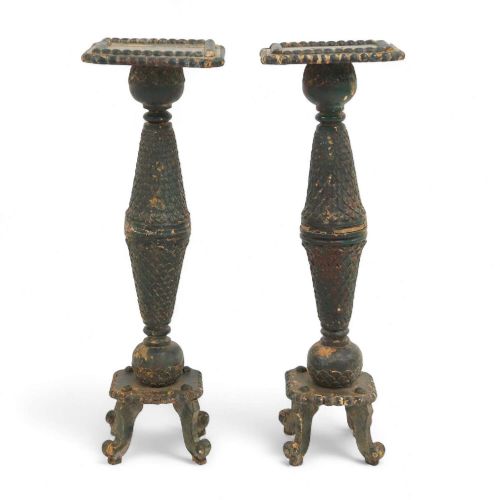
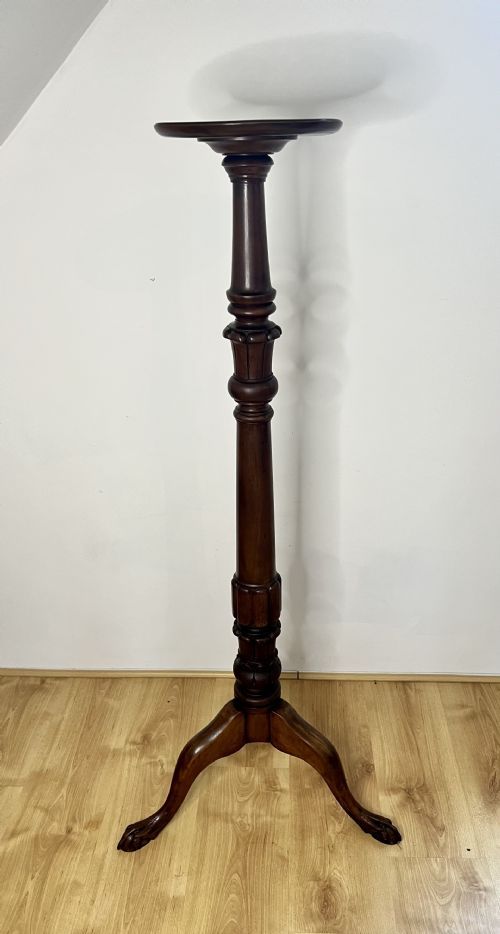
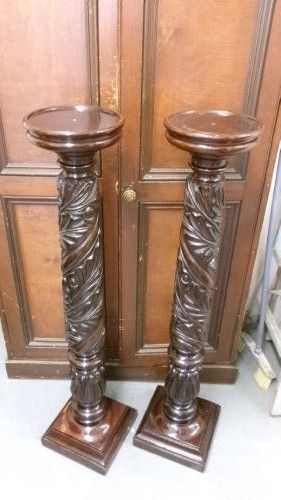
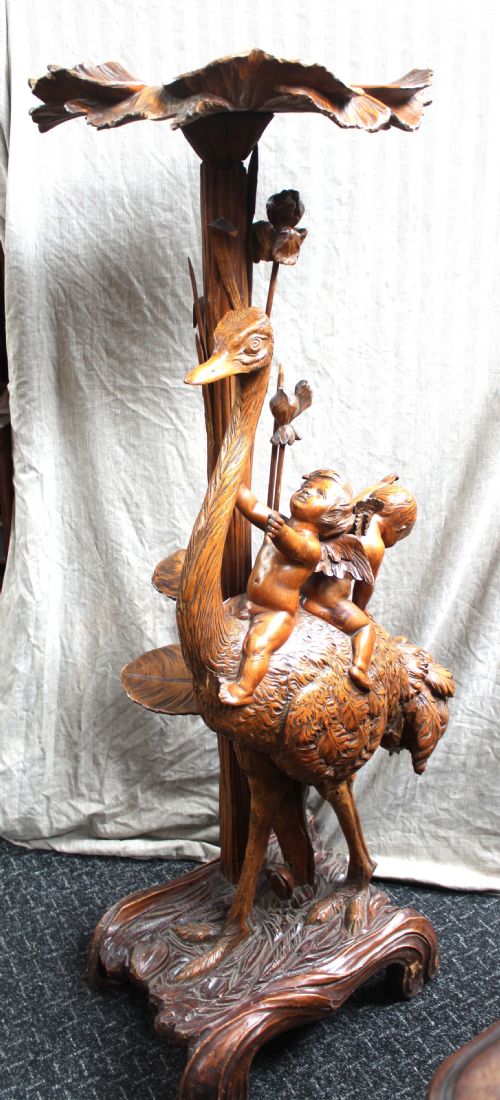
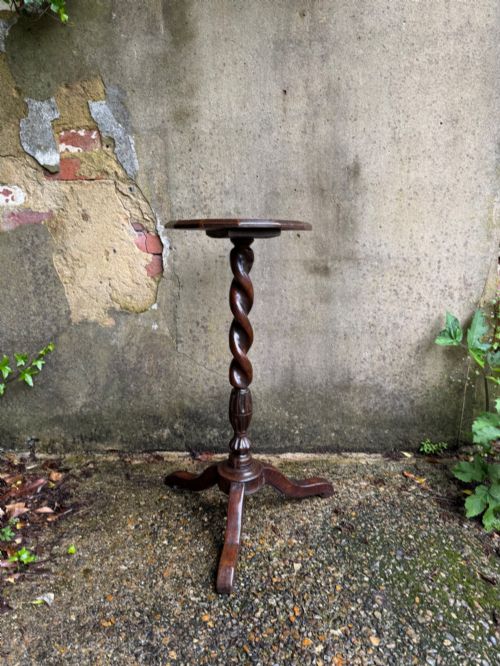
Carved Wood Torchere Stand
A carved wood torchere stand elevates a lamp, plant or sculpture, bringing height and sculptural form to a corner.
Carved Wood Torchere Stand
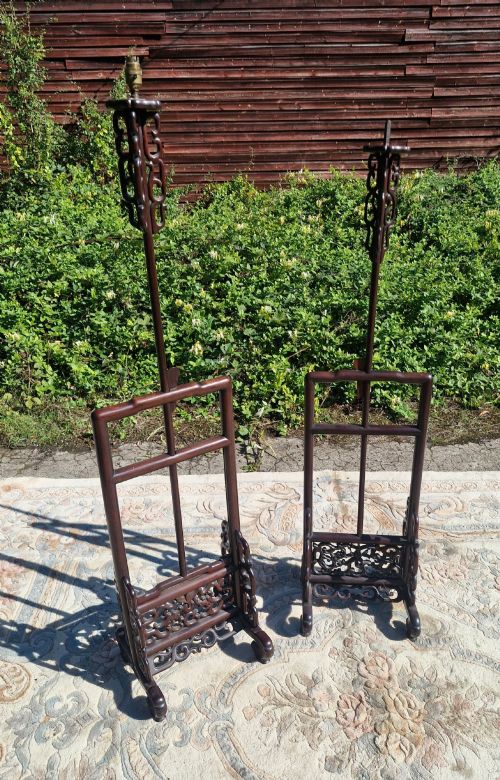
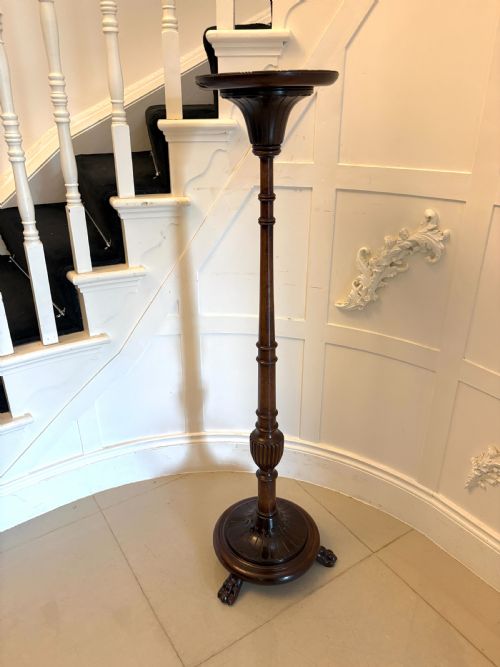
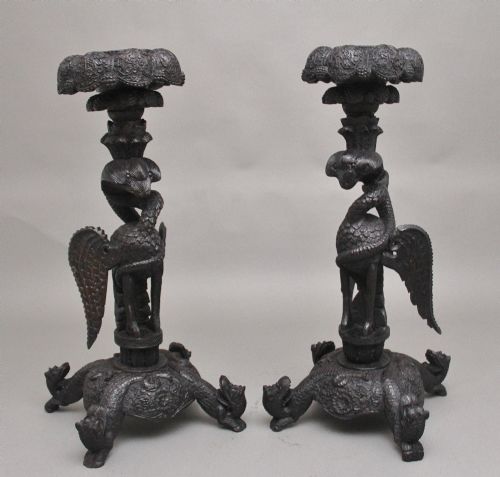
A carved wood torchere stand functions as an elevated support for candles, lamps, plants or busts, designed to occupy corners or empty spaces in a room. The items on this page span several centuries, including Victorian, Edwardian and 18th century examples alongside traditional Chinese pieces.
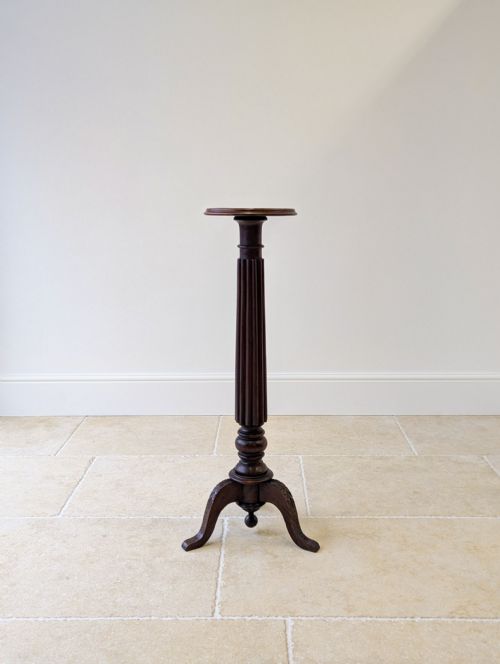
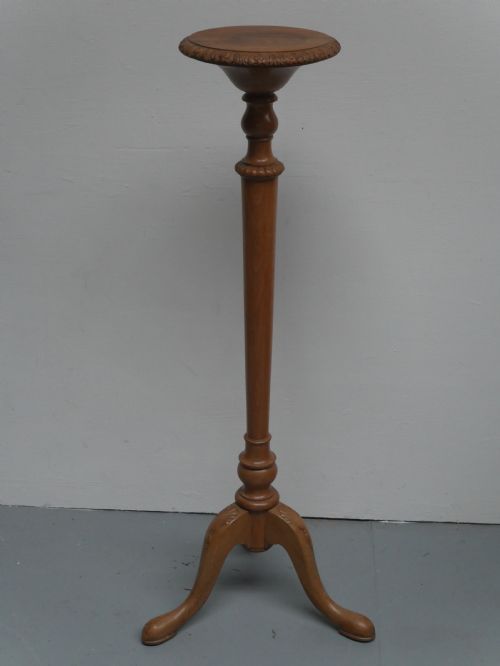
Most entries follow familiar forms such as tall plant stands, pedestals, and lamp standards supported by tripod bases or columns. Mahogany and oak dominate the material selection, though walnut and pinewood also appear.
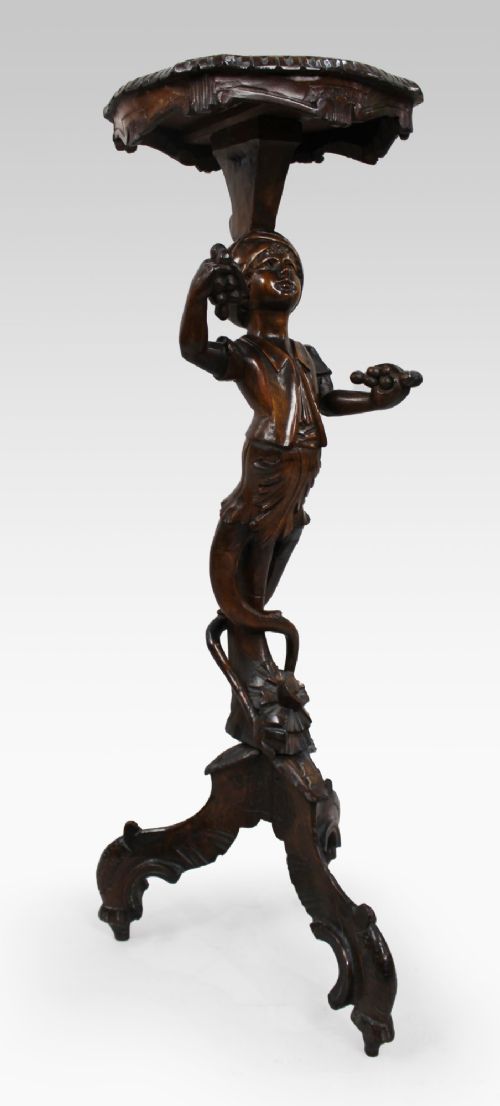
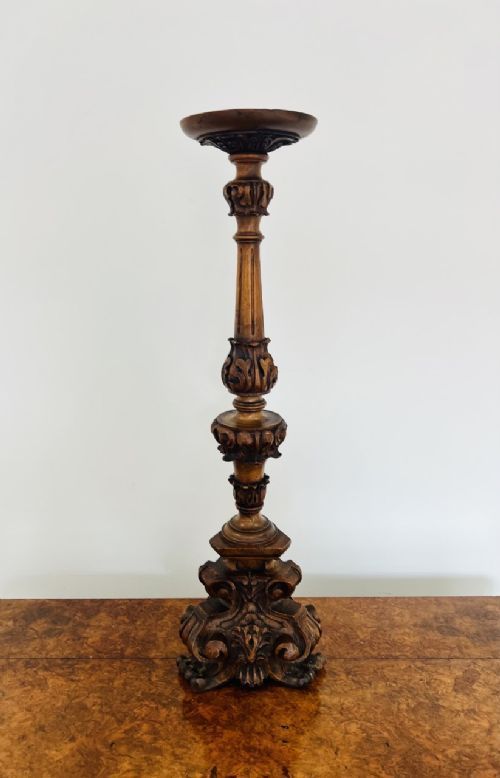
Makers fashioned these stands for domestic utility and display, resulting in varying heights and surface treatments. Buyers encounter straightforward mahogany columns alongside figural Venetian and Anglo Indian pieces.
How they were made
Carpenters and carvers shaped these pieces primarily from solid hardwoods such as mahogany, oak, and walnut, employing turning lathes and hand chisels. Structural stability required joined tripod bases or heavy central columns to support heavy jardinieres and busts.
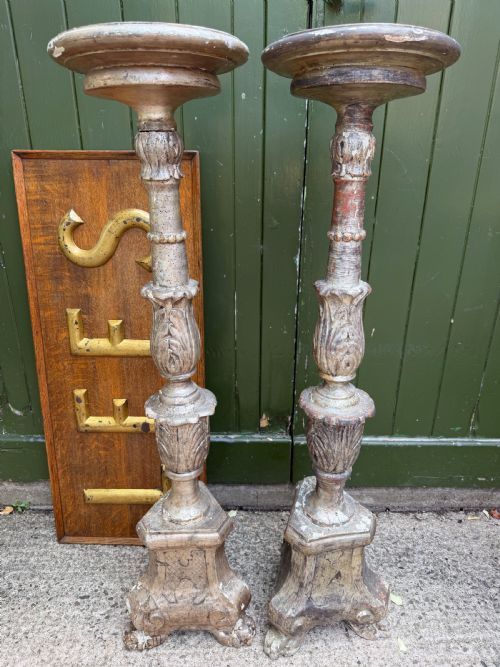
Surfaces received diverse treatments ranging from clear polishes that exposed the natural grain of mahogany to applications of gold leaf, gesso, and polychrome paint. Italian and Venetian examples frequently utilised silvering or painted pigments over carved wood surfaces.
The listings on this site feature carved wood torchere stands spanning the 18th century through to the Edwardian period in mahogany, oak, and painted finishes.
What varies in quality
The refinement of the carving dictates much of the distinction between standard production and exceptional work. Crisp detail in acanthus leaves, fluting, or figural forms indicates skilled hand execution rather than mechanical shaping.
Material selection and surface preservation also define the standing of a piece. Original paint, gilding, and untouched patination on older hardwood surfaces elevate the character of the object.
The Carved Wood Torchere Stand Glossary
- Torchere
- A tall stand originally designed to hold a torch or candle, now commonly used for lamps and plants. These pieces provide vertical accent in interior spaces.
- Jardiniere
- An ornamental pot or stand for holding plants and flowers. They often sit atop tall pedestals.
- Triform
- Having three sides or a three-footed base. This configuration offers stability for tall columns.
- Polychrome
- Painted or decorated in several colours. This finish appears frequently on Venetian and figural stands.
- Gesso
- A plaster-like mixture applied to wood as a base for paint or gold leaf. It provides a smooth surface for detailed gilding.
Carved Wood Torchere Stand: Frequently Asked Questions
What is a torchere stand used for?
These tall stands support lighting, house plants, bronze busts or decorative urns in domestic interiors. They lift display objects off the floor to fill empty corners.
Historically, they illuminated dark rooms by holding candles or oil lamps at elevated heights.
How do I date a wooden torchere?
Dating relies on timber choice, construction methods, and stylistic cues corresponding to periods like the 18th century or Victorian era. Mahogany and oak usage shifted across decades alongside carving fashions.
Secondary woods and tool marks visible underneath or inside the structure help confirm the period of manufacture.
Are these stands stable enough for heavy plants?
Most antique stands feature sturdy tripod bases or weighted columns engineered to support substantial jardinieres and heavy flowerpots. The distribution of weight across three or more feet prevents tipping.
Heavier figural stands offer exceptional base stability due to their solid wood construction.
What is the difference between a pedestal and a torchere?
Pedestals generally feature straight, boxy or column-like shafts meant to display sculptures and art objects. Torcheres traditionally possess slender proportions specifically intended for lighting or plant display.
In practice, makers and sellers often use both terms interchangeably for tall display furniture.