


Carved Wood Side Console
A carved wood side console brings sculptural weight and surface utility to a room, drawing the eye with detailed timber or gilded work.
Carved Wood Side Console
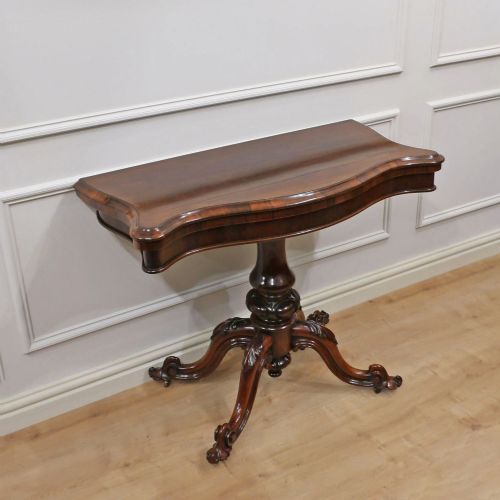
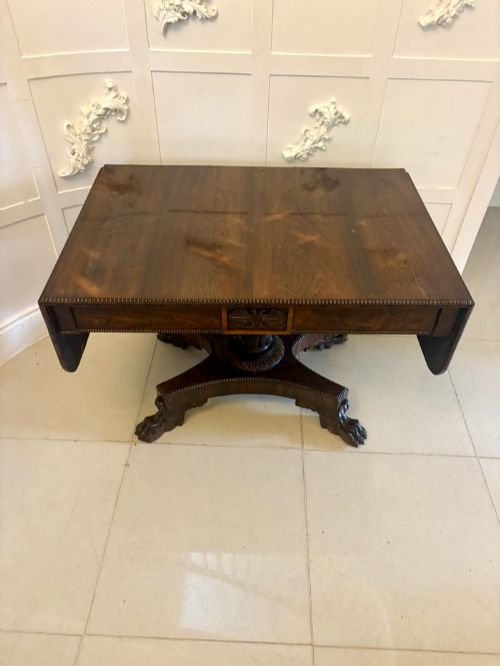
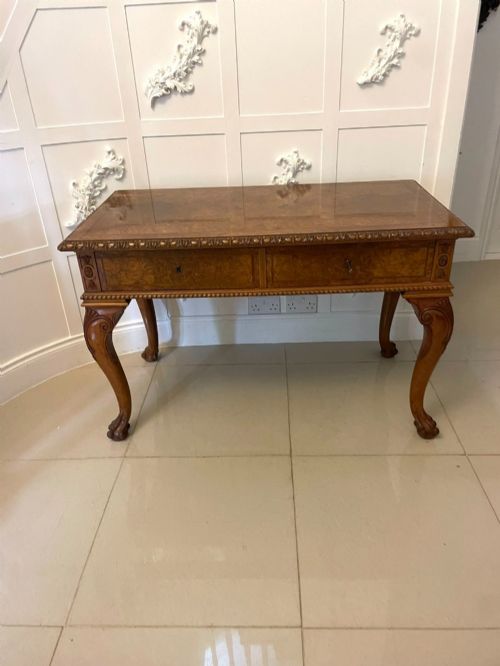
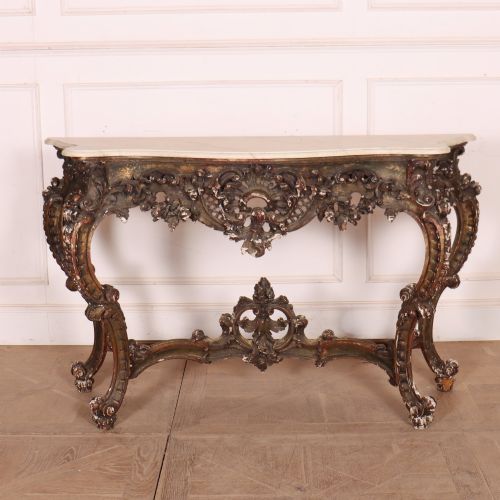
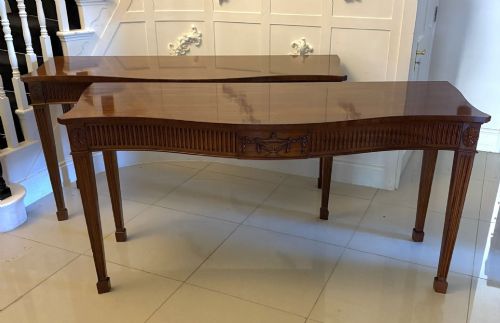
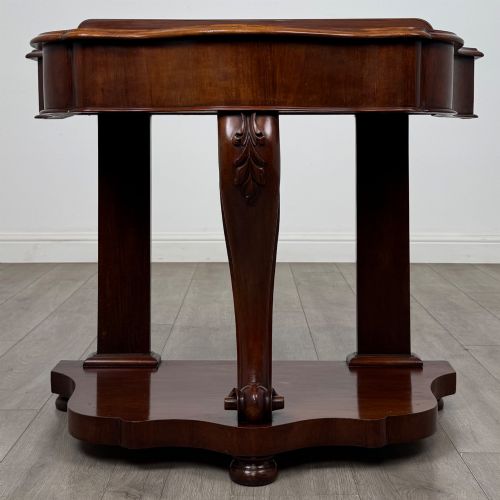
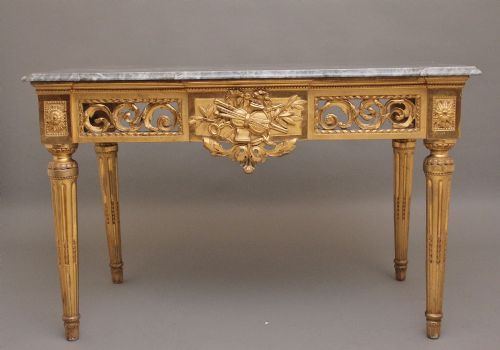
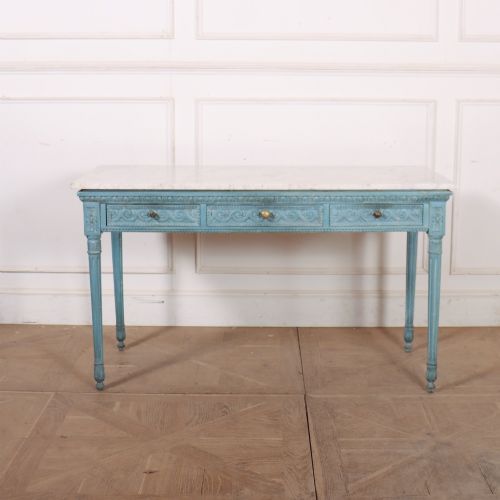
When you search for a carved wood side console, you encounter a range of forms designed to sit against a wall or function as a focal point within a room. The selections on this page span console tables, side tables, washstands, and serving tables originating from periods such as the 18th century, Victorian era, and Edwardian period.
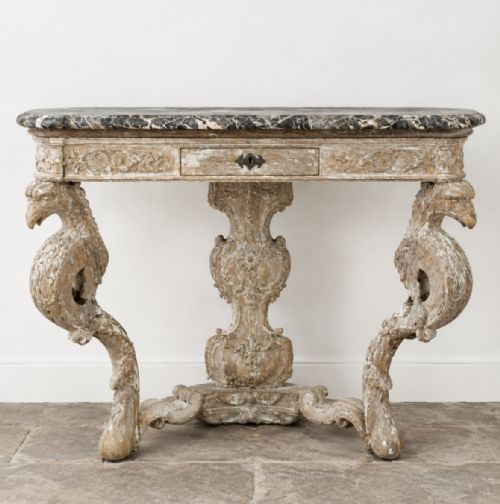
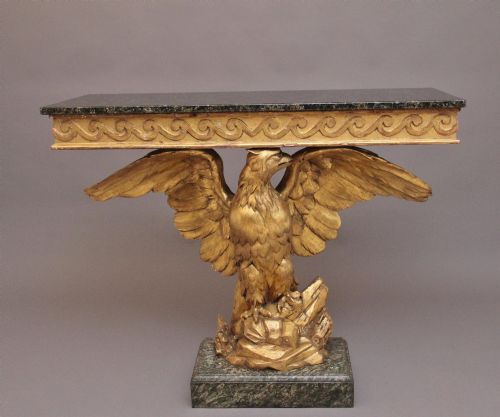
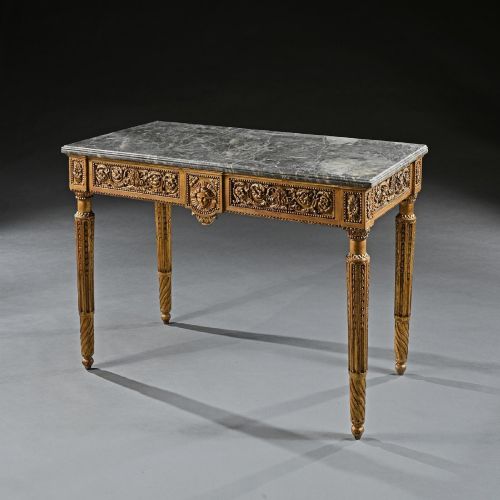
You are most likely to meet mahogany, oak, and walnut variants alongside gilded gesso and marble-topped designs. These pieces adopt styles ranging from Regency and Neoclassical to French Rococo and Jacobean Revival.
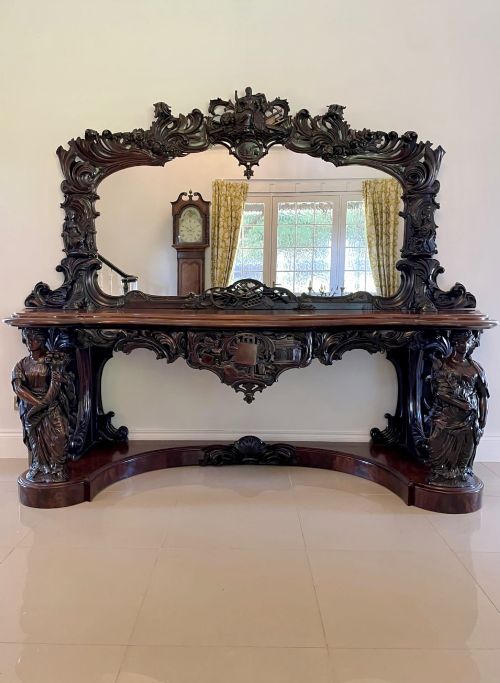
The objects serve various functions, from narrow hall tables and serpentine serving consoles to freestanding library and sofa tables. Each item demonstrates the specific proportion and timber treatment characteristic of its era.
Materials and construction methods
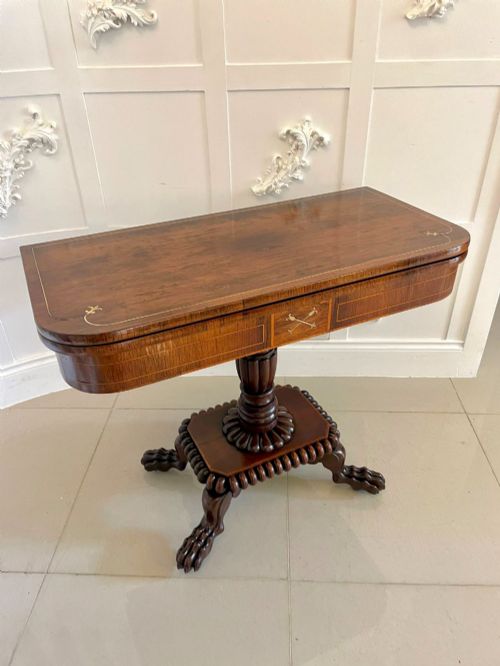
Cabinet makers utilised dense hardwoods such as mahogany, walnut, oak, and rosewood for structural stability and fine carving capabilities. These timbers were often selected for figured grain patterns or enhanced with gesso and giltwood coatings on formal Italian and French pieces.
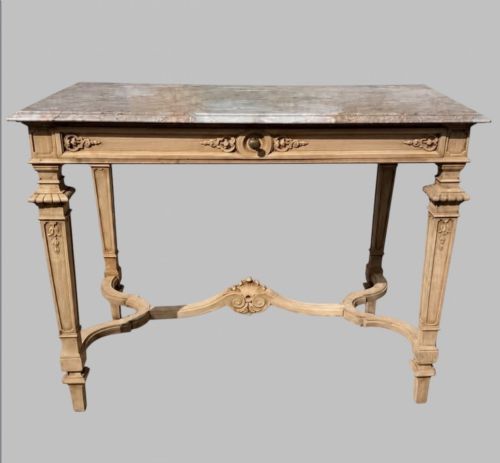
Surfaces frequently incorporate inset marble slabs, including rouge and figured varieties, secured within wooden frames. Brass inlay, elaborate carving, and serpentine shaping demonstrate the manual dexterity applied during the 18th, 19th, and early 20th centuries.
Some tables are so shy they refuse to stand without leaning against a wall for moral support.
Distinguishing quality across the range
Quality depends upon the crispness of the hand carving and the selection of timber veneers, such as burr walnut or figured mahogany. Superior examples exhibit deliberate spatial harmony, sophisticated Neoclassical or Rococo detailing, and integrated structural elements rather than superficial ornamentation.
The integration of heavy materials, such as thick marble tops fitted precisely into carved wooden frames, separates standard utility items from exhibition-standard pieces. Finer items maintain proportional balance between heavy base carving and top surface dimensions.
The Carved Wood Side Console Glossary
- Console table
- A table designed to stand against a wall, frequently secured to it or supported by heavy front legs. These tables often feature decorative carving along the apron.
- Giltwood
- Wood that has been coated with gold leaf or a gold-coloured finish. This technique appears frequently on 18th-century Italian and French frames.
- Serpentine
- A shape characterised by a line of three curves, bending inward in the centre and outward at the ends. It provides a fluid contour to table fronts.
- Demi lune
- A half-moon shape used for table tops and frames. This form allows the furniture to sit flat against a wall while projecting outward.
- Gesso
- A plaster-like mixture applied to wood as a base for painting or gilding. It allows for sharp, moulded relief decoration.
Carved Wood Side Console: Frequently Asked Questions
Where should I place a console table?
These tables find natural placement in entrance halls, living rooms, or dining spaces where surface area is required without blocking walkways.
Because many versions are shallow or shaped with flat backs, they fit neatly against empty wall spaces below mirrors or artwork.
How do I identify a marble-topped console?
Marble-topped variants feature stone inserts fitted directly into the wooden framework of the table top. These tops can be heavy and are often secured by the surrounding moulding.
Origins for these pieces frequently trace to 18th- and 19th-century French and Italian workshops where stone and giltwood were paired.
What is the difference between a side table and a console?
Console tables are traditionally designed to stand against a wall, sometimes relying on wall fixings for total stability. Side tables are generally freestanding items meant to occupy perimeter spaces.
Over time, the terms have overlapped in marketplace listings, though console forms retain more prominent front ornamentation.
How do I care for antique timber surfaces?
Maintain timber and gilt surfaces by dusting with a dry, soft cloth and avoiding excessive moisture or direct sunlight. Wax polishes can be applied sparingly to solid hardwoods.
Marble inserts require gentle cleaning with non-acidic solutions to protect the polished stone from etching.