





Italian Rococo Pier Table
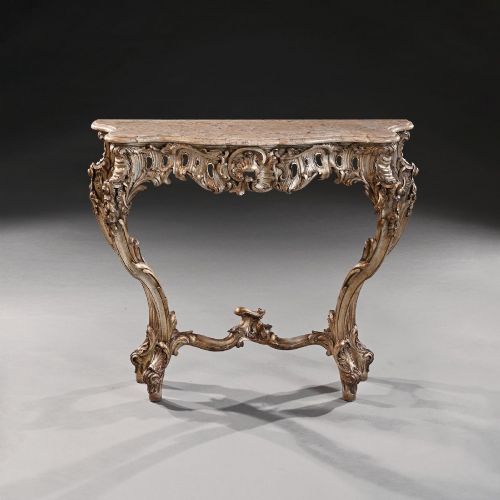
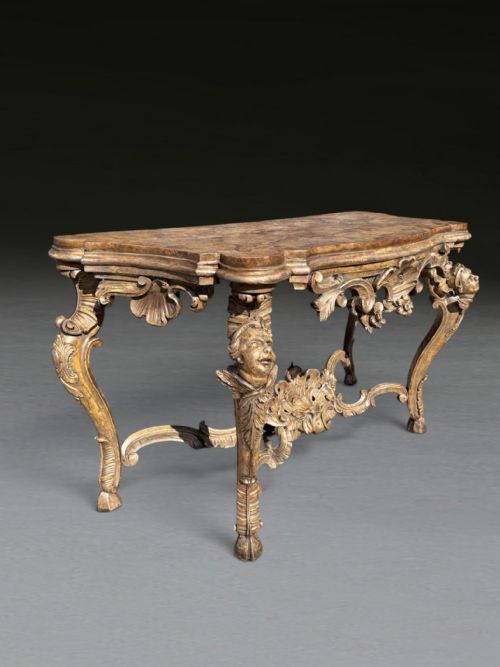
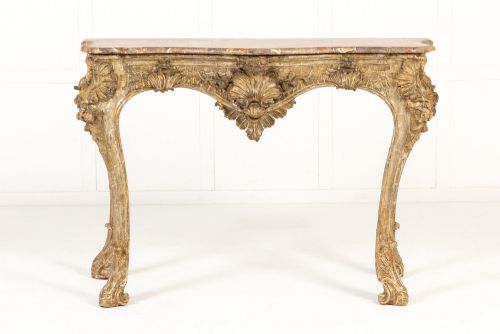
An italian rococo pier table brings flamboyant carving and shaped marble into a grand interior, offering the dramatic curves typical of southern European reception rooms.
Italian Rococo Pier Table
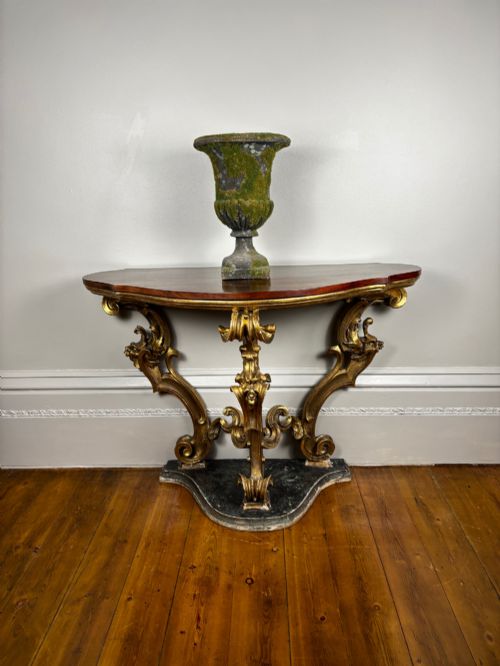
When searching for an italian rococo pier table, you encounter console and side tables designed to sit against a wall beneath a mirror or window. The examples recorded here span the eighteenth and nineteenth centuries, alongside later revivals from the early twentieth century.
The form relies on serpentine or shaped marble tops supported by heavily decorated frames. Original eighteenth-century pieces appear alongside Victorian and later revivals that echo the same theatrical spirit.
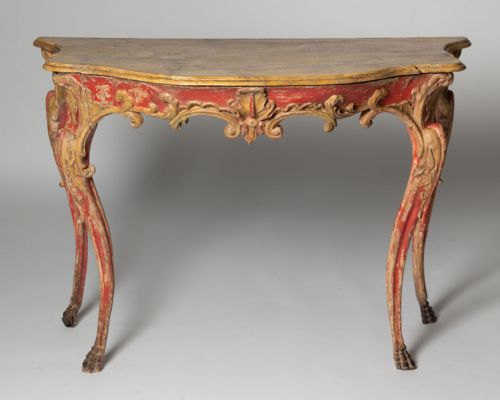
Venetian and general Italian origins dominate the selection, bringing regional variations in paint, gilding, and structural carving. Most items function as console tables, built to display objects rather than stand independently in open space.
Materials and Construction
Carved wood provides the primary armature for these tables, overlaid with gesso to receive intricate surface ornament. Giltwood and gold leaf finishes dominate the surviving output, giving the timber frames a metallic lustre.
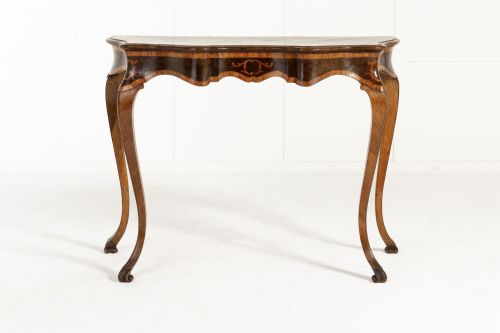
Marble provides the standard top material, cut to follow the serpentine and shaped contours of the wooden base. Walnut and painted finishes also appear, offering alternative textures to the standard gilded surfaces.
Judging Quality and Execution
The depth and sharpness of the wood carving dictate the visual impact of the frame. Relief work involving figures, putti, or complex scrolling foliage requires high skill from the carver.
The integration between the stone top and the wooden base marks the distinction between standard production and superior work. A well-fitted marble slab matches the exact serpentine contours of the gessoed frame beneath.
The Italian Rococo Pier Table Glossary
- Serpentine top
- A rectangular or shaped surface featuring a central inward curve flanked by outward convex sweeps. This contour defines many rococo console designs.
- Giltwood
- Timber coated with gold leaf over a prepared gesso ground. It reflects light effectively in candlelit period interiors.
- Gesso
- A plaster mixture applied to wood to create a smooth surface for carving or gilding. It allows for crisp ornamental detail.
- Pier table
- A decorative table made to stand against a wall pier between windows. These pieces often matched architectural mirrors.
Italian Rococo Pier Table: Frequently Asked Questions
Where should I place a console table?
These tables suit hallways, reception rooms, or dining areas where wall space allows a prominent focal point. They function best against flat walls beneath large mirrors or artworks.
Because they feature shallow depths, they occupy minimal floor space while providing a surface for lamps or decorative objects.
Are these tables sturdy enough for daily use?
Console tables were historically designed to carry decorative items rather than heavy loads. The heavy marble tops give them stability, but the carved wooden frames require careful handling.
Placing them against a wall ensures structural security, as many tall console designs rely on wall support or brackets for complete stability.
How do I identify an eighteenth-century piece?
Eighteenth-century examples display hand-carved details in the gesso and wood that reflect period joinery techniques. The patination of the giltwood and the wear on the wooden structure reveal their age.
Later nineteenth-century revivals often utilise heavier construction methods and distinct tool marks associated with machine-assisted or industrial woodworking.
How do I clean a marble top?
Use a damp cloth with mild, pH-neutral soap to wipe down the stone surface gently. Avoid acidic cleaners or harsh chemicals that can etch or dull the marble polish.
Dry the surface thoroughly with a soft cloth to prevent water spots and maintain the natural lustre of the stone.