




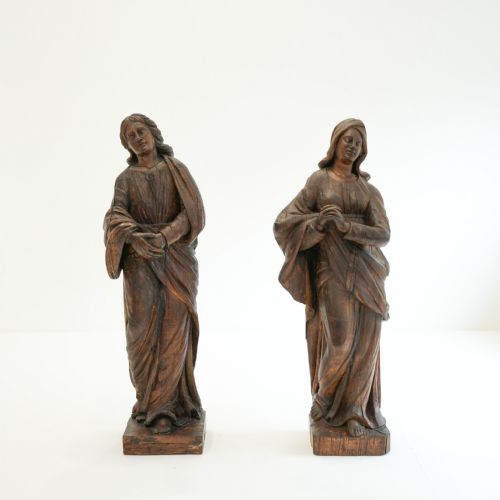


Carved Wood Saint Statue
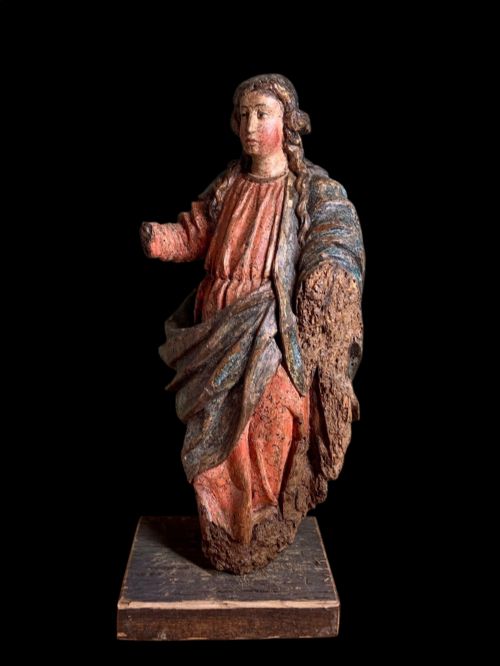
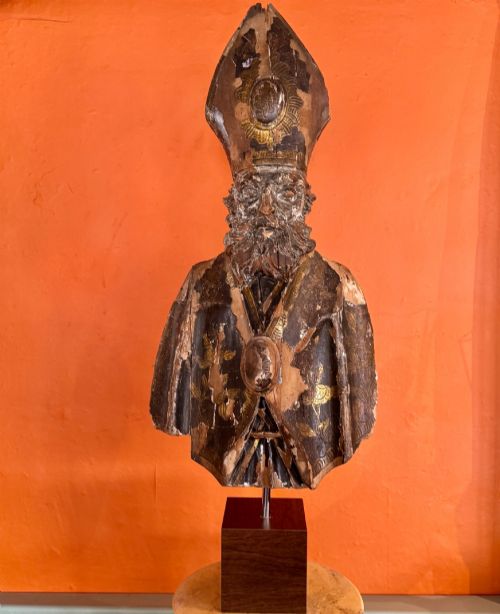
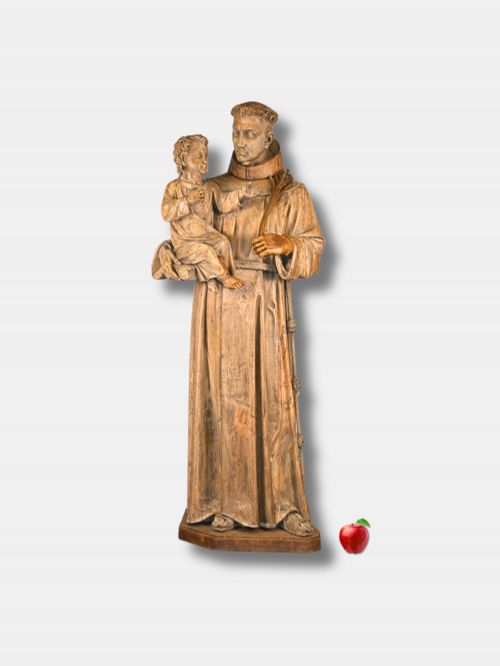
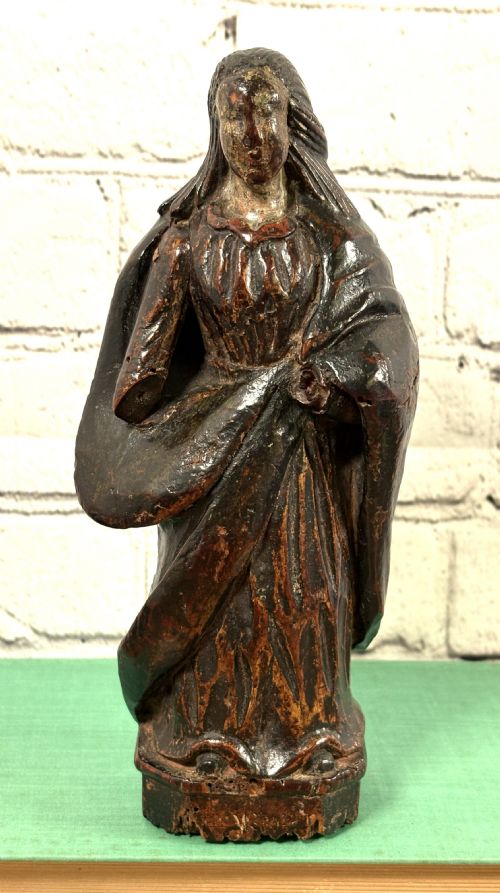
A carved wood saint statue brings centuries of devotion, dramatic drapery and rich surface patination straight into a modern interior.
Carved Wood Saint Statue
When you search for a carved wood saint statue, you enter a centuries-old tradition of religious sculpture spanning from medieval times through the baroque era and into the nineteenth century. These works depict apostles, bishops, and holy figures carved by regional European artisans for churches, home altars, and processional use.
You are most likely to meet figures carved from oak, limewood, and applewood, often retaining traces of their original polychrome paint or gilded surfaces. The selection ranges from small devotional fragments to life-size processional figures originating from Italy, France, Germany, Spain, and Flanders.
Materials and carving techniques
Sculptors utilised dense, durable timbers such as oak, limewood, and applewood, selecting each log for its grain and stability against splitting over centuries. Regional workshops shaped these woods using gouges and chisels to create deep, expressive folds in garments and lifelike facial expressions.
Many surfaces received a preparation layer of gesso before painters applied polychrome pigments, metallic leaf, or gold leaf to enhance the visual drama. This combination of hand carving and layered surface decoration gave the figures a luminous presence suitable for dim chapels and processional routes.
Materials recorded across the selection include oak, limewood, applewood, gesso, gold leaf, and polychrome paint.
Judging quality in historic figures
The distinction between ordinary workshop output and superior sculpture rests upon the anatomical confidence of the carving and the rhythm of the drapery folds. Master carvers imbued wooden folds with a sense of weight and movement that lesser hands missed.
Survival of original surface finishes also dictates desirability, as untouched polychrome paint or gold leaf holds greater historic value than later overpainting. The expressive power in the face of the saint remains the ultimate test of the artisan's skill.
Franz Keller
The Carved Wood Saint Statue Glossary
- Polychrome
- Decoration consisting of several colours applied to wood or gesso. This surface treatment brings depth and realism to historic devotional carvings.
- Gesso
- A plaster mixture applied to wood as a smooth base for painting or gilding. It seals the timber and allows fine details to be modelled upon the surface.
- Giltwood
- Wood that has been treated with a thin layer of gold leaf or powder. This technique catches candle and sunlight within ecclesiastical interiors.
- Capipote
- A Spanish devotional figure with a carved head and hands attached to a dressed armature frame. These garments were often changed according to liturgical seasons.
- Limewood
- A fine-grained timber favoured by northern European carvers for intricate detail. Its even texture allows deep, undercut carving without splintering.
Carved Wood Saint Statue: Frequently Asked Questions
How do I identify the age of these statues?
Age is determined by stylistic markers in the carving, the choice of timber, and the construction methods visible on the reverse. Examining tool marks and timber shrinkage provides reliable clues to the period of origin.
Later Victorian Gothic revival pieces often display machine precision or different preparation layers compared to medieval or eighteenth-century originals. Comparing the surface wear and patination helps confirm the true age of the timber.
Where were these statues originally displayed?
Most pieces originated in European churches, abbeys, or private domestic shrines where they served as focal points for prayer. Some larger examples were carried through streets during religious processions.
Smaller figures often formed parts of home altars or portable devotional tabernacles used by travelling families. Their movement from sacred spaces to private collections preserves centuries of devotional use.
How do I care for wooden religious carvings?
Keep wooden sculptures away from direct sunlight, heating vents, and rapid humidity fluctuations to prevent the timber from splitting. Dust them gently with a dry, soft brush rather than using liquid polishes that can damage fragile paint.
Stable indoor environments help preserve fragile gesso and polychrome surfaces. Avoid abrasive cleaners or damp cloths on historic painted or gilded areas.
What does polychrome mean on a sculpture?
Polychrome refers to the multi-coloured paint decoration applied over wood or gesso to make the saint appear lifelike. Artisans used pigments bound in oil or tempera to render robes, flesh tones, and hair.
Many surviving pieces show losses or wear to these pigments from centuries of handling and changing environments. The remaining traces of original paint contribute significantly to the character and history of the piece.