




Carved Wood Landscape Mirror
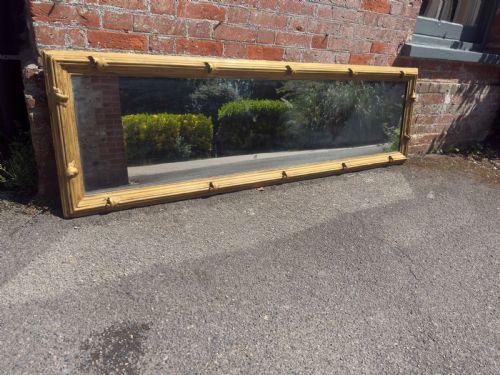
A carved wood landscape mirror brings breadth and historical weight to a room, framing reflections within ornate wooden structures designed to hang horizontally.
Carved Wood Landscape Mirror
A carved wood landscape mirror functions primarily as a wide wall hanging or an overmantel fixture designed to span the width of a fireplace or sideboard. These horizontal pieces draw the eye outward, expanding the perceived volume of a room through expansive glass surfaces.
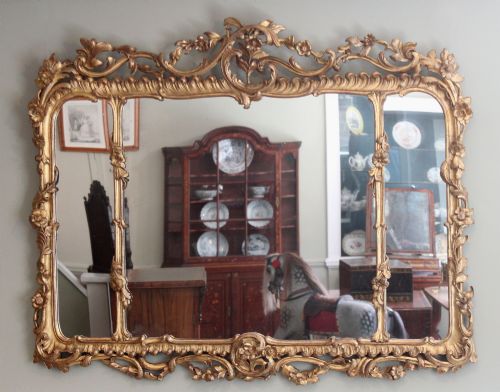
The selections available here span from eighteenth-century Georgian and Chippendale designs to nineteenth-century Victorian and Regency creations, alongside twentieth-century iterations. Overmantel mirrors and trumeau mirrors dominate the forms, frequently utilising tripartite plates or wide wooden frames.
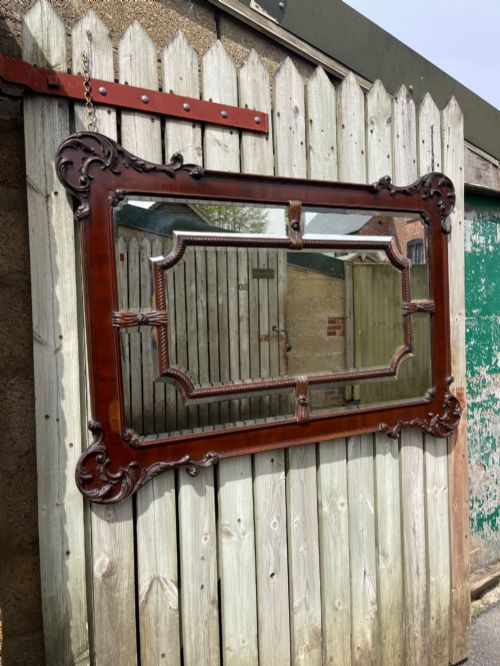
Makers and artisans across English, French, and Italian workshops produced these horizontal looking glasses to anchor formal drawing rooms and country house interiors. Buyers frequently encounter nineteenth-century examples incorporating gesso and gilt finishes alongside unpainted mahogany or walnut structures.
Materials and construction
Craftsmen shaped these frames from solid hardwoods including mahogany, walnut, and various softwoods before applying layers of gesso to carve intricate relief ornamentation. Artisans then gilded these surfaces using gold leaf or applied paint finishes to achieve the desired lustre and colour.
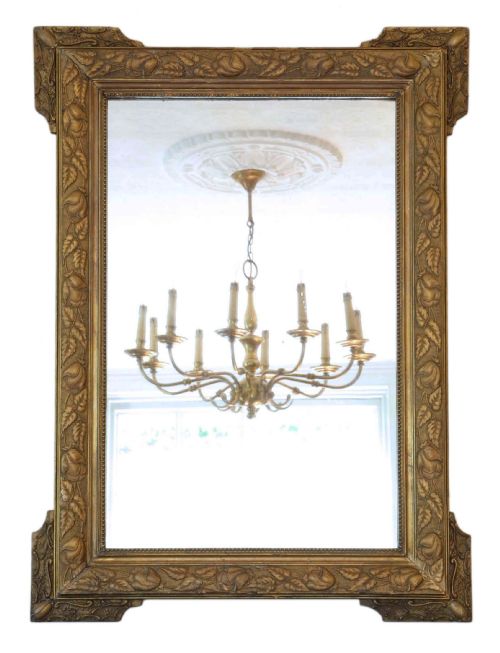
Composition material frequently augmented hand-carved wooden elements, allowing workshops to mould repetitive floral or scroll motifs efficiently before securing them to the main frame. Plate glass, sometimes divided into multiple sections such as triple plates or tryptic formats, was fitted into the rebate and secured from the rear.
Certain nineteenth-century Irish overmantel mirrors incorporate carved wooden squirrels and Ho Ho birds peering out from the foliage of the frame.
Evaluating craftsmanship and condition
Depth and sharpness in the carved wooden or gesso enrichment separate superior examples from routine commercial output, as skilled hand-chiselling retains crisp botanical and figurative details. The integrity of the original gilding or paint layer remains paramount, with untouched surfaces holding greater historical consistency.
The quality of the mirror glass itself dictates the visual depth of the reflection, where older silvering displays characteristic age foxing and subtle distortion. Frame stability, original backboards, and the harmonious integration of joinery further distinguish exceptional pieces from later adaptations.
The Carved Wood Landscape Mirror Glossary
- Giltwood
- Wood carved and subsequently covered with fine leaf gold or metal powder applied over a prepared gesso ground. This finish provides a luminous metallic surface characteristic of formal period looking glasses.
- Gesso
- A plaster-like mixture applied to wooden frame foundations and smoothed to receive carving, paint, or gilding. It allows artisans to execute sharp, low-relief decorative motifs.
- Overmantel Mirror
- A wide horizontal looking glass specifically proportioned to hang on the wall directly above a fireplace mantelpiece. These pieces often incorporate landscape orientations to match the chimney breast.
- Trumeau Mirror
- A decorative wall mirror combined with a painted panel or carved artwork within a single integrated frame structure. Originating in neoclassical interior design, these pieces frequently utilise landscape proportions.
- Composition
- A moulded mixture of whiting, resin, glue, and linseed oil pressed into decorative ornaments for frames. Workshops utilised this material as an efficient alternative to hand-carving complex repeating patterns.
Carved Wood Landscape Mirror: Frequently Asked Questions
How do I hang a heavy overmantel mirror?
Heavy landscape mirrors require secure fixing directly into wall studs or masonry using substantial brackets designed to bear the distributed weight of wood and glass. Professional installation ensures the frame remains stable and flush against the wall surface.
Because these horizontal pieces span significant widths, balancing the load across multiple fixing points prevents structural strain on the original antique frame joints.
Can these mirrors be hung vertically?
Certain landscape formats possess symmetrical proportions that allow orientation as vertical wall mirrors, depending on the design of the cresting and frame. However, pieces specifically constructed as overmantels or landscape trumeaus typically look balanced only in their intended horizontal position.
Reviewing the placement of hanging hardware on the reverse clarifies whether the maker intended the mirror to be displayed horizontally or vertically.
What causes foxing on antique mirror glass?
Foxing appears as small dark spots or cloudy patches on antique mirror plates where atmospheric moisture has slowly oxidized the backing over the centuries. This chemical process develops naturally as the silvering ages beneath the glass.
Many collectors value authentic foxing as proof of age and original manufacture, provided the spots do not obscure the reflection entirely.
How do I clean an antique giltwood frame?
Dusting giltwood frames requires a very soft, dry brush to remove particles without disturbing fragile gesso or gold leaf surfaces. Liquid cleaners and modern solvents must be avoided entirely to prevent stripping the historic finish.
Professional conservators should handle any chemical cleaning or structural repairs to preserve the original patina of the wood and gilt.