

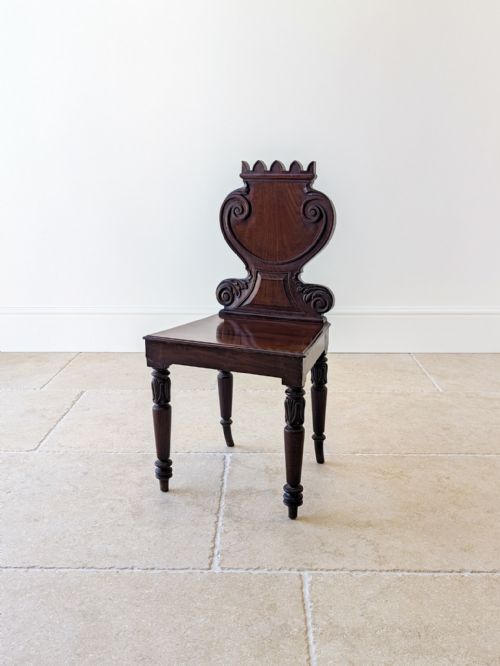
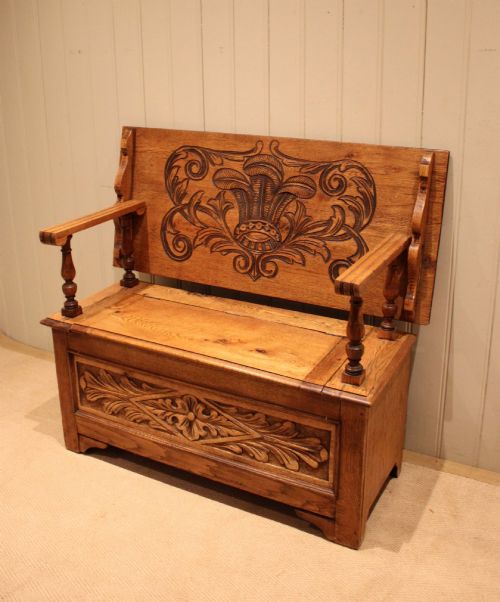
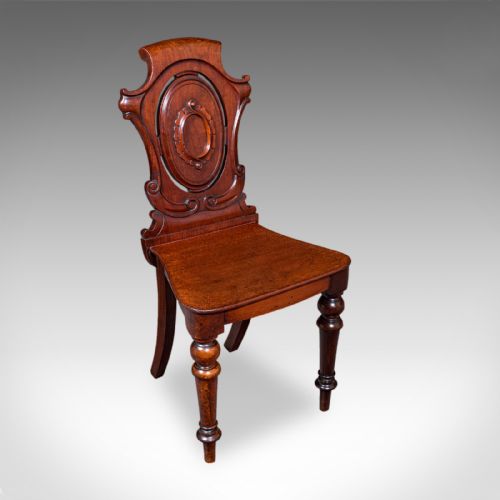
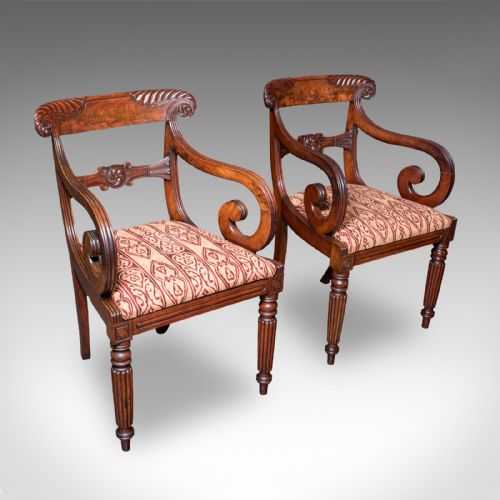
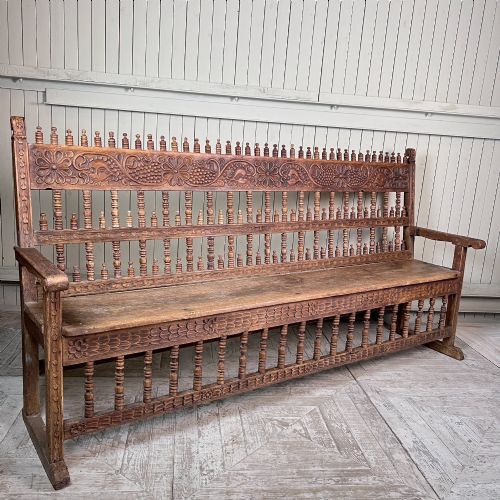
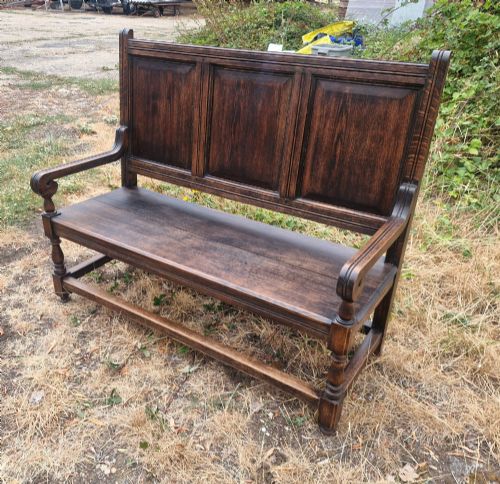
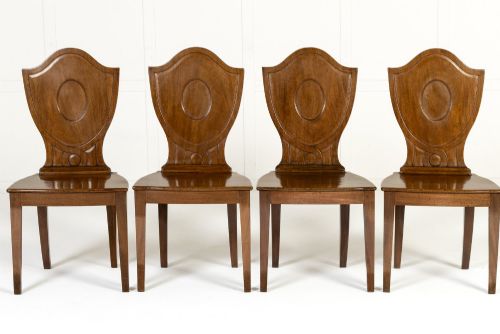
Carved Wood Hall Seat
A carved wood hall seat is a substantial antique anchor for an entranceway, offering both firm seating and a striking sculptural presence.
What these pieces are
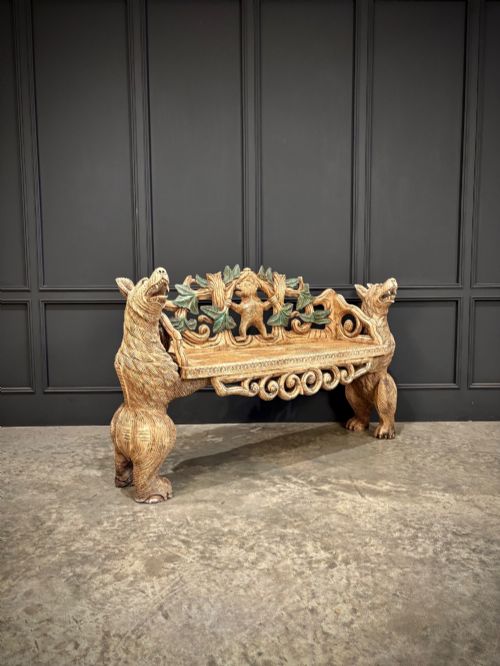
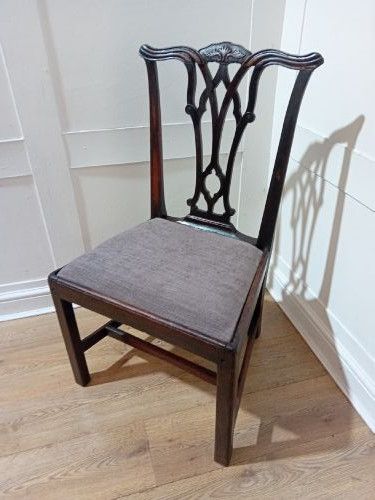
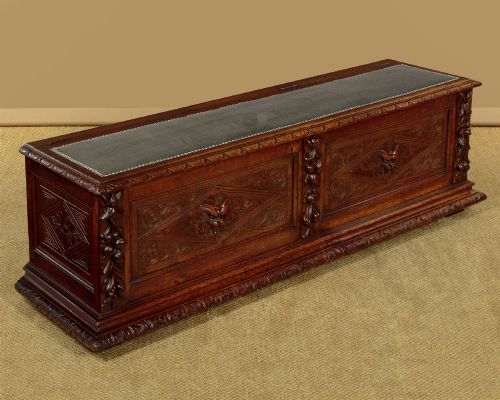
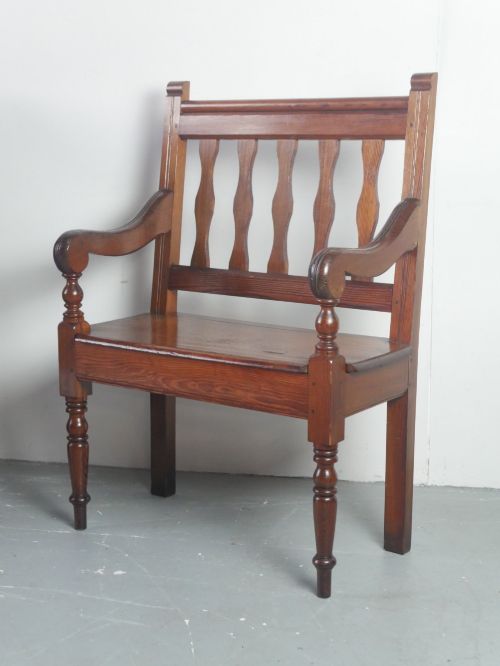
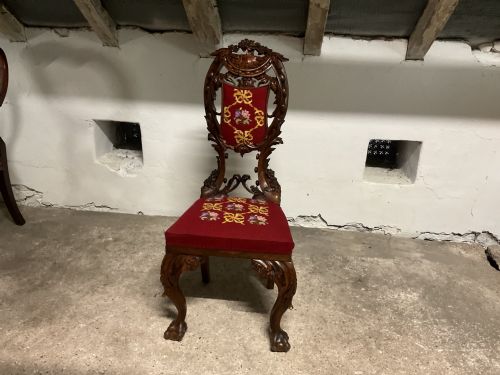
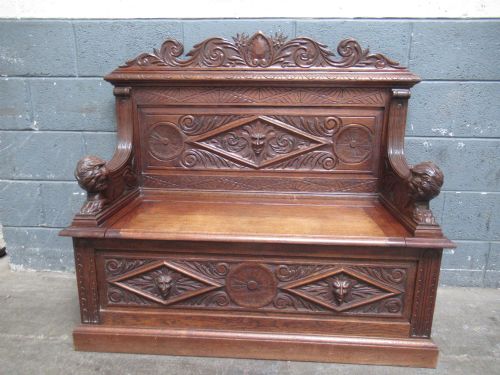
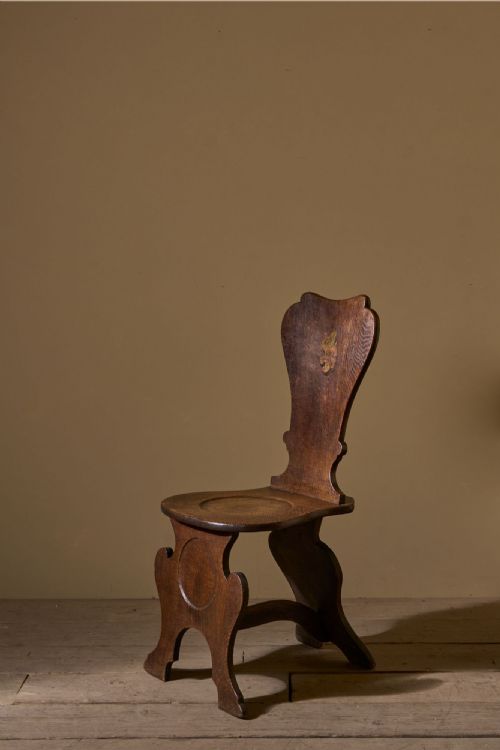
A carved wood hall seat provides a practical and decorative focal point for an entranceway or passage, originating from various periods including the eighteenth and nineteenth centuries. These items manifest in forms such as hall benches, hall chairs, and larger carved bench seats.
The selections available span multiple stylistic traditions, ranging from Victorian Gothic Revival and Renaissance Revival to Spanish Colonial, Black Forest, and Flemish influences. Buyers frequently encounter oak and walnut examples dating to the Victorian era alongside heavier hardwood variants from earlier periods.
How they were made
Craftsmen built these seating pieces using solid timbers such as oak, walnut, mahogany, and lindenwood, frequently deploying dense hardwoods to withstand the rigours of an entrance hall. Structural integrity often relied on traditional joinery methods suited to heavy daily use.
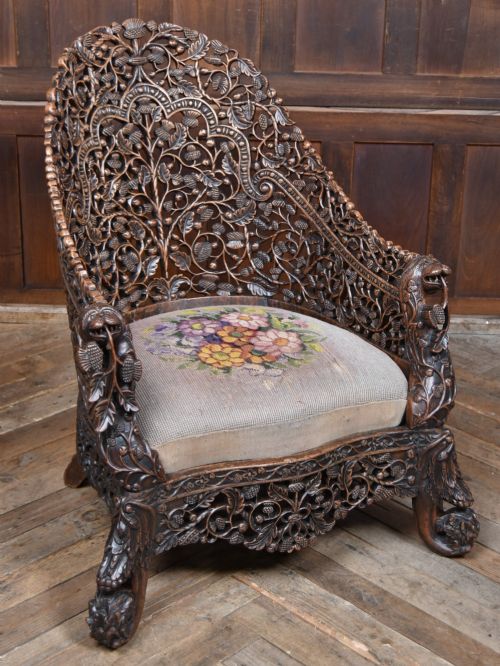
Surface ornamentation involved extensive hand carving across the timber, sometimes accented with iron components. Artisans utilised deep relief carving to depict figures, animals, or elaborate foliage characteristic of specific revival styles.
Retail Price Guide 2026
Typical UK retail prices for carved wood hall seat, calculated from the Sellingantiques database of over a million retail prices indexed since 2003. This retail price guide relies exclusively on Sellingantiques data; no external sources or auction records are used, so the figures do not describe the wider market.
What varies in quality
The depth, crispness, and artistic ambition of the hand carving dictate the aesthetic standing of each piece. Superior examples display spirited execution in the woodwork, whereas lesser items rely on repetitive or shallow incision.
The choice of primary timber influences the character and durability of the seating, with dense hardwoods and carefully selected oak or walnut marking out the superior end of the range.
The Carved Wood Hall Seat Glossary
- Hall bench
- A long wooden seat designed primarily for an entrance hall or passage. These often incorporate storage or high carved backs.
- Gothic Revival
- An architectural and decorative style drawing inspiration from medieval forms. It frequently appears in nineteenth-century woodwork through pointed arches and heavy tracery.
- Hardwood
- Timber derived from broad-leaved deciduous trees, noted for density and longevity. Varieties like oak, walnut, and mahogany form the core of these listings.
- Black Forest
- A style of wood carving originating from the mountain region of central Europe. Pieces from this tradition often feature naturalistic animal figures, notably bears.
Frequently Asked Questions
Where should I place a hall seat?
These pieces suit entrance halls, wide corridors, or large reception rooms where their substantial depth and decorative backs can be fully appreciated.
Because they were built to anchor a transitional space, they work well against a plain wall that allows the carved details to stand out.
How do I care for antique carved wood?
Maintain the timber by applying a microcrystalline wax periodically to nourish the surface without attracting dust.
Keep the seating away from direct heat sources and sudden humidity shifts to prevent the solid oak, walnut, or hardwood from splitting.
What is Spanish Colonial furniture?
This descriptor applies to objects produced in the Spanish overseas colonies, often utilising local heavy hardwoods and distinctive regional decorative motifs.
These pieces typically date from the late eighteenth or early nineteenth centuries and display robust construction.
How can I tell the period of a bench?
Examine the wood species, tool marks left by the maker, and the specific stylistic vocabulary of the carving to ascertain the era.
Victorian and eighteenth-century examples exhibit different approaches to proportion and revival ornamentation that help separate the decades.