


Carved Wood Girandole
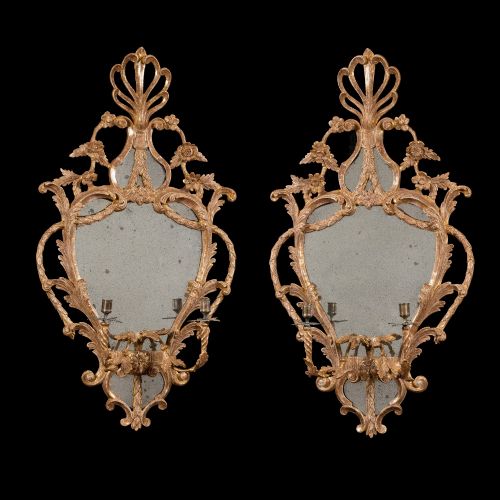
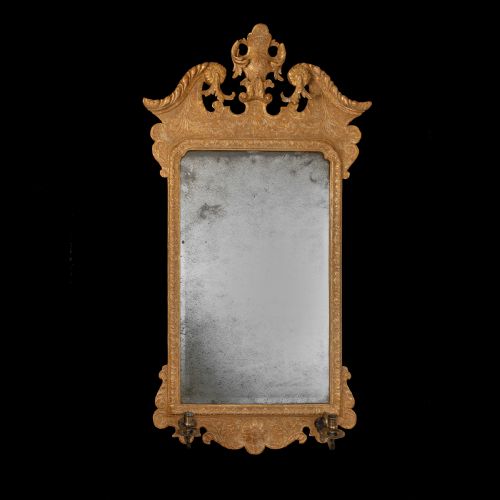
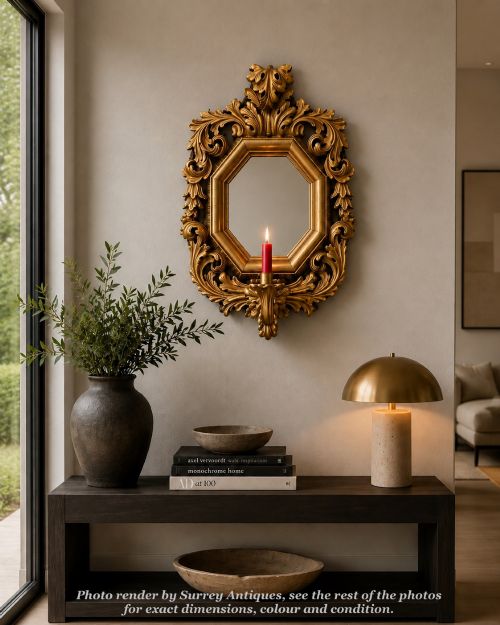
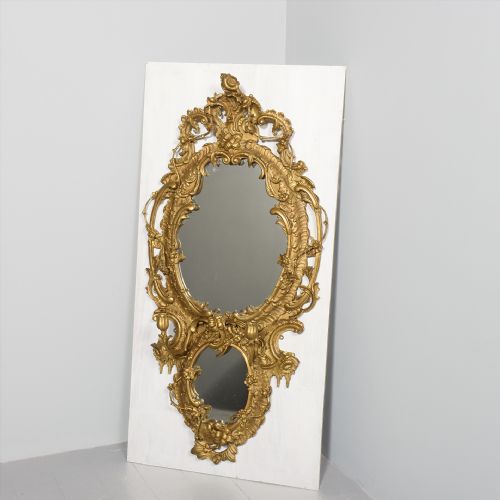
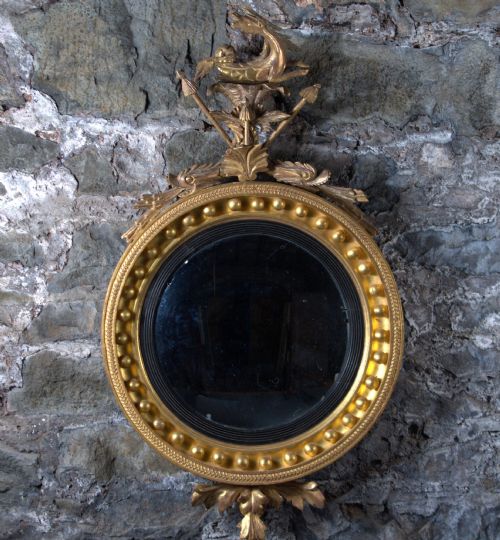
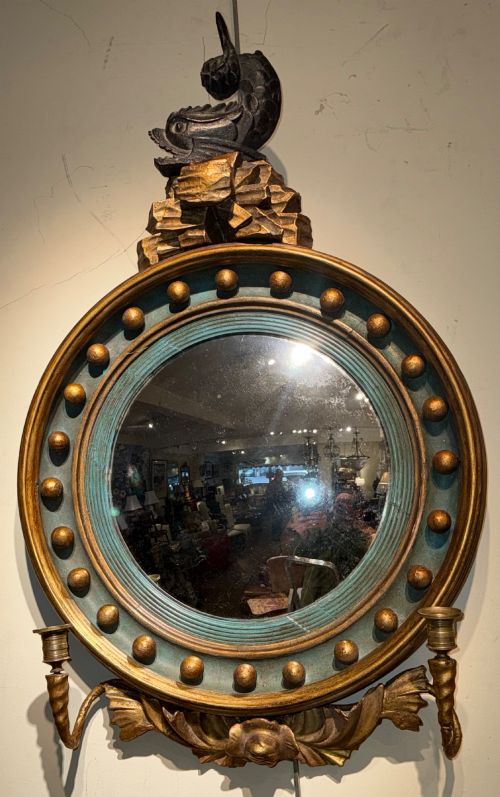
A carved wood girandole brings together reflected light and sculpted form, making it a focal point for any panelled wall or drawing room.
Carved Wood Girandole
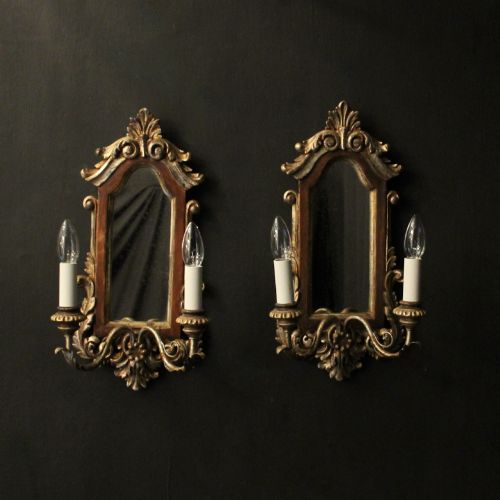
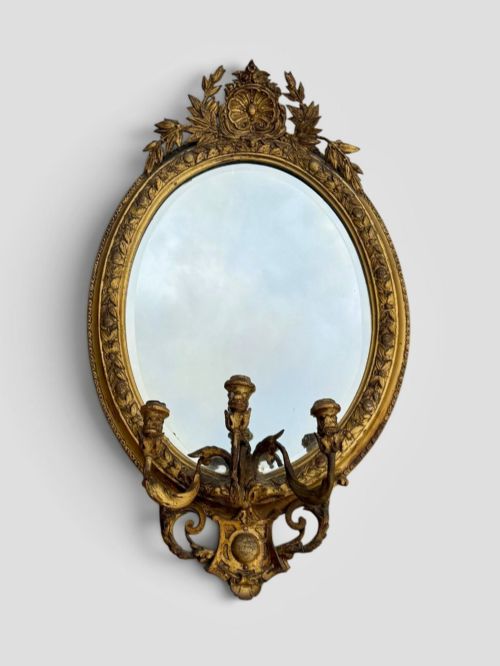
A carved wood girandole is a wall-mounted mirror combined with candle sconces, designed to multiply the light within a room. When you search for a carved wood girandole, you encounter wall mirrors, girandoles, wall sconces, and convex mirrors spanning multiple centuries.
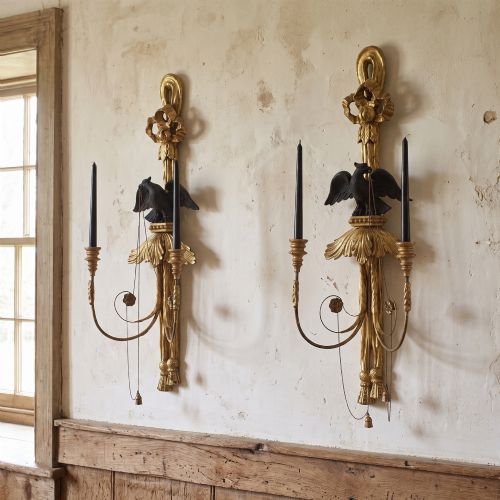
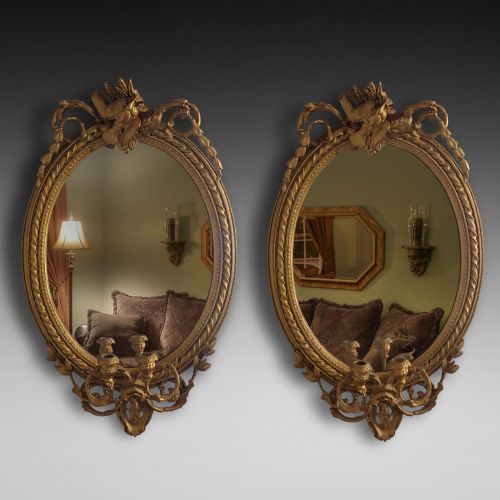
The pieces on this page range from 18th-century Georgian and Italian rococo examples to Victorian, Regency, and early 20th-century revivals. You are most likely to meet giltwood girandole mirrors featuring twin arms, eagle surmounts, or circular convex plates framed in carved wood and gesso.
Origins vary between English workshops and continental centres, notably Italy and France. Styles move from the ornate carvings of the George II period through to later revival pieces from the 19th and early 20th centuries.
Materials and construction
Makers shaped the frames from timber, applying layers of gesso to the carved wooden base before gilding the surface with gold leaf or paint. Metal components form the structural candle branches or sconces that project from the frame.
Mirror glass, occasionally pink or curved into a convex form, sits within the carved rebate. Giltwood, brass, and silvered wood provide the reflective and metallic contrasts typical of these wall lights.
Some convex mirrors feature watchful eagles perched on top, guarding the reflections of generations below.
Distinctions in quality
The depth and crispness of the wood carving dictate the visual hierarchy of the piece, separating standard production from master craftsmanship. Crisp feather work on eagle crests and sharply defined acanthus scrolls show superior hand-carving skill.
The integrity of the gesso ground beneath the gilding determines how well the surface holds its detail over centuries. Original mirror plates and intact gilt surfaces carry more weight than heavily restored or later re-gilt examples.
Benjamin Goodison
The Carved Wood Girandole Glossary
- Girandole
- A branched wall-mounted candlestick or sconce combined with a mirror. The candle arms reflect their flame directly into the glass plate.
- Gesso
- A plaster-like mixture applied to wood frames to create a smooth surface for carving and gilding. It allows for intricate relief ornamentation.
- Convex mirror
- A round mirror with a bulging surface that offers a wide-angle reflection of the room. These frequently feature eagle surmounts and candle branches.
- Giltwood
- Timber covered with a thin layer of gold leaf. It creates a bright reflective surface across the carved ornament.
- Sconce
- A wall bracket designed to hold candles or lights. On these pieces, they project from the sides or base of the mirror frame.
Carved Wood Girandole: Frequently Asked Questions
Were these mirrors meant for candles?
The projecting arms were specifically designed to hold wax candles, which flickered against the glass plate to illuminate darker rooms.
Most surviving examples retain their original sconces and drip pans, though modern owners often choose not to burn candles on them.
What is a convex girandole?
A convex girandole uses a curved spherical glass plate that captures a panoramic view of the entire interior. Regency examples often paired this fish-eye reflection with an eagle surmount.
The curved glass makes rooms appear larger while concentrating light from the attached candle arms.
How do I date a giltwood frame?
Dating relies on the style of the carving, the composition of the underlying gesso, and the manufacturing traits of the wood. Georgian pieces show deep, hand-chiseled relief work.
Later Victorian and 20th-century revivals often utilise softer gesso mixtures and mechanical finishing techniques beneath the gold leaf.