
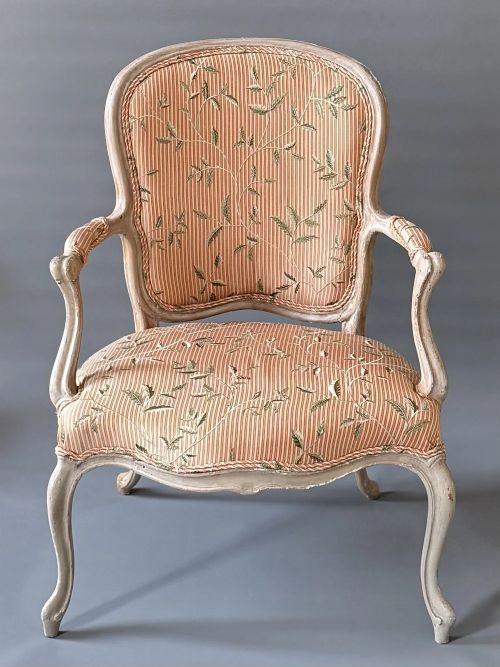
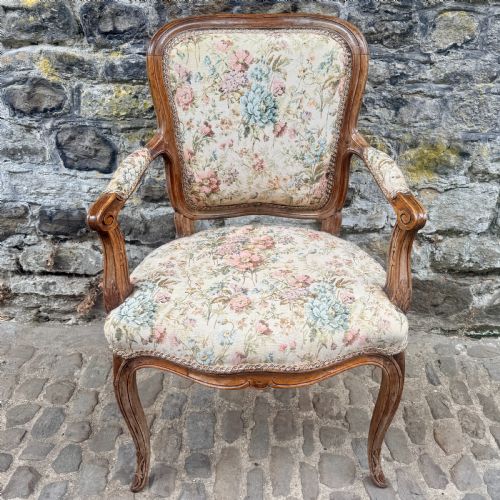
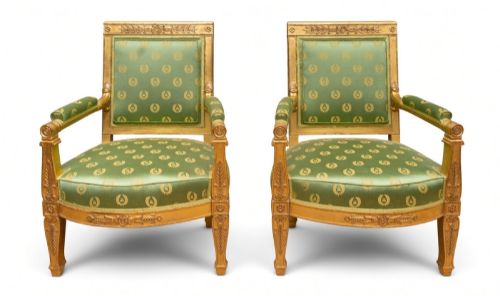
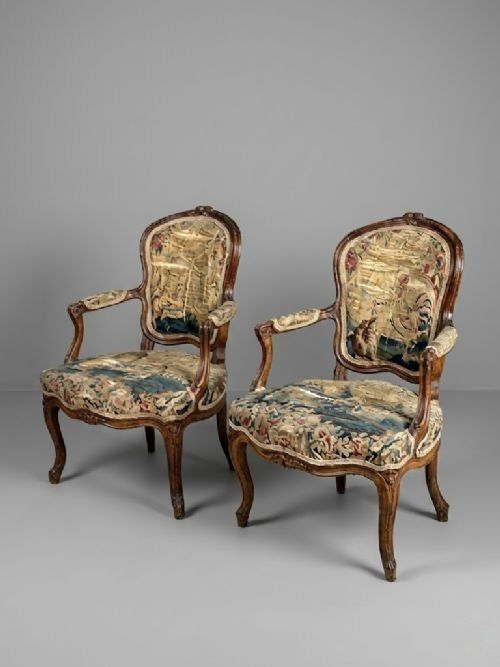
Carved Wood Fauteuil
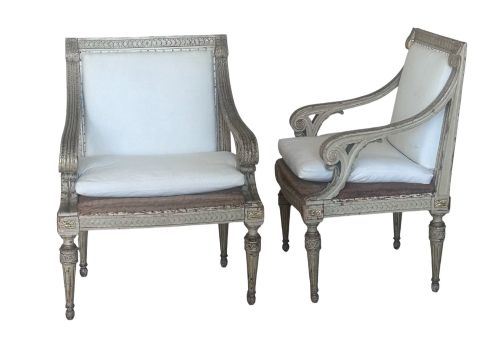
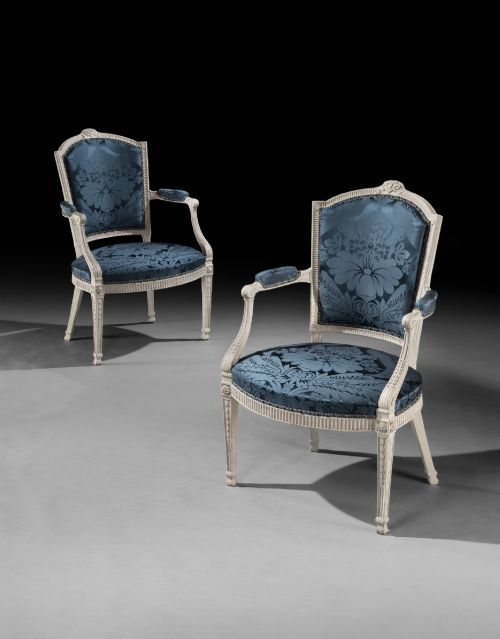
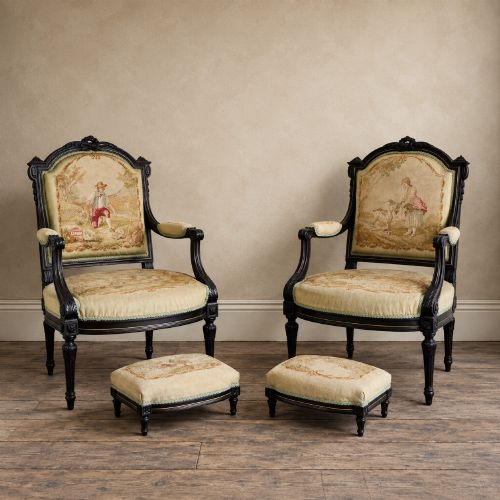
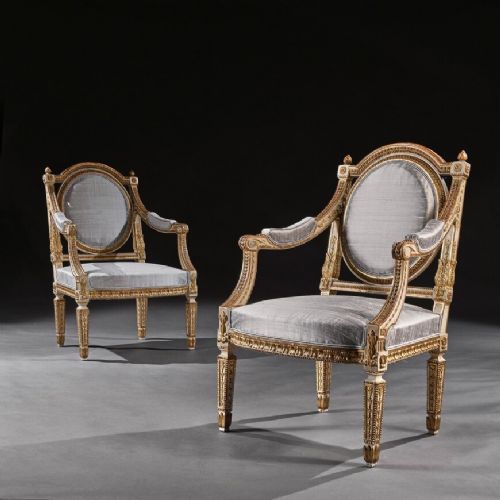
These carved wood fauteuil armchairs bring continental elegance into a room through generous proportions and ornate woodwork.
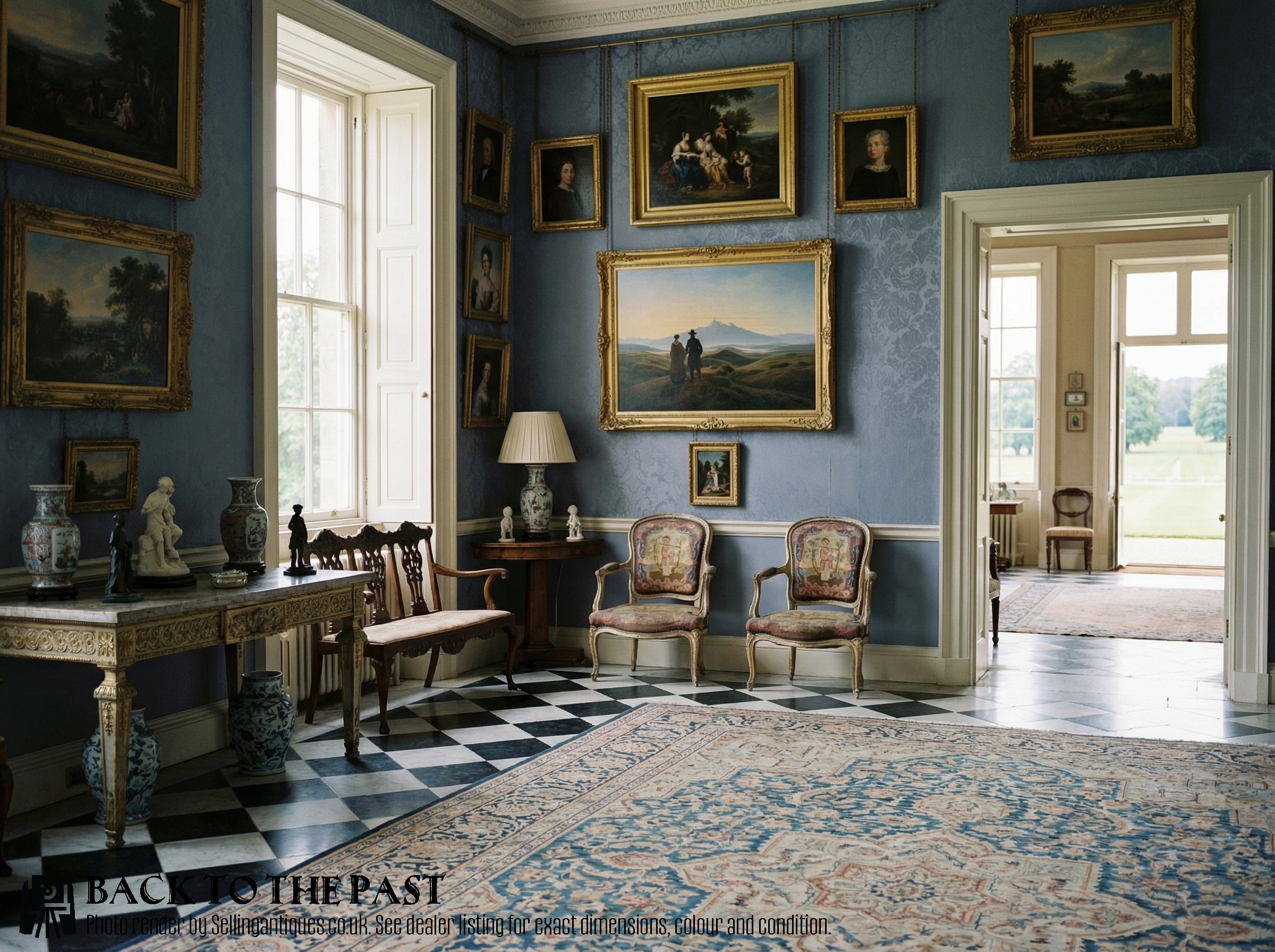
What a carved wood fauteuil is
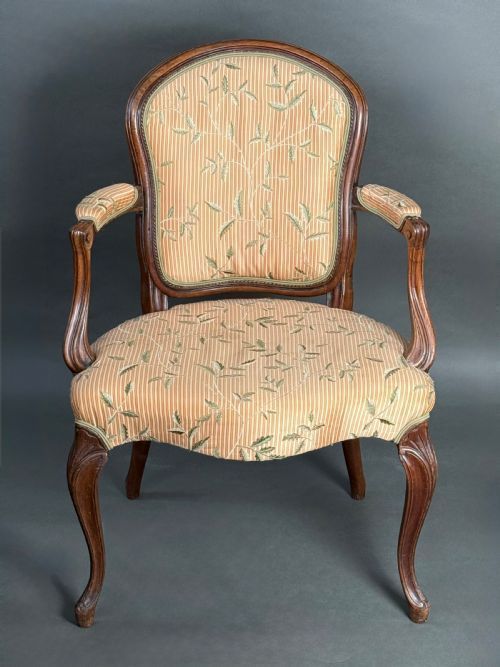
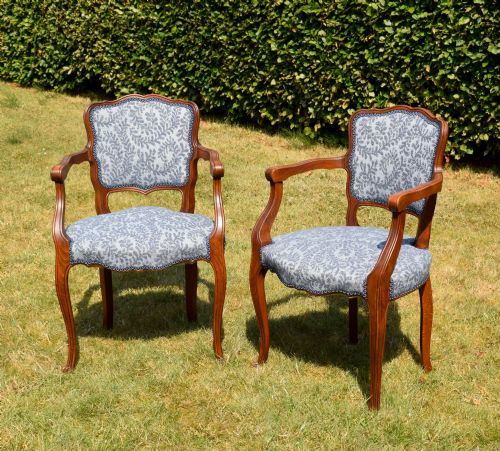
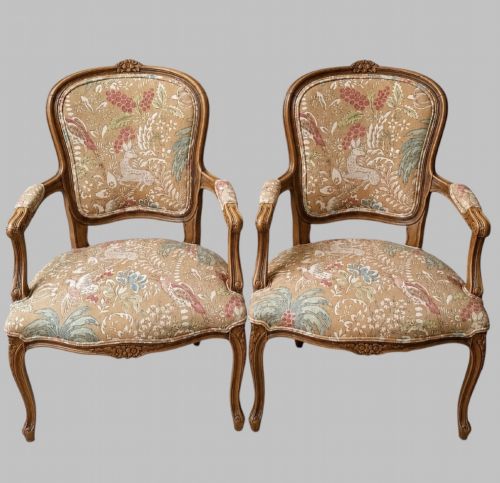
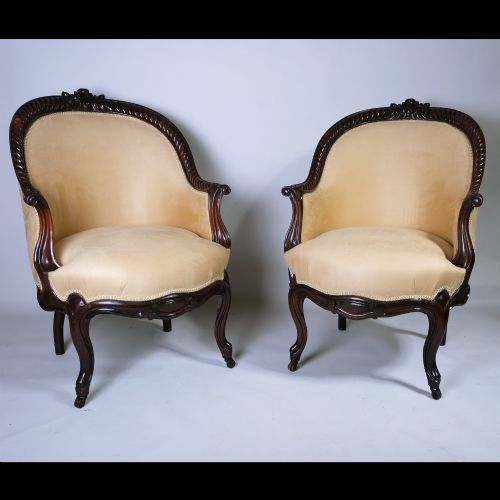
A carved wood fauteuil is an open armchair originating from France, defined by upholstered armrests and a padded back set within a visible wooden frame. The examples appearing on this page span several centuries, reaching from the eighteenth century through the nineteenth and into the twentieth.
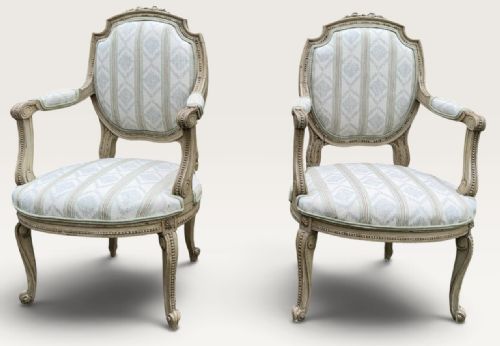
The versions most frequently met here belong to revival movements, including French Renaissance Revival, Italian Rococo, and Louis XV or Louis XVI styles. These pieces often arrive in pairs, featuring elaborate woodwork across the crest rail, arm supports, and cabriole legs.
Makers shaped these armchairs to serve both formal salons and private chambers, combining comfort with decorative presence. The forms include standard proportions alongside larger scaled seating designed for grander reception rooms.
How they were made
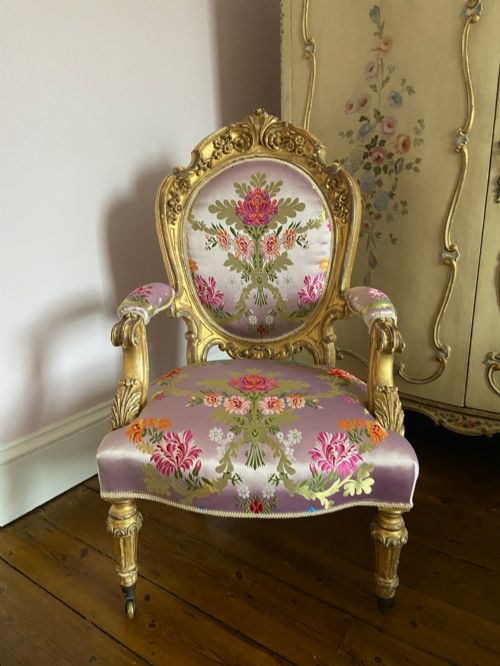
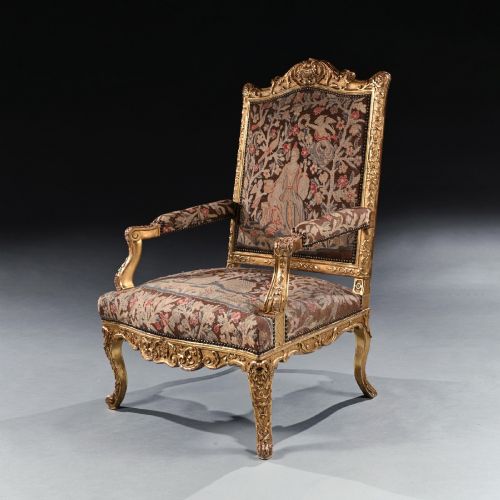
Craftsmen built the structural frames from solid timbers such as walnut and rosewood, whilst applying surface treatments that include gilding, paint, and natural wood finishes. Giltwood surfaces show thin layers of gold leaf applied over a prepared base, creating a brilliant metallic sheen on the carved details.
Carvers shaped the wood by hand to create floral motifs, scrollwork, and fluted legs characteristic of the period and revival styles. Upholstery techniques involved traditional stuffing secured beneath damask fabric, needlework, leather, or standard upholstery fabric.
Retail Price Guide 2026
Typical UK retail prices for carved wood fauteuil, calculated from the Sellingantiques database of over a million retail prices indexed since 2003. This retail price guide relies exclusively on Sellingantiques data; no external sources or auction records are used, so the figures do not describe the wider market.
Listings for a carved wood fauteuil span the eighteenth, nineteenth, and twentieth centuries, incorporating giltwood, walnut, and painted finishes.
What varies in quality
The standard of carving defines the upper tier of these armchairs, where crisp relief work and deeply undercut foliage demonstrate exceptional manual skill. Weaker examples display shallow, mechanical surface decoration that lacks dimensional depth.
The choice of primary material and finish dictates overall dignity, with solid walnut and burnished giltwood holding higher visual status than heavily distressed painted treatments. Proportions also govern the success of the piece, as balanced frames maintain structural harmony between the seat, arms, and back.
The Carved Wood Fauteuil Glossary
- Fauteuil
- An open-armed French upholstered armchair with exposed wooden framing around the back and seat.
- Giltwood
- Timber coated with a thin layer of gold leaf or powder, producing a brilliant golden surface.
- Cabriole leg
- A furniture leg that curves outward in a convex arc and tapers inward in a concave arc, ending in a pad or scroll foot.
- Damask fabric
- A reversible patterned textile woven on a jacquard loom, frequently used for upholstery.
- Crest rail
- The top horizontal member of an armchair back, often carved with central motifs or floral crests.
Frequently Asked Questions
What is a fauteuil?
A fauteuil is an upholstered armchair featuring open wooden arms where the timber frame remains visible around the padded elements.
Originating in France, this seating form prioritises both decorative carving and comfortable social posture.
How do I tell revival styles apart?
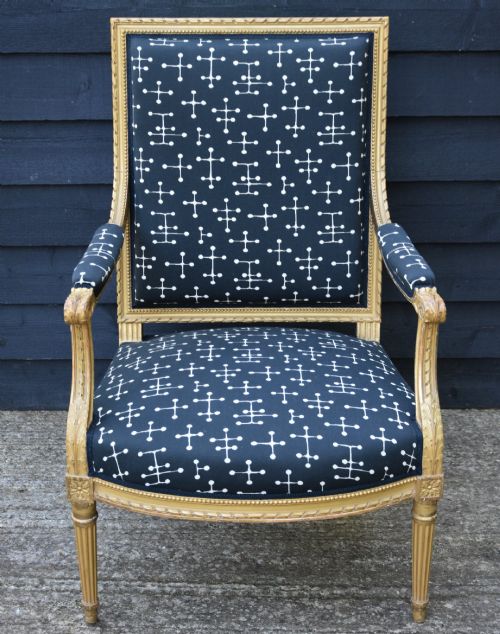
Revival pieces incorporate decorative vocabulary from earlier royal reigns, such as the asymmetric curves of Rococo or the straight fluted columns of Louis XVI.
Examining the specific carving motifs and leg shapes helps distinguish between these historical revivals.
Are these chairs comfortable to use?
These armchairs were designed for formal relaxation, offering padded seating and supportive upholstered backrests.
Their open arm design accommodates voluminous period clothing whilst providing structured arm support.
Where were fauteuils placed?
These armchairs historically occupied grand salons, drawing rooms, and private bedchambers in continental houses.
Their decorative backs meant they often sat away from walls as freestanding elements within a room layout.