
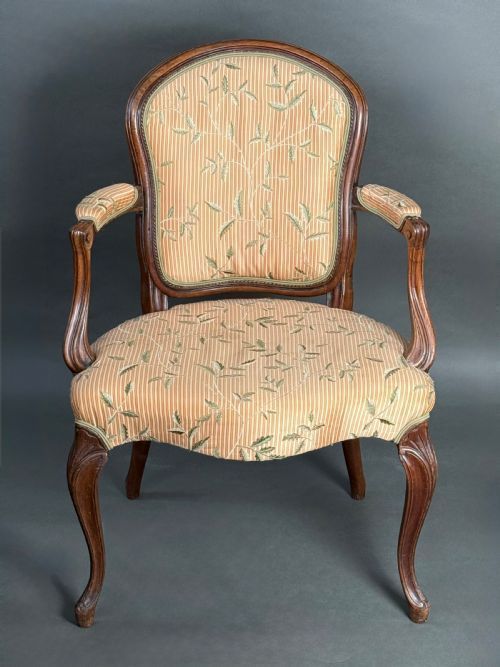
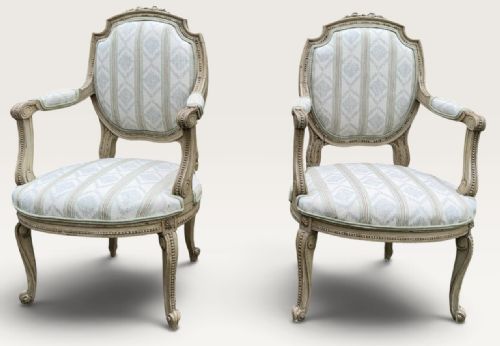
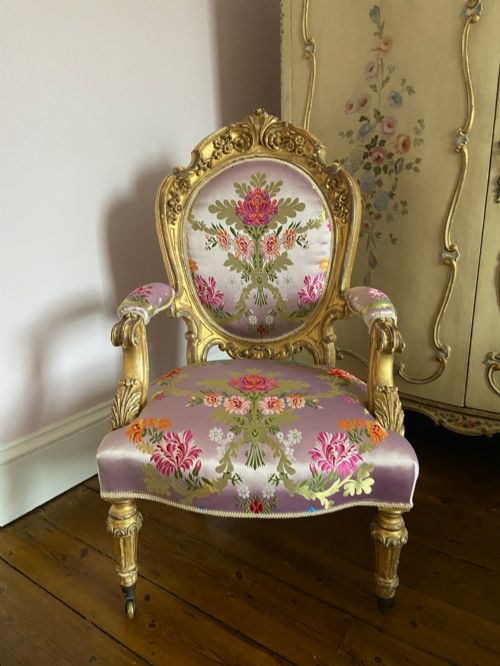
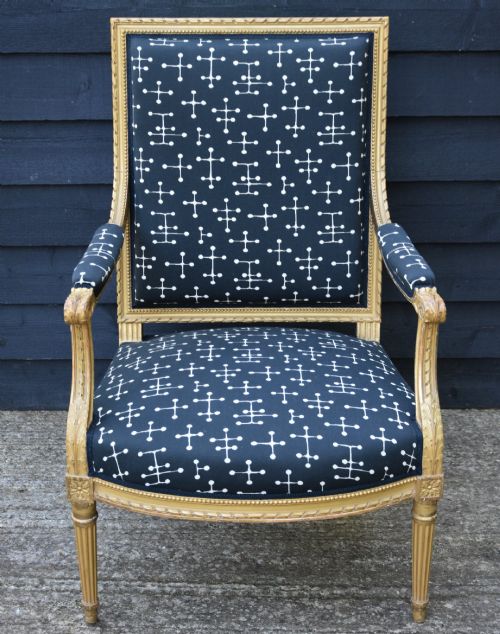
Carved Wood Fauteuil Chair
A carved wood fauteuil chair brings open arms and period grace to a room, offering a seat shaped by centuries of European craftsmanship.
Carved Wood Fauteuil Chair
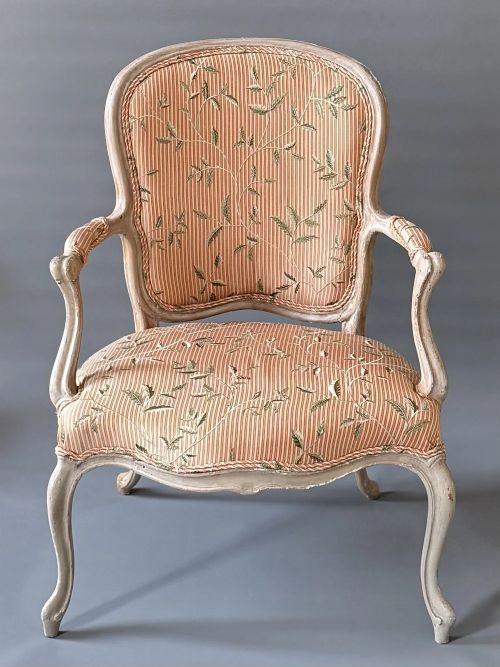
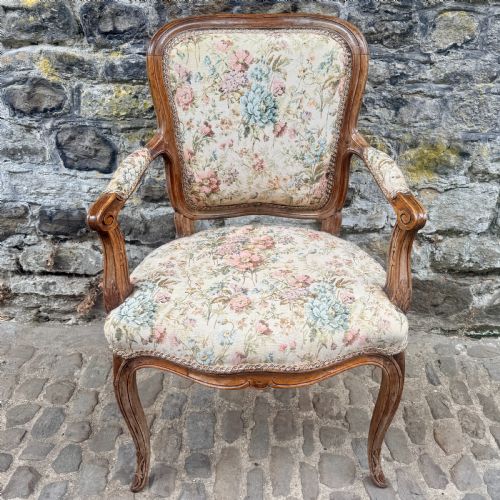
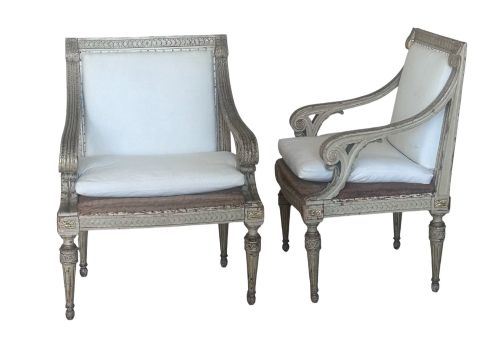
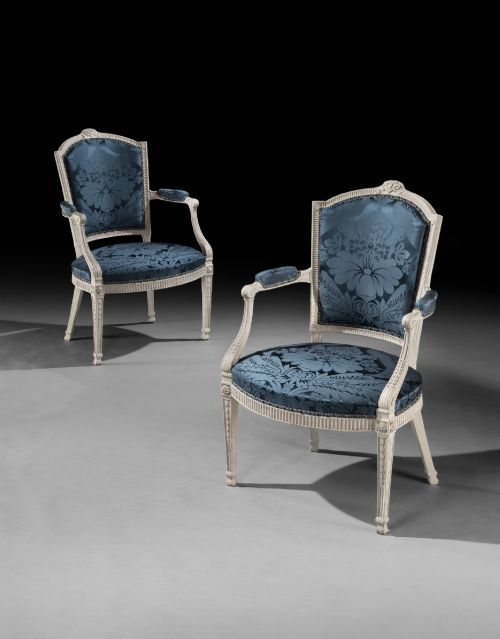
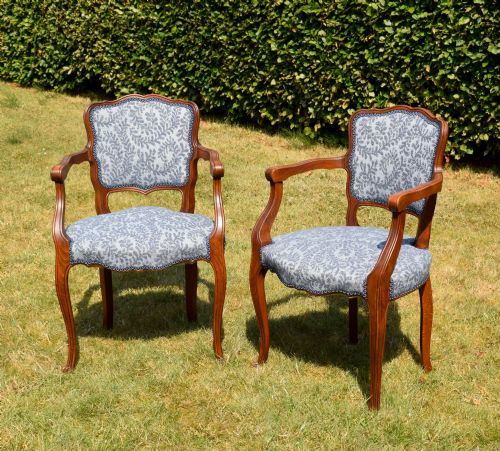
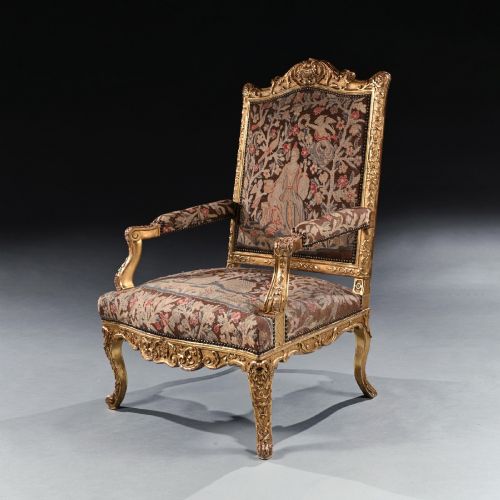
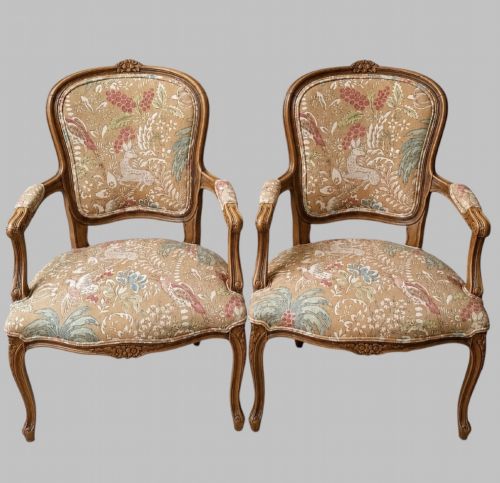
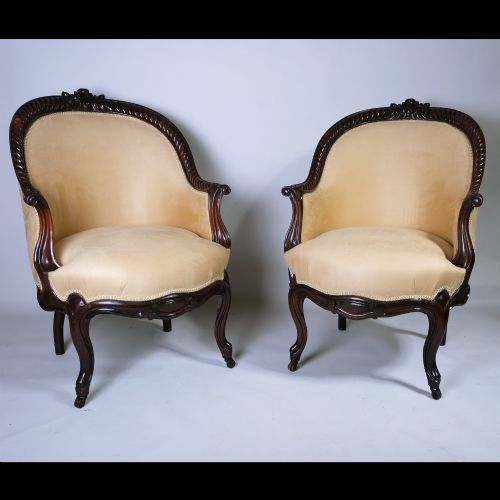
A carved wood fauteuil chair is an open-armed seating form rooted in French design traditions, spanning the eighteenth, nineteenth, and early twentieth centuries. The pieces on this page appear mainly in French regional and revival styles, including Louis XV, Louis XVI, and Rococo interpretations.
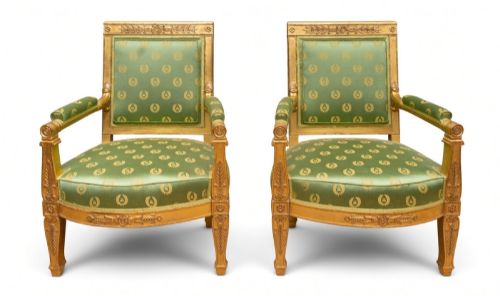
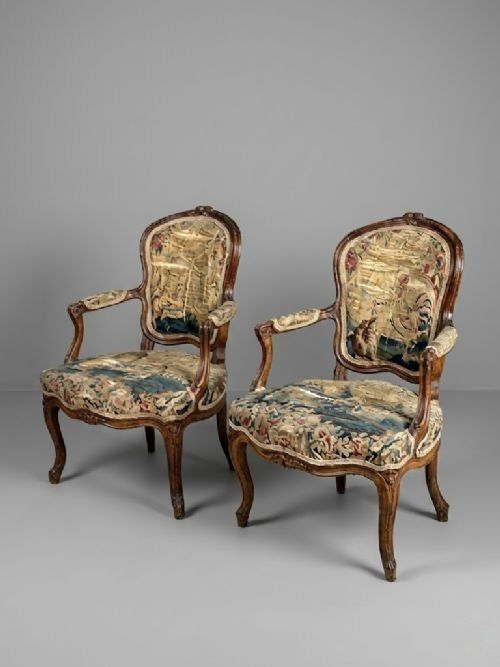
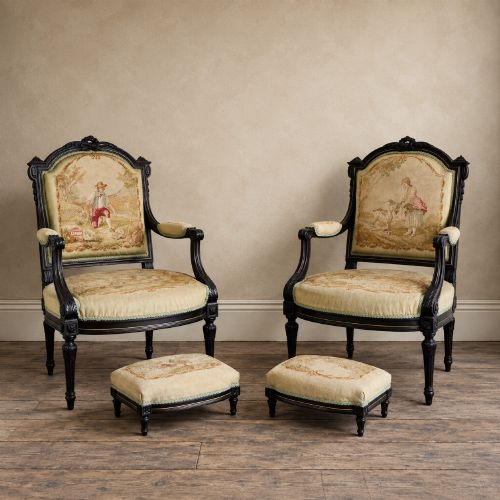
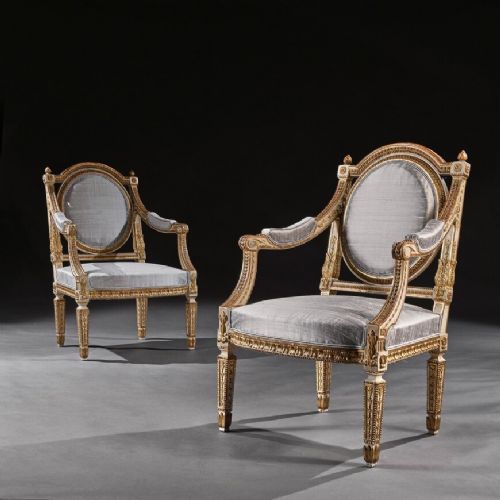
Makers and workshops produced these armchairs for formal salons and private chambers alike, utilising walnut, beech, oak, and giltwood. Alongside single pieces, pairs and larger suites frequently emerge, upholstered in silk, velvet, cotton, or needlework tapestry.
The physical evidence ranges from eighteenth-century provincial frames to nineteenth-century revival pieces carrying carved ornament and painted surfaces. Buyers encounter both intimate salon chairs and larger proportions designed for repose.
Materials and construction
Carpenters shaped the structural frames from hardwoods such as walnut, beech, and oak, applying joinery techniques suited to curved rails and cabriole legs. Guild artisans then finished many surfaces with applied gold leaf, gesso, paint, or ebonisation.
Upholstery methods involved webbing, stuffing, and covering with textiles like silk damask, velvet, or hand-stitched needlework panels secured with decorative tassels or brass nails. Original finishes and subsequent reupholstery layers coexist on pieces originating across the nineteenth century.
Assessing the craftsmanship
Depth and crispness of hand-carving distinguish finer frames from simpler production, particularly around floral crests, scrollwork knuckles, and fluted legs. The weight of the timber and the integrity of the underlying joinery govern the structural resilience of the armchair.
Surface treatment preservation alters the character of each piece, whether dealing with original giltwood, historical painted patinas, or the quality of contemporary textile choices used during restoration.
Jacob-Desmalter·Colefax and Fowler
The Carved Wood Fauteuil Chair Glossary
- Giltwood
- Timber coated with a thin layer of gold leaf over a prepared gesso base. This technique was widely utilised on formal eighteenth and nineteenth-century salon furniture.
- Cabriole leg
- A furniture leg that curves outward in a convex arc and tapers inward in a concave arc, ending in a pad or scroll foot. It draws inspiration from animal limbs and defines Rococo design.
- Rococo
- An artistic style characterised by asymmetry, scrollwork, and naturalistic plant motifs. It heavily influenced mid-eighteenth-century seating and later nineteenth-century revivals.
- Aubusson
- A traditional type of tapestry woven in France, frequently utilised for historic chair seat and back upholstery. These panels depict floral designs or pastoral scenes.
Carved Wood Fauteuil Chair: Frequently Asked Questions
How do I identify a true fauteuil?
A true fauteuil is an armchair defined by open wooden sides rather than fully upholstered padded arms. This structural choice reveals the carved frame while providing a lighter profile for salon use.
Craftsmen designed these seats to accommodate wider eighteenth-century court fashion and voluminous garments, distinguishing them from enclosed armchair styles.
Were these chairs meant for dining?
These seats were primarily created for drawing rooms, boudoirs, and reception spaces rather than dining tables. Their low seats and open armrests encouraged relaxed conversation and social gatherings.
Dining seating of the period favoured rigid upright frames and enclosed sides without protruding armrests to fit comfortably beneath tables.
How do I care for giltwood frames?
Giltwood surfaces require gentle dusting with a dry, soft brush to protect the delicate gold leaf layer. Moisture and chemical polishes can damage the underlying gesso and historical finish.
Placing the chair away from direct sunlight and humidity fluctuations preserves the integrity of both the carved wood and the decorative metallic application.
How do I distinguish eighteenth and nineteenth-century pieces?
Eighteenth-century examples display hand-carving methods specific to their period of origin, often showing natural tool marks and older timber shrinkage. Revival pieces from the nineteenth century frequently employ machine assistance alongside hand finishing.
Examining the construction joints, hardware, and underlying webbing often reveals the chronological timeline of the timber frame and its upholstery history.