
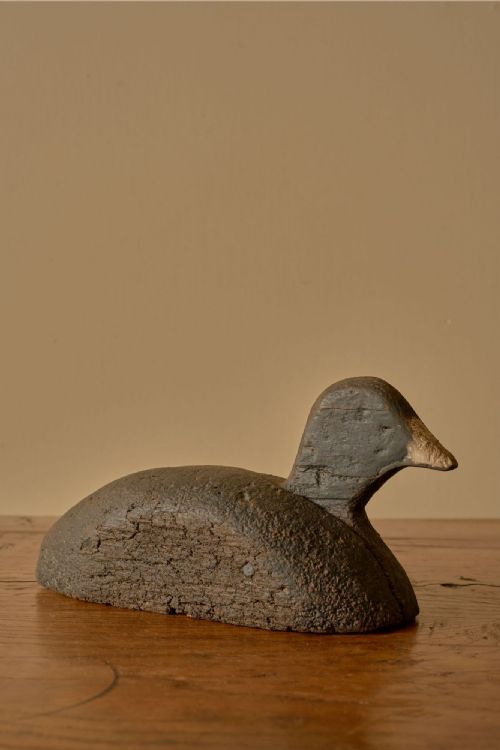
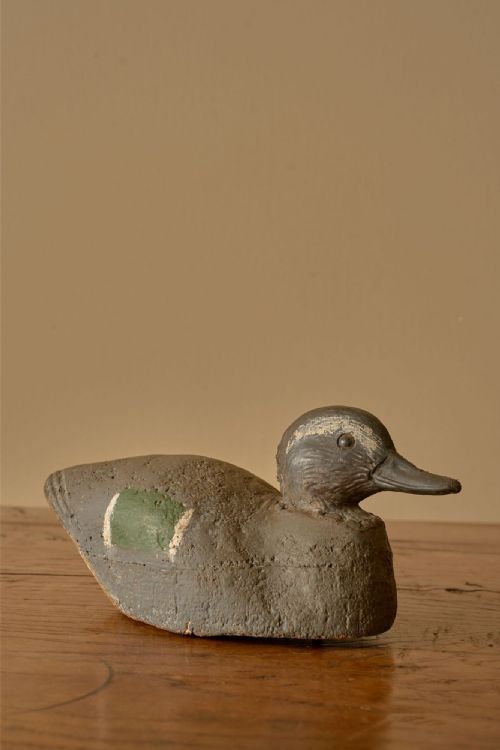
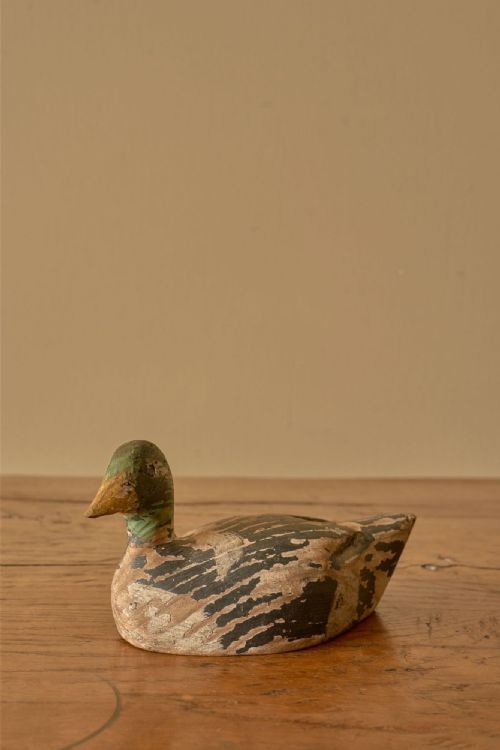
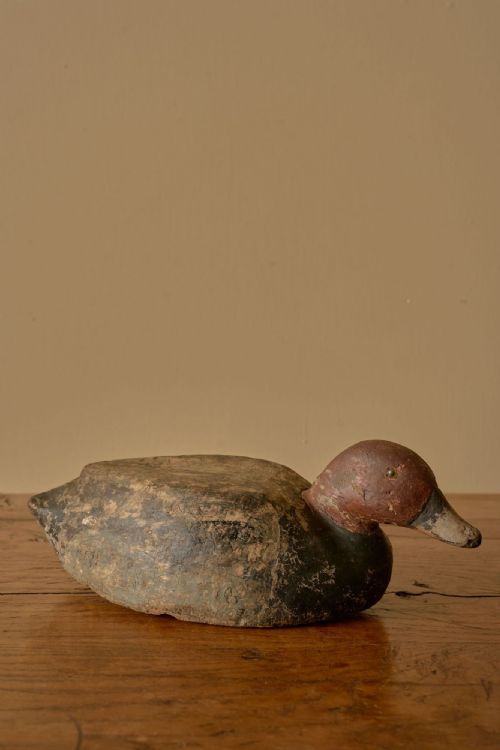


Carved Wood Duck
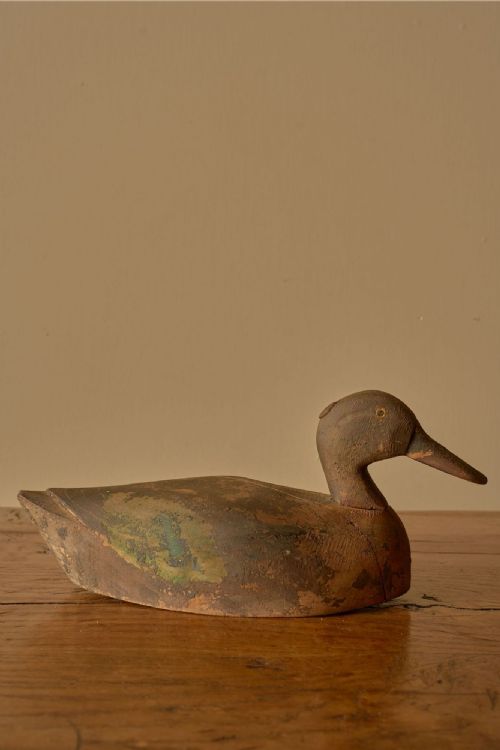
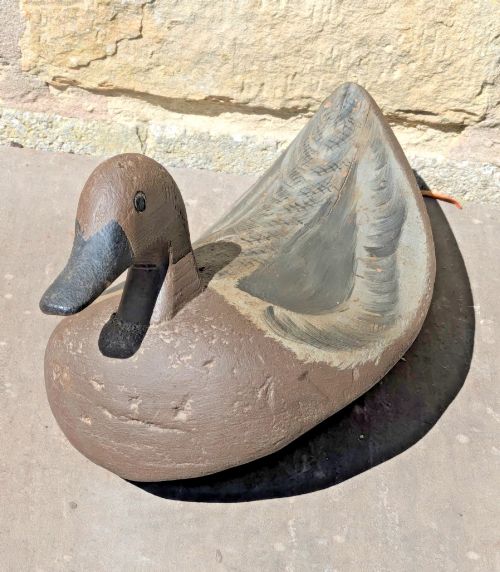
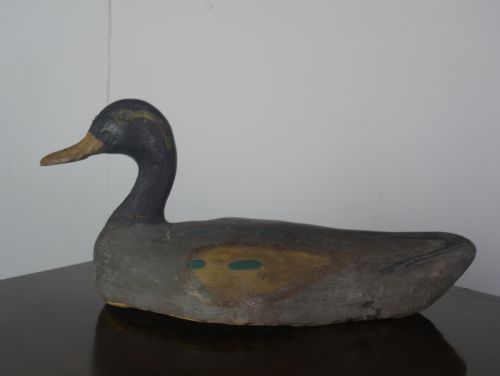
These carved wood duck figures bring rustic charm and utilitarian history into a room, spanning decoy types and decorative folk art.
Carved Wood Duck
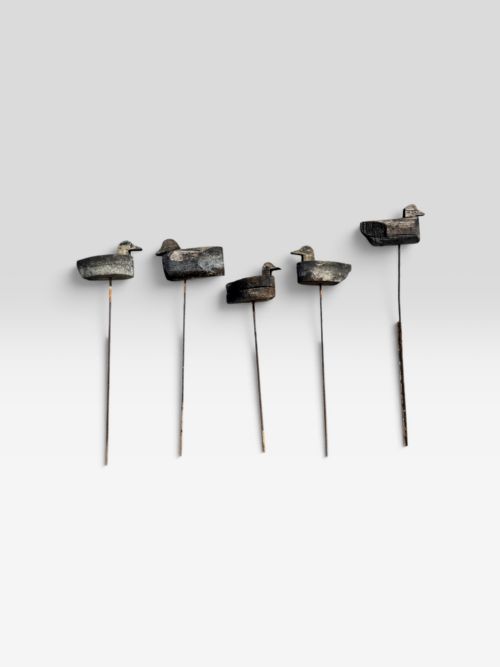
When you search for carved wood duck, you encounter working decoys and decorative birds originating from periods like the Victorian era, the Edwardian years, and the early twentieth century. Most examples on this page take the form of traditional decoy ducks, alongside related folk art sculptures and occasional pairings such as the American loon.
The selection also incorporates international pieces, including Chinese Qing dynasty carved hardwood sculptures of auspicious mandarin ducks. These objects bridge the gap between practical waterfowl decoys used on rivers and lakes and purely decorative sculptures meant for interior display.
How they were made
Makers shaped timber and carved wood into buoyant, streamlined forms suited for water use or display, frequently applying paint to replicate natural plumage. Surfaces often show layers of original hand-painted colour combined with glass elements or iron details depending on the specific period and origin.
Craftsmen utilised traditional hand-carving techniques on solid blocks of timber, resulting in tactile surfaces that retain tool marks and authentic ageing. The integration of painted wood finishes defined the folk art aesthetic seen across nineteenth-century and twentieth-century examples.
The inventory includes folk art pieces, decorative sculptures, and specific waterfowl forms such as the American loon and mandarin ducks.
What varies in quality
Quality rests in the fidelity of the carving and the integrity of the original painted surface, where surviving early pigment adds distinct character. Pieces displaying nuanced anatomical shaping and balanced proportions stand apart from simpler utilitarian items.
The distinction between standard working decoys and superior artistic interpretations lies in the preservation of surface patina and the subtlety of the woodworker's hand.
The Carved Wood Duck Glossary
- Decoy duck
- A carved and painted water bird traditionally placed on water to attract wild fowl within shooting range. These working objects now serve as decorative folk art.
- Folk art
- Items created by self-taught or traditional craftsmen using local materials, prioritising functional utility and straightforward design over academic artistic rules.
- Patina
- The surface texture, wear, and colour acquired by wood and paint over decades of handling and environmental exposure. It indicates genuine age.
- Mandarin duck
- A distinct species often depicted in pairs within Asian art as a symbol of lifelong fidelity and harmony. These are typically rendered in carved hardwood rather than soft timber.
Carved Wood Duck: Frequently Asked Questions
What are carved wood ducks?
These pieces comprise working waterfowl decoys and decorative sculptures shaped from timber and painted by hand.
They reflect historical hunting practices and traditional folk art styles from the nineteenth and twentieth centuries.
How were decoy ducks used?
Fowlers floated these wooden birds on lakes and rivers to lure wild ducks within range.
Today, collectors place them on shelves, tables, and mantels purely for decorative display.
How do I date an old decoy?
Examination of the timber species, tool marks, and paint layers helps determine the approximate period of manufacture.
Early twentieth-century and Victorian examples often exhibit specific weathering patterns and construction methods distinct from modern reproductions.
Are all carved ducks decoys?
Most examples function as working decoys, but the category also includes ornamental carvings and sculptural pairs.
Chinese Qing dynasty hardwood sculptures, for instance, were created as symbolic art rather than functional water lures.