


Carved Wood Convex Mirror
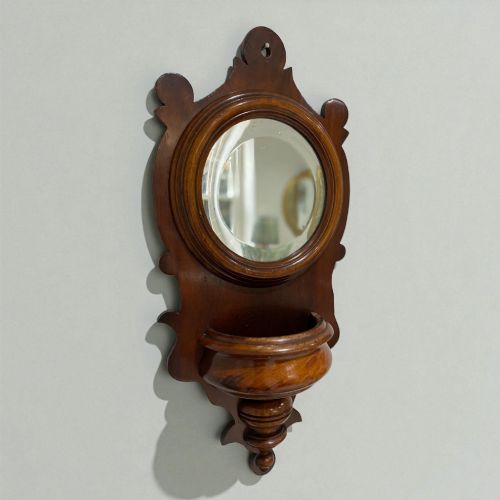
A carved wood convex mirror brings depth and a singular fish-eye perspective to a room, most often appearing in Regency and nineteenth-century forms.
Carved Wood Convex Mirror
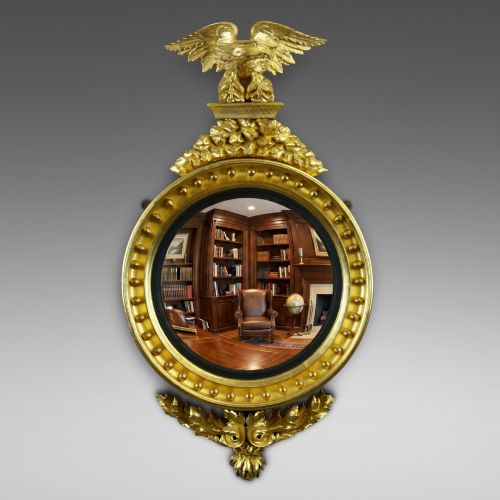
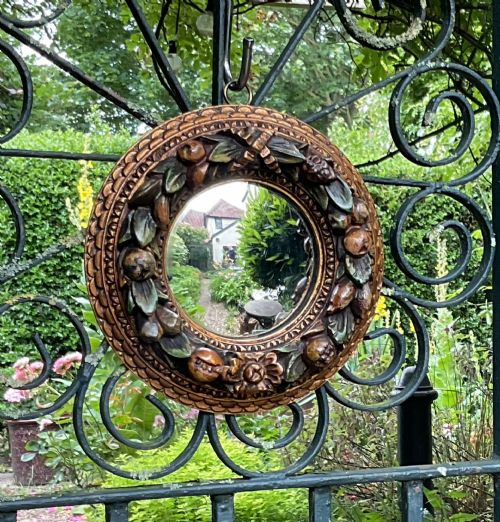
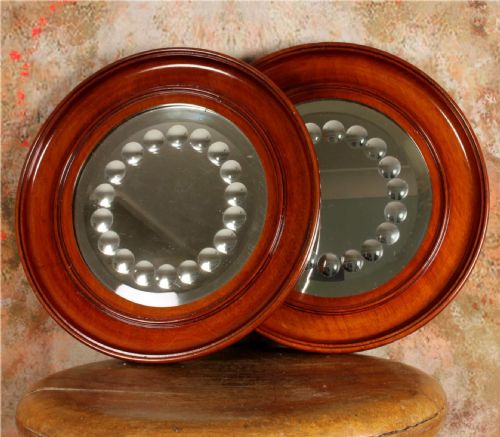
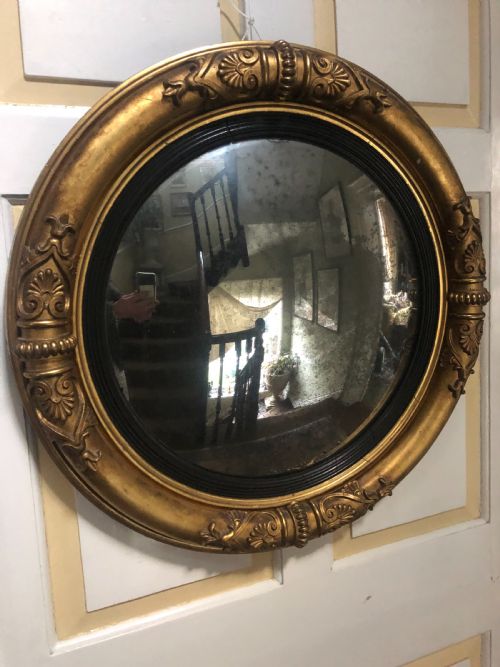
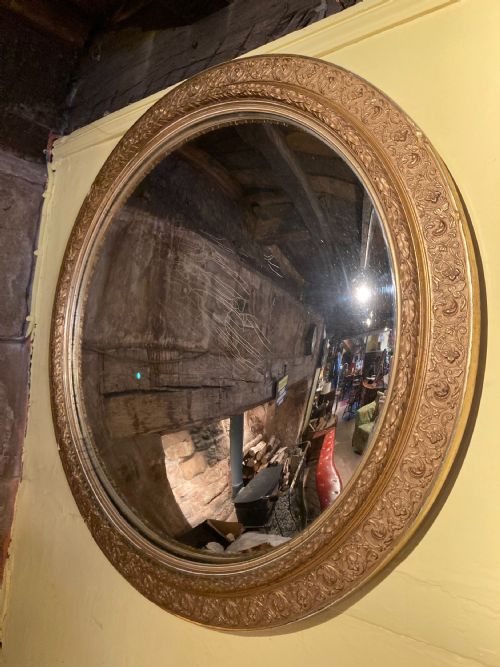
When you search for a carved wood convex mirror, you encounter circular wall plates designed to reflect an entire room within a curved glass surface. The most common examples span the Regency period and the nineteenth century, frequently showing giltwood frames and carved details.
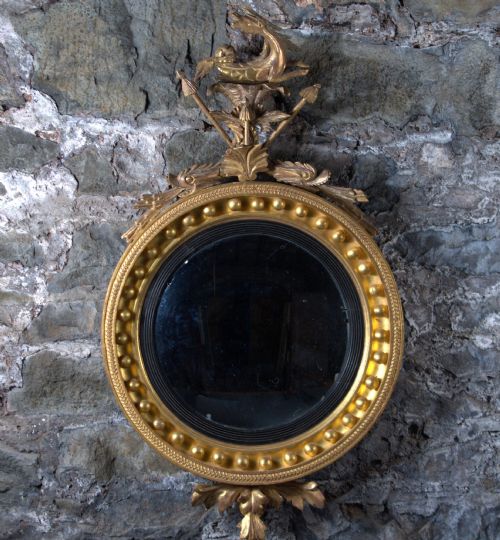
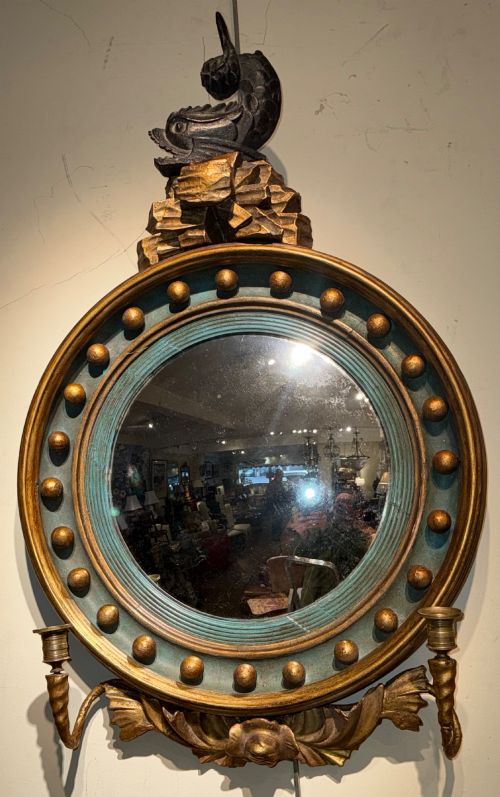
Many of these pieces take the form of wall mirrors or girandoles, occasionally featuring candle arms or decorative crests. Alongside standard round frames, French sunburst designs and dragon motifs appear within the selection.
The style ranges from restrained nineteenth-century timber frames to ornate Regency revival interpretations. Buyers find these mirrors utilised in halls and reception rooms where a wide-angle reflection creates the illusion of space.
Materials and construction
Makers built these frames using timber such as mahogany, ebonised wood, and general carved wood as a foundation for intricate ornamentation. Gesso was frequently applied over the carved base to create a smooth surface for subsequent gilding.
The characteristic giltwood finish relies on gold leaf applied to the prepared gesso and wood structure. Mirrored glass was then shaped into a spherical curve, producing the distinct convex reflection seen in these wall mirrors.
Listings feature pieces spanning the Regency period, Victorian era, and early twentieth century, constructed from giltwood, mahogany, and ebonised wood.
Distinctions in quality
The standard of a carved wood convex mirror rests largely on the depth and crispness of the wood carving on the frame. Elaborate surmounted elements like spread eagles or dragons demonstrate superior artisan skill compared to plain mouldings.
The quality of the gilding and the preservation of the original gesso foundation heavily influence the character of the piece. Additionally, the clarity and weight of the curved glass plate distinguish finer historical examples from later revivals.
The Carved Wood Convex Mirror Glossary
- Convex mirror
- A circular wall glass curved outward to reflect a wide field of view. This optical property earned such pieces historical nicknames like sorcerer's or witch's mirrors.
- Giltwood
- Wood covered with a thin layer of gold leaf or gilt powder. This finish defines the majority of Regency frames in the selection.
- Gesso
- A plaster mixture applied to wood frames to provide a smooth base for gilding. It allows for sharp relief work in carved ornaments.
- Girandole
- A decorative wall mirror fitted with arms for holding candles. These fixtures combine illumination with the curved reflection.
- Sunburst mirror
- A circular convex glass set within radiating carved wooden rays. French examples from the twentieth century frequently adopt this dynamic starburst form.
Carved Wood Convex Mirror: Frequently Asked Questions
What is a convex mirror used for?
These mirrors were historically placed in drawing rooms and dining rooms to monitor activity across a wide space from a single vantage point. The curved glass gathers light from all corners, brightening darker hallways and compact interiors.
Today, they function primarily as striking focal points above mantelpieces or console tables. Their unique optical distortion adds architectural interest to traditional and contemporary rooms alike.
How do I date a convex mirror?
Dating relies on examining the timber, the construction of the frame, and the composition of the gesso underneath the gilding. Regency pieces often exhibit specific classical motifs, such as reeded bezels and carved eagle crests.
Later nineteenth-century and 1920s revivals display subtle differences in wood density and the application of gold leaf. Comparing the backboards and fixings to known period examples further clarifies the age.
Why are some called sorcerer's mirrors?
The curved glass creates a distorted, panoramic reflection that captures an entire room in miniature. This unusual optical effect led superstitious households in past centuries to associate the glass with magic and divination.
The term persists alongside witch's mirror to describe round convex wall pieces. Despite the folklore, their primary historical purpose was decorative and practical.
Are these mirrors fragile?
The combination of heavy carved wood frames and curved glass requires secure wall anchoring. Giltwood surfaces also demand careful handling to prevent chipping the delicate gesso beneath the gold leaf.
Maintenance involves gentle dusting with a soft, dry cloth rather than liquid cleaners. Proper placement away from direct moisture preserves both the timber frame and the silvered glass.