
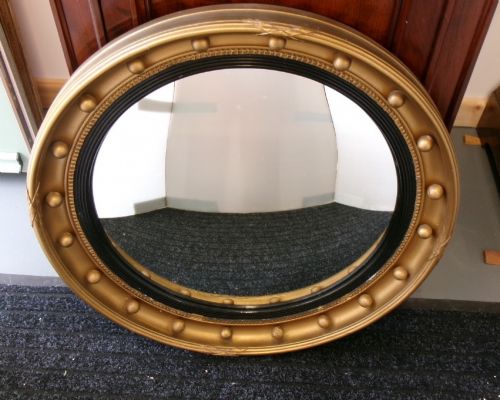

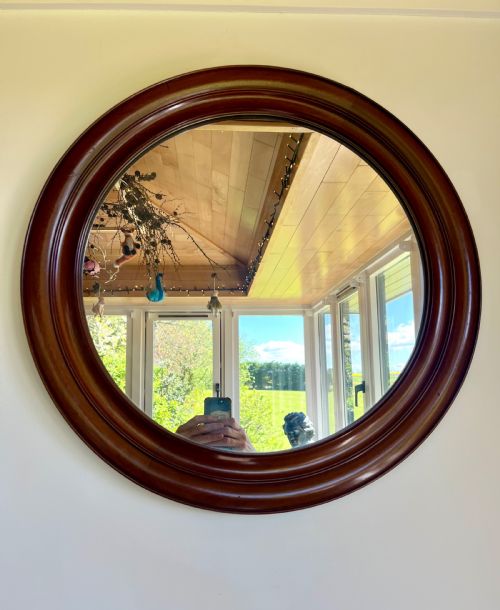


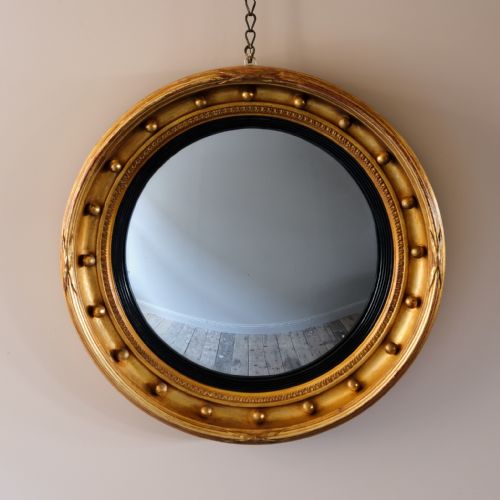


Antique Style Convex Mirror
An antique style convex mirror distorts the room into a deep bubble, catching light across curved glass.
Antique Style Convex Mirror
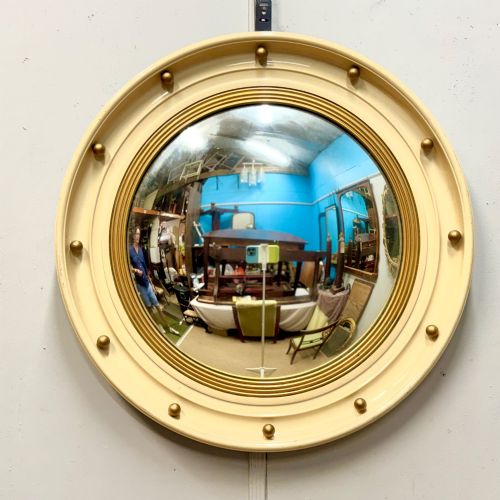
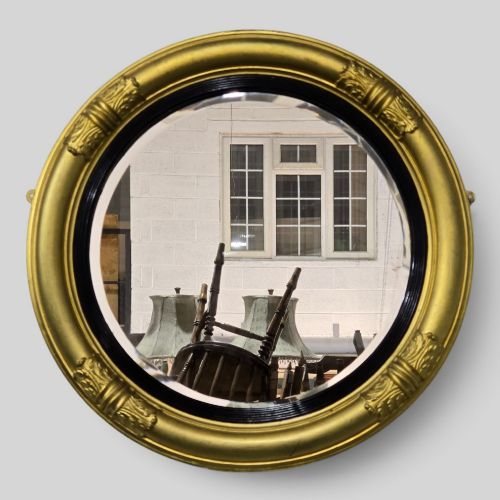
An antique style convex mirror turns the reflection of an entire interior into a rounded circular plate, framed in giltwood or timber. You meet these pieces mostly as wall mirrors, wall sconces and circular porthole designs.
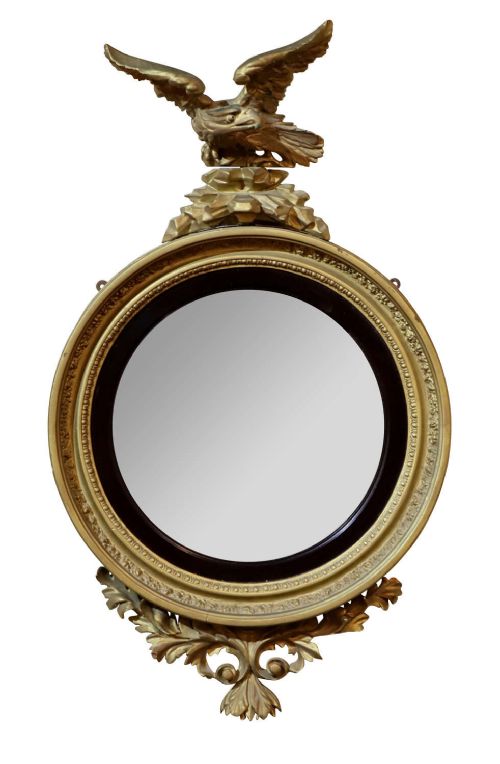
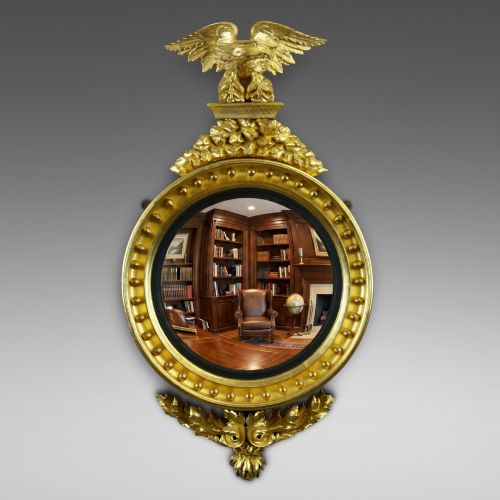
The form spans the nineteenth century through the nineteen-thirties, taking shapes from Regency circular frames to Victorian and later revivals. A buyer encounters pieces featuring eagle surmounts or simple round mouldings intended for halls and reception rooms.
How they were made
Frames rely on giltwood, ebonised wood, gesso, mahogany, composition and metal to hold the curved glass plate in place. Carved timber provides the structural base for the gilded finish.
Makers shaped the glass to curve outward, creating the distinct bulging reflection characteristic of convex mirrors and butler's mirrors.
Listings span the nineteenth century, the Victorian era and the nineteen-twenties, incorporating materials such as giltwood, mahogany, brass and ebonised wood.
What varies in quality
The crispness of the carved detail on the frame and the depth of the gilding separate the finer pieces from simpler wall mirrors. Ornaments such as spread eagles show greater hand-carving skill in superior examples.
The clarity of the convex glass and the integrity of the underlying wood or composition dictate the character of the piece. Period frames retain the original layered materials that define their visual weight.
The Antique Style Convex Mirror Glossary
- Convex mirror
- A round mirror with an outward-curving glass plate that reflects a wide, circular view of the room.
- Giltwood
- Timber coated with gold leaf or a gold-coloured finish, common on nineteenth-century frames.
- Gesso
- A plaster-like mixture applied to wood frames to create a smooth surface for carving and gilding.
- Girandole
- A wall mirror fitted with attached candle sconces that project light across the glass.
- Ebonised wood
- Timber treated to resemble heavy, dark ebony.
Antique Style Convex Mirror: Frequently Asked Questions
How do I hang a heavy convex mirror?
These mirrors carry substantial weight due to the glass and timber frames.
Secure fixings directly into wall studs or use appropriate wall anchors to support the piece safely.
Where were convex mirrors placed?
Historically, butler's mirrors and hall mirrors hung in prominent reception spaces to monitor activity.
The curved reflection allowed servants or residents to see across an entire room from a single vantage point.
What is an eagle surmount?
An eagle surmount is a carved wooden bird figure perched atop the upper frame of the mirror.
This decorative feature appears on Regency and nineteenth-century circular giltwood designs.
Are these mirrors always round?
Most examples follow a circular porthole format, though oval variations also exist.
The curved glass itself remains the defining shape across wall sconces and framed wall mirrors.