
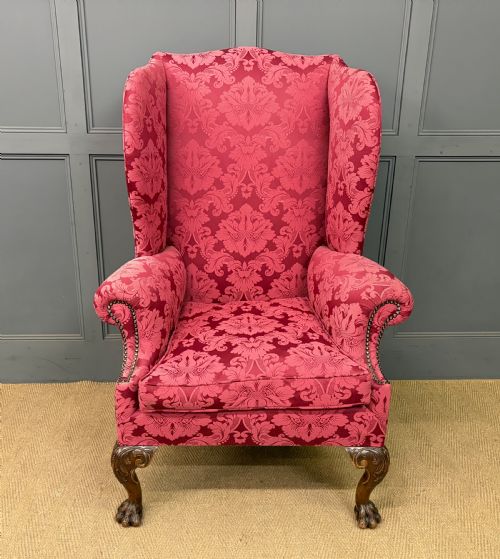


Carved Walnut Wing Chair
A carved walnut wing chair offers deep upholstered comfort alongside sturdy historic timber frames.
Carved Walnut Wing Chair
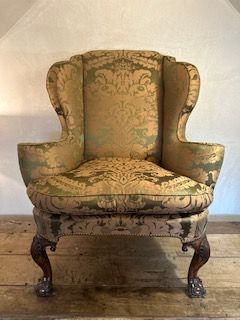
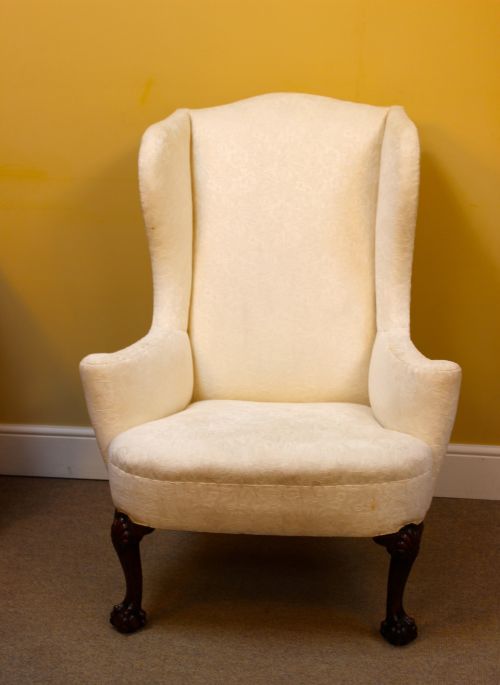
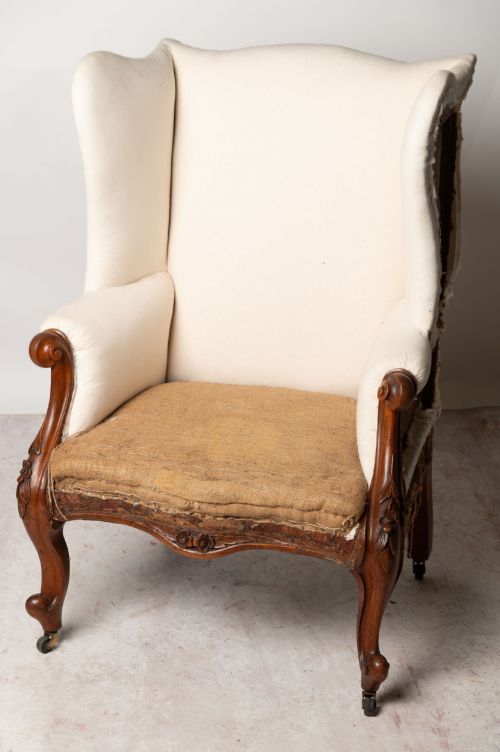
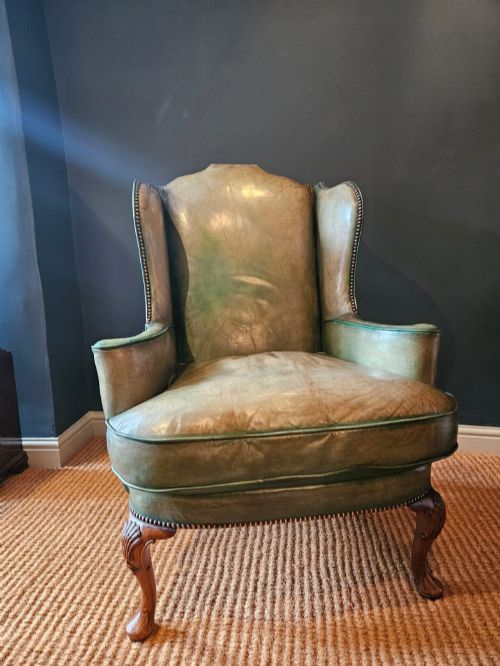
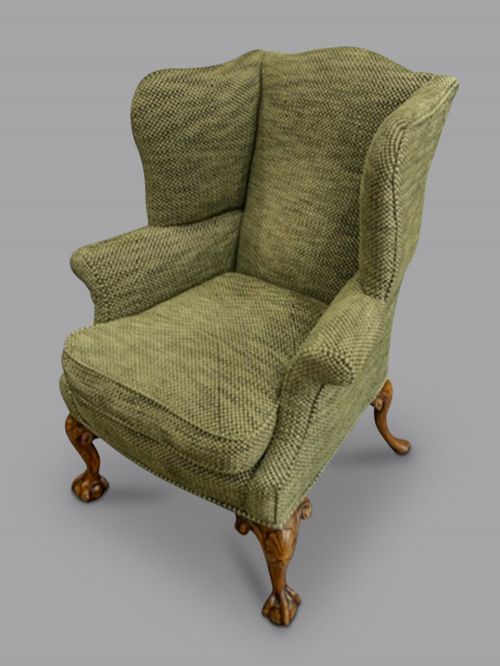
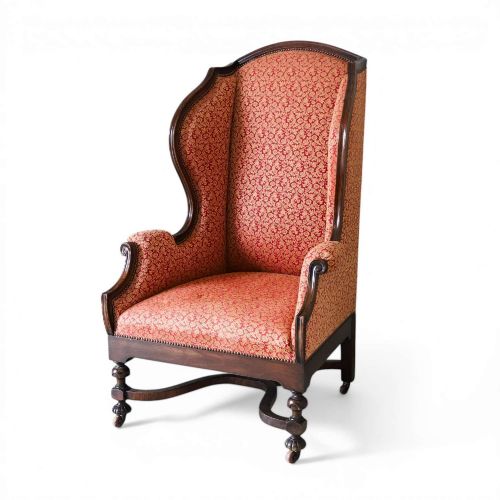
A carved walnut wing chair provides high-backed seating designed to shield the sitter from draughts while showcasing rich timber grain and carved details. These armchairs appear in various period interpretations across the inventory.
The version most likely to meet you on this page is a nineteenth-century example drawing inspiration from earlier Georgian or Queen Anne aesthetics. Walnut frames dominate the selection alongside assorted textile upholsteries.
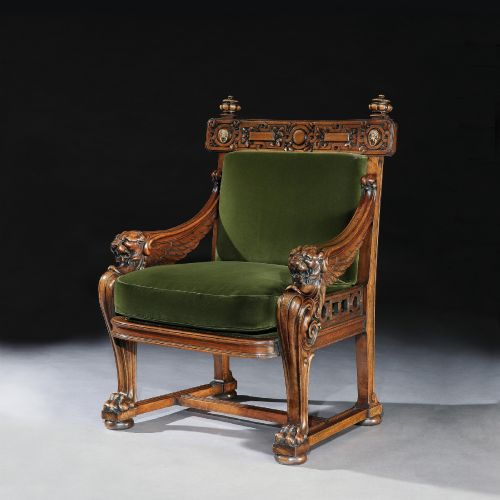
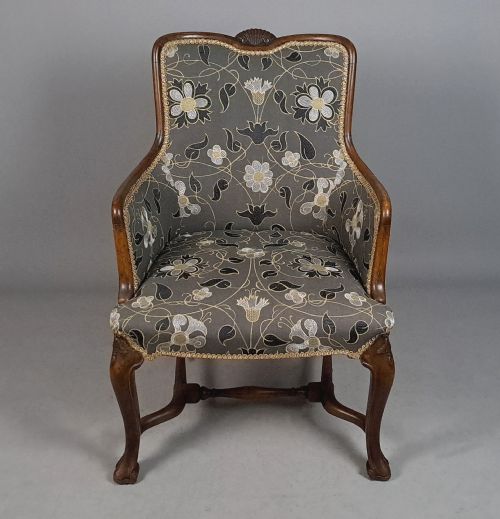
Makers shaped these seating options into distinct regional and revival forms, ranging from English cabriole leg designs to continental European variations. Each piece balances substantial wooden construction with fully padded seating areas.
What varies in quality
The refinement of the timber carving distinguishes the superior examples from standard workshop production. Crisp execution on cabriole legs, arms, and crest rails indicates skilled craftsmanship.
The choice and execution of upholstery materials also create distinction across the range. Original or historically appropriate textile choices maintain the integrity of period revivals more effectively than unsympathetic modern replacements.
Some chairs sport wings wide enough to gossip behind without the neighbours hearing a whisper.
Howard And Sons
The Carved Walnut Wing Chair Glossary
- Wing chair
- An armchair featuring side panels or wings designed to block draughts and retain fireplace heat. These upholstered seats often stand on carved wooden legs.
- Cabriole leg
- A furniture leg that curves outward at the knee and tapers inward toward the ankle, finishing in a pad or foot. This form frequently appears on eighteenth-century and revival seating.
- Damask
- A reversible figured fabric woven on a jacquard loom with patterns formed by contrasting warps and wefts. It appears frequently as upholstery on period armchairs.
- Monopodia
- A carved furniture support taking the form of a single animal leg and foot. The motif is associated with classical revival designs.
- Carolean style
- A decorative aesthetic reflecting the reign of King Charles II, characterised by rich wood carving and scrollwork. Revival versions appear frequently in later nineteenth-century seating.
Carved Walnut Wing Chair: Frequently Asked Questions
What periods do these chairs come from?
The selection spans from eighteenth-century originals through various nineteenth-century revivals up to pieces from the nineteen-twenties. Earlier examples sit alongside later interpretations built in historical styles.
Craftsmen across these eras adapted classic silhouettes like the Queen Anne and Georgian forms while retaining traditional walnut construction.
How do I identify a revival piece?
Revival chairs often replicate earlier styles such as George II or Queen Anne designs while utilising nineteenth- or twentieth-century construction methods. Look closely at timber ageing and joinery techniques to date the frame.
Stylistic revivals were especially popular during the Victorian and Edwardian periods when makers drew heavily on historic forms.
What upholstery materials are used?
Listings feature textiles such as damask, velvet, leather, and standard woven fabrics. Some pieces retain historic coverings while others require re-upholstery.
Leather and heavy textiles were commonly chosen to complement the dark tones of the carved walnut frames.
How do these chairs fit into modern rooms?
Their substantial high-backed profiles make them practical as fireside seating or reading chairs. The classic wooden frames and neutral or patterned upholstery blend easily with traditional and eclectic interiors.
Placing them in a living space introduces architectural interest through exposed walnut legs and carved details.