


Vintage Velvet Easy Chair
A vintage velvet easy chair offers deep comfort and traditional presence, combining tactile pile with classic seating forms.
Vintage Velvet Easy Chair
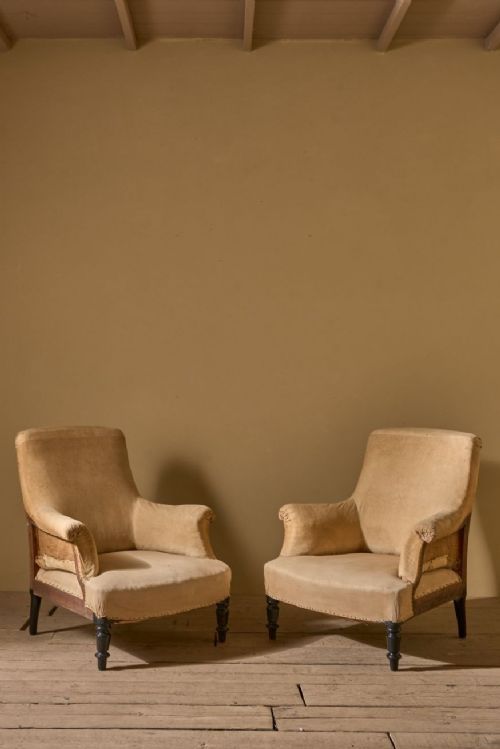
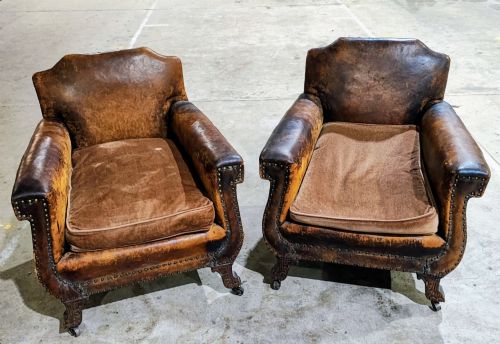
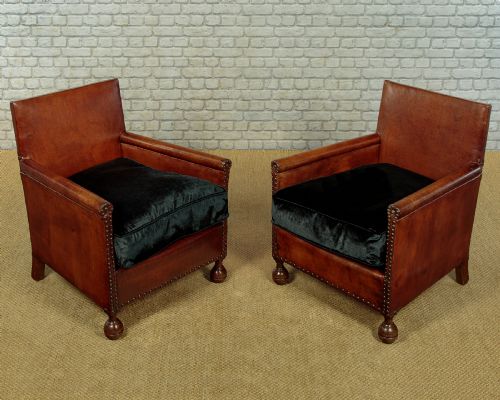
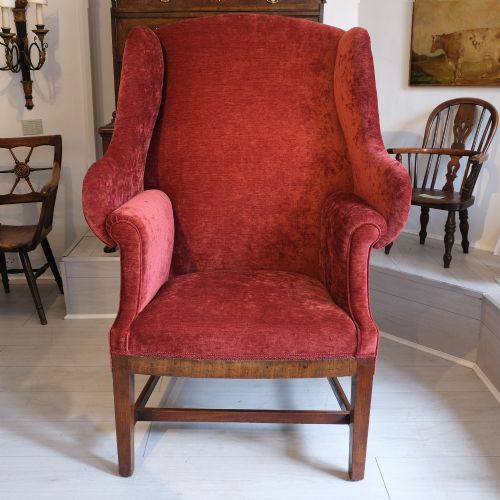
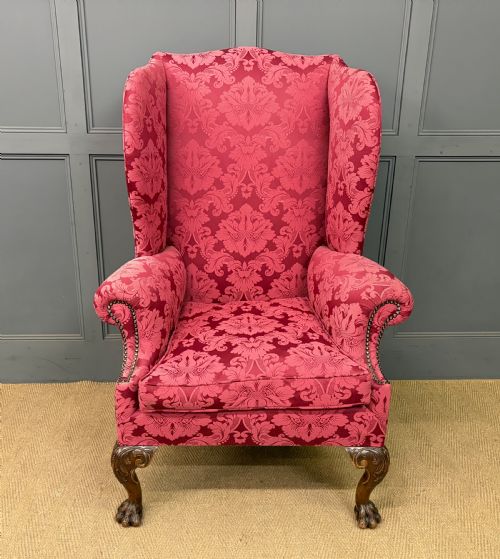
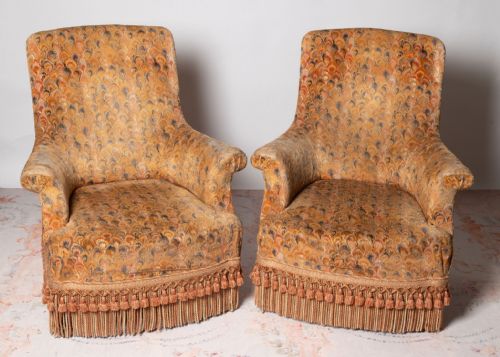
A vintage velvet easy chair brings together period seating forms and soft pile upholstery, spanning styles from Victorian and Edwardian to 1930s designs. You will frequently encounter wingback armchairs, club chairs, and open armchairs finished in velvet.
The selection ranges across the nineteenth century, the Edwardian era, and the 1930s, utilising timber frames beneath upholstered bodies. These pieces serve as functional seating with distinct historical character for a room.
How they were made
Makers constructed the underlying frames using timber, mahogany, walnut, and hardwood, often supporting sprung interiors and padded upholstery. The visible woodwork was polished or left natural depending on the period style.
Outer coverings of velvet and cotton enclose the padding, sometimes complemented by brass details or leather elements. Traditional joinery and hand-tack upholstery methods secured the materials to the wooden skeletons.
Some chairs spent a century hiding under plain cotton before someone finally unleashed their inner pink velvet.
What varies in quality
The density and weight of the timber frame establish the foundational integrity of the seating, with dense hardwoods providing greater stability. Superior examples demonstrate substantial scale and robust internal construction.
The depth and pile density of the velvet covering, alongside the precision of the upholstery work, define the tactile finish. Finer pieces retain well-balanced proportions and well-executed stylistic details consistent with their era.
Howard and Sons
The Vintage Velvet Easy Chair Glossary
- Wingback armchair
- An upholstered seat featuring protective side panels attached to the backrest to block draughts. This form appears frequently across nineteenth and early twentieth-century listings.
- Club chair
- A deep, low-slung upholstered seat designed for relaxation, often associated with traditional club rooms. These chairs use supportive sprung seats and padded arms.
- Napoleon III style
- A nineteenth-century French design influence characterised by ornate frames and upholstered comfort. Pieces in this style often use plain or shaped wooden elements.
- Open armchair
- A seat featuring exposed wooden arms without full upholstery coverage along the sides. These pieces highlight the craftsmanship of the timber frame.
- Hardwood
- Dense timber derived from broad-leaved trees, utilised for structural frames to ensure longevity. Walnut and mahogany are prominent examples found in these pieces.
Vintage Velvet Easy Chair: Frequently Asked Questions
What periods do these armchairs come from?
The listings encompass items originating from the nineteenth century, the Edwardian period, and the 1930s. These eras represent distinct shifts in domestic seating design.
Craftsmen during these times utilised traditional timber framing and textile upholstery to build durable seating for parlours and libraries.
What woods are used in the frames?
Makers constructed the internal frames and visible legs using timber, walnut, mahogany, and general hardwood. These materials provided the structural strength required for heavy daily use.
Visible woodwork is often polished to highlight the natural grain beneath the upholstered body.
Where were these armchairs used?
These seating pieces typically furnished traditional country houses, drawing rooms, libraries, and studies. Their robust construction and padded upholstery suited spaces dedicated to reading and rest.
Over time, they transitioned into general living spaces while retaining their period architectural forms.