

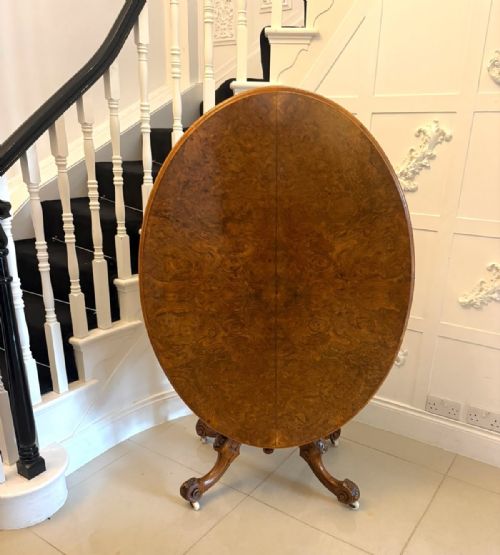
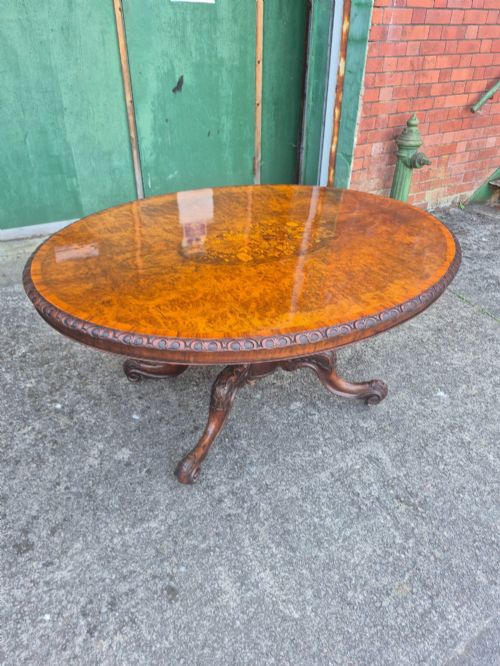
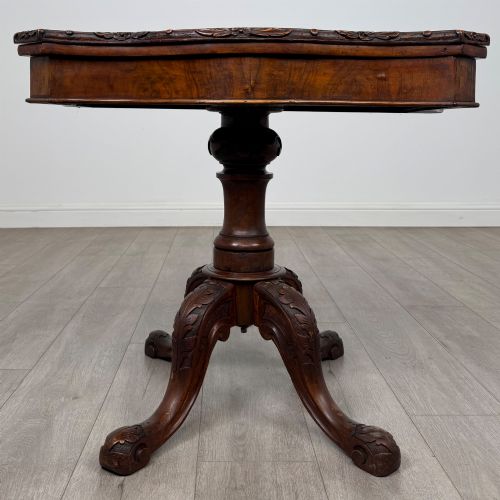
Carved Walnut Tilt Top
Carved walnut tilt top tables combine practical ingenuity with rich timber figures, offering flexible surface space and period elegance for modern rooms.
Carved Walnut Tilt Top
When you search for carved walnut tilt top, you are looking at tables designed to pivot their tabletops into a vertical position when not in use. These pieces include loo tables, breakfast tables, and occasional tables spanning Georgian, William IV, and Victorian periods.
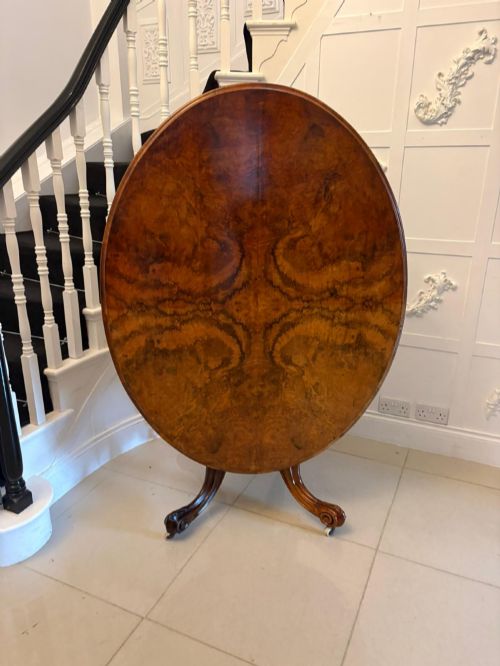
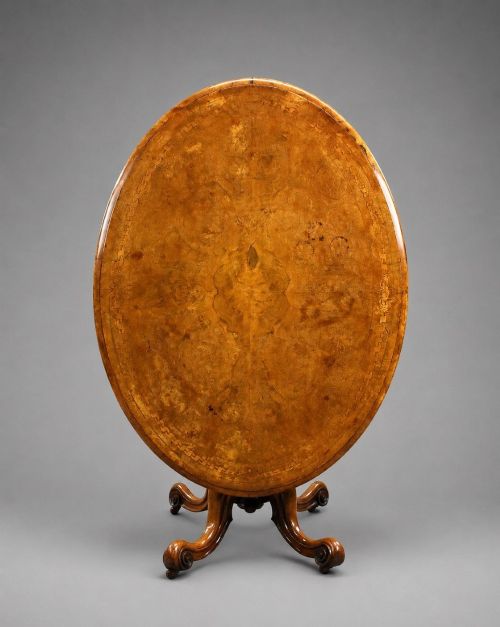
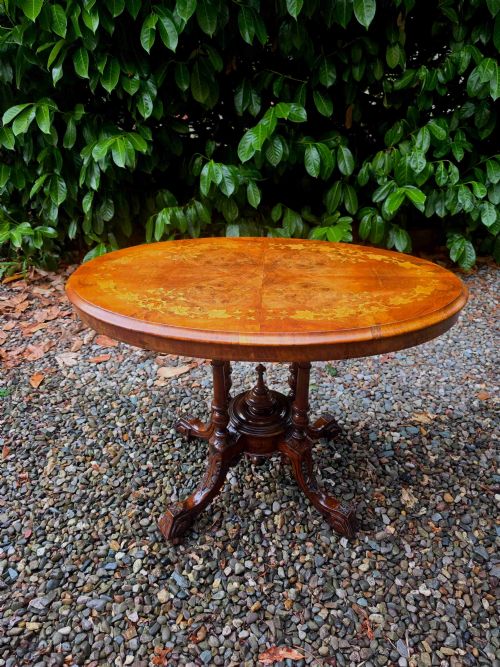
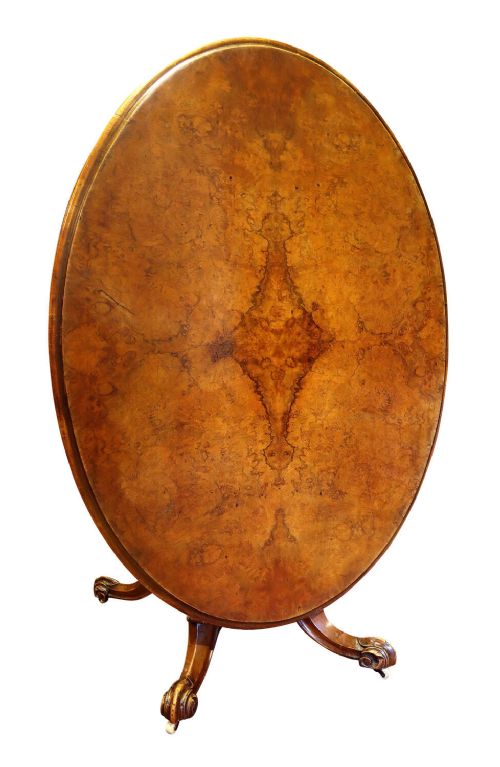
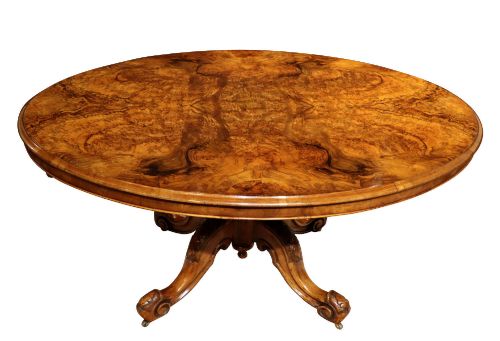
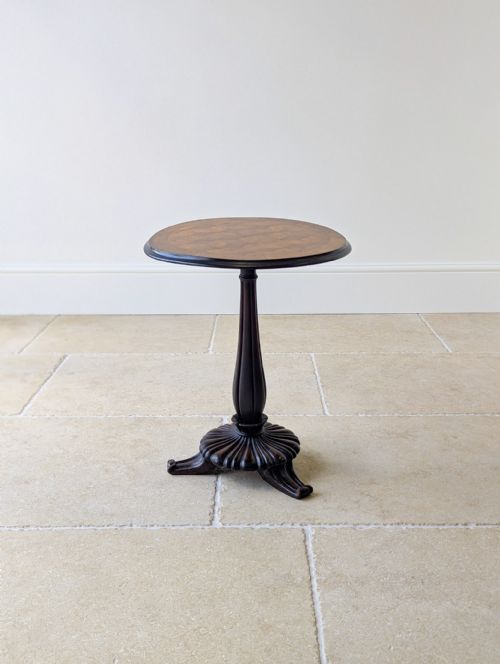
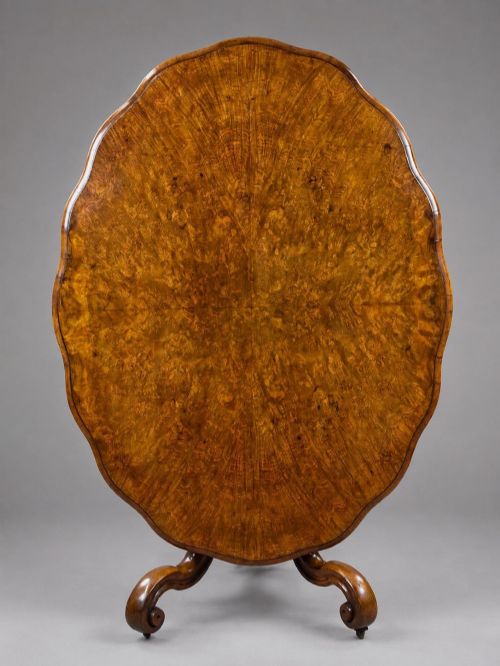
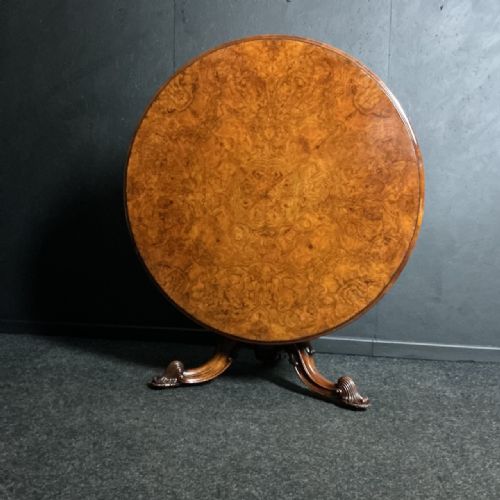
The version you are most likely to meet on this page is the Victorian burr walnut oval or round table, often supported by a carved pedestal base. These tables originate from nineteenth-century workshops and demonstrate diverse forms such as wine tables, side tables, and larger dining formats.
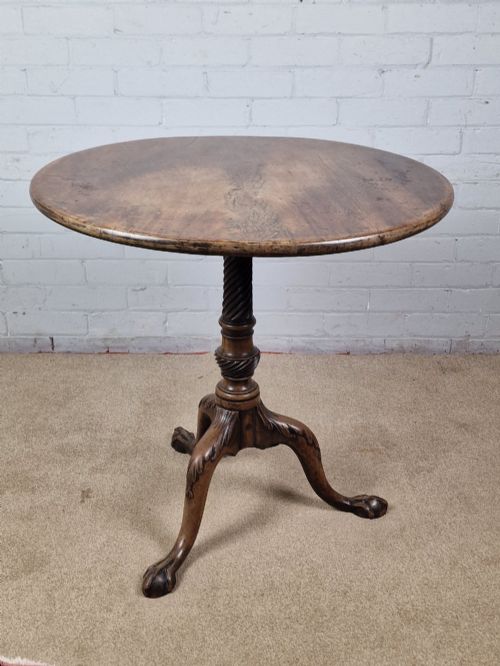
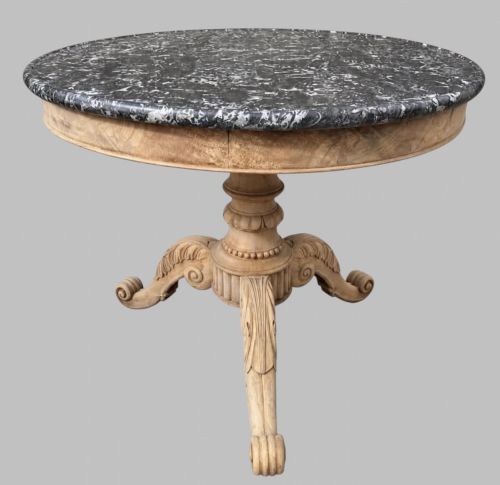
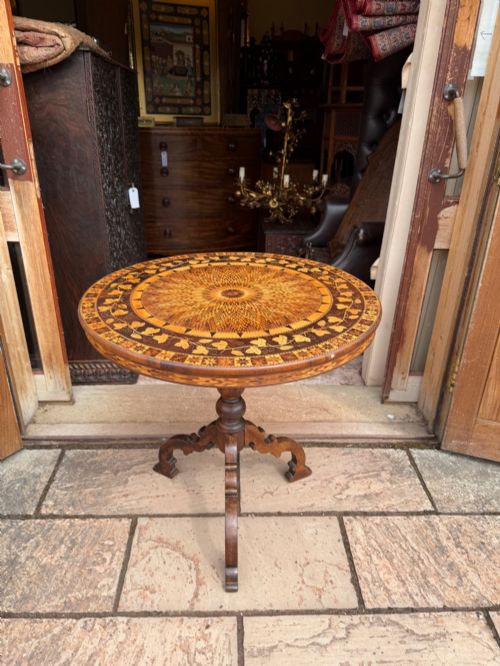
Makers utilised various regional interpretations, from Irish eighteenth-century examples to French bleached gueridon pieces and Italian Sorrento or Swiss Black Forest variants. The overriding characteristic is the combination of walnut timber with a tilting mechanism and carved wooden supports.
How they were made
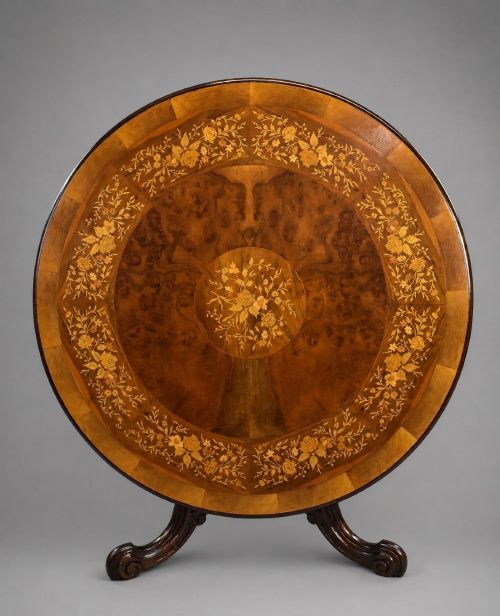
Cabinet makers constructed these tables primarily from solid walnut and burr walnut veneers, selecting timber for its dramatic grain patterns and figuring. They frequently enhanced the surfaces with marquetry inlay, boxwood inlay, and wood inlay, sometimes combining walnut with mahogany.
Structural elements incorporated brass fittings and carved wooden pedestals, such as quadrapod bases or tripod supports. Artisans carved floral decoration and structural details by hand, attaching the tops to pivoting mechanisms that allowed the surface to snap or tilt flat.
Swiss Black Forest carvers occasionally added wonderfully fierce wooden bears to support these tables, proving that Victorian tea time required a touch of alpine drama.
What varies in quality
The standard of craftsmanship rests heavily on the selection of the burr walnut veneer and the intricacy of the marquetry and boxwood inlay. Tables displaying crisp, deep hand-carving on the pedestal and base generally represent higher tiers of nineteenth-century production.
Proportion and stability during the tilt action also distinguish finer examples from standard production pieces. The integration of secondary woods, brass components, and the crispness of inlaid motifs further separate average tables from exceptional ones.
The Carved Walnut Tilt Top Glossary
- Burr walnut
- A type of wood taken from the wart or growth on a walnut tree, yielding highly figured and swirled grain patterns. Cabinet makers prized this veneer for tabletops.
- Loo table
- A large round or oval nineteenth-century table originally designed for the card game loo. These tables almost universally featured tilt-top mechanisms to save space.
- Marquetry
- Decorative inlay work using various tinted woods to form pictorial or geometric patterns on the surface. It appears frequently on Victorian table tops.
- Snap top
- An alternative term for tilt top, referring to the mechanism that locks the horizontal surface firmly into place. A spring or catch secures the table when lowered.
- Quadrapod
- A four-legged pedestal base supporting the central column of larger tables. This configuration provided stability for heavy oval breakfast and dining formats.
Carved Walnut Tilt Top: Frequently Asked Questions
What is a tilt top table used for?
These tables served primarily as versatile centre, breakfast, or dining surfaces in nineteenth-century homes. The tilting mechanism allowed the top to fold flat against the pedestal, making the furniture easy to store against a wall when not in use.
Today, they function effectively as occasional, lamp, or coffee tables in living spaces. Their dual nature offers both display surface and space-saving utility.
How do I identify a Victorian walnut table?
Victorian walnut tables generally exhibit rich burr walnut veneers, dark warm tones, and substantial pedestals with carved decoration. Stylistic markers include oval or round tops, occasional marquetry inlay, and tripod or quadrapod bases.
Examining the construction methods, secondary timbers underneath, and hand-carved details helps distinguish genuine nineteenth-century output from later revival pieces.
How does the tilt top mechanism work?
The tabletop mounts onto a pivoting block connected to the central pedestal column via a hinge arrangement. A small brass catch or latch secures the surface in the horizontal position.
Releasing the catch allows the heavy wooden top to pivot ninety degrees into a vertical stance. This clever engineering enabled rooms to be cleared quickly after dining or entertaining.