
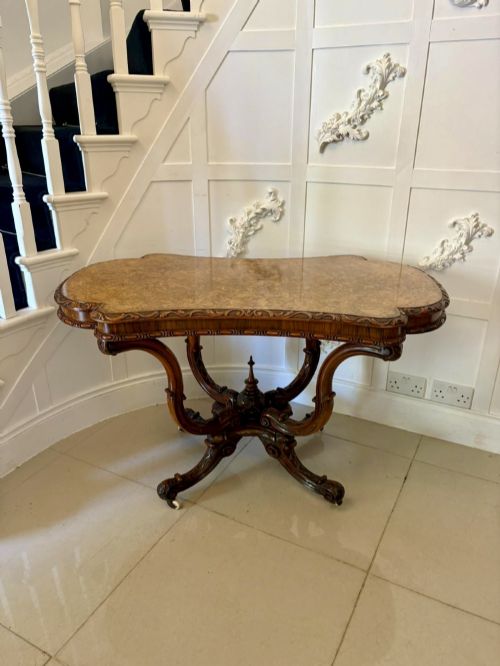
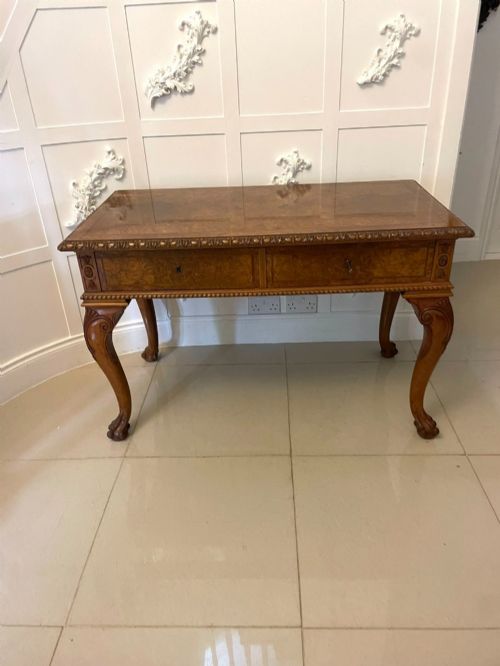
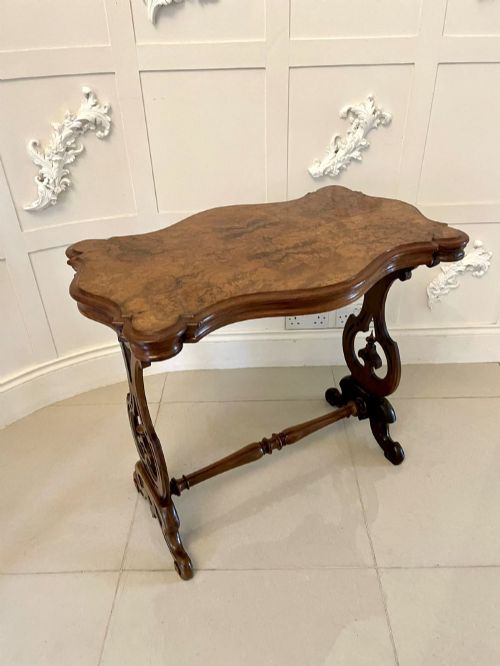
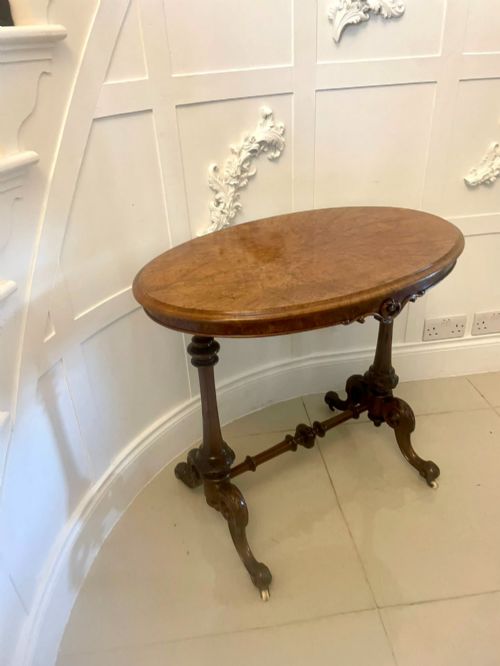

Carved Walnut Sofa Table
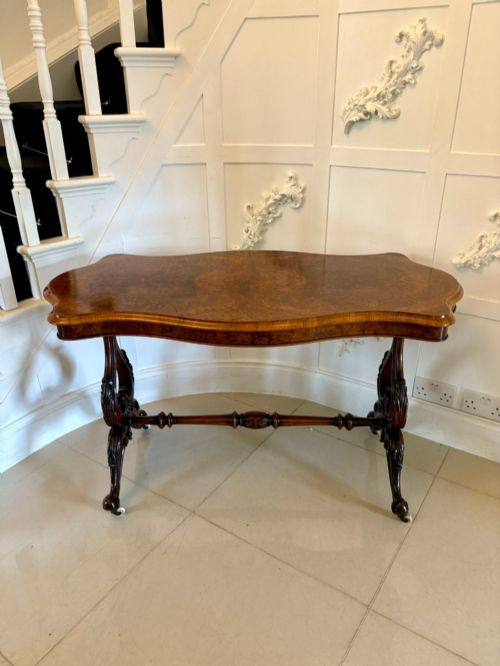
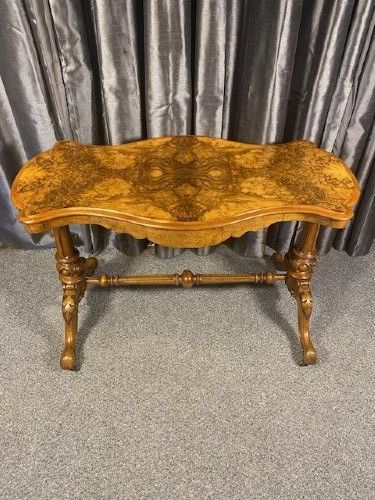
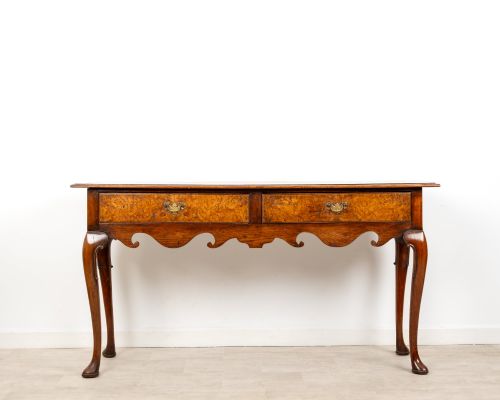
A carved walnut sofa table brings warmth and rich timber grain to a room, functioning as a versatile surface originating from the nineteenth and early twentieth centuries.
Carved Walnut Sofa Table
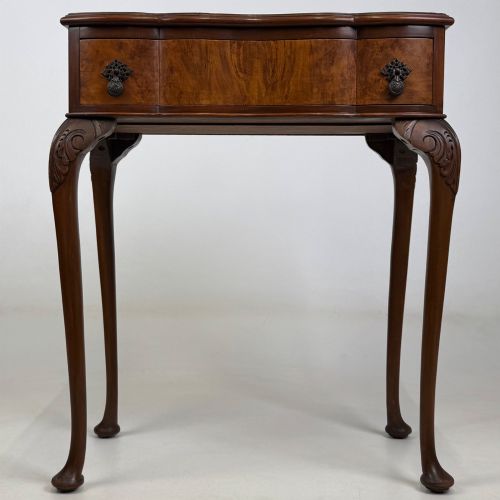
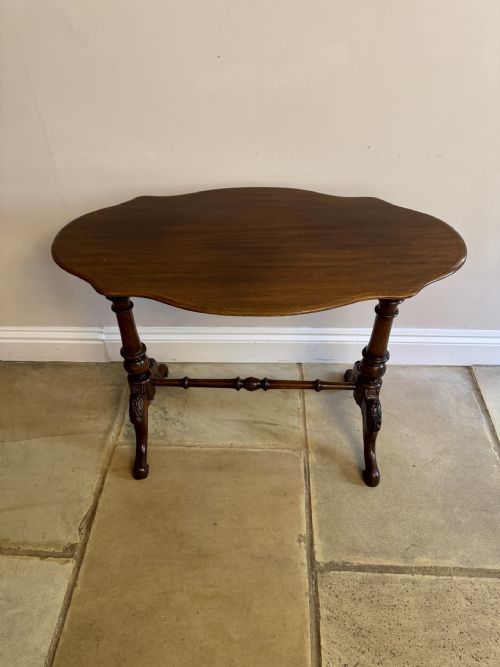
Victorian pieces dominate the available examples, often featuring burr walnut veneers, shaped tops, and elaborate carved details. Alongside these, early twentieth-century interpretations demonstrate the enduring popularity of walnut timber in domestic furniture.

How they were made
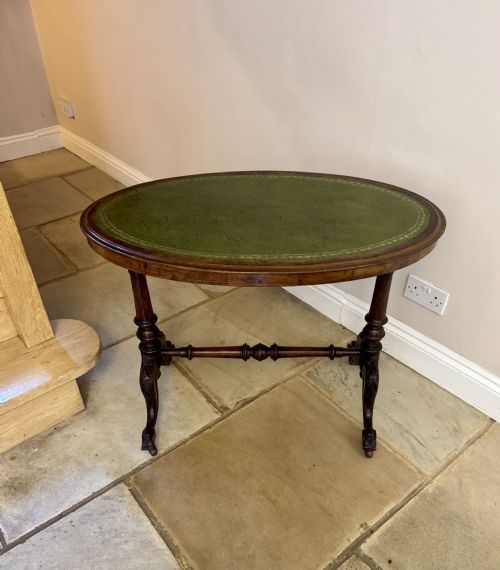
Cabinet makers utilised solid walnut and burr walnut veneers over secondary timbers, exploiting the rich, figured grain of the wood. Surfaces frequently incorporated decorative elements such as boxwood inlay, brass fittings, and leather inserts for writing tables.
Construction techniques combined traditional joinery with detailed hand-carving, particularly on pedestals, legs, and friezes. Ebonised wood and marquetry were also employed to add textural and visual contrast to the polished walnut surfaces.
Carved Walnut Sofa Table Retail Price Guide 2026
Typical asking prices for carved walnut sofa table among the pieces listed under this phrase on Sellingantiques today, from the lower quarter to the upper quarter. They describe what is for sale here now, not the wider market.
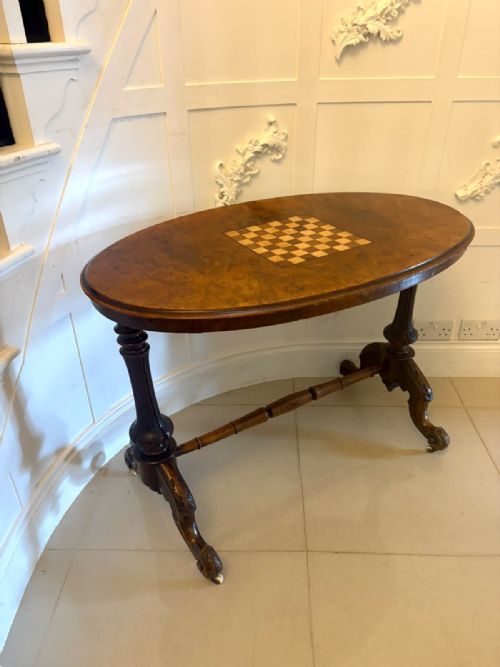
One exceptional Victorian centre table doubles as a chess board, proving that nineteenth-century drawing rooms took their board games very seriously indeed.
What varies in quality
The choice of timber grain significantly dictates the visual appeal, with highly figured burr walnut commanding attention through complex, swirling patterns. The crispness and depth of the hand-carving on the base and legs separate standard production from exceptional pieces.
Proportion and stability define the structural standard, as freestanding centre tables and console tables rely on balanced design and robust internal framing. Refined details, such as precise boxwood inlay and intact leather writing surfaces, elevate the overall execution.
The Carved Walnut Sofa Table Glossary
- Burr walnut
- A veneer sliced from the growth excrescences on a walnut tree, prized for its swirling, highly figured grain patterns. It is frequently seen on Victorian table tops.
- Marquetry
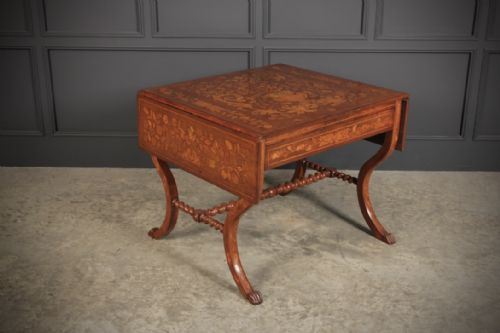
- The art of applying pieces of veneer to a structure to form decorative patterns and pictures. Dutch examples often display floral motifs in contrasting woods.
- Console table
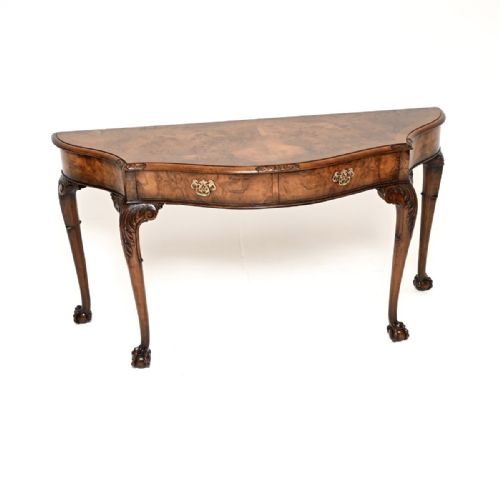
- A table designed to be fixed against a wall, frequently supported by ornamental brackets or carved legs. Many Edwardian and Victorian variants appear in hallways.
- Sutherland table
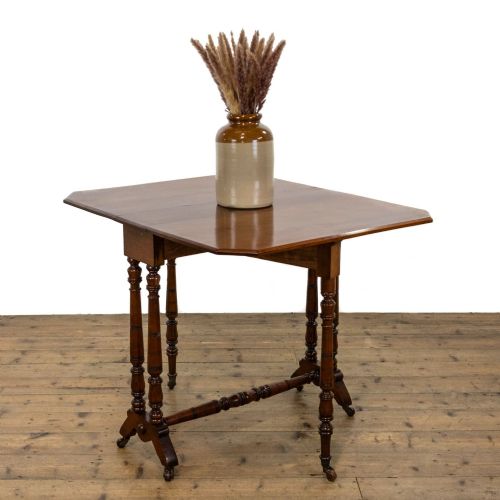
- A narrow drop-leaf table with hinged leaves that fold down almost vertically. This form provides a compact footprint when not in use.
- Ebonised wood
- Timber treated to resemble ebony, providing a deep black finish. It is often used to accent walnut furniture and carved mouldings.
Carved Walnut Sofa Table: Frequently Asked Questions
What is a walnut sofa table used for?
These tables traditionally stood behind a sofa or sat centrally in a room to hold lamps, books, or decorative objects. Writing tables and occasional variations also provided practical surfaces for correspondence and daily tasks.
Today, they function well as decorative display pieces or functional side tables in living spaces and hallways, bringing period character and warm timber tones to an interior.
How do I identify a Victorian walnut table?
Victorian walnut tables generally date from the mid-nineteenth century, exhibiting rich burr walnut veneers, substantial turned pedestals, and detailed hand-carving. Stylistic markers often include serpentine edges, shaped bases, and occasional boxwood inlay.
Later Edwardian and Queen Anne revival pieces from the early twentieth century often adopted similar forms and materials, making timber grain and construction methods key indicators of age.
Are these tables solid walnut?
Most pieces combine solid walnut for structural framing and legs with burr walnut veneers applied to the tops and drawer fronts. Veneering allowed cabinet makers to display the most striking and figured grain patterns available.
Secondary timbers were commonly used for interior framing and drawer linings, a standard practice in nineteenth-century cabinet making.
How do I care for antique walnut furniture?
Protect the polished timber surface by keeping the table away from direct sunlight and heat sources, which can dry out the wood and veneer. Regular dusting with a soft, dry cloth preserves the finish without building up residues.
Applying a traditional beeswax polish occasionally helps nourish the walnut grain and maintain its characteristic deep lustre over time.