

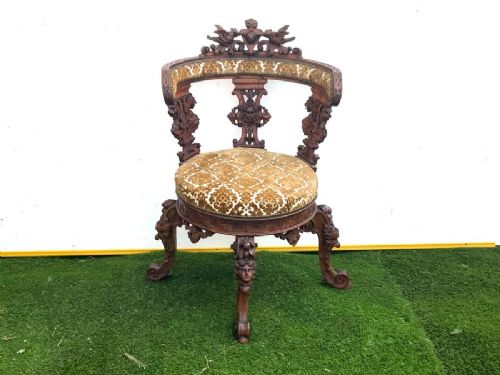
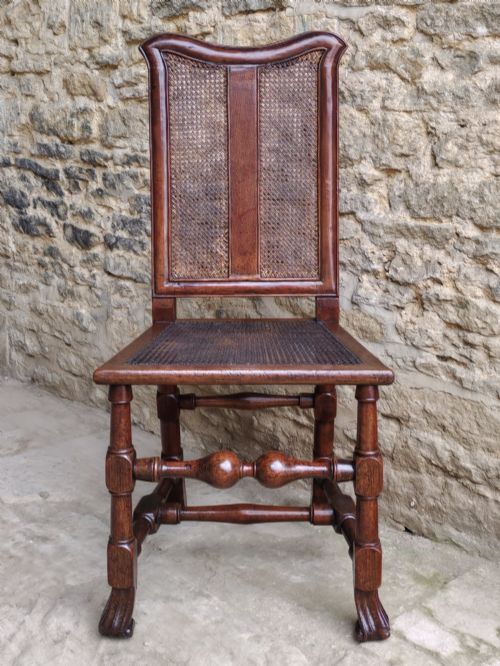
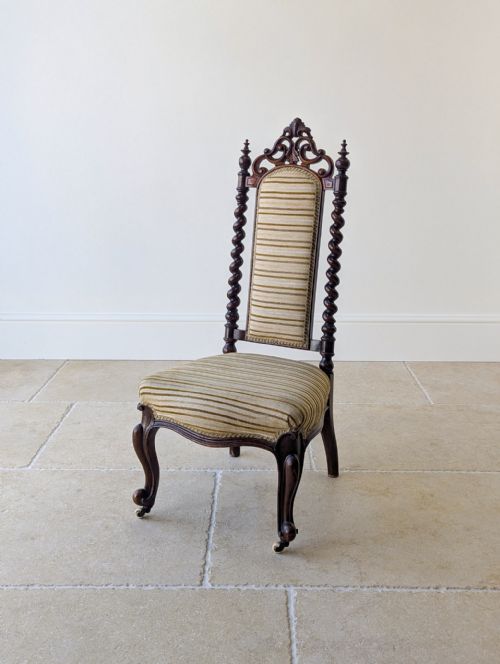
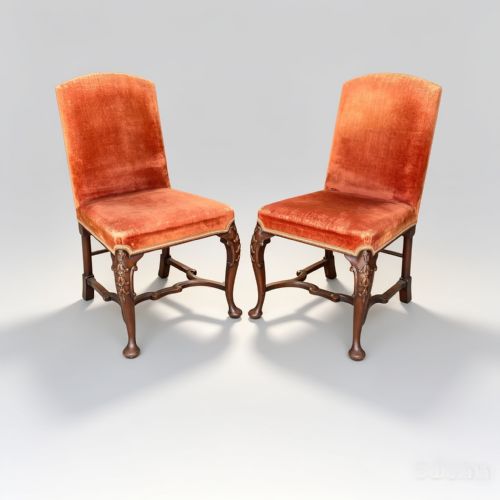
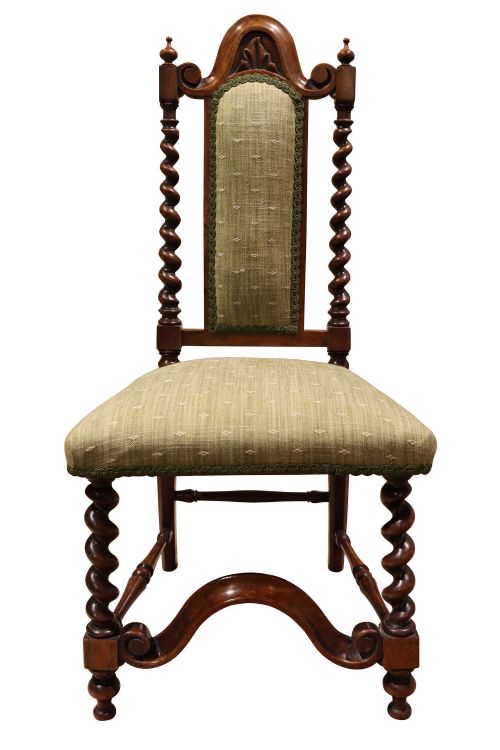
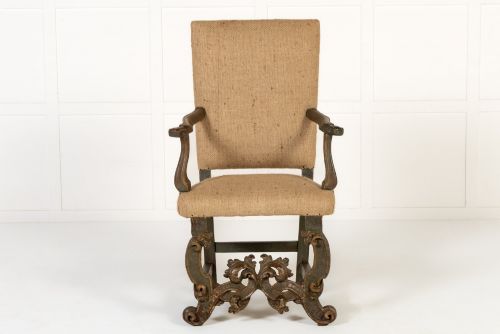
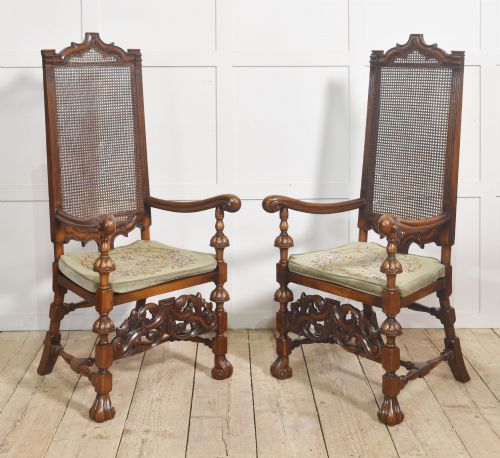
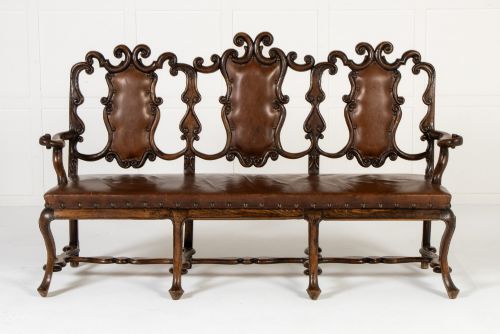

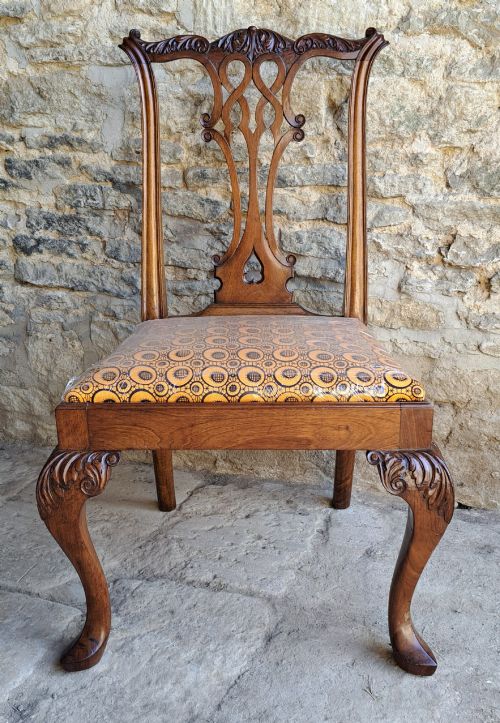

Carved Walnut Hall Chairs
Carved walnut hall chairs combine dense, figured timber with robust carving to serve as formal entrance seating.
Carved Walnut Hall Chairs
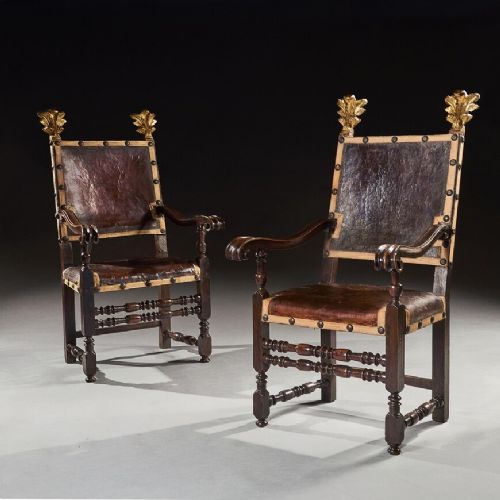
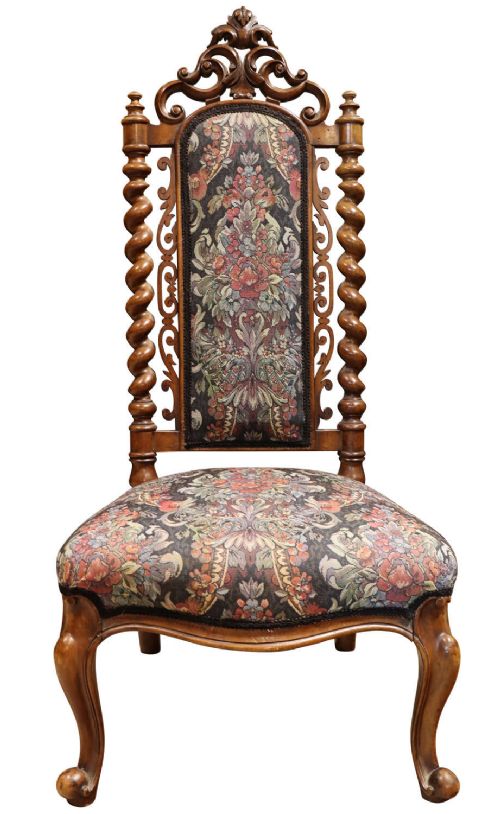
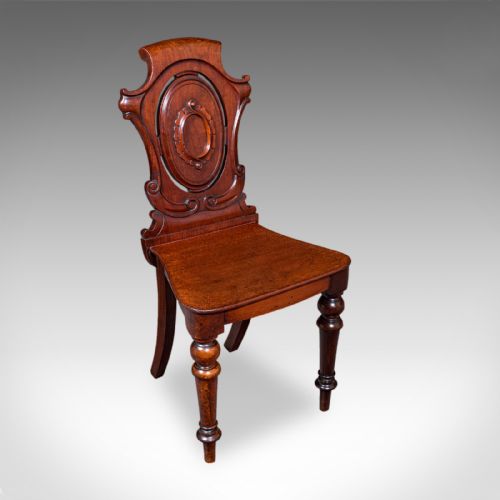
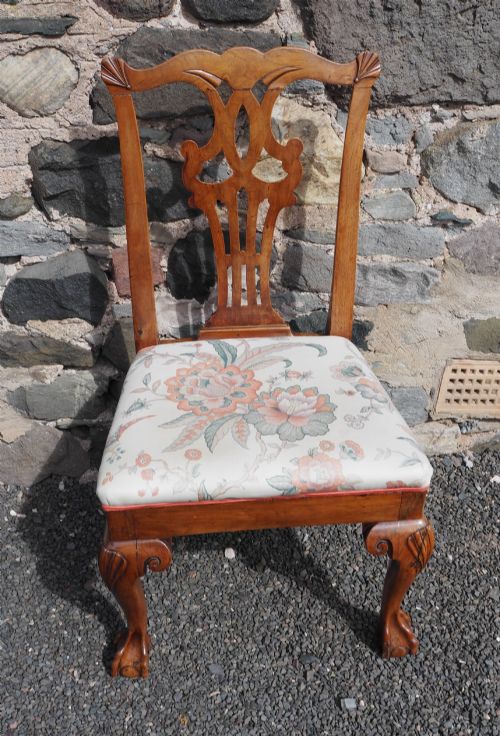
Carved walnut hall chairs are formal timber seats designed for entranceways and reception rooms, utilising dense hardwoods shaped with elaborate relief work. Buyers seeking these pieces encounter examples ranging from 17th-century Italian Baroque forms to 19th-century Victorian interpretations. The selection frequently includes side chairs and sgabello forms featuring high backs and rigid profiles.
The material palette relies heavily on solid walnut, sometimes paired with textile, cane, fabric, brass, velvet, tapestry, or leather inserts. English and continental workshops produced these seats across the 18th and 19th centuries, incorporating revival styles such as Carolean, Renaissance, and William & Mary. Many survivors emerge in pairs or small sets intended originally for grand hallways.
Materials and construction
Cabinetmakers utilised walnut for its rich grain patterns and tensile strength, which permitted deep chisel work without splintering. Timber framing often incorporated turned supports, barley twists, or pierced splats secured with traditional joinery.
Upholstered variants integrated textiles, leather, or tapestries fixed with brass tacks, whilst decorative iterations showcased bone inlay, parcel-gilding, or intricate marquetry panels.
Carved Walnut Hall Chairs Retail Price Guide 2026
Typical asking prices for carved walnut hall chairs among the pieces listed under this phrase on Sellingantiques today, from the lower quarter to the upper quarter. They describe what is for sale here now, not the wider market.
Assessing quality and execution
Quality rests in the crispness of the carved relief and the selection of figured walnut timber for primary visibility areas. Superior examples display balanced proportions, symmetrical joinery, and sculptural depth that remains sharp across high-stress points like crest rails and legs.
Lesser pieces rely on shallow surface stamping or soft secondary timbers disguised with dark stains. The integrity of the original joints and the retention of period upholstery elements further distinguish standard production from exceptional workshop output.
Charles Tozer·Waring & Gillow·Whytock & Reid of Edinburgh·Simpson and Sons, Halifax
The Carved Walnut Hall Chairs Glossary
- Walnut
- A hard, dark brown timber prized for its rich grain and suitability for intricate carving. It served as the primary material for high-status furniture across multiple European periods.
- Sgabello
- A type of Renaissance wooden chair featuring a box-like base or trestle supports and a carved back. These pieces often functioned as decorative hall seating in Italian palazzos.
- Barley twist
- A woodworking technique turning timber into a spiral rope shape. This decorative support column appeared frequently on 17th-century and Victorian chair legs.
- Pierced splat
- The central vertical strip of a chair back cut through to form an open design. Makers shaped these elements into shields, scrolls, or geometric patterns.
Carved Walnut Hall Chairs: Frequently Asked Questions
Where should I place a carved walnut hall chair?
These chairs suit entrance halls, landings, and reception rooms where their decorative backs and rigid posture command attention without crowding the floor.
Because they were built for formal display rather than lounging, pairing one with a small console table creates a traditional focal point.
How do I care for antique walnut timber?
Maintain walnut surfaces by dusting with a soft cloth and avoiding direct sunlight or intense heat sources that dry the wood.
Applying a microcrystalline wax occasionally protects the finish and preserves the natural lustre of the grain.
Are these chairs comfortable for daily seating?
Historic hall chairs prioritised upright posture and heraldic display over ergonomic comfort, featuring rigid wooden or lightly padded backs.
Unupholstered timber seats function best as accent pieces or occasional perches rather than task seating.
How do I distinguish 17th-century pieces from later revivals?
Early pieces exhibit tool marks, pegged joinery, and oxidation consistent with age, whereas revival items from the 19th century often display machine-sawn elements.
Stylistic markers like Carolean scrolls or Baroque carvings were heavily replicated during the Victorian era.