




Restoration Style Armchairs
Restoration style armchairs bring heavy carved timber and high-backed seating into a room, channelling seventeenth-century grandeur through later revival workmanship.
Restoration Style Armchairs
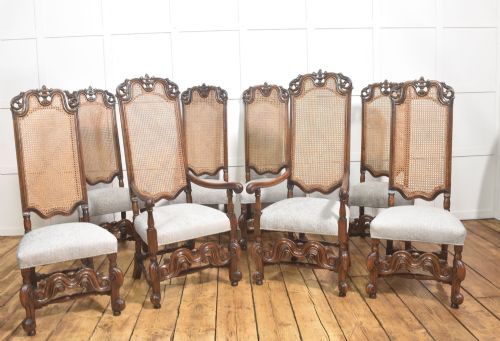
Restoration style armchairs encompass seating that echoes the opulent tastes of the seventeenth century, drawing heavily on Carolean, Charles II, and Jacobean motifs. When searching for restoration style armchairs, buyers encounter a mix of genuine seventeenth-century survivals alongside nineteenth-century revival pieces made during the Victorian era and up to the 1920s.
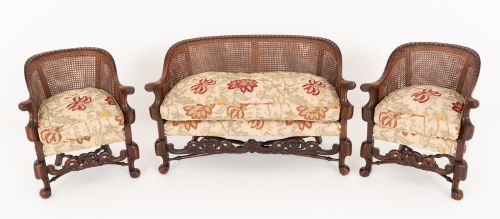
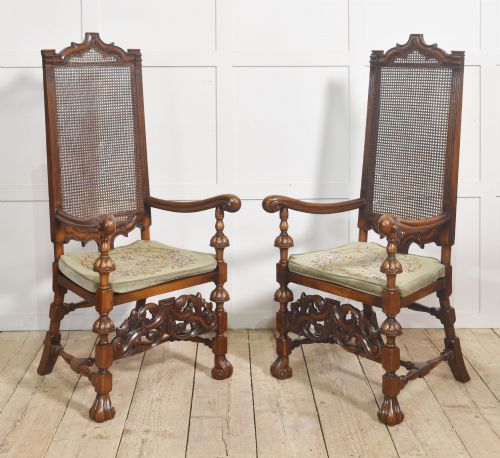
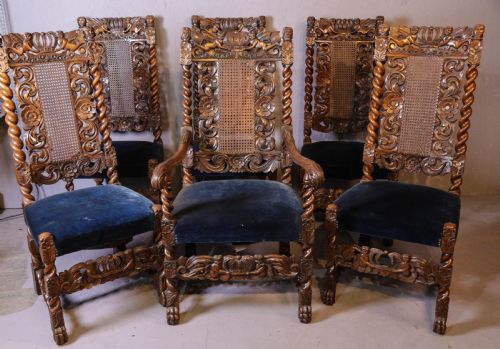
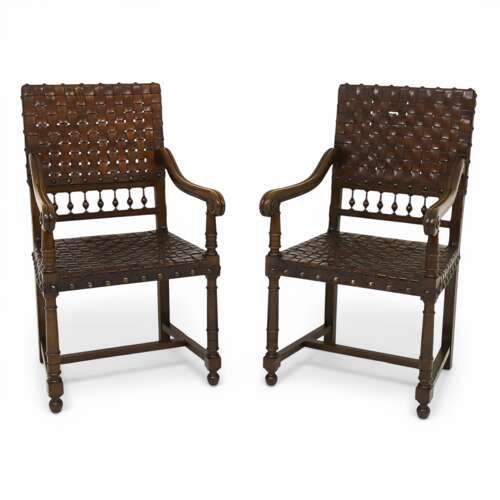
The form typically manifests as high-back dining chairs, imposing open armchairs, or low-slung bergere suites. Walnut and oak dominate the timber choices, often paired with cane panels, woven leather, or rich upholstery fabrics like velvet.
Materials and Making
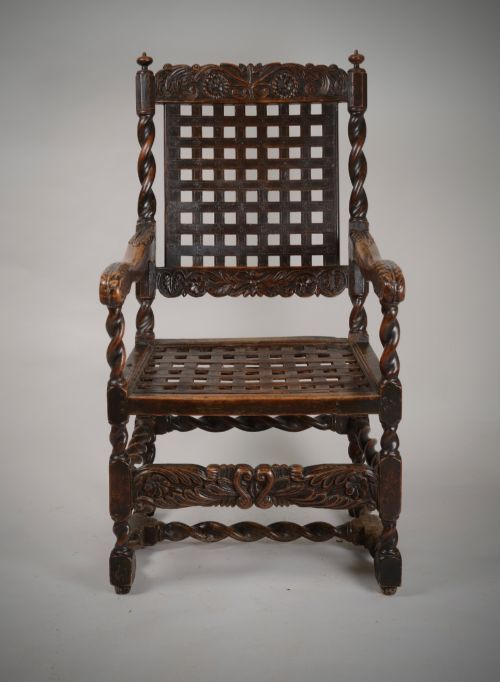
Carpenters shaped these chairs using dense hardwoods, primarily walnut and oak, which lent themselves to deep, ornate relief carving along the crest rails, stiles, and stretchers. Skilled hands utilised traditional joinery alongside intricate hand-weaving for cane panels and leather seats.
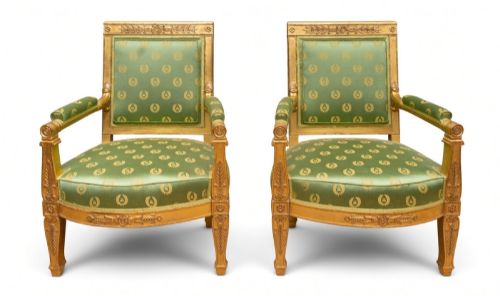
Giltwood appears on continental examples, while surface decoration ranges from plain polished timber to painted finishes and brass accents. Upholstery materials span from contemporary fabric to heavy velvet and leather, often secured with decorative brass tacks.
Restoration Style Armchairs Retail Price Guide 2026
Typical asking prices for restoration style armchairs among the pieces listed under this phrase on Sellingantiques today, from the lower quarter to the upper quarter. They describe what is for sale here now, not the wider market.
One chair even carries hints of an American journey, proving that seventeenth-century style travelled far beyond British shores.
Quality and Construction
The depth and crispness of the timber carving separate standard revival pieces from superior examples, as does the selection of figured walnut or solid oak. Sharp, undercut details in scrollwork and foliage indicate superior workmanship compared to soft, shallow moulding.
Structural integrity depends on the tightness of the joints and the preservation of the original framework, whether dealing with cane backrests or upholstered frames. The harmony between the timber frame and the chosen covering also dictates the overall standard.
Jacob Desmalter·Howard and Sons
The Restoration Style Armchairs Glossary
- Carolean
- Pertaining to the reign of Charles II, characterised by lavishly carved woodwork, cane panels, and scrolling motifs. This aesthetic forms the backbone of the restoration style.
- Bergere
- An enclosed upholstered armchair with wooden framing exposed around the sides and back. These often appear in suites within the evidence.
- Cane
- Strips of rattan woven into an open mesh pattern to form seats and backrests. It provides a lightweight yet sturdy panel within heavy timber frames.
- Scroll arm
- An armrest shaped into an outward or inward-curling spiral terminal. This sculptural feature frequently appears on seventeenth-century style seating.
- Fauteuil
- An open-framed upholstered armchair with exposed wooden armrests originating in France. Examples in this style reflect continental neoclassical interpretations.
Restoration Style Armchairs: Frequently Asked Questions
How do I spot a true seventeenth-century piece?
Authentic seventeenth-century chairs show genuine timber shrinkage, hand-cut joinery marks, and surface wear consistent with centuries of use. Revival pieces from the nineteenth or twentieth centuries often utilise machine tooling and display uniform patination.
Examining the underside and interior joints reveals the construction methods typical of earlier periods versus later revival workshops.
Are these chairs comfortable for daily sitting?
Many high-back timber and cane chairs serve better as decorative accent pieces rather than lounging seats. Upholstered variants and bergere suites offer a softer sit suitable for living spaces.
Consider the upright posture demanded by high carved wooden backs when selecting seating for prolonged use.
How should I care for cane and leather?
Cane panels require occasional light dusting and hydration to prevent the rattan from becoming brittle and snapping. Woven leather benefits from gentle cleaning and leather balms to maintain flexibility.
Keeping these materials away from direct heat sources prevents warping and cracking in older timbers and organic inserts.
What defines the Carolean style?
Carolean design relies on rich carving, prominent crown and cherub motifs, and spiral-turned legs connected by decorative stretchers. Walnut is the preferred medium for displaying this intricate ornamentation.
This aesthetic arose following the restoration of the monarchy in sixteen-sixty, celebrating luxury and craftsmanship.