





Carolean Cane Back Armchairs
Carolean cane back armchairs bring seventeenth-century grandeur to a room, offering striking carved walnut and oak frames paired with woven seating.
Carolean Cane Back Armchairs
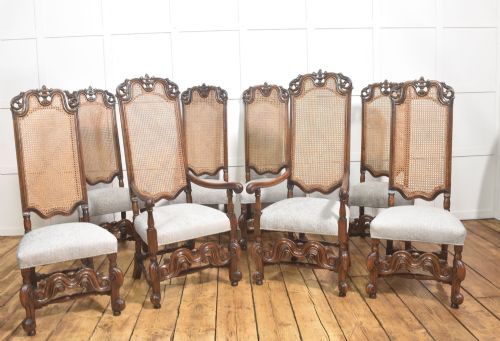
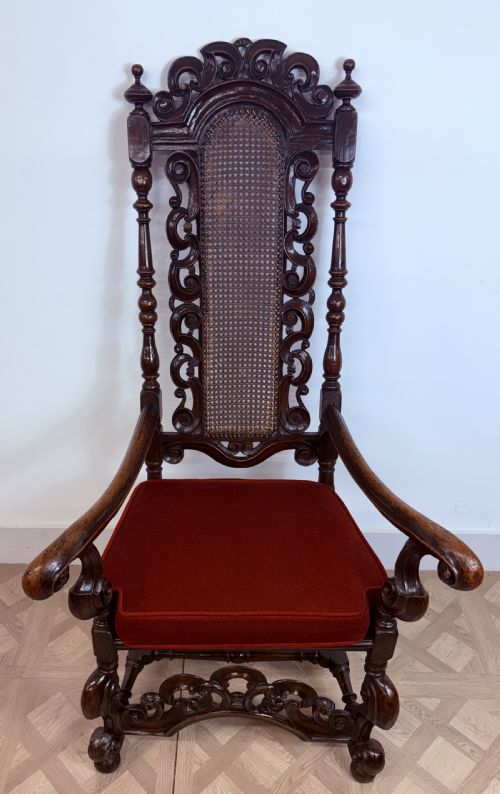
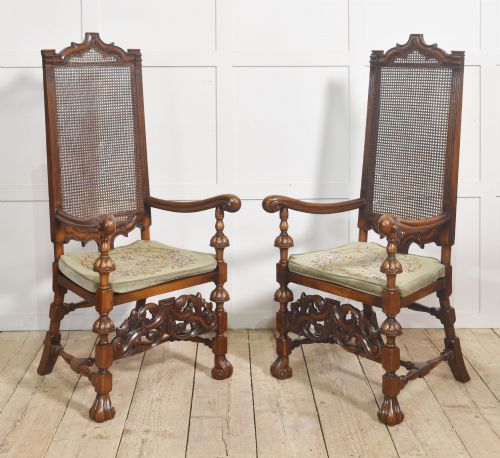
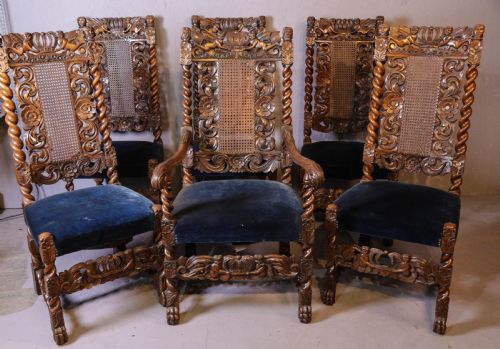
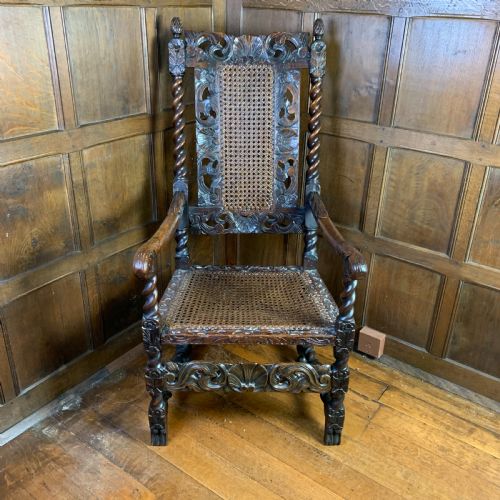
Carolean cane back armchairs are stately seating forms defined by their high backs, open arms, and intricate wooden frames. When exploring carolean cane back armchairs, buyers encounter original seventeenth-century examples alongside revival pieces produced across the Victorian and Edwardian eras.
Originating in the late seventeenth century during the Restoration period, these chairs reappear in later revival styles including Jacobean and Carolean taste. Most pieces available combine traditional craftsmanship with the robust proportions favoured by nineteenth and early twentieth-century makers.
How they were made
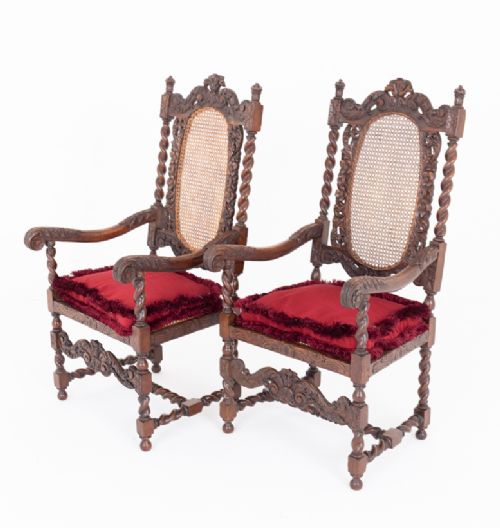
The primary structure relies on solid timber framing, predominantly walnut and oak, shaped through precise joinery and hand carving. Artisans fashioned deep relief ornamentation into the crest rails, stiles, and front legs.
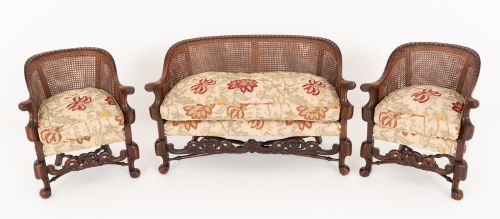
Backs and seats incorporate woven natural materials, utilising cane and rattan threaded through drilled frame apertures to form resilient support. Upholstered elements occasionally appear in velvet and woven fabric alongside the exposed cane panels.
Materials recorded across the selection include solid walnut, oak, woven cane, rattan, velvet, and various upholstery fabrics.
What varies in quality
Quality depends heavily on the depth and crispness of the wood carving, distinguishing master craftsmanship from simpler production. Heavily carved details display sharper definition and greater proportion in superior pieces.
The integrity of the woven cane work and the selection of timber dictate the overall standard. Sound walnut framing and tight, uniform caning elevate a piece above standard utilitarian examples.
The Carolean Cane Back Armchairs Glossary
- Carolean
- Pertaining to the reign of Charles II, marked by lavish baroque carving and the introduction of cane seating in English furniture. This aesthetic defines the Restoration period of the late seventeenth century.
- Cane
- Strips of peeled rattan woven into patterned mesh panels for chair backs and seats. This material provides both flexibility and ventilation.
- Crest rail
- The uppermost horizontal member of a chair back, frequently shaped and carved with scrolls, crowns, or foliage. It anchors the top of the frame.
- Stretcher
- A horizontal wooden brace connecting the legs of a chair for structural stability. On these chairs, they are often intricately turned or carved.
- Bergere
- An enclosed or open armchair featuring upholstered sides or woven cane panels within a wooden frame. These chairs prioritise comfortable lounging.
Carolean Cane Back Armchairs: Frequently Asked Questions
Are these chairs comfortable for daily use?
The upright stance and woven cane back provide firm support suited for formal seating or occasional sitting.
Adding a loose squab cushion to the seat softens the firm wooden base for longer periods of use.
How do I spot a seventeenth-century original?
Original pieces show period joinery techniques, distinct timber oxidation, and hand-cut elements beneath the frame.
Revival versions from later centuries often employ standardised machine cutting and different wood finishing methods.
Can damaged cane be repaired?
Skilled craftspeople can re-weave damaged cane panels by threading new rattan through the existing frame holes.
Traditional hand-caning requires patience to match the pattern and tension of the original surrounding mesh.
Where should I place these in a home?
Their strong vertical lines and carved woodwork make them striking focal points in a hallway or study.
Pairs function well beside a fireplace, while larger sets integrate naturally around a formal dining table.