




Carved Wooden Seating Suite
A carved wooden seating suite offers matching craftsmanship for formal rooms, bringing period character and substantial seating together in one purchase.
Carved Wooden Seating Suite
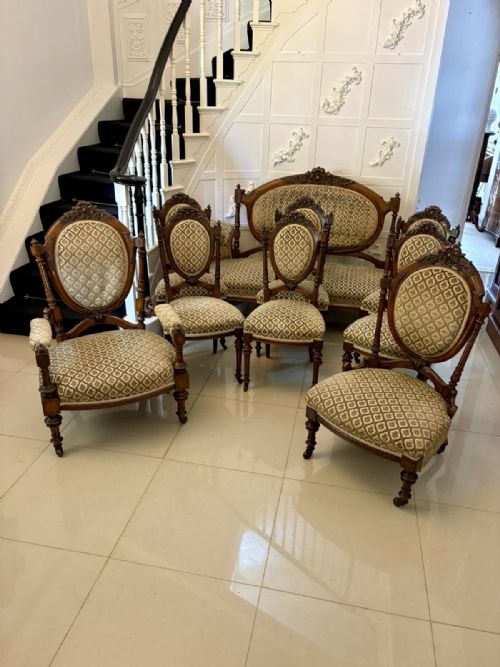
A carved wooden seating suite brings together matched chairs, benches, or settees to furnish formal spaces with cohesive period style. When searching for a carved wooden seating suite, buyers encounter everything from large Victorian walnut arrangements to dining chairs and conservatory groupings.
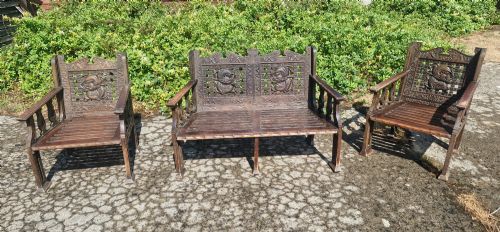
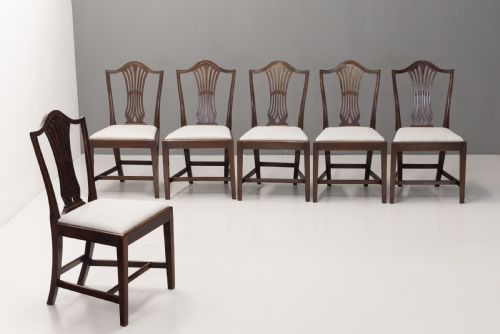
The selections span distinct periods and aesthetics, including Georgian mahogany designs, Carolean style pieces, and Chinese Qing Dynasty style benches. Sets range from smaller parlour groupings up to substantial dining and salon suites numbering nine or ten pieces.
Origins vary widely across the inventory, taking in Scottish workshops, English makers, Anglo-Indian commissions, and Burmese country house furniture. Buyers are most likely to meet Victorian and Georgian mahogany or walnut iterations alongside robust Arts and Crafts oak and exotic hardwoods.
How they were made
Construction relies heavily on dense timbers such as mahogany, walnut, teak, and oak, chosen for their structural strength and capacity to hold intricate hand-carved detail. Artisans shaped these hardwoods into robust frames for dining chairs, settees, and benches.
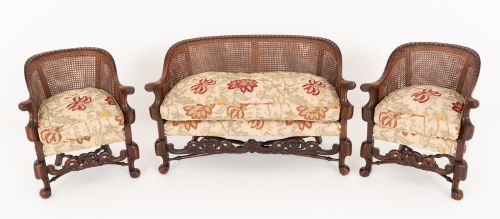
Surface embellishment often involves elaborate hand carving, seen in dragon motifs, balloon backs, and revival styles reflecting Carolean or Hepplewhite influences. Upholstery and seating surfaces incorporate traditional materials including fabric, woven cane, and occasionally brass or marble accents.
Some Burmese conservatory suites hide remarkably fierce dragons in their woodwork just to keep tea-time interesting.
What varies in quality
The distinction between standard commercial production and exhibition quality work lies in the depth and precision of the timber carving. Suites designated as exhibition quality display crisper detail, superior timber selection, and more ambitious stylistic forms across every chair in the set.
Completeness and scale also drive the standing of a suite, as larger sets of ten or nine matched pieces require greater consistency in timber ageing and construction. The integration of specialised regional or revival styles, from Chinese Qing Dynasty carving to Empire revival outlines, demands elevated joinery skills.
The Carved Wooden Seating Suite Glossary
- Carolean Style
- A late seventeenth-century aesthetic revived in later periods, characterised by rich carving, scrolling foliage, and open crest rails. It heavily influences Victorian interpretations of earlier seating.
- Bergere Suite
- A matching set featuring upholstered enclosed sides with cane or fabric panels. These pieces provide deep, comfortable seating within a formal wooden frame.
- Balloon Back
- A rounded, continuous backrest profile shaped like a balloon, highly popular on nineteenth-century dining chairs. This design offers ergonomic support while displaying figured mahogany grain.
- Settle
- A wooden bench featuring a high back to block draughts, often incorporating enclosed storage beneath the seat. Examples range from vernacular farmhouse seating to elaborate oriental hall benches.
- Hepplewhite Revival
- Furniture produced in the late nineteenth century replicating the light, elegant geometry and shield-back designs associated with the eighteenth-century designer George Hepplewhite.
Carved Wooden Seating Suite: Frequently Asked Questions
What is a carved wooden seating suite?
A carved wooden seating suite is a collection of matched chairs, settees, or benches designed to furnish a dining room, salon, or conservatory with uniform style.
These groupings ensure interior harmony through matching timber frames, consistent carving motifs, and coordinated upholstery.
How do I date a wooden seating suite?
Dating relies on identifying the underlying period style, such as Georgian, Victorian, or Arts and Crafts, alongside the choice of primary timber like mahogany or walnut.
Construction methods and the specific revival movement referenced in the carving also provide clear chronological markers for each piece.
Where were these seating suites used?
Larger suites were traditionally placed in formal dining rooms, grand halls, and expansive country house drawing rooms to accommodate guests during gatherings.
Smaller conservatory or parlour groupings served lighter social functions in specialised garden rooms and private reception spaces.
How should I care for antique wooden seating?
Antique wooden seating requires stable indoor humidity levels to prevent the timber from drying out and the hand-carved joints from loosening.
Regular dusting with a soft cloth and occasional gentle waxing preserve the polished finish without harming the historic wood.