



Traditional Bergere Chairs
Traditional bergere chairs are deep, Caned seat armchairs offering solid timber frames and graceful reclining postures.
Traditional Bergere Chairs
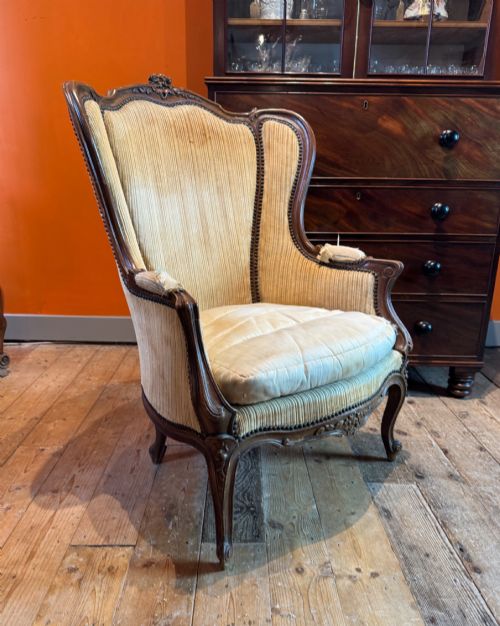
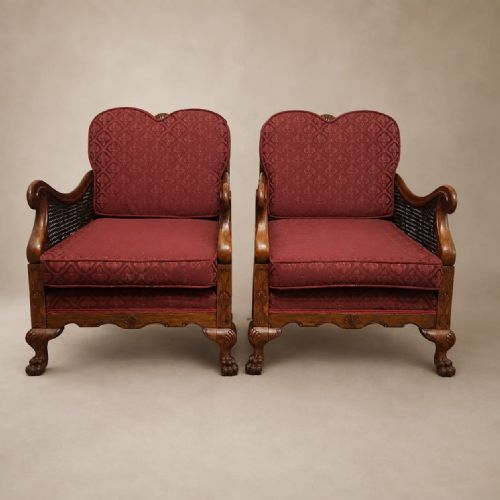
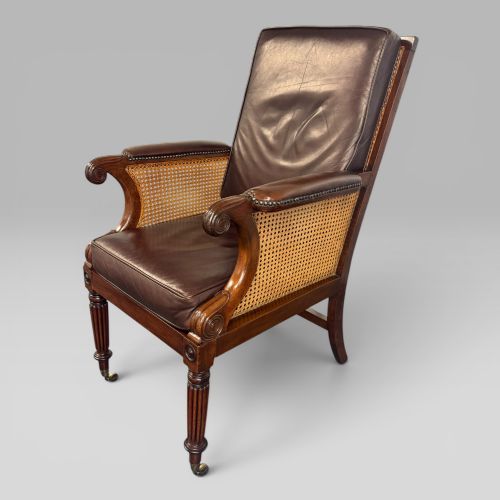
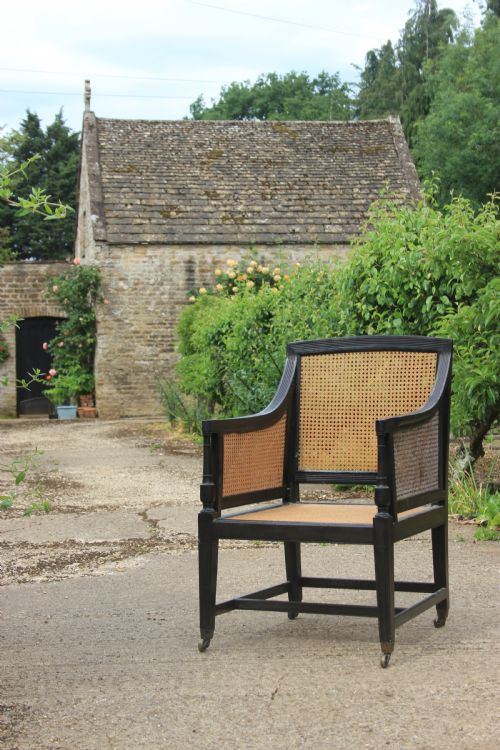
Traditional bergere chairs combine enclosed wooden frames with woven cane sides and seats, designed for comfortable library and drawing room seating. The pieces on this page span several eras, including Regency, Victorian, Edwardian, and the nineteen twenties French revival.
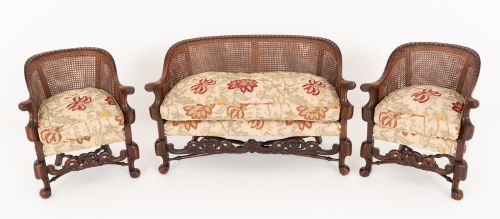
Most examples appear as single armchairs or matched pairs, constructed predominantly in mahogany and walnut. Occasional variations include seating suites, side chairs, and children's high chairs originating from the nineteenth and early twentieth centuries.
Construction and materials
Makers shaped structural frames primarily from solid mahogany and walnut, occasionally employing ebony or oak. Artisans integrated turned or carved wooden supports to bear the weight of the deep seated frames.
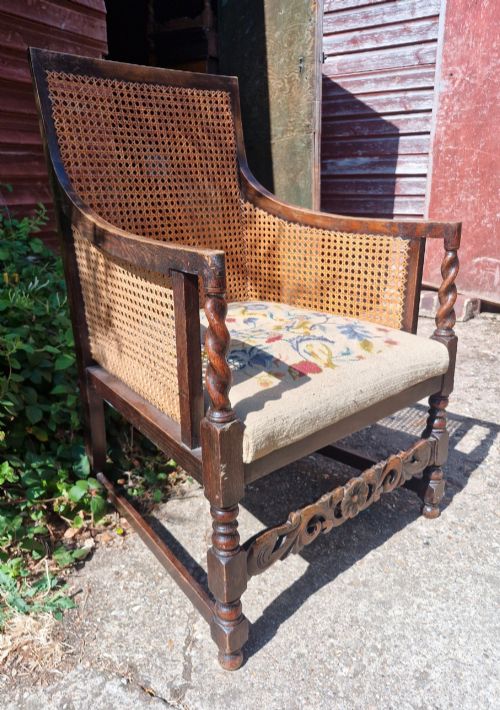
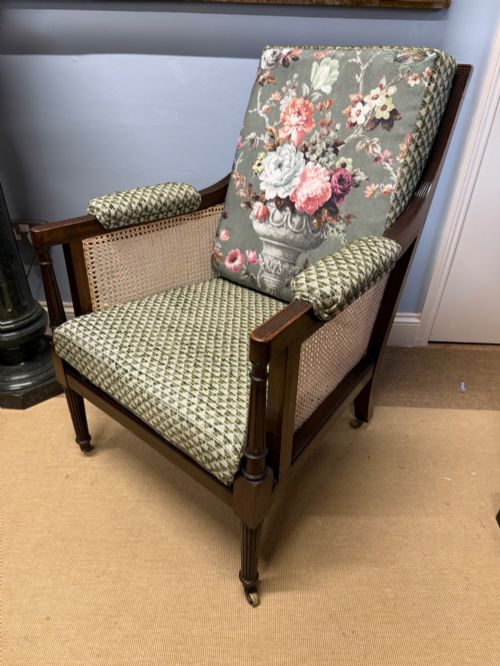
Panels of split cane formed the characteristic woven back and side enclosures, requiring skilled hand weaving techniques. Loose squab cushions upholstered in fabric, leather, or velvet completed the seating arrangement.
Listings feature mahogany as the predominant timber, alongside walnut, oak, and ebony across various historical periods.
Assessing craftsmanship and design
Quality rests in the crispness of the timber carving and the tightness of the frame joints. Substantial mahogany frames with refined details sit above simpler constructed alternatives.
The precision of the cane weaving and the selection of secondary timbers distinguish standard production from superior cabinet work. Integrated design elements such as lyre fronts or inlay elevate the visual execution.
The Traditional Bergere Chairs Glossary
- Bergere
- An enclosed upholstered armchair with wooden framing and cane panels. This form originated in France during the eighteenth century.
- Caning
- A woven lattice made from peeled rattan plant material used for chair seats and backs. It provides flexible and breathable support.
- Squab
- A loose, removable cushion placed on top of a chair seat. It is typically filled with traditional stuffings and covered in fabric or leather.
- Klismos
- An ancient Greek chair design characterised by curved legs and a concave backrest. This classical form reappeared during the Regency period.
Traditional Bergere Chairs: Frequently Asked Questions
What is a bergere chair?
A bergere chair is a traditional upholstered armchair featuring an enclosed wooden frame with cane sides and back panels. These seats are designed for deep, relaxed comfort.
Most examples date from the nineteenth and early twentieth centuries, utilising timbers like mahogany and walnut paired with woven rattan.
How do I care for cane panels?
Cane panels require gentle dusting and occasional light moisture to prevent the rattan fibres from becoming brittle. Keeping the chairs away from direct heat sources preserves the material.
Avoid pressing heavily against the centre of the cane panels when moving the chair to prevent stretching or breaking the strands.
Are these chairs comfortable for daily use?
These chairs offer deep seating proportions paired with a supportive angled backrest. The addition of a loose squab cushion provides extra softness for extended sitting.
Selecting a model with upholstered cushions in fabric or leather ensures a comfortable seating experience suitable for modern living rooms or libraries.
How do I date a traditional bergere chair?
Dating relies on examining the timber species, joinery methods, and stylistic details such as Regency curves or Edwardian inlay. Cabinet makers incorporated design traits specific to their working decades.
Comparing the turned leg profiles and arm shapes against known period examples helps establish the likely manufacturing era.