
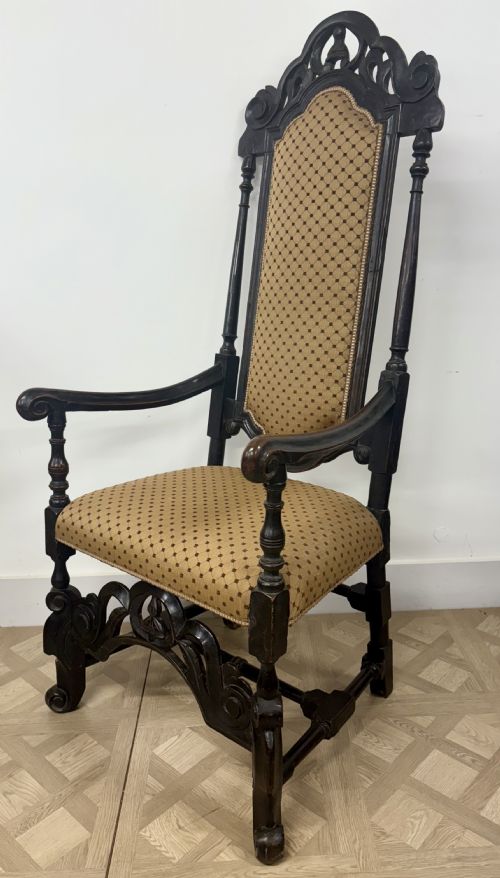
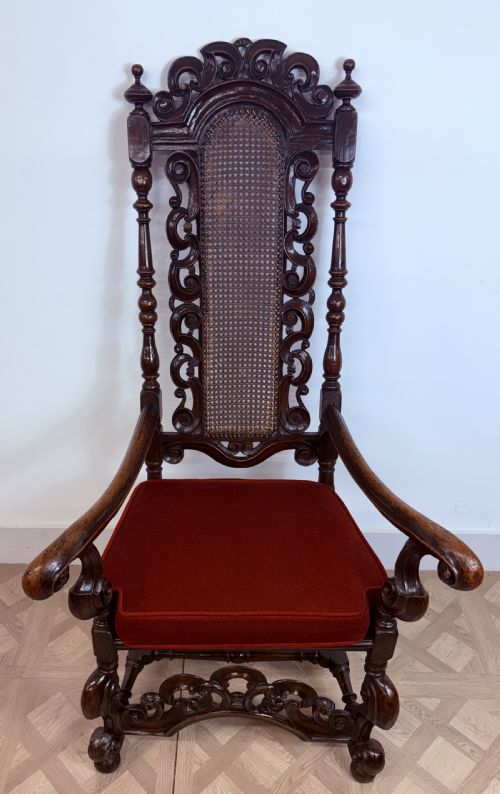
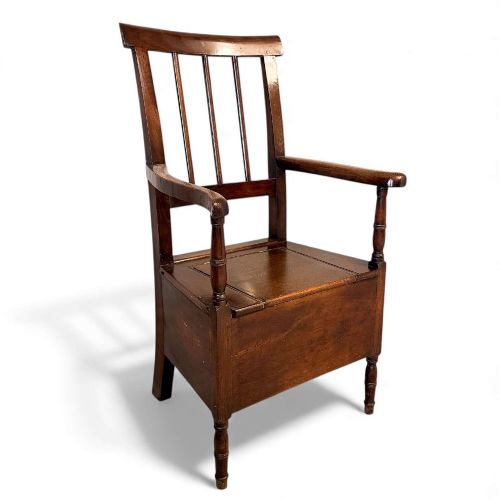
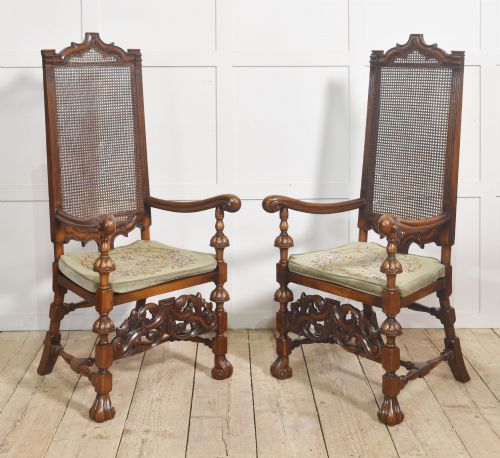


William and Mary Armchairs
William and Mary armchairs bring serious, sculptural presence to a room, offering high backs, rich timber, and early craftsmanship.
William and Mary Armchairs
William and Mary armchairs emerge from the late seventeenth century, bringing substantial timber forms and high vertical proportions to seating. When searching for william and mary armchairs, buyers encounter authentic period examples alongside later revival pieces produced in the nineteenth and early twentieth centuries.
The dominant material in these pieces is walnut, often accompanied by oak and complemented by cane, upholstery, velvet, and tapestry. Forms range from high-backed caned chairs to library chairs and commode chairs, reflecting the varied domestic requirements of the period and its later revivals.
Origin points span English workshops, alongside occasional pieces showing American influence or continental tastes such as the Carolean style. Buyers meet both single chairs and matched pairs, with nineteenth-century revival iterations capturing the decorative ambition of the original period.
Judging Quality
Quality rests in the crispness of the carving and the proportional balance between the high back and the open arms. Finer examples display meticulous joinery and well-defined turnings on the legs and stretchers.
The selection of timber grain and the integrity of secondary materials, such as original caning or period textiles, distinguish high-grade pieces from simpler commercial production.
Listings feature walnut as the primary timber, alongside oak, cane, velvet, and tapestry across seventeenth-century and revival periods.
The William and Mary Armchairs Glossary
- Carolean
- A style spanning the reign of Charles II, characterised by rich baroque carving and scrolled timber work. It heavily influences the decorative vocabulary seen in later seventeenth-century seating.
- Caned
- Woven rattan or cane material used for seat panels and tall backs. This technique provided lightweight yet resilient support.
- Commode Chair
- A specialised seating form incorporating a concealed chamber pot beneath the seat. These combine utilitarian function with the formal appearance of an armchair.
- Fauteuil
- An open-armed upholstered armchair originating in France. The term is sometimes applied in nineteenth-century contexts to revival seating with exposed wooden frames.
- Giltwood
- Timber treated with a thin layer of gold leaf or gilt finish. This decorative treatment appears on high-status revival pieces.
William and Mary Armchairs: Frequently Asked Questions
What defines a William and Mary armchair?
These chairs are characterised by tall backs, turned walnut or oak legs, and scrolled stretchers. They reflect the formal design vocabulary introduced around the turn of the eighteenth century.
Revival pieces from later centuries adopt these exact proportions and material choices, maintaining the visual weight of the original era.
How do I spot a revival piece?
Nineteenth and twentieth-century revival chairs often show standardised machine-cut joinery and timber conditioning typical of later industrial workshops. Examining the tool marks and wear patterns helps clarify the age of the wood.
Stylistic cues, such as the specific interpretation of Carolean or William and Mary motifs, also point towards later manufacturing dates like eighteen-eighty or nineteen-hundred.
Were these chairs used at dining tables?
Armchairs of this scale were typically reserved for heads of households or honoured guests in parlours and halls, rather than standard dining use. Their imposing height and carved arms made them status items.
Library chairs and wing armchairs served specific reading and domestic repose functions within grand rooms.
How should I care for antique walnut frames?
Walnut frames benefit from stable indoor humidity and protection from direct sunlight to prevent timber splitting and fading. Gentle dusting with a dry cloth maintains the surface finish without stripping the patina.
Avoid liquid polishes and wax buildups that can obscure carved details and damage exposed wood or cane panels.