


Green Damask Accent Chairs
Green damask accent chairs bring pattern and presence into a room, spanning periods from the eighteenth century to the Edwardian era.
Green Damask Accent Chairs
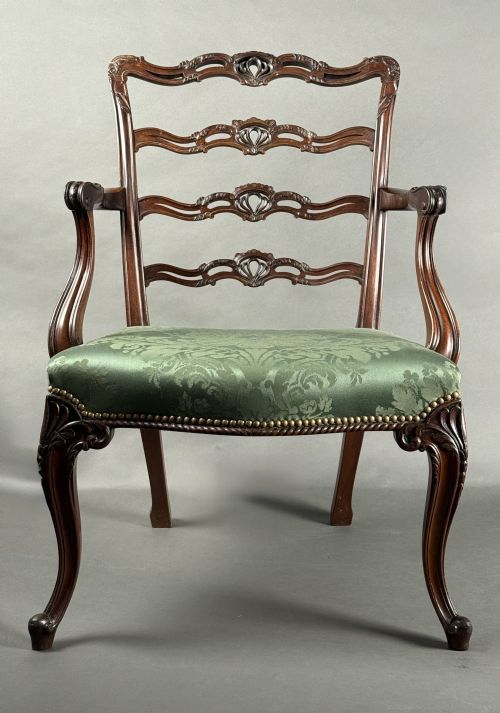
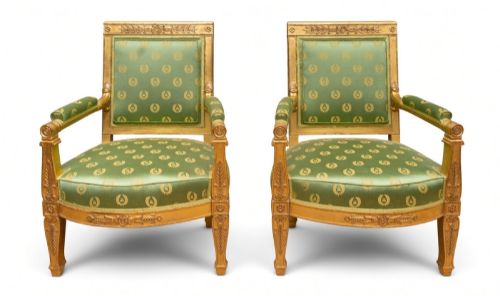
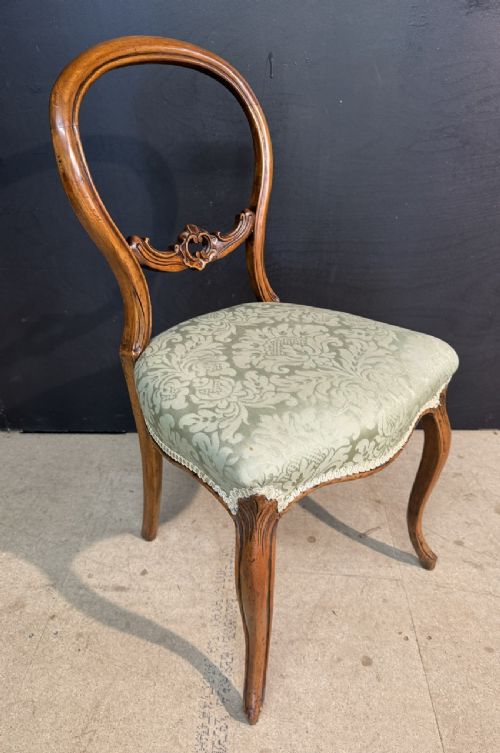
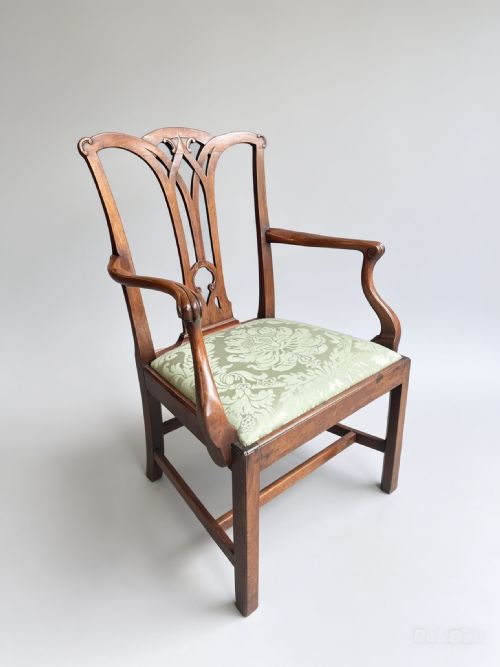
Green damask accent chairs are upholstered seating forms designed to provide a focal point within a room, utilising patterned textiles across various historical periods. The inventory on this page spans the eighteenth and nineteenth centuries into the early twentieth century, incorporating styles such as George III, Victorian, Edwardian, and French Restauration. Buyers seeking green damask accent chairs encounter armchairs, salon chairs, and library chairs constructed in these traditional aesthetics.
The underlying frames of these pieces reflect diverse regional workshops and design idioms, including English country, Dutch rococo, and Hepplewhite style influences. Formats range from high-backed walnut armchairs to carved mahogany Gainsborough chairs and giltwood salon seating. This variety ensures that each piece functions distinctly within an interior, whether placed in a drawing room, a hallway, or a bedroom.
How they were made
Makers utilised solid hardwoods such as mahogany, walnut, and rosewood for the structural frames of these seats, employing traditional joinery techniques to ensure stability. Giltwood and simulated satinwood surface treatments appear alongside carved mahogany and inlaid marquetry, demonstrating varied cabinet-making traditions. Brass elements occasionally accent the timber framework.
Upholstery methods involved securing silk and damask fabric over supportive interior stuffing to create the padded backrests and seats characteristic of these chairs. The textile patterns are woven directly into the fabric structure, providing both texture and visual depth to the outer covering.
Listings feature mahogany, walnut, and rosewood frames paired with damask and silk upholstery across eighteenth and nineteenth-century periods.
What varies in quality
Quality in these chairs rests upon the crispness of the timber carving and the architectural proportion of the frame. Pieces featuring deeply carved cabriole legs, detailed giltwood ornament, or complex marquetry display a higher degree of artisan skill than plainer structural examples.
The refinement of the upholstery work and the selection of the damask fabric also differentiate examples across the range. Superior pieces maintain integrity in both their internal construction and the execution of surface decoration.
Jacob Desmalter
The Green Damask Accent Chairs Glossary
- Damask
- A reversible figured fabric with patterns woven into the flat surface, commonly utilised for historic upholstery.
- Giltwood
- Timber treated with a thin layer of gold leaf or gold paint applied to the carved surface.
- Cabriole leg
- A furniture leg featuring a double curve, typically swelling outward at the knee and tapering inward at the foot.
- Marquetry
- Decorative veneer work arranged in geometric or pictorial patterns across wooden surfaces.
Green Damask Accent Chairs: Frequently Asked Questions
What is a green damask accent chair?
A green damask accent chair is an upholstered seating piece covered in patterned woven fabric, designed to stand out within an interior scheme. These chairs encompass various historical forms from the eighteenth to the early twentieth century.
They serve both decorative and functional purposes, often placed in reception rooms, libraries, or parlours as standalone seating items.
How do I identify an eighteenth century armchair?
Eighteenth century armchairs typically display specific structural proportions and carving characteristics associated with periods like the George III reign or Chippendale designs. Timber choice, such as solid mahogany, and joinery methods offer key chronological indicators.
Cabinet-makers of this era focused on harmonious lines, often utilising cabriole legs or square-moulded stretchers depending on the exact decade of production.
Where should I place a salon chair?
Salon chairs suit formal reception spaces, drawing rooms, or bedrooms where their decorative frames and upholstered backs can be viewed from multiple angles. Their lighter relative scale allows them to sit comfortably alongside larger sofas and primary seating.
In modern interiors, they function effectively as occasional seats in corners or flanking a fireplace.