


Gilded Carved Thrones
These gilded carved thrones are grand, gold-finished armchairs designed to command a room, built for those who want historic presence and statement seating.
Gilded Carved Thrones
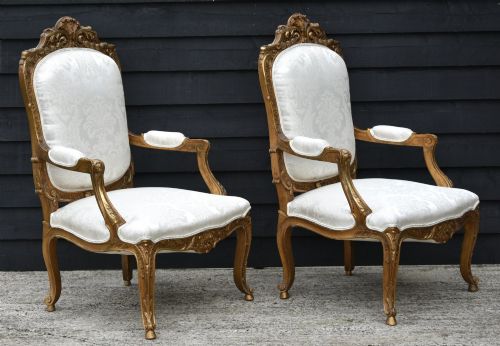
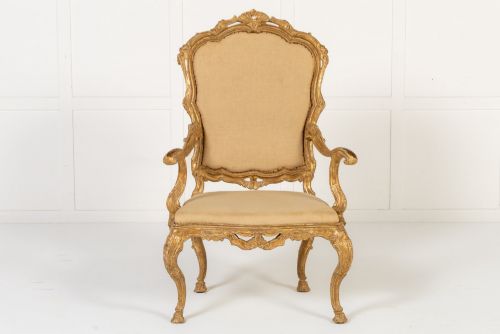
When you search for gilded carved thrones, you are looking at grand armchairs and fauteuils finished in gold or silver leaf, built to dominate a room. The pieces on this page span from the 18th century through the 19th century and into the early 20th century.
You will encounter major European revivals, including Italian Rococo, French Regence, and Louis XVI styles. Most examples function as imposing armchairs, often appearing in matched pairs with substantial carved detailing.
How they were made
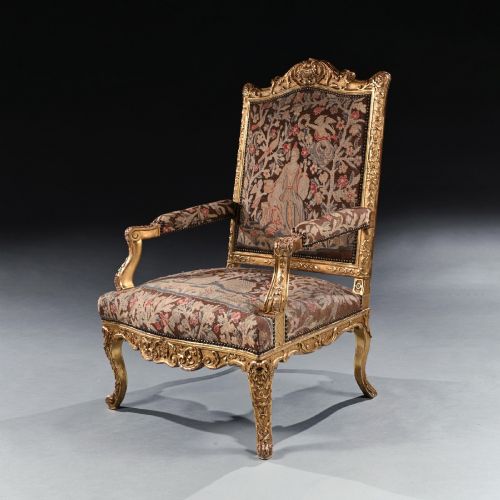
The framework relies on carved timber, predominantly giltwood, beech, walnut, and silver gilt. Artisans shaped these woods into elaborate scrollwork and structural frames before applying gold leaf.
Upholstery defines the seating surface, utilising historic textiles such as tapestry, damask, velvet, linen, and leather. Brass tacks frequently secure the edges of these heavy fabrics to the wooden structure.
Listings span from the 18th century to the 1920s, featuring Italian Rococo, Baroque Revival, and William and Mary styles.
What varies in quality
The depth and crispness of the wood carving separate standard seating from exceptional pieces. Hand-tooled detail in the giltwood shows an artisan's control over the ornamentation.
The choice of covering fabric alters the character of the chair. Heavy woven tapestry and rich damask elevate the textile work far beyond simple leather or plain linen.
The Gilded Carved Thrones Glossary
- Giltwood
- Timber coated with gold leaf or powder over a prepared gesso ground. This technique creates a brilliant reflective surface across the carved ornament.
- Fauteuil
- An open-armed French armchair with upholstered back and arm pads. The wooden framework remains partially exposed around the cushioning.
- Damask
- A reversible figured fabric woven on a jacquard loom. It provides a patterned, lustrous surface used heavily in formal upholstery.
Gilded Carved Thrones: Frequently Asked Questions
Where should I place a throne chair?
These large armchairs demand space and work best as focal points in a drawing room, hallway, or study. Position them away from cramped corners so the carved wooden frames remain fully visible.
Because of their visual weight, they pair well with simpler surrounding furniture. Let the gilt finish catch the light without competing against other ornate pieces.
How do I care for giltwood?
Keep giltwood surfaces away from direct sunlight and damp environments to protect the thin gold leaf. Dust the carved details gently with a soft, dry brush.
Avoid liquid cleaners, polishes, and abrasive cloths entirely. Moisture can lift the underlying gesso and flake the metallic finish away from the wood.
Are these chairs comfortable to sit in?
Historic armchairs prioritise upright, formal posture over deep lounging. The supportive frames and firm upholstery reflect the etiquette of past centuries.
Added cushions can adjust the seat depth if you prefer a softer sit. Remember that antique textiles require gentle treatment during daily use.
How do I identify the period?
Study the carved motifs, proportions, and structural joinery to determine the era. Rococo pieces display asymmetrical curves, while Baroque and William and Mary styles favour heavier, symmetrical geometry.
Revival pieces from the nineteenth century often combine elements from multiple earlier reigns. Look closely at the tooling on the wood and the type of upholstery nails used.