



Baroque Style Open Armchairs
Baroque style open armchairs bring grand, theatrical seating into a room with heavy carving and sweeping lines.
Baroque Style Open Armchairs
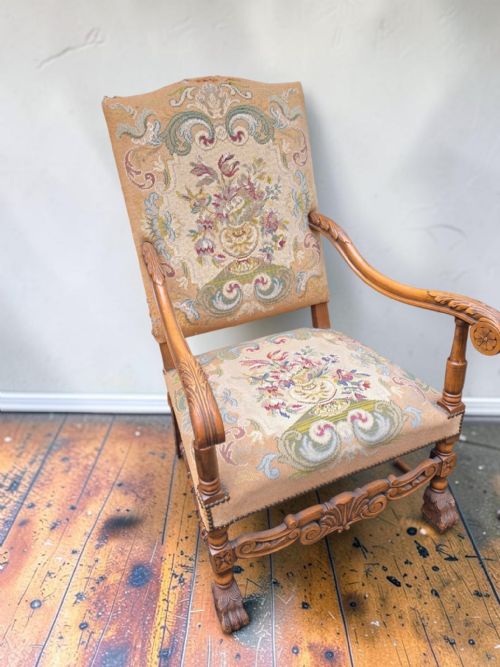
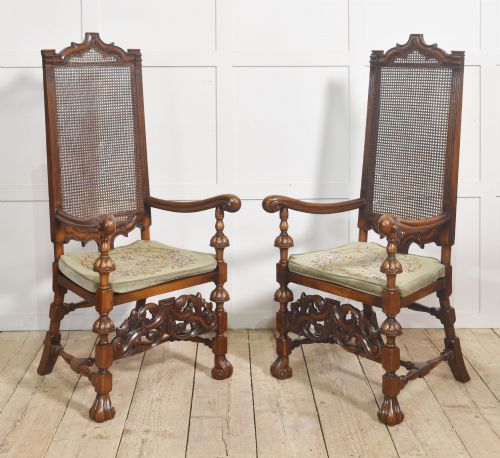
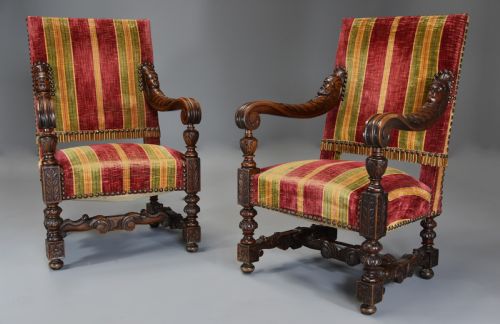
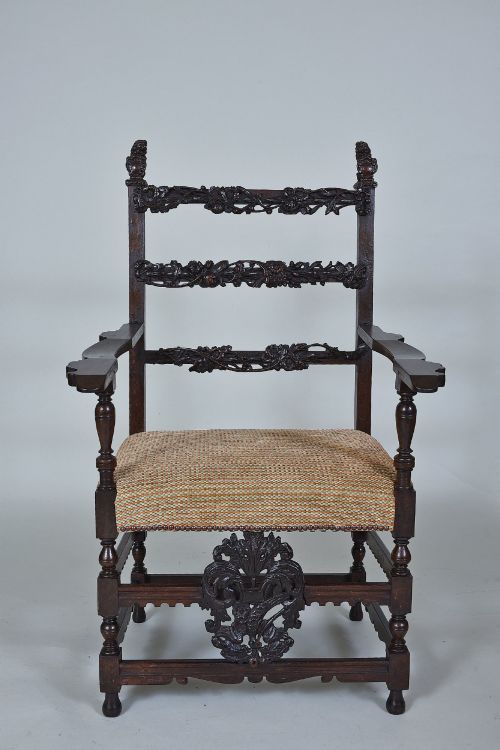
When you search for baroque style open armchairs, you encounter a selection of revival seating largely drawn from the nineteenth century alongside earlier examples. These grand chairs take various forms, including high-back sculptural armchairs, elbow chairs, and imposing throne chairs.
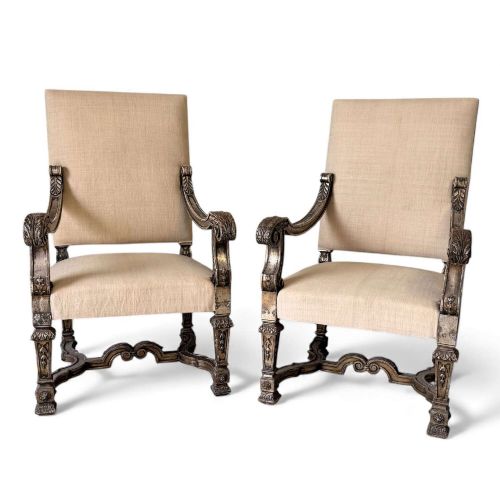
The material palette leans heavily on walnut, accented with giltwood and gold leaf, while upholstery ranges from rich velvet and tapestry to needlework and woven fabric. Most pieces found here channel regional revivals like the French Baroque, Italian Baroque, and Dutch Baroque styles.
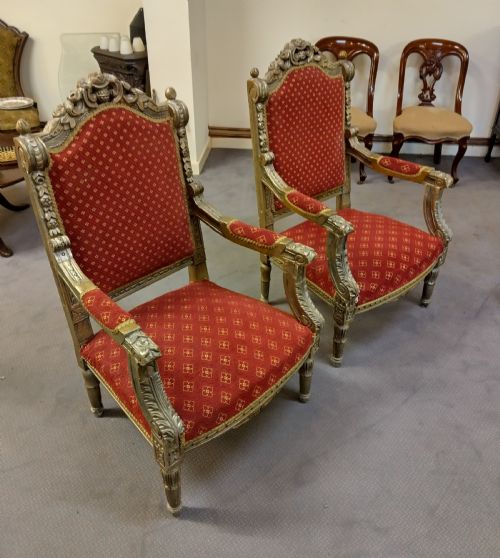
Makers often drew inspiration from the seventeenth and eighteenth centuries, producing revival pieces that emulate the ornate carving and substantial frames of the period. Whether you encounter a pair of gilt finish armchairs or a single walnut elbow chair, each piece delivers a commanding presence.
How they were made
Carpenters carved dense timbers like solid walnut and padouk wood to form the robust frames necessary for these substantial chairs. Artisans applied giltwood and gold leaf finishes to enrich the carved details, creating shimmering surfaces that catch the light.
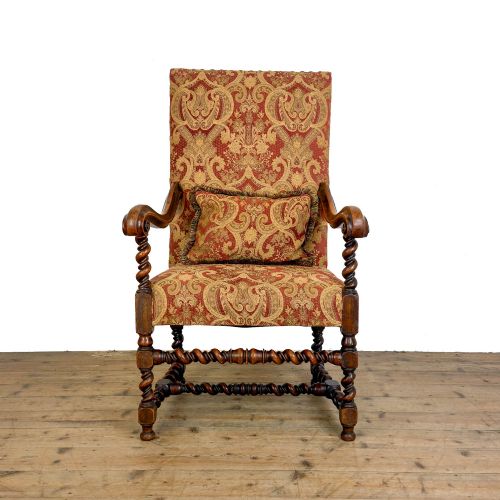
Upholstery techniques involved securing heavy textiles such as tapestry, velvet, and needlework directly to the wooden framework. Some seating incorporates cane work or relies on exposed turned wood like bobbin turned styles to add texture.
Listings feature walnut as the primary timber, complemented by giltwood, gold leaf, and padouk wood across various European revival styles.
What varies in quality
The depth and crispness of the wood carving dictate much of the visual weight, with superior examples displaying sharply defined botanical and sculptural motifs rather than soft, flat surfaces. The choice of primary timber also matters, as solid walnut and padouk offer greater permanence than softer woods.
Proportion and stance separate standard production from exceptional pieces, particularly in throne chairs and high-back formats where balance is critical. Furthermore, the fidelity of the revival style - whether following French, Italian, or Dutch Baroque idioms - determines the cohesion of the design.
The Baroque Style Open Armchairs Glossary
- Giltwood
- Wood that has been coated with a thin layer of gold leaf or gilt finish. This technique adds a reflective, luxurious sheen to carved details.
- Elbow chair
- An armchair featuring supportive armrests, often used interchangeably with the term open armchair in historical listings. These provide comfortable seating with an open frame.
- Tapestry
- A heavy, hand-woven or machine-woven textile featuring pictorial scenes or intricate patterns. It serves as durable and decorative upholstery for antique frames.
- Bobbin turned
- A method of woodturning that creates a series of rounded, spool-like shapes along the length of a furniture leg or stretcher. This technique adds rhythmic texture to the frame.
- Throne armchair
- An oversized, high-backed seat designed to project authority and status. These imposing chairs often feature elaborate crest rails and deep upholstery.
Baroque Style Open Armchairs: Frequently Asked Questions
How were baroque style armchairs used historically?
Historically, these grand chairs served as formal seating in reception rooms, halls, and parlours to signal the status of the owner. Their imposing frames and high backs were designed to command attention rather than offer casual lounging.
They were often arranged in pairs or matched sets along the perimeter of a formal chamber. Over time, many have been reupholstered to suit modern living while retaining their architectural silhouettes.
How do I style a baroque armchair at home?
Positioning one of these chairs as a focal point in a study, drawing room, or hallway allows the intricate carving and rich wood tones to stand out. Pairing an armchair with neutral surroundings lets the substantial silhouette take centre stage.
They also work well in combination with simpler contemporary furnishings to create a deliberate contrast of periods. Ensuring adequate floor space around the chair highlights its sculptural qualities.
How do I distinguish between different revival periods?
French Baroque revival pieces often display flowing, extravagant curves and heavy gilding, whereas Italian examples tend to feature dramatic sculptural woodwork and high backs. Dutch interpretations frequently showcase darker walnut and robust, sturdy proportions.
Looking closely at the turning styles, such as bobbin turned elements, and the character of the wood helps identify regional influences. Comparing the upholstery textiles to known historical patterns provides further clues.