



Needlepoint Walnut Chairs
Needlepoint walnut chairs bring rich historic textiles and warm timber frames together, offering lasting craft and character for any interior.
Needlepoint Walnut Chairs
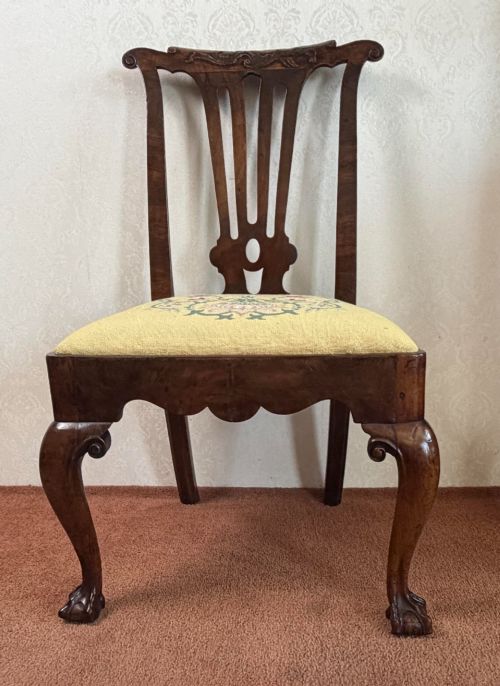
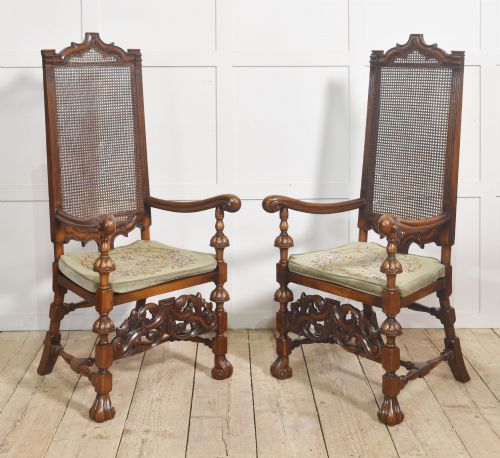
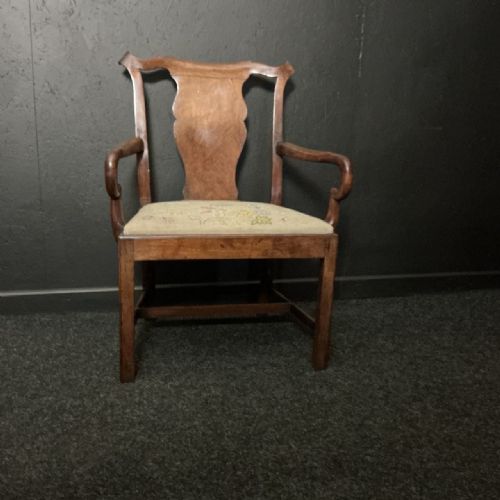
When you search for needlepoint walnut chairs, you encounter seating constructed from dark timber and upholstered in wool tapestry work. The examples span several centuries, reaching from early Georgian designs to Victorian revivals.
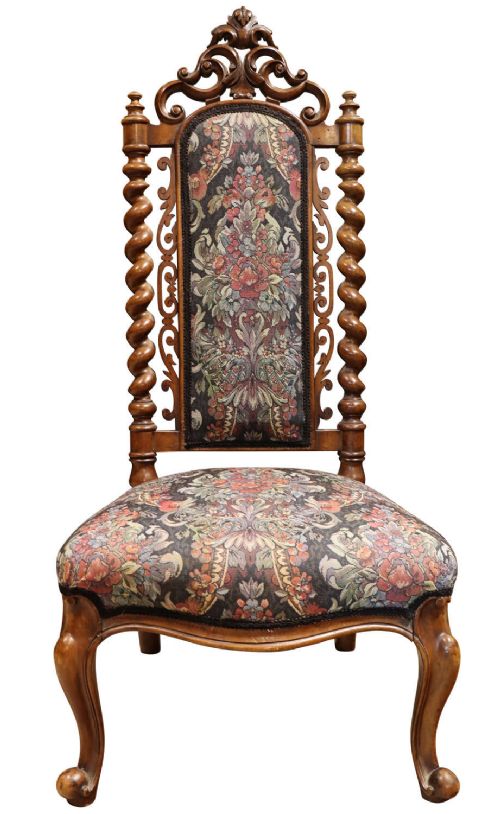
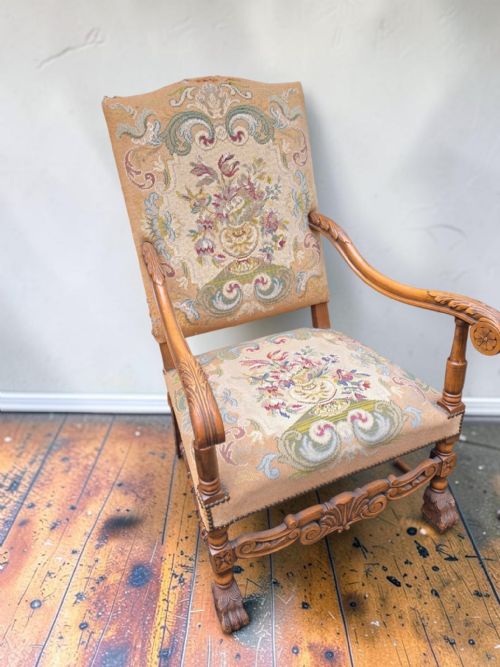
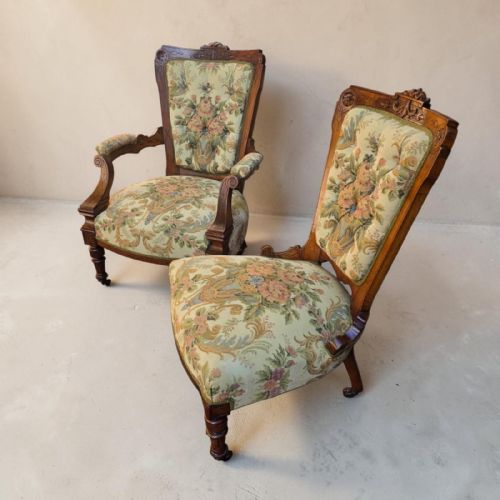
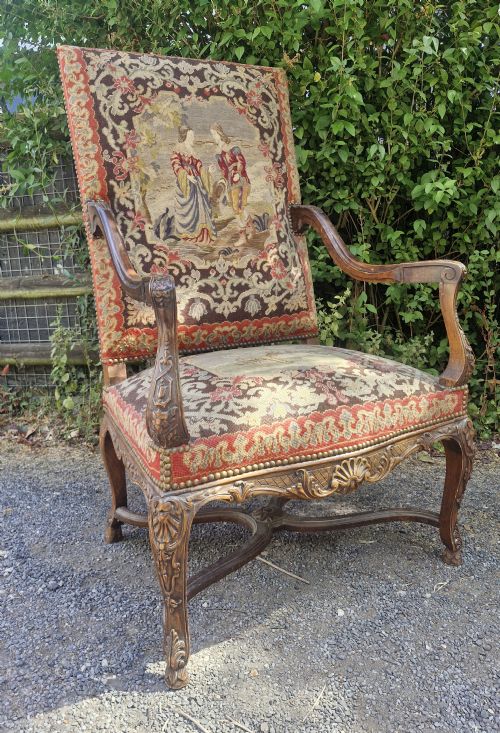
You meet a variety of forms on this page, including open armchairs, salon seats, side chairs, and nursing chairs. Many pieces reflect historical revivals such as Queen Anne, George II, and Rococo styles.
Origin points range from English workshops to French ateliers and Scottish makers. The combination of dense hardwood frames and hand-stitched textile covers defines this grouping entirely.
Materials and construction methods
Makers utilised solid walnut for the structural frames, carving cabriole legs, scroll backs, and arms directly into the dense timber. Brass elements occasionally appear on castors or decorative fixings.
The upholstery consists of wool, textile fabric, and wool tapestry worked in needlepoint or petit point stitch. These textile panels are fixed over traditional stuffing to form drop-in seats or fully padded backs.
Listings include walnut timber combined with wool tapestry, brass accents, and textile upholstery across Victorian and Georgian eras.
Factors that define quality
The precision of the timber carving sets examples apart, with crisp detailing on knees, rails, and frames showing superior hand work. Timber selection also matters, as well-figured grain enhances the visual weight of the walnut.
The density and fineness of the needlepoint embroidery dictate the execution level of the textile cover. Tightly worked wool in intricate patterns retains its integrity better than looser stitching.
Charles Tozer·Waring & Gillow·R Whytock of Edinburgh
The Needlepoint Walnut Chairs Glossary
- Petit point
- A form of needlepoint embroidery executed on single-mesh canvas using very fine stitches. This technique allows for high detail and shading in pictorial textile panels.
- Drop-in seat
- A removable upholstered frame that drops into a rebate within the chair rails. It simplifies reupholstery and maintenance.
- Prie-Dieu chair
- A low-backed devotional chair fitted with a ledge for kneeling during prayer. Victorian examples frequently utilise walnut frames and needlepoint covers.
- Cabriole leg
- A furniture leg that curves outward at the knee and tapers inward at the ankle, ending in a pad or claw foot. It is common on Queen Anne and Georgian walnut seating.
Needlepoint Walnut Chairs: Frequently Asked Questions
What periods do these chairs come from?
The inventory spans the eighteenth, nineteenth, and early twentieth centuries. You find pieces originating in the Georgian and Victorian eras alongside later revivals.
Craftsmen across these periods utilised traditional walnut framing combined with hand-worked wool tapestry covers.
Are the needlepoint covers original?
Many chairs retain their period needlepoint upholstery, while others feature later textile replacement work. Historical pieces often show hand-stitched wool panels contemporary to the frame construction.
Examining the underside and the tacking edge reveals whether the fabric dates to the original manufacture or a later restoration.
How do I care for antique needlepoint?
Protect wool tapestry covers from direct sunlight to prevent the natural dyes from fading over time. Gentle vacuuming through a mesh screen removes dust without disturbing the stitches.
Keep the walnut timber nourished with appropriate furniture wax applied sparingly with a soft cloth.
Can these chairs be used daily?
Solid walnut provides a sturdy structural foundation suitable for normal sitting and everyday domestic use. Checking the stability of the joints ensures the frame remains secure.
Consider the height and scale of specific forms, such as low nursing chairs or dining seats, when placing them in a room.