

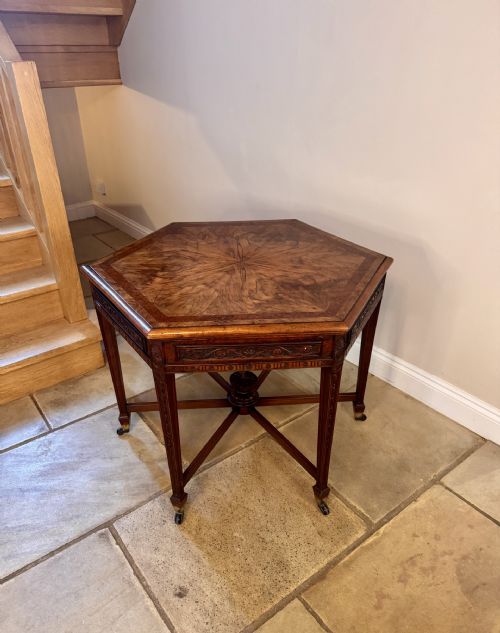
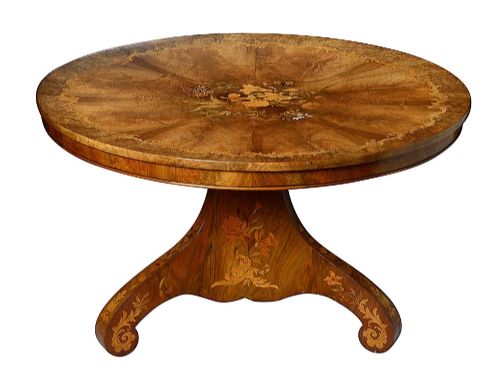
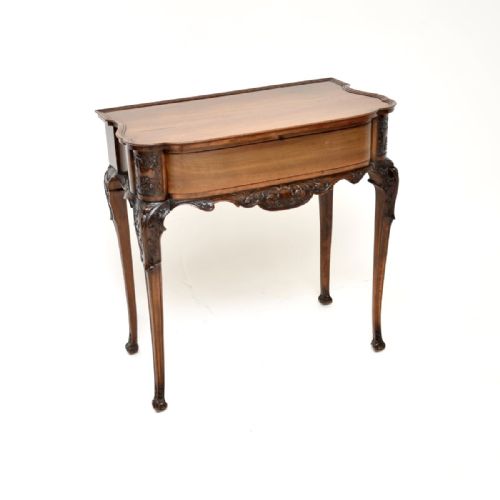
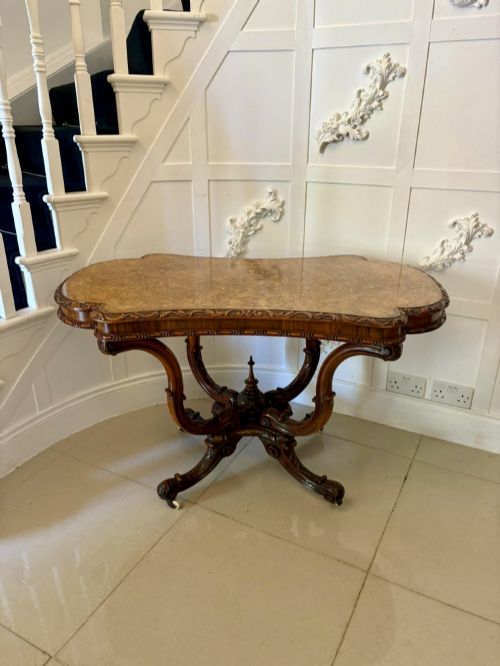

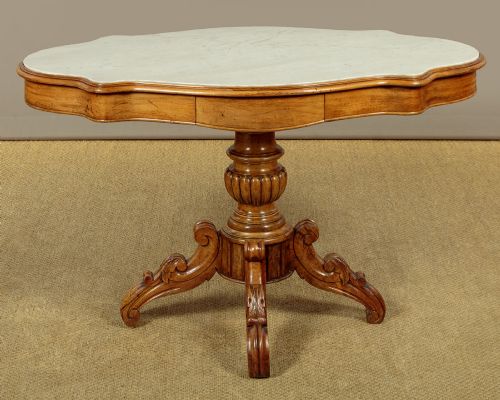


Carved Walnut Foyer Table
A carved walnut foyer table provides a commanding architectural anchor for an entrance hall, combining rich timber grain with sculptural detail.
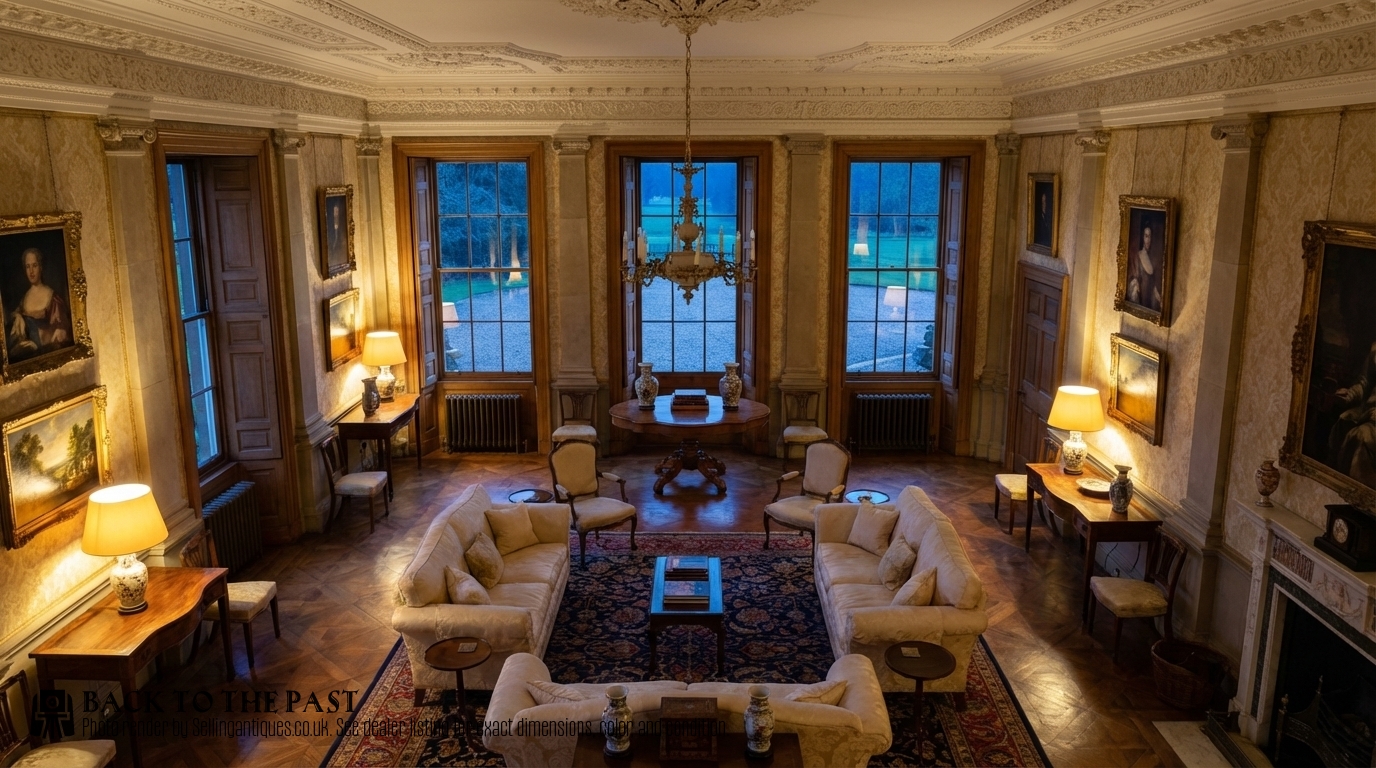
Carved Walnut Foyer Table
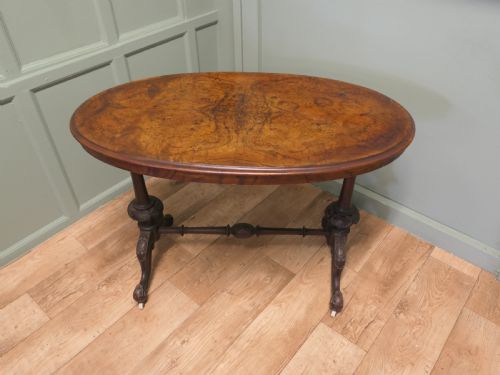
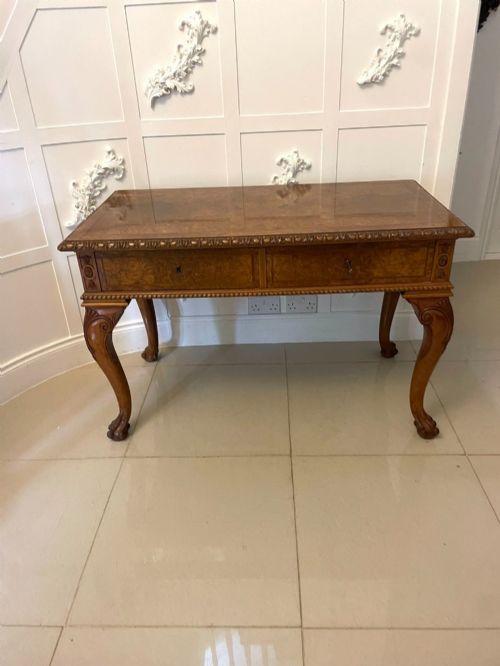
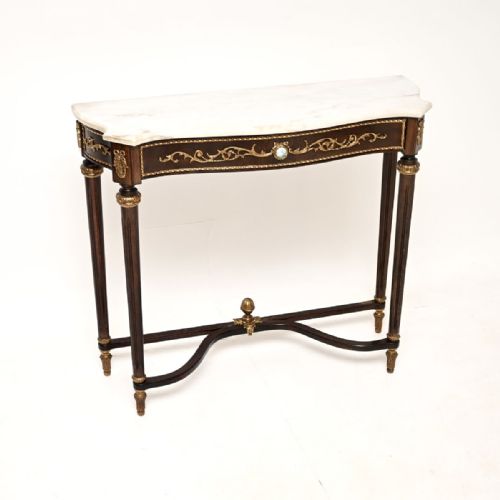
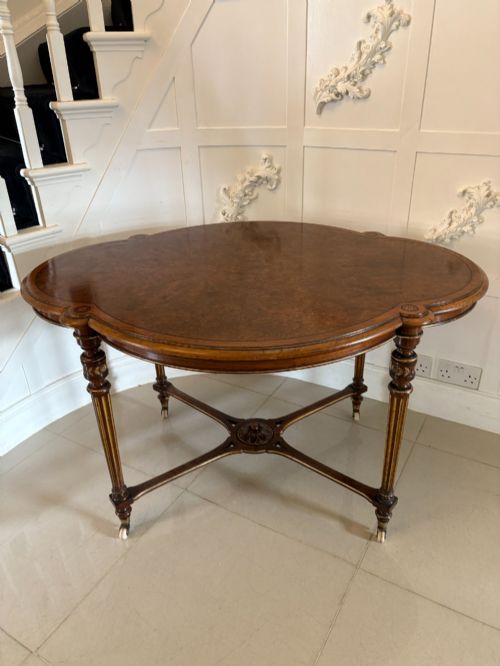
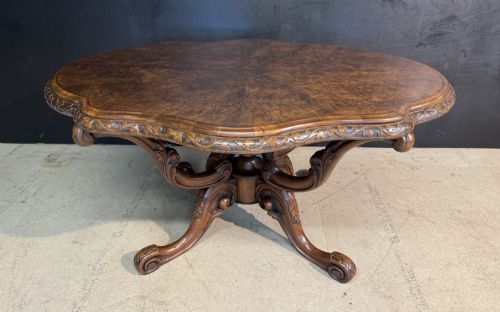
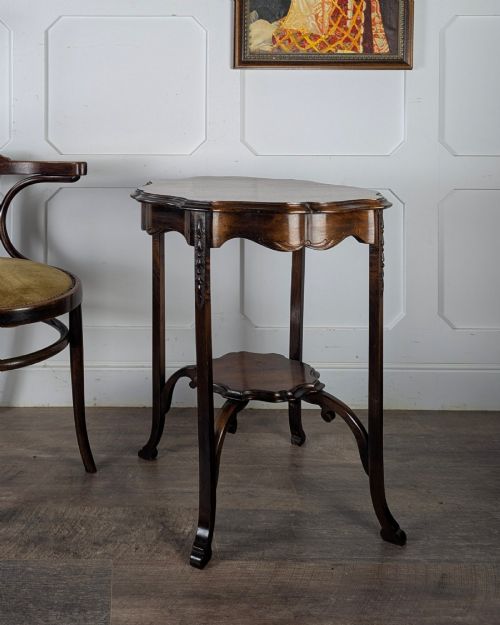
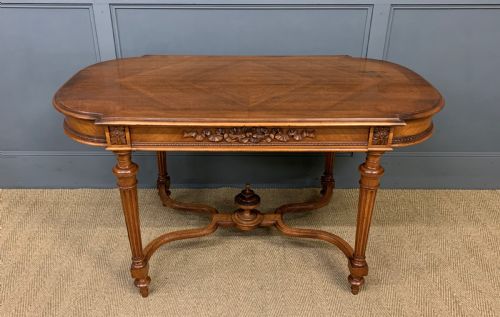
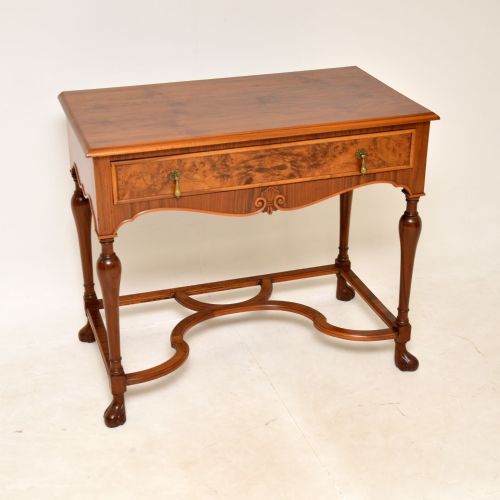
A carved walnut foyer table appears most frequently in forms designed for prominent placement against a wall or in the middle of a room, such as console tables, hall tables, and centre tables. These pieces emerge predominantly from the nineteenth and early twentieth centuries, spanning Victorian, Edwardian, and various revival aesthetics.
Makers utilised dense timbers and decorative veneers to create substantial furniture suited to grand domestic spaces. The selection includes French examples, Italian serpentine designs, and English interpretations of earlier decorative movements.
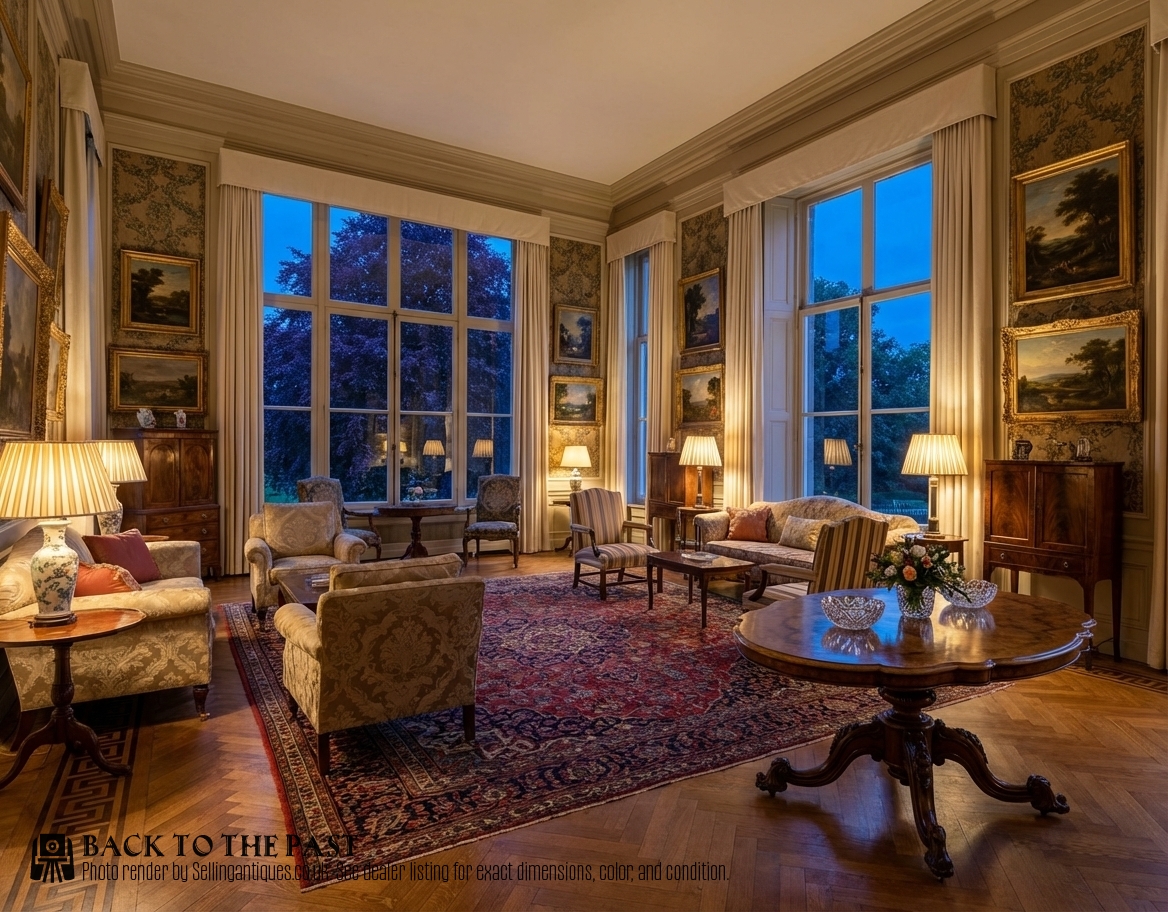
Materials and Technique
Cabinet makers relied heavily on walnut and burr walnut, prized for their complex, highly figured grain patterns that catch the light in a hallway. These primary timbers were frequently enhanced with intricate marquetry inlay, wood inlay, or brass mounts.
Many structural formats incorporate contrasting surfaces, pairing carved timber bases with heavy marble tops or specimen marble inserts. Joinery methods supported both freestanding centre tables and wall-anchored console designs.
Carved Walnut Foyer Table Retail Price Guide 2026
Typical asking prices for carved walnut foyer table among the pieces listed under this phrase on Sellingantiques today, from the lower quarter to the upper quarter. They describe what is for sale here now, not the wider market.
Listings feature walnut and burr walnut construction across Victorian, Edwardian, and nineteenth-century periods.
Judging Quality
Distinction across the range lies in the depth of the carving and the selection of the burl veneer. Superior examples display crisp, hand-carved botanical or scroll motifs that remain sharp rather than softened by excessive finishing.
The integration of secondary materials defines the upper tier of pieces. Heavy, well-fitted marble tops and precise, complex marquetry inlay indicate a higher standard of craftsmanship than plain timber surfaces.
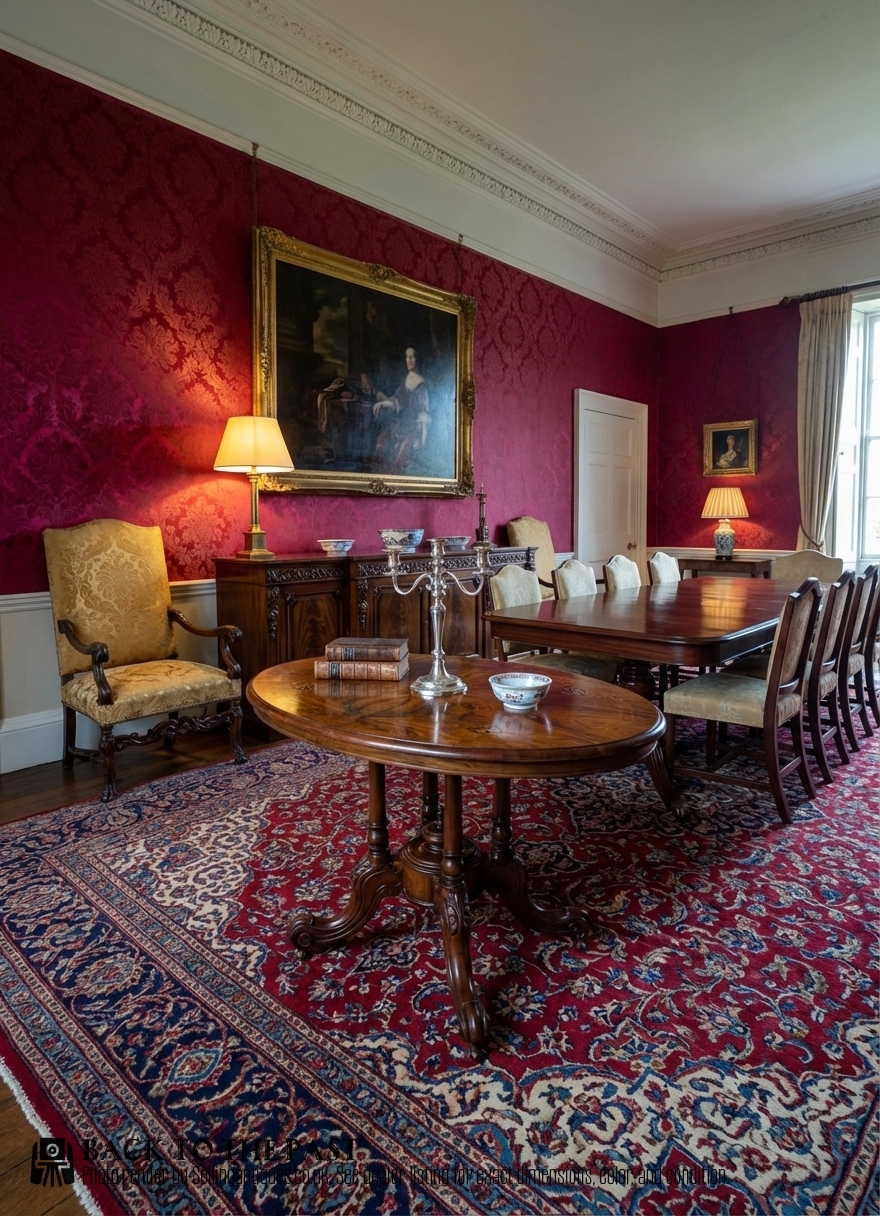
Maple and Co·Holland and Sons
The Carved Walnut Foyer Table Glossary
- Burr walnut
- Timber taken from a growth on the walnut tree, showing highly decorative, swirling grain patterns. It is sliced into thin veneers for decorative table tops.
- Console table
- A table designed to stand against a wall, traditionally supported by brackets or legs at the front. These pieces serve as functional hallway surfaces.
- Centre table
- A freestanding table designed to be viewed from all sides, intended for the middle of a room rather than against a wall. They frequently feature elaborate pedestal or basket bases.
- Marquetry inlay
- Decorative patterns formed by fitting contrasting pieces of wood veneer into a primary background. This technique creates geometric or pictorial designs across the table top.
- Gueridon
- A small French table, often round, supported by a central pillar or columns. These forms frequently incorporate marble tops.
Carved Walnut Foyer Table: Frequently Asked Questions
What is a carved walnut foyer table used for?
These tables provide a practical surface in entrance halls for holding keys, correspondence, and decorative objects while establishing a strong visual focal point.
Their substantial construction and finished backs allow them to stand independently or anchor the perimeter of a room.
How do I style a foyer table?
Pair the piece with a wall mirror or artwork above to balance the visual weight of the timber base. Keep surface accessories minimal to showcase the grain and inlay.
Allow enough clearance around the furniture for natural movement through the hallway.
How do I identify a Victorian walnut table?
Look for dense walnut timbers combined with characteristic Victorian design motifs such as heavy pedestals, curved cabriole legs, or elaborate marquetry. Dates often align with mid to late nineteenth-century revival styles.
Construction details typically feature solid secondary woods beneath decorative burr veneers.
Are marble top tables original?
Many nineteenth-century console and centre tables were constructed specifically to carry heavy marble or specimen marble tops. These stone slabs provide a durable, cool surface that contrasts with warm timber.
Examine the seating rebate beneath the top to ensure the stone sits securely within the wooden frame.