


Carved Walnut Cabinet on Stand
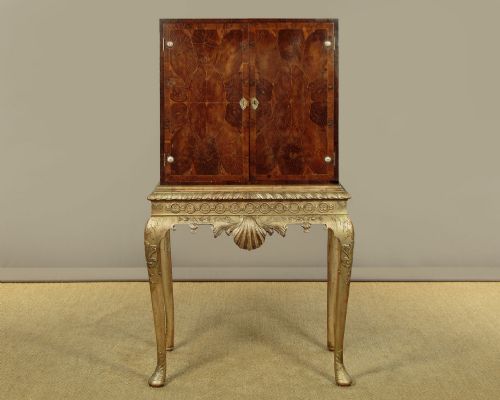
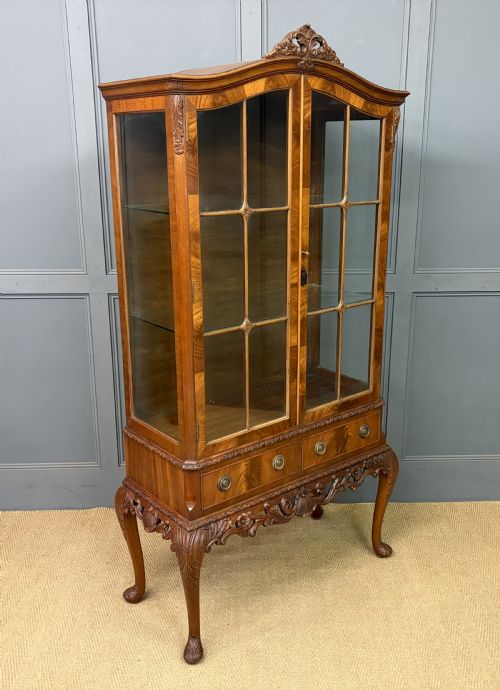
Carved walnut cabinet on stand pieces combine striking timber figure with elevated storage, offering serious presence for any serious interior.
Carved Walnut Cabinet on Stand
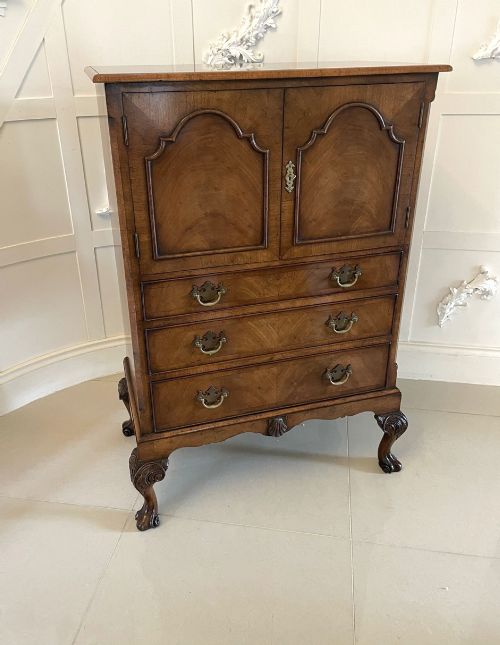
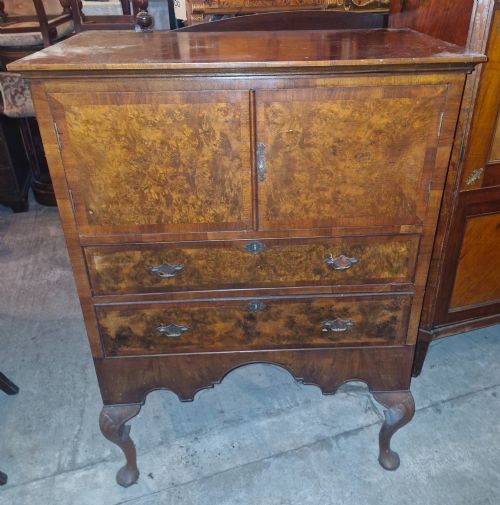
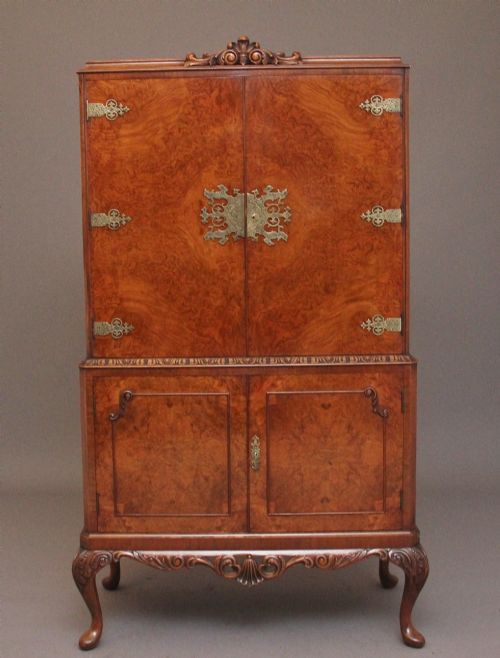
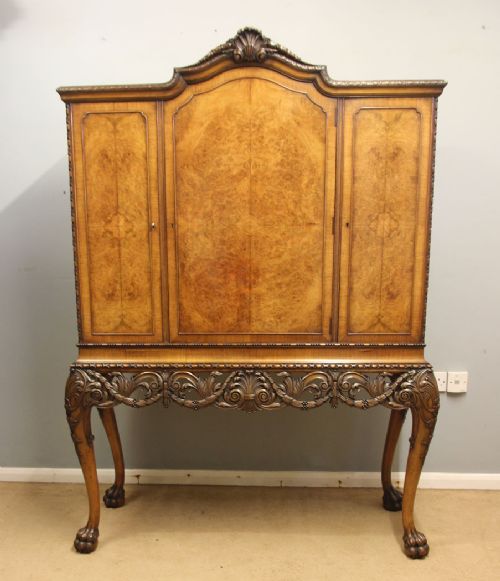
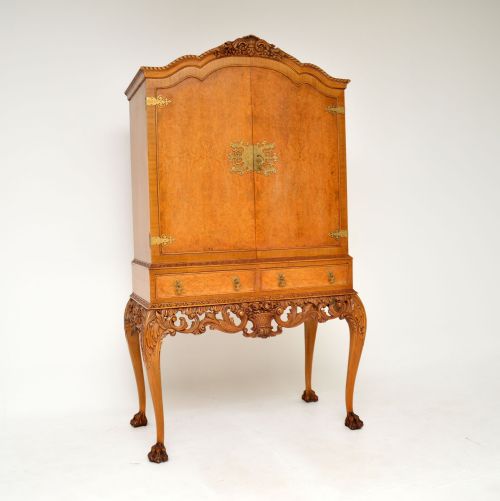
A carved walnut cabinet on stand brings together an enclosed upper storage section and a supportive lower frame, appearing across periods from the seventeenth century through to the nineteen thirties. These works range from seventeenth-century Spanish and continental forms to later British revival pieces, incorporating styles such as Queen Anne, William and Mary, and Victorian.
The materials recorded in these examples centre heavily on walnut and burr walnut, frequently accented with brass, glass, ceramic, and giltwood. Makers and workshops represented across the broader archive include notable firms like Maple & Co. and Shoolbred and Co., alongside individual designers such as Gabriel Viardot.
Buyers encountering this search phrase find a mix of distinct functional forms, including drinks cabinets, cocktail cabinets, music cabinets, and chests on stand. The structural division between the upper cabinet and the supporting stand defines the archetype, creating an architectural silhouette in any room.
Distinguishing quality factors
Quality separates along the depth and crispness of the timber carving, the choice and matching of burr walnut veneers, and the integrity of the original stand structure. Superior pieces display continuous grain alignment across large surfaces and meticulous joinery that withstands the weight of dense hardwood.
The distinction between workshop execution also governs value, where documented makers command attention through refined proportion and high-grade secondary woods. Lesser examples exhibit heavier proportions, simpler secondary timbers, or mismatched veneer sections that lack the visual harmony of top-tier work.
Some nineteenth-century music cabinets quietly doubled as lounges for pianists needing a discreet place to rest between movements.
Gabriel Viardot·Shoolbred & Co.·Maple & Co.
The Carved Walnut Cabinet on Stand Glossary
- Burr walnut
- A highly figured timber veneer harvested from walnut tree growths, prized for its swirling, organic grain patterns.
- Stand
- The elevated base or frame featuring legs and stretchers that lifts the cabinet body off the floor.
- Bargueño
- A type of portable desk or cabinet originating in Spain, often fitted with numerous drawers and placed upon a dedicated carved stand.
- Canterbury
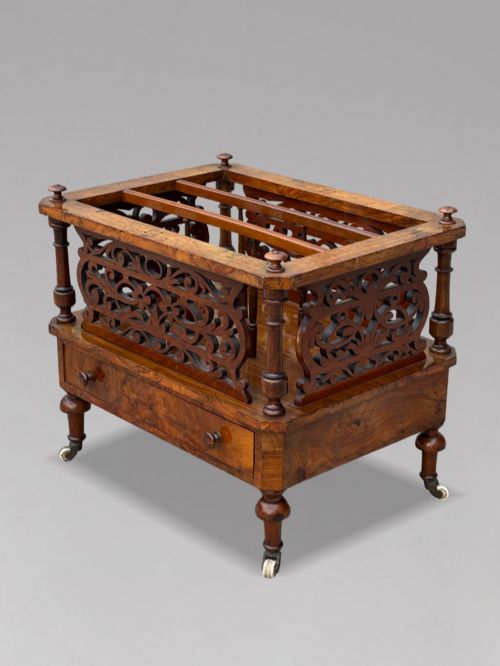
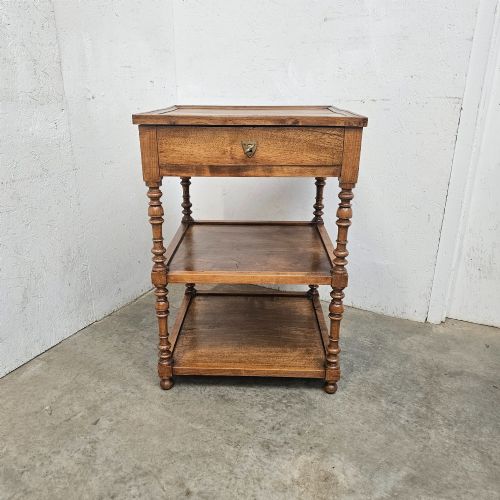
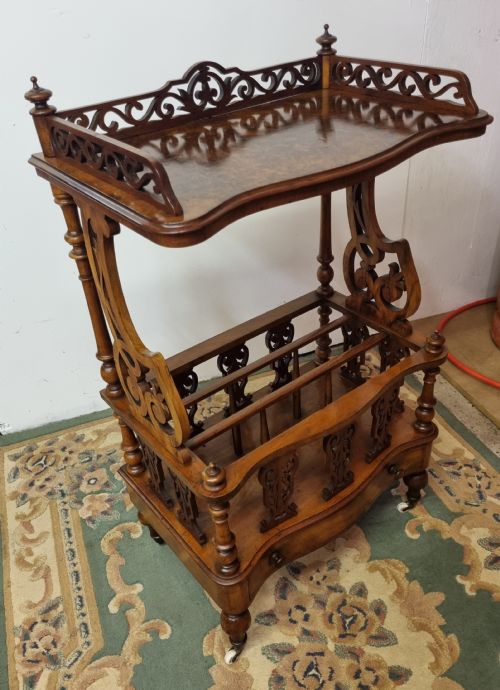
- A low multi-tiered stand originally designed for sheet music or books, frequently sharing walnut construction and turned supports with related cabinets.
- Stretchers
- Horizontal wooden members connecting the legs of a stand to provide structural stability and rigidity.
Carved Walnut Cabinet on Stand: Frequently Asked Questions
What is a cabinet on stand?
A cabinet on stand consists of a self-contained upper storage unit resting on an open-framed base with legs. This form elevates the main body, lightening the visual weight of dense hardwoods like walnut.
Historically, these pieces served as prominent display or storage furniture in wealthy interiors, offering both surface decoration and practical utility.
How do I date a walnut cabinet?
Dating relies on examining construction techniques, hardware types, and stylistic indicators such as leg shapes and carving motifs. Seventeenth-century examples often feature heavy stands and architectural paneling, whereas nineteen-twenties revivals adopt cleaner lines.
Secondary timbers inside drawers and backboards also provide clues, as wood availability shifted across the Victorian and Edwardian eras.
Where should I place one?
These cabinets work effectively in living rooms, hallways, or dining spaces where their detailed timber surfaces can be appreciated. Their elevated profile means they occupy less floor space than massive wardrobes while still offering generous interior capacity.
Keep them away from direct sunlight and strong heat sources to protect the burr walnut veneer from drying out.
Are these pieces purely decorative?
While highly ornamental, many are fully functional storage items suited for modern use as drinks cabinets, bookcases, or general storage. The internal fittings often include shelves, drawers, or specialised racks originally intended for music or glassware.
Living with them involves utilising their internal compartments much as original owners did centuries ago.