


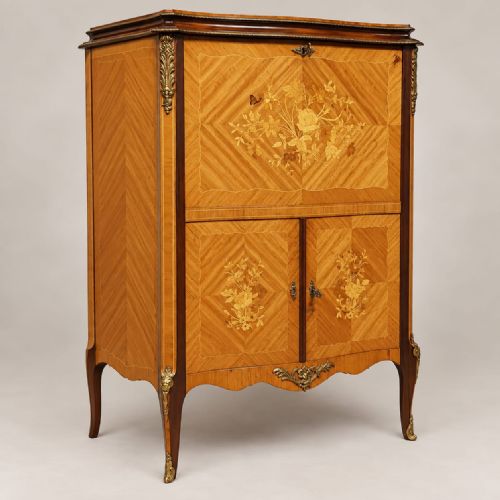
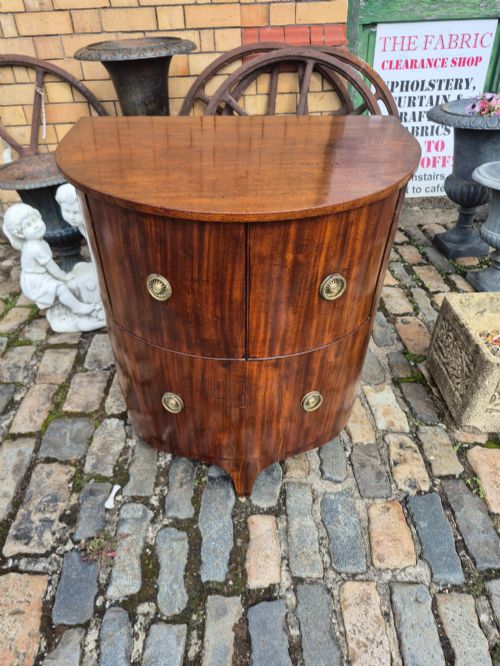
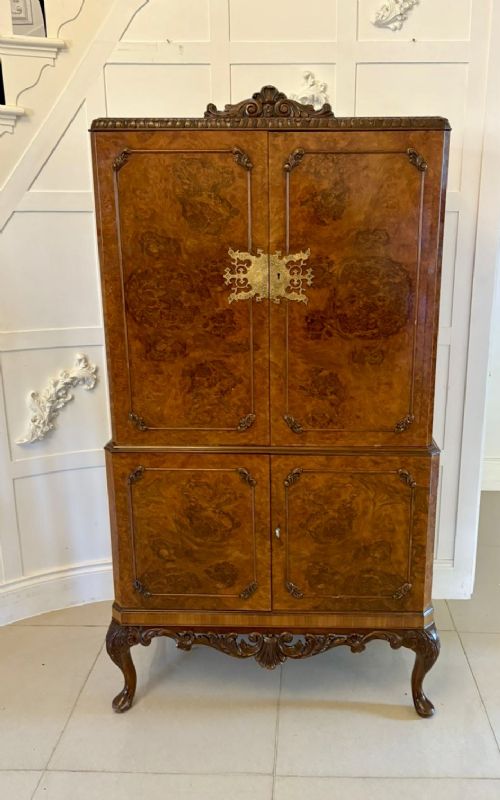
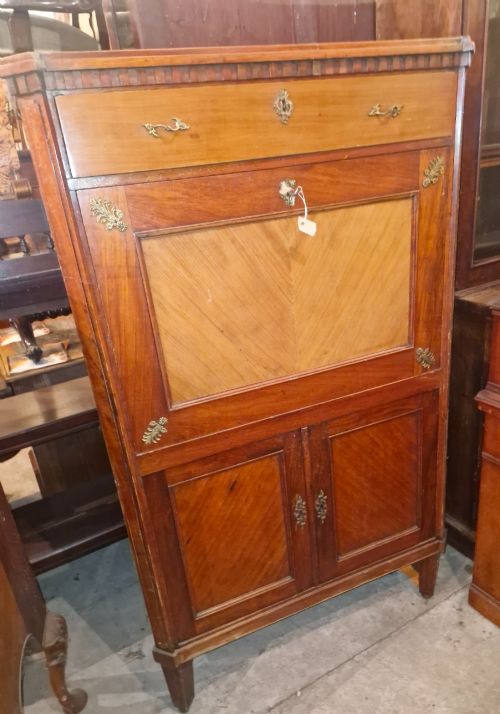
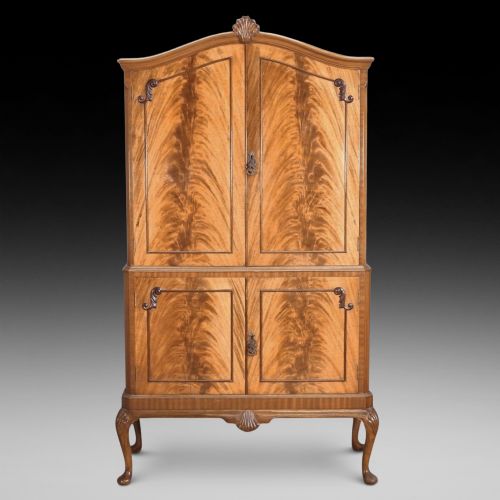
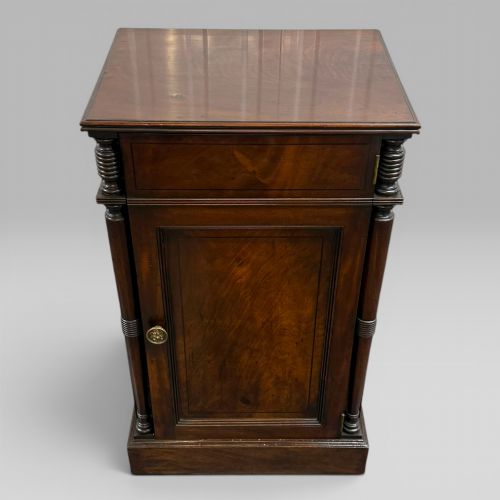
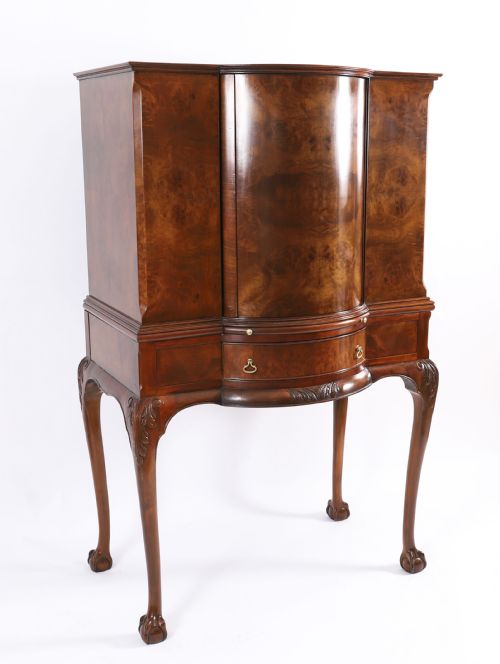
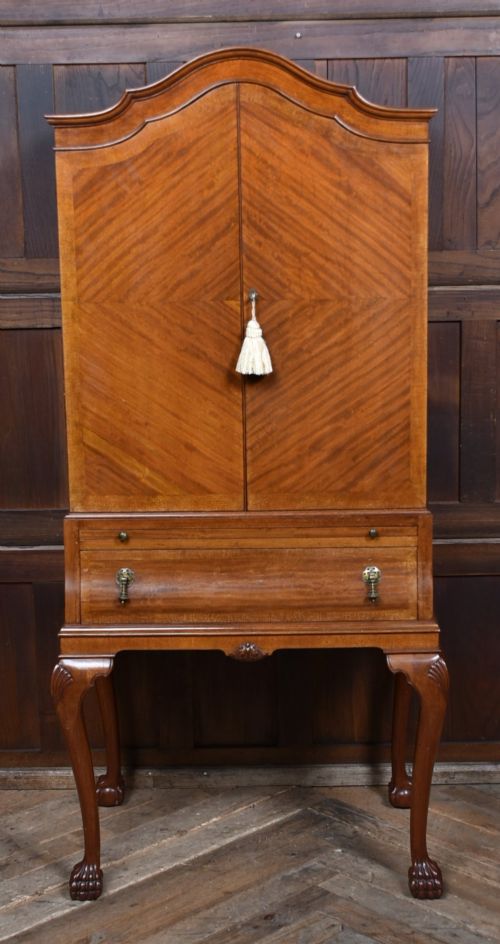
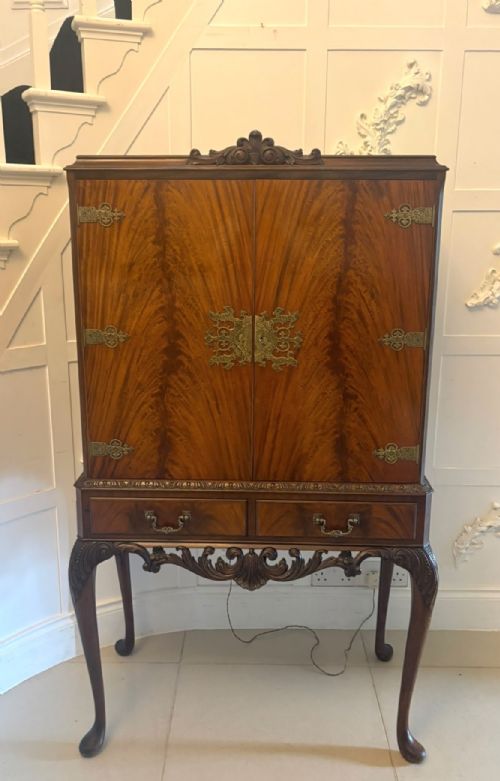
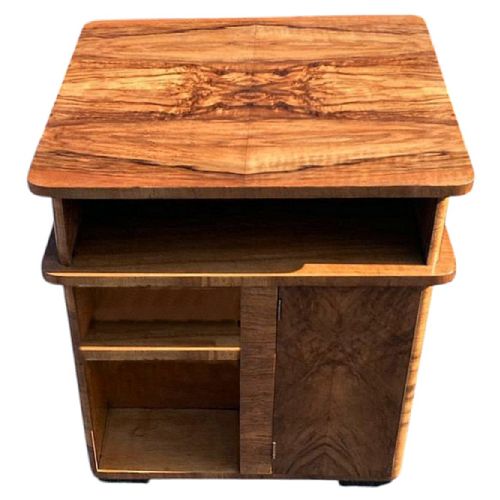

Brown Liquor Cabinet
When you search for a brown liquor cabinet, you look for a sturdy place to hold bottles, glasses, and decanters.
Brown Liquor Cabinet
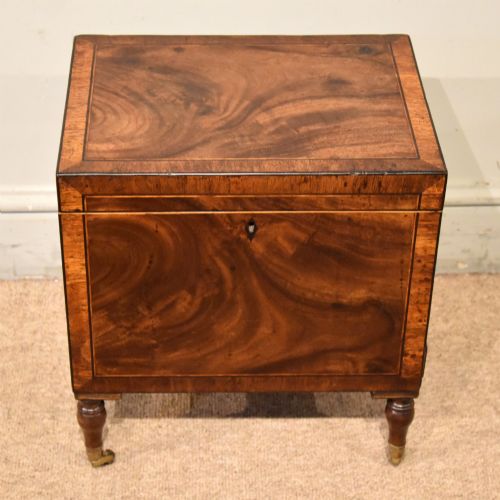
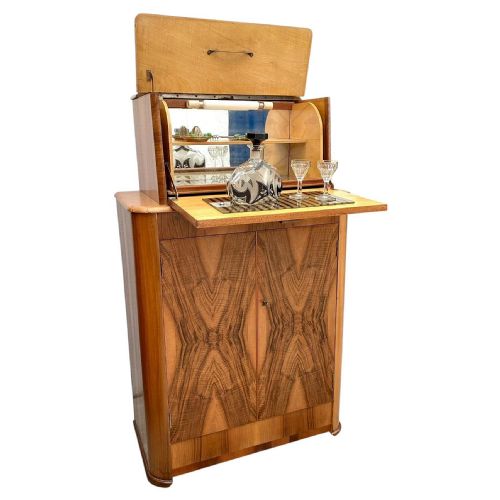
A brown liquor cabinet serves to store spirits and glassware in domestic settings. When you search for a brown liquor cabinet, you meet various forms including drinks cabinets, cocktail cabinets, cellarettes, and wine coolers.
The pieces on this page span several centuries and styles. You will find examples from the Georgian, Regency, Victorian, and Edwardian periods, alongside later 19th-century and 20th-century items.
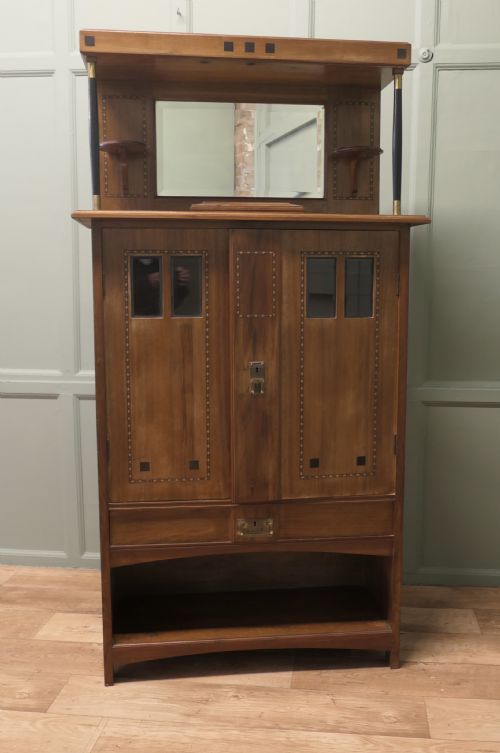
Art Deco and Secessionist designs sit alongside Queen Anne Revival, Georgian Revival, and French Empire pieces. Cabinets on stands and cocktail tables also appear within the selection.
How they were made
Cabinet makers utilised solid timbers and decorative veneers to build these pieces. Mahogany, walnut, burr walnut, pollard oak, satinwood, and oak form the primary wooden structures.
Metal fittings in brass add functional and decorative detail to the woodwork. Glass panels and internal mirrors appear in glazed bookcases and display cabinets, while removable trays and fitted interiors assist with service.
Brown Liquor Cabinet Retail Price Guide 2026
Typical asking prices for brown liquor cabinet among the pieces listed under this phrase on Sellingantiques today, from the lower quarter to the upper quarter. They describe what is for sale here now, not the wider market.
Listings feature walnut, burr walnut, mahogany, oak, satinwood, brass, and glass across Georgian, Regency, Victorian, Edwardian, and Art Deco periods.
What varies in quality
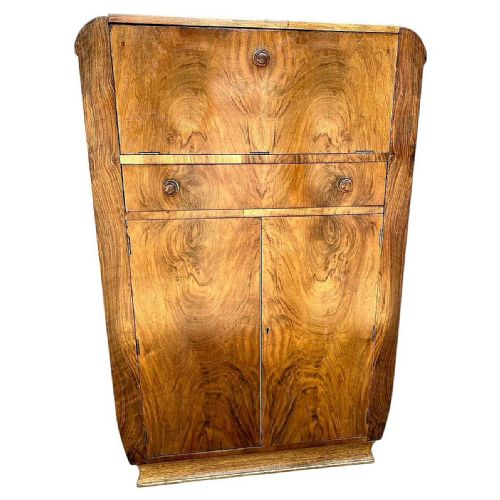
The choice of timber grain defines the visual appeal of each piece. Figured mahogany and burr walnut display intricate natural patterns that mark out finer examples.
Construction methods and maker attribution separate standard items from superior works. Pieces attributed to workshops such as Gillows or firms like Hille and Epstein demonstrate distinct levels of joinery and design execution.
Gillows·Hille·Harry and Lou Epstein·Waring and Gillow
The Brown Liquor Cabinet Glossary
- Cellarette
- A lockable container used for holding bottles and decanters. These vessels often sat on stands or floors during the Georgian and Regency periods.
- Tantalus
- A locked frame holding decanters visible to guests while preventing access without a key. They appear frequently in late 19th-century and Edwardian contexts.
- Cocktail cabinet
- A specialised piece designed for mixing and serving drinks. They date prominently to the Art Deco period and the 1920s and 1930s.
- Vener
- A thin layer of fine wood applied to a base carcass. Burr walnut and figured mahogany veneers create decorative surfaces on many 20th-century cabinets.
- Cabinet on stand
- A storage compartment elevated on legs or a separate base structure. This form provides prominence and floor clearance in formal rooms.
Brown Liquor Cabinet: Frequently Asked Questions
How do I identify an Art Deco cabinet?
Art Deco cabinets typically date from the 1920s and 1930s and display geometric lines alongside striking wood grains. Burr walnut and figured walnut veneers are common choices for the exterior surface.
These pieces often feature specialised internal fittings for cocktail preparation, including glass shelves, mirrored backs, and pull-out mixing trays.
What is a tantalus?
A tantalus is a locking bar frame that secures several decanters in place while leaving their contents visible. It allowed hosts to display expensive spirits safely.
Most surviving examples date from the late 19th century and the Edwardian era, incorporating wooden bases with metal locking mechanisms.
Where were these cabinets made?
The pieces listed originate predominantly from British cabinet-making traditions and workshops. Makers ranged from regional cabinet makers to notable London firms.
Stylistic influences from French Empire and revival movements also appear alongside domestic Georgian, Victorian, and Edwardian designs.