


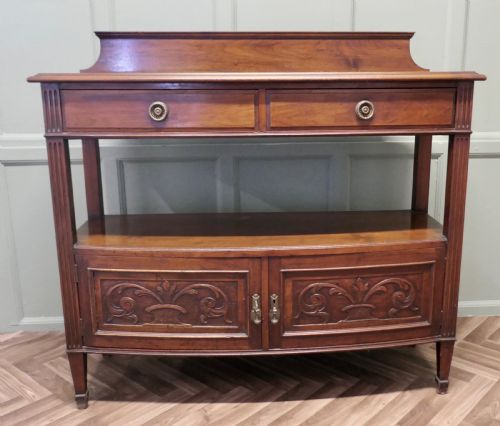


Carved Walnut Buffet Table
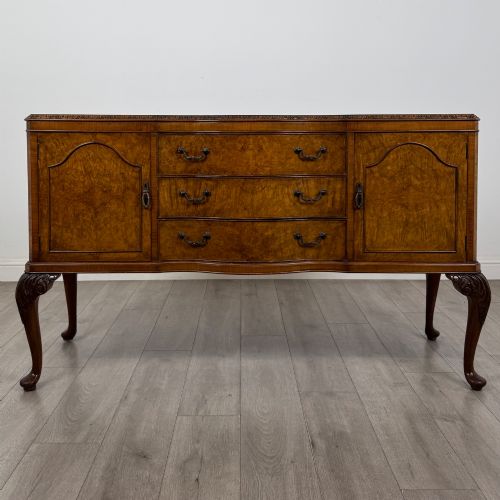
A carved walnut buffet table brings rich timber grain and formal utility to a dining room or hallway.
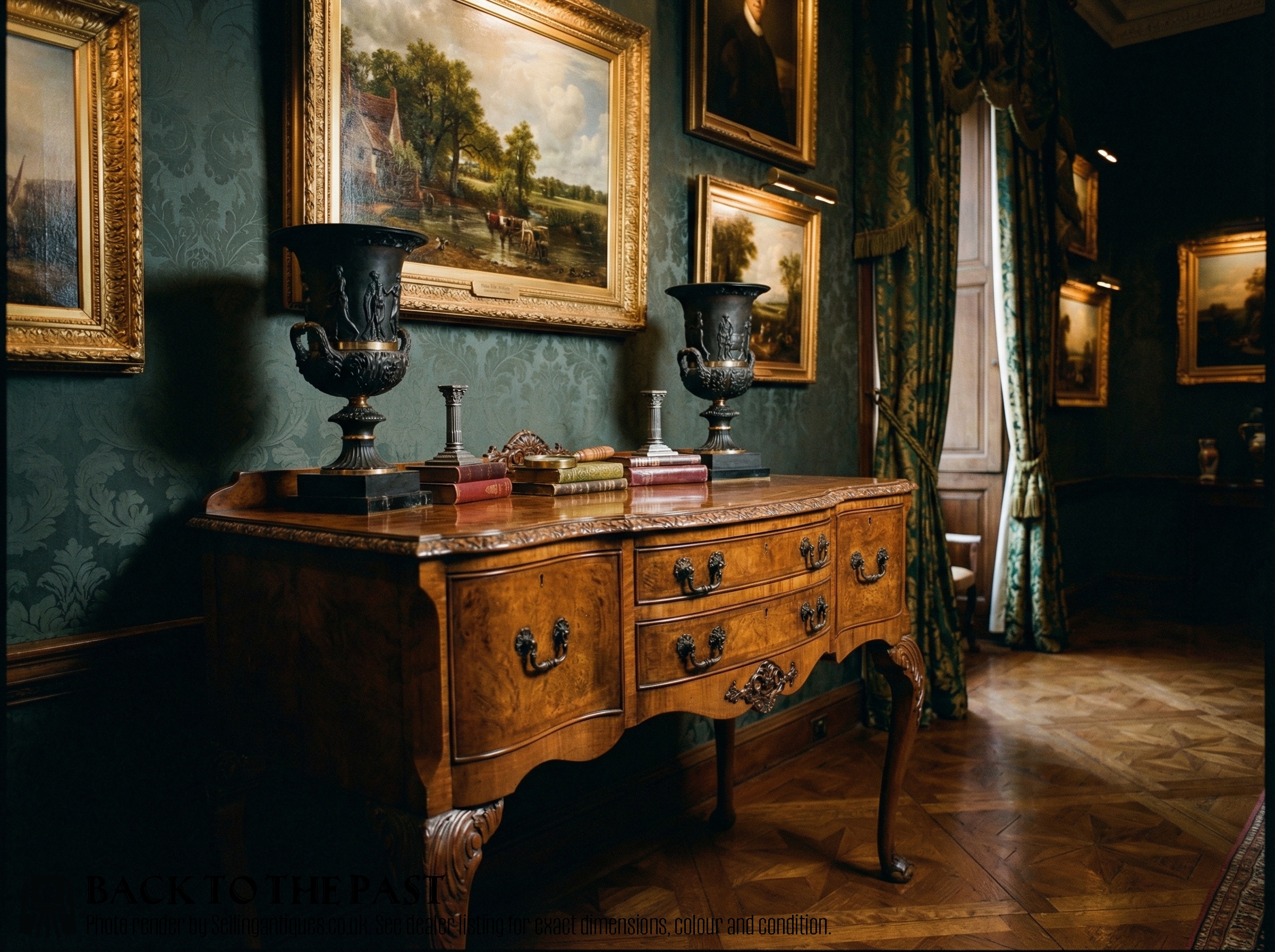
Carved Walnut Buffet Table
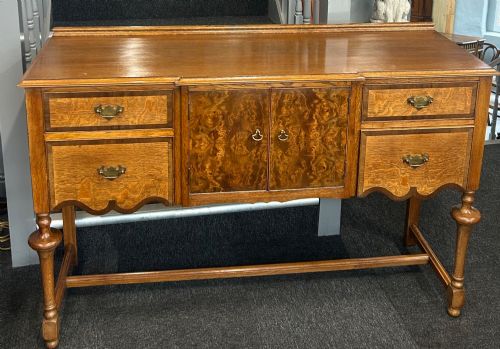
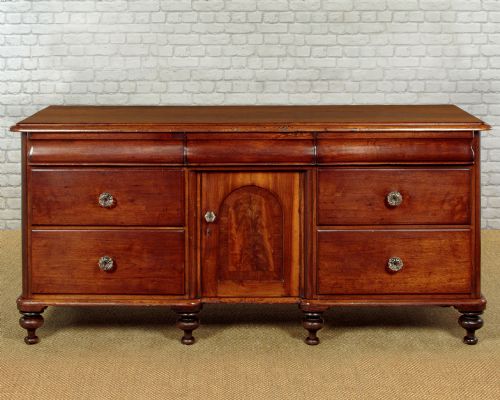
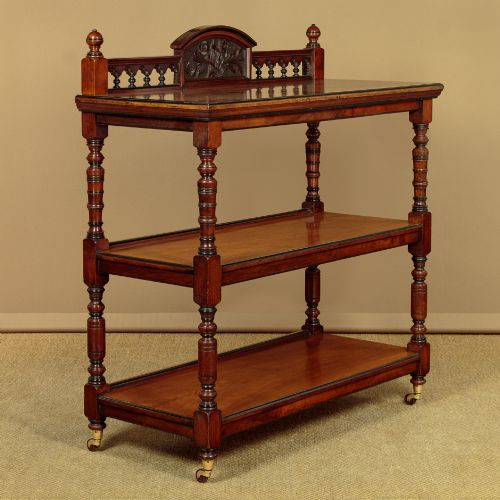
A carved walnut buffet table encompasses heavy serving surfaces, sideboards, credenzas and metamorphic dumb waiters spanning the seventeenth century through to the art deco era. Buyers searching for a carved walnut buffet table encounter distinct regional iterations, from nineteenth century French servers to Edwardian burr walnut consoles and Victorian adjustable pieces.
The material palette is anchored by solid walnut and burr walnut veneer, frequently complemented by brass hardware, marble tops, oak carcases and occasional glass elements. Stylistic diversity runs from gothic revival and french renaissance revival through to queen anne revival, aesthetic movement and art deco.
Materials and construction
The construction relies on solid walnut and decorative burr walnut veneers applied over secondary timbers such as oak. Carved ornamentation defines the structural surfaces, ranging from deep gothic and renaissance motifs to smooth art nouveau lines.
Functional mechanics appear in metamorphic dumb waiters, fully adjustable buffet tiers and folding serving tables utilising brass fittings.
Some Victorian dumb waiters change shape completely when adjusted, proving that nineteenth century furniture makers loved a clever mechanical trick.
Judging execution
Quality rests upon the selection of timber figures, particularly the rich patterning found in burr walnut veneers compared against plain plain walnut boards. The crispness and depth of hand carving distinguish workshops of high ambition from standard production.
The integrity of mechanical actions in metamorphic or adjustable pieces, alongside the harmonious integration of brass hardware and marble inserts, separates superior examples from simpler ones.
Hille of London·Epstein
The Carved Walnut Buffet Table Glossary
- Burr walnut
- A figured timber veneer obtained from the wart-like growths on walnut trees, prized for its swirling grain patterns. It creates a highly decorative surface on nineteenth and twentieth century cabinet fronts.
- Dumb waiter
- A tiered serving table designed to hold dishes without requiring servants at the table. Victorian examples often feature multiple revolving or adjustable shelves.
- Buffet
- A sideboard or serving table dedicated to the display and service of food and drink. These pieces range from compact servers to monumental French Renaissance revival cupboards.
- Metamorphic furniture
- Pieces engineered to transform from one form of furniture into another, such as a serving table that alters its tier height. This engineering requires precise brass hardware and joinery.
- Credenza
- A sideboard or buffet cabinet typically standing low to the ground, often featuring enclosed cupboards and display surfaces. Victorian and continental versions frequently incorporate burr veneers.
Carved Walnut Buffet Table: Frequently Asked Questions
How do I style a buffet table?
A buffet table serves as both a practical serving station and a focal point for displaying ceramics, silver or glassware.
Keep the surface uncluttered to allow the walnut grain and carved details to remain visible.
What is a metamorphic dumb waiter?
A metamorphic dumb waiter is an adjustable tiered serving table designed to change its height or configuration.
Victorian examples use mechanical brass ratchets or columns to alter the positions of the shelves.
How do I identify burr walnut?
Burr walnut is recognisable by its swirling, highly figured grain pattern caused by knot formations in the timber.
Cabinet makers applied it as a decorative veneer across drawer fronts and top panels during the Victorian and Edwardian periods.
Where were these pieces made?
The listings show English, French and American origins spanning multiple centuries.
French workshops frequently produced heavily carved Renaissance revival buffets, while English makers favoured walnut pedestal sideboards and art deco cabinets.