

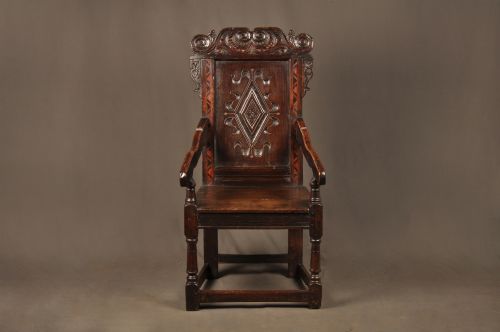
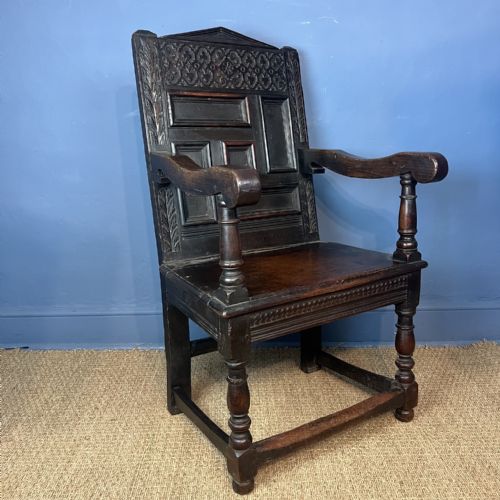
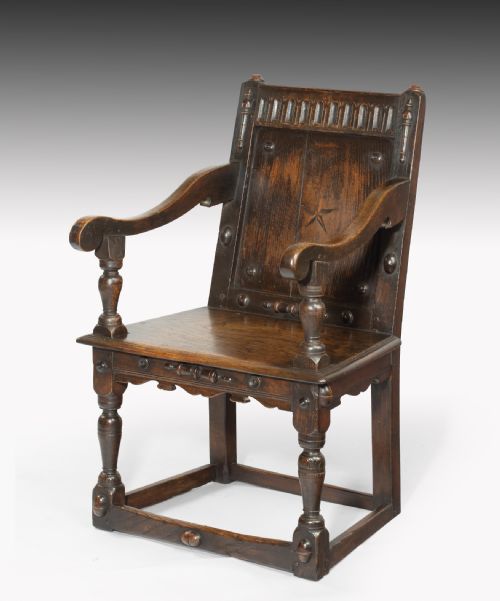
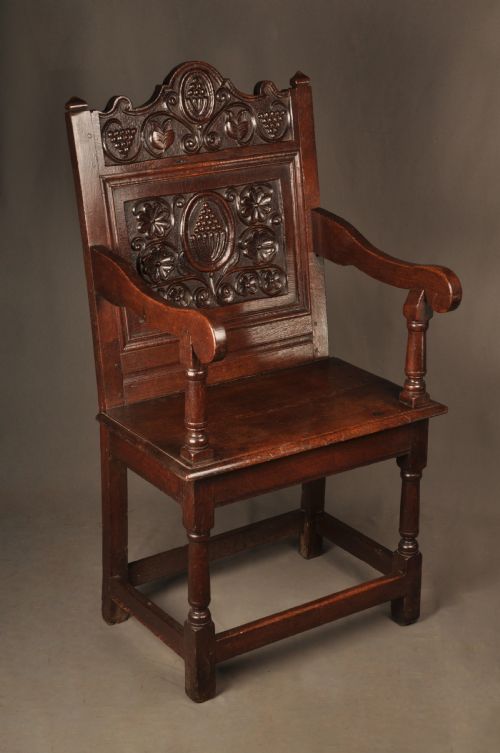
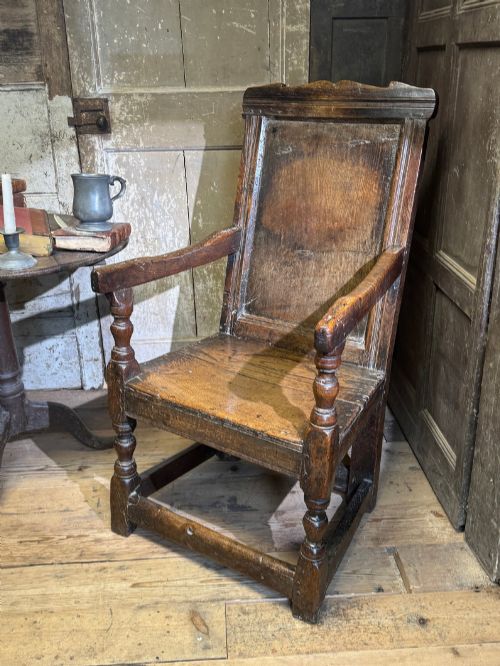

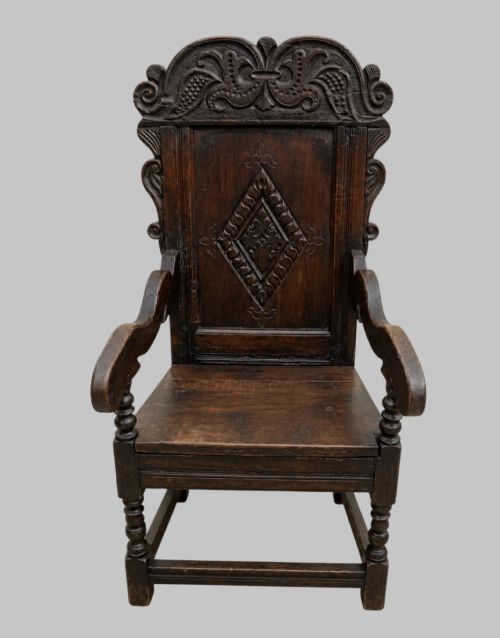
Carved Wainscot Chair
A carved wainscot chair brings solid oak construction and panelled backs into domestic spaces, offering sturdy seating with centuries of history.

Carved Wainscot Chair
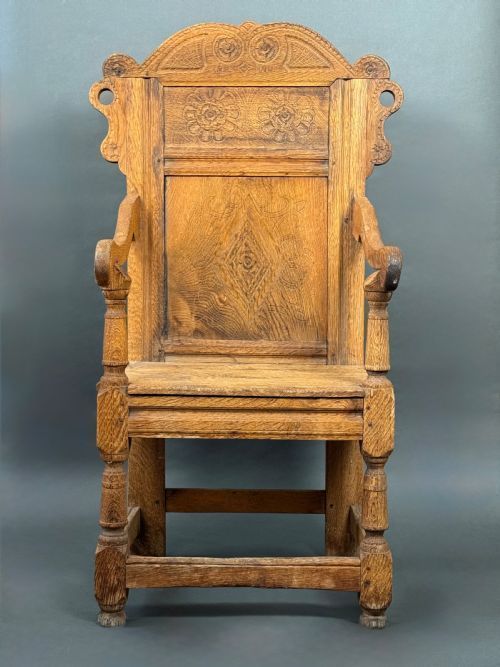
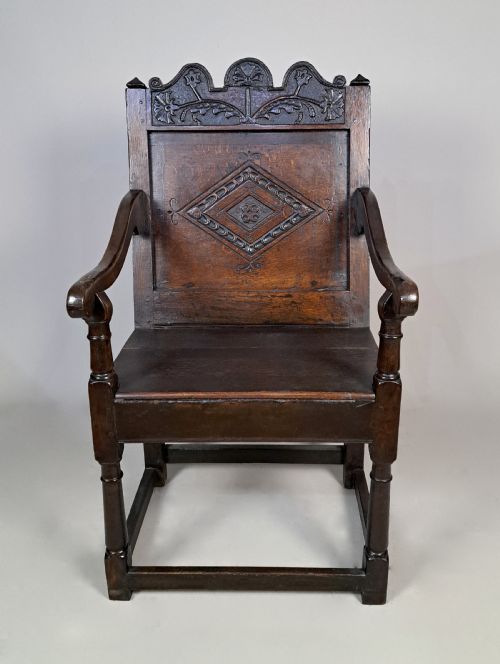
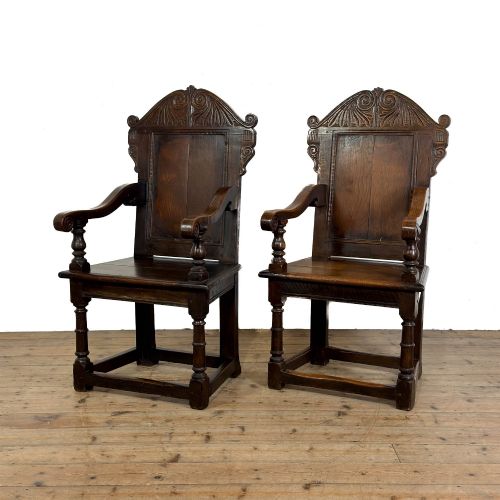
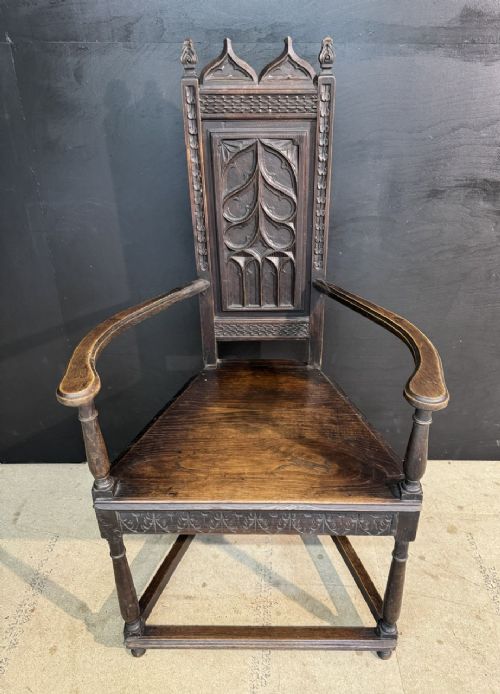
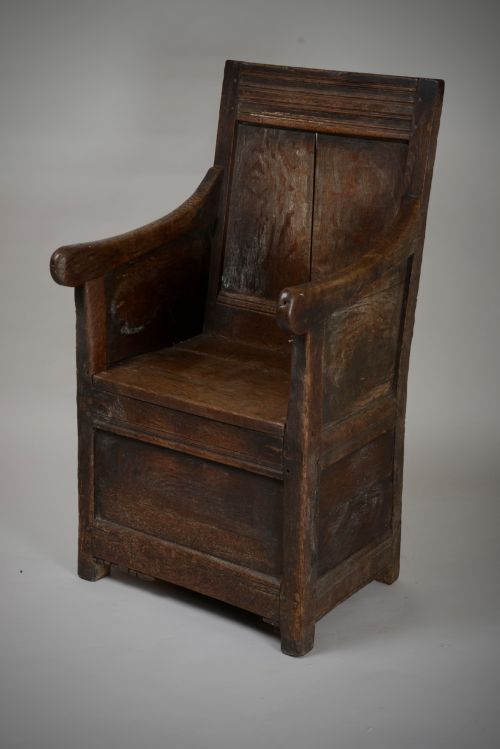
A carved wainscot chair is a heavy wooden armchair defined by a solid panelled back and box-like construction, originating from periods when timber seating was status furniture. These seats appear most frequently from the seventeenth century, alongside later revivals from the nineteenth century that mimic earlier regional designs.
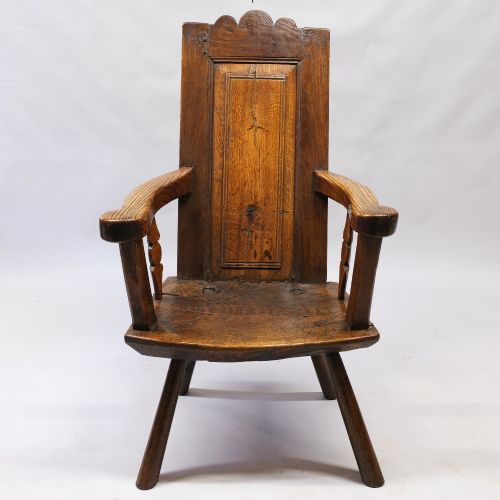
The form developed from domestic carpentry traditions in England, Scotland, and Wales, utilising regional joinery methods. Pieces span armchairs, side chairs, and smaller formats designed for domestic halls and chambers.
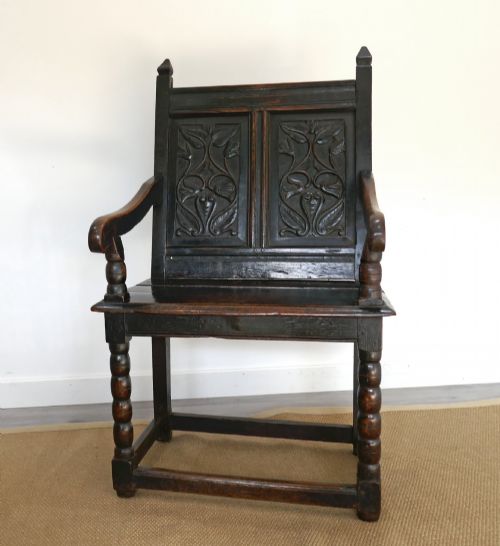
Buyers encounter examples originating from Yorkshire, Lancashire, Cheshire, and the West Country, each showing distinct carving patterns on the back panels. The surviving pieces connect modern interiors directly to early modern domestic life through heavy timber frameworks.
How they were made
Makers constructed these chairs primarily from solid oak, sometimes incorporating elm for secondary framing or seats. Timber was cleft and hewn rather than sawn, creating sturdy vertical stiles and horizontal rails that locked together with mortise and tenon joints secured by wooden pegs.
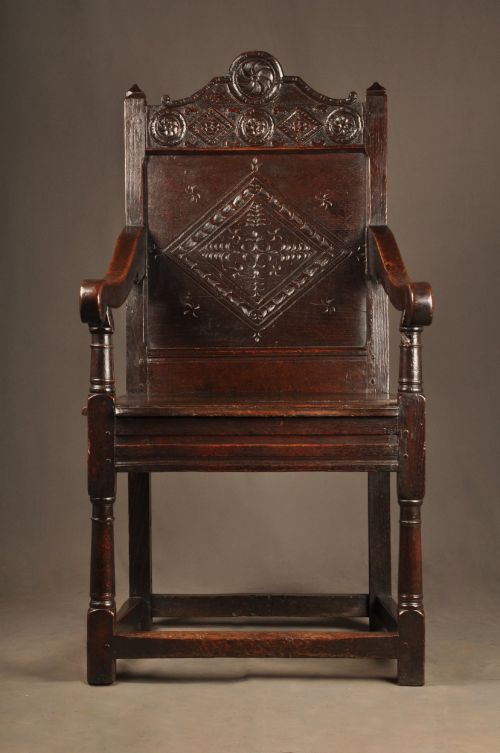
Carving was applied directly to the surface of the wooden back panels and crest rails using gouges and chisels, often displaying geometric guilloche patterns, scrolling foliage, or strapwork. Surfaces were finished with wax or oil over time, allowing the grain of the oak to darken naturally through exposure and use.
Listings feature solid oak and elm construction spanning the sixteenth century through the nineteenth century, including regional Yorkshire and Lancashire forms.
What varies in quality
The depth and execution of the carved decoration determine much of the visual hierarchy among these chairs. Crisp, deeply incised motifs carved directly from the structural timber indicate superior craftsmanship compared to shallow or later surface work.
Proportion and structural integrity separate standard examples from exceptional ones. Chairs retaining their original timber thickness across the seat and arms without excessive replacement parts command greater attention from collectors.
The Carved Wainscot Chair Glossary
- Wainscot
- A term originally describing fine oak panelling used on walls, later applied to heavy wooden chairs constructed using similar panel-and-frame techniques. These chairs rely on flat wooden panels fitted into grooved stiles and rails.
- Stile
- A vertical member in the framing of a chair back or seat. These form the primary upright supports that bear the weight of the panel.
- Rail
- A horizontal framing member running between stiles. The crest rail sits at the very top of the back panel.
- Backstool
- An early form of chair without arms, constructed with a panelled back similar to larger armchairs. These items functioned as movable seating around dining tables.
- Joined oak
- Furniture constructed using mortise and tenon joints secured by wooden pegs rather than iron nails. This method defines seventeenth-century carpentry.
Carved Wainscot Chair: Frequently Asked Questions
How do I identify a seventeenth century wainscot chair?
Seventeenth century examples display traditional joined construction with wooden peg fasteners and hand-carved oak panels showing regional design traits.
Examination of the timber surfaces often reveals oxidation and wear consistent with centuries of handling.
Were these chairs used at dining tables?
These heavy armchairs typically stood against walls or served as the head of the household table for the master.
Smaller backstools and side chairs provided movable seating for other household members during meals.
What is the difference between original and revival pieces?
Period pieces from the sixteenth and seventeenth centuries exhibit the timber seasoning, tool marks, and structural wear of their era.
Nineteenth-century revival examples imitate these earlier styles using machinery or nineteenth-century interpretation of historic carved motifs.
How do I care for solid oak furniture?
Solid oak requires stable indoor humidity levels away from direct heat sources to prevent timber splitting.
Applying traditional beeswax occasionally helps maintain the lustre of the historic wood surface.