





Welsh Vernacular Armchair
These welsh vernacular armchair examples are country seats built from local woods by regional makers, offering rugged charm and honest construction.

Welsh Vernacular Armchair
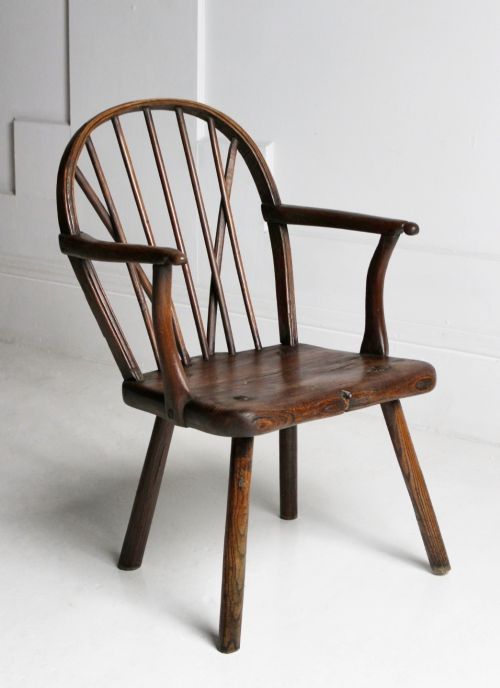
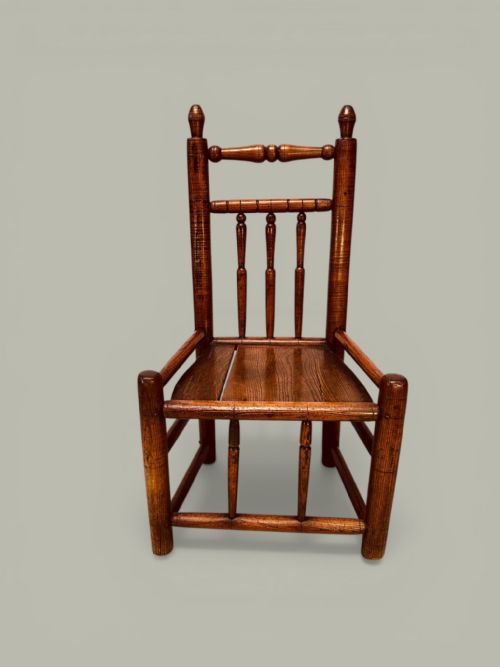
A welsh vernacular armchair represents the tradition of country seating built across rural workshops and farms. You encounter forms ranging from generous panelled oak armchairs to stick backs, comb backs, and turned chairs.
The selection includes regional pieces originating from areas such as the Swansea Valley and Carmarthenshire, alongside child's chairs and pairs. These seats carry the practical design choices of eighteenth-century and nineteenth-century makers.
How they were made
Makers utilised native timbers available locally, combining oak for structural frames and panels with ash, elm, and yew for spindles, seats, and contrasting details. Burr elm frequently provides rich figuring on seat pads.
Construction relies on traditional joinery methods such as pegged mortise and tenon joints for panelled frames and bodging techniques where tapered legs and spindles are wedged into solid timber seats.
Welsh Vernacular Armchair Retail Price Guide 2026
Typical asking prices for welsh vernacular armchair among the pieces listed under this phrase on Sellingantiques today, from the lower quarter to the upper quarter. They describe what is for sale here now, not the wider market.
Some makers incorporated contrasting yew-wood panels into plain oak frames, ensuring even a humble farmhouse seat received a touch of decorative flair.
What varies in quality
The distinction lies in the harmony of proportions, the integrity of the timber selection, and the comfort of the rake in the back. A well-balanced stick back demonstrates considered spacing in the spindles and strong structural unity.
Surface character also shapes the piece, where original paint surfaces or untouched patination on unpolished oak and elm elevate the presence of the chair above heavily restored examples.
The Welsh Vernacular Armchair Glossary
- Stick back
- A chair construction method where turned or shaped wooden sticks form the backrest by slotting directly into a solid wooden seat. This method defines many vernacular country pieces.
- Comb back
- A Windsor chair variation where the top rail resembles the teeth of a comb, often featuring an extended headrest supported by vertical spindles.
- Vernacular
- Objects designed by local craftsmen using regional traditions and native materials rather than adhering to formal metropolitan style guides.
- Turner's chair
- An early form constructed using turned posts and spindles, sometimes associated with seventeenth-century production methods.
- Burr elm
- A timber harvested from elm tree growths, prized by makers for its swirling grain patterns and used in chair seats.
Welsh Vernacular Armchair: Frequently Asked Questions
How do I date a stick back chair?
Dating relies on observing construction techniques, tool marks, timber shrinkage, and the profile of the spindles and legs. Earlier eighteenth-century examples often show hand-rived components and deeper saddle seats.
Nineteenth-century pieces tend to incorporate more machine assistance and lighter turnings, though primitive methods persisted in rural workshops.
Where were these chairs made?
These chairs originated in rural Welsh workshops, farmhouses, and villages, with specific examples documented to locations such as the Swansea Valley and Carmarthenshire. Local makers utilised whatever native timber grew nearby.
Regional styles developed independently based on the skills of the local carpenter and the availability of materials like oak, ash, and yew.
How should I care for an antique oak chair?
Maintain antique oak and elm chairs by placing them away from direct heat sources and sudden temperature fluctuations that cause timber to split. Avoid modern chemical polishes that build up sticky residues on historic surfaces.
Feeding the dry wood occasionally with traditional beeswax helps preserve the natural patination built up over centuries of handling.