
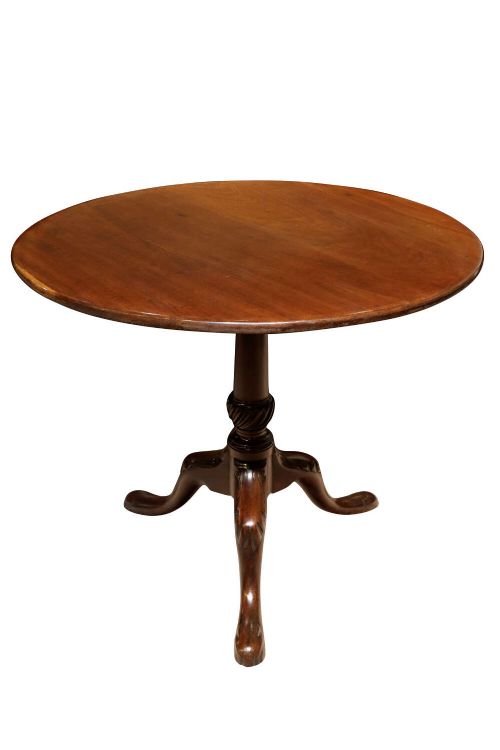
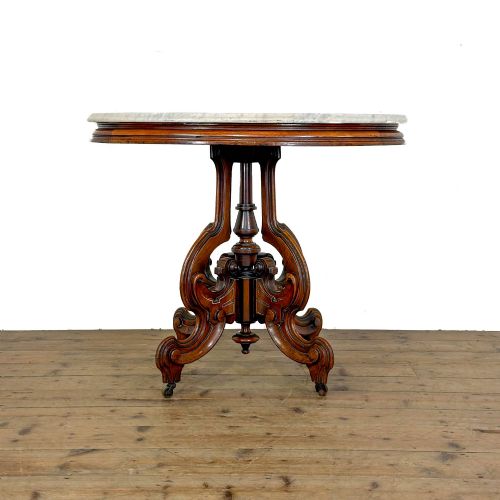
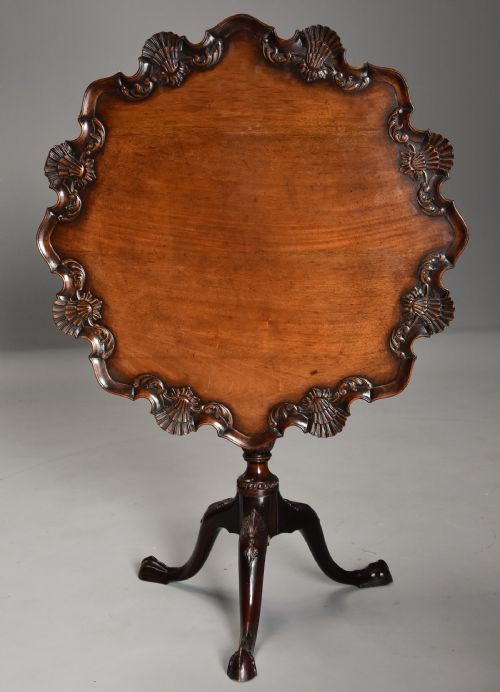
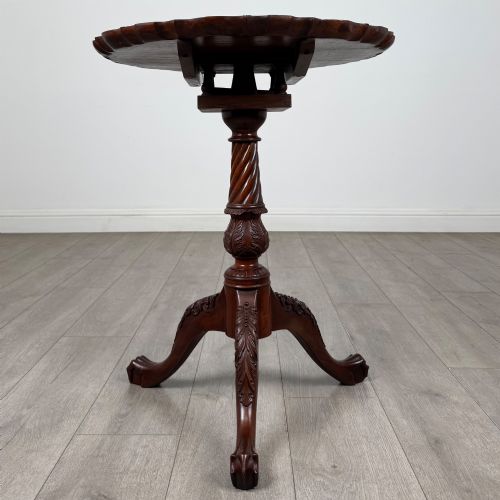
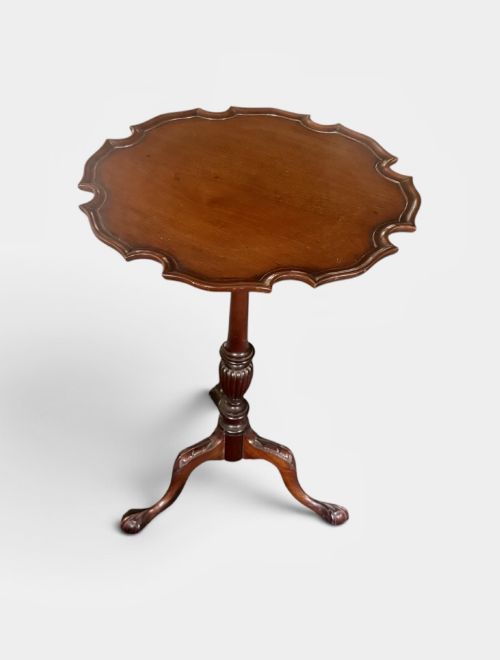
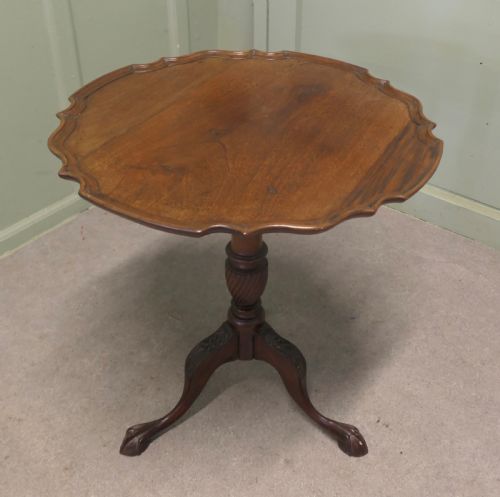
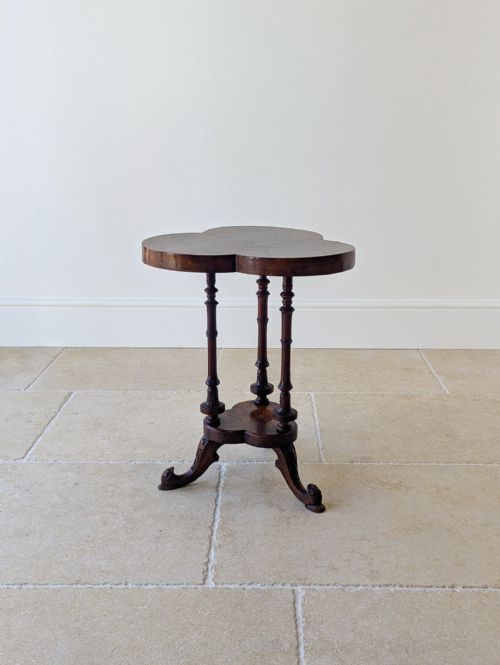
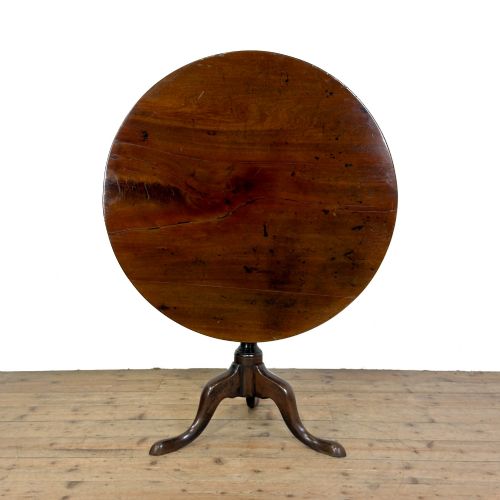
Carved Tripod Tea Table
A carved tripod tea table brings centuries of British and colonial craftsmanship into a room, offering a compact surface raised on a central pillar and three legs.
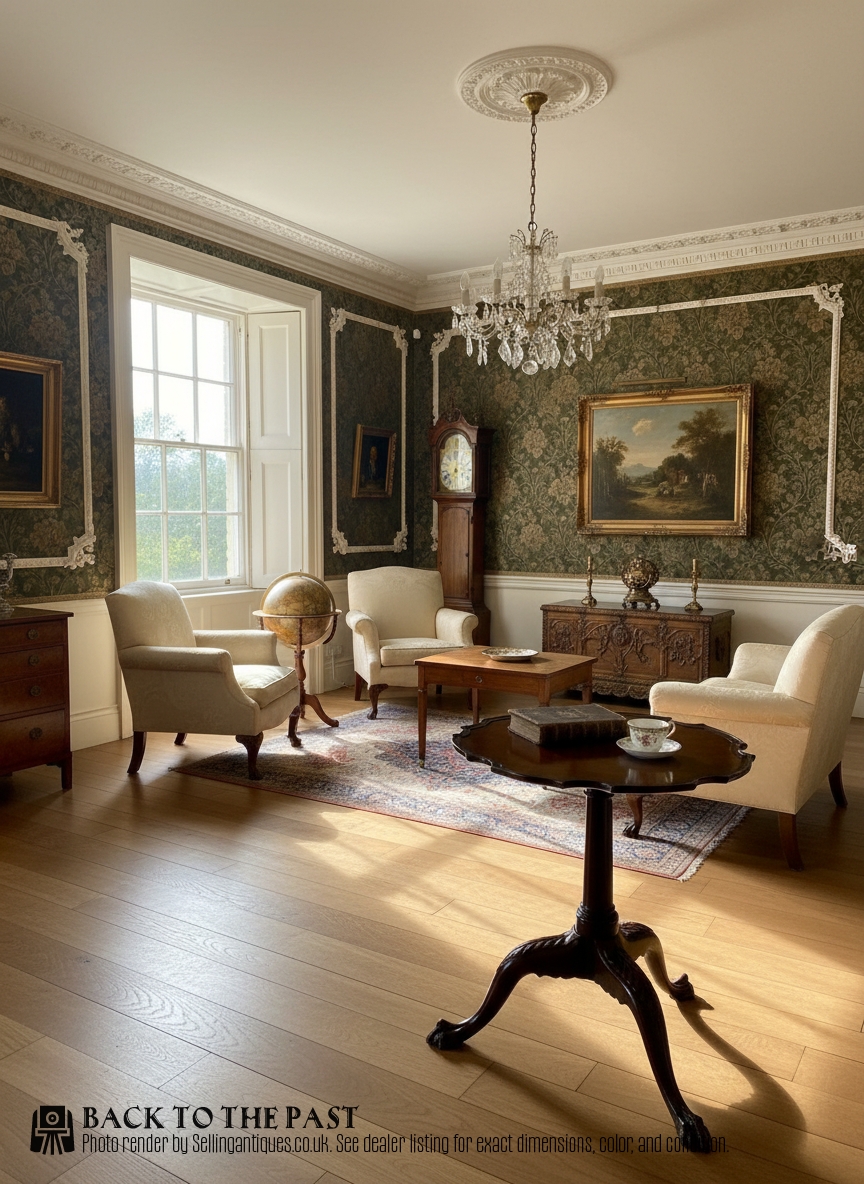
Carved Tripod Tea Table
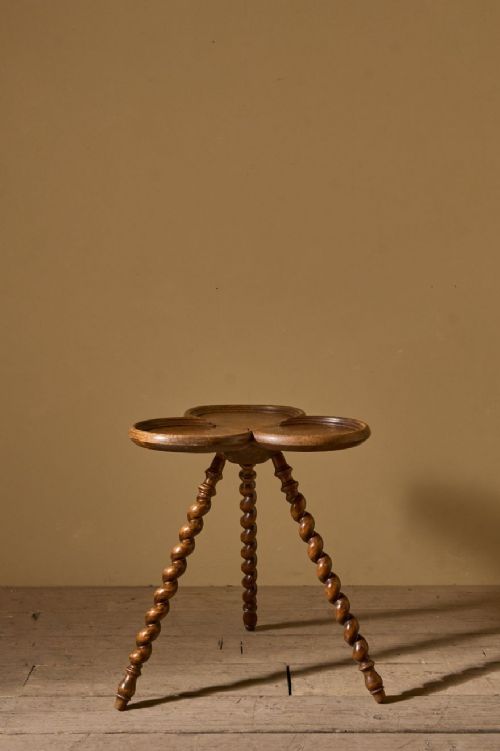
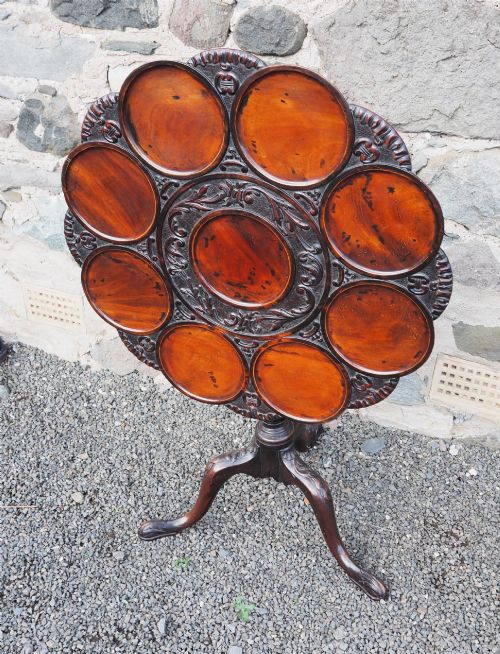
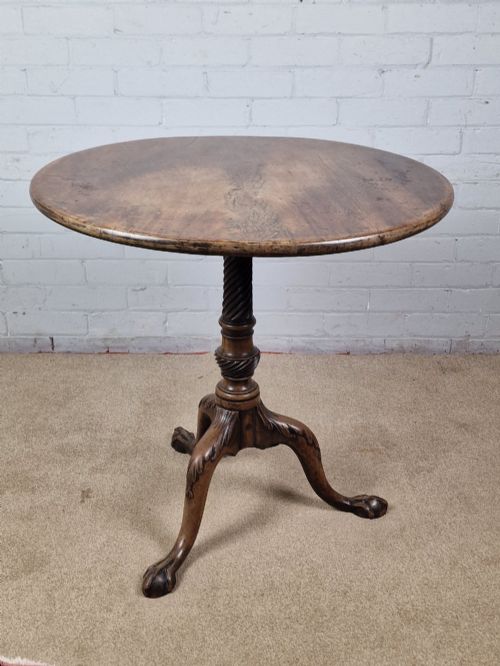
A carved tripod tea table is primarily found in forms designed for small-scale hospitality, reading, or display, functioning as a wine table, tilt-top table, or kettlestand. The pieces gathered here span from the Georgian and George II periods through the Victorian and Edwardian eras, reaching into Anglo-Indian production.
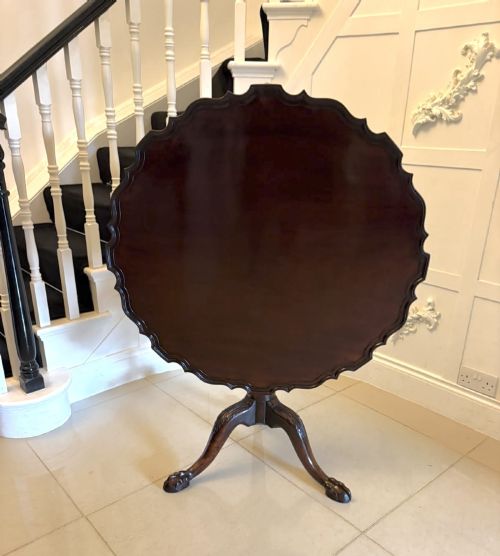
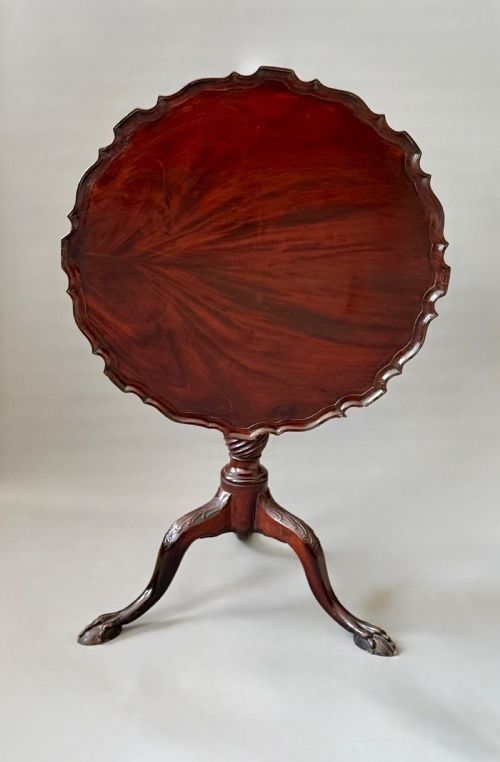
Mahogany and walnut dominate the domestic examples, whilst regional workshops and colonial trade introduced teak, padouk, and pollard oak. Buyers meet circular, clover-shaped, and trefoil tops, many featuring piecrust edges and birdcage mechanisms that allow the surface to rotate and fold.
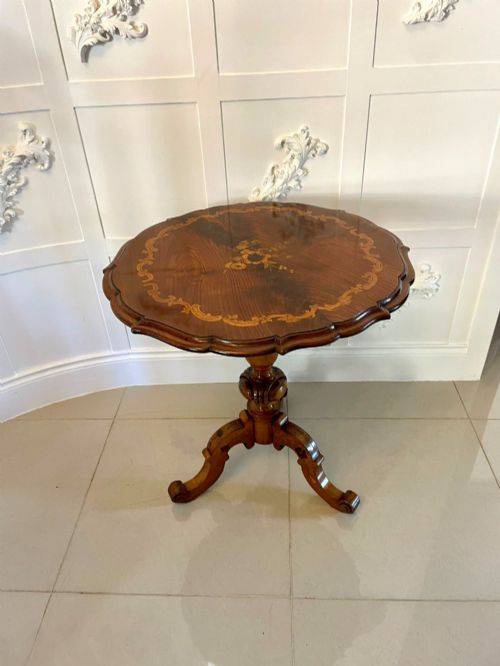
The proportions remain domestic and portable, designed to sit beside a chair or in the centre of a parlour. Simpler country house oak variants appear alongside highly carved Chippendale style models and intricate mother of pearl inlaid pedestal tables.
Materials and Construction
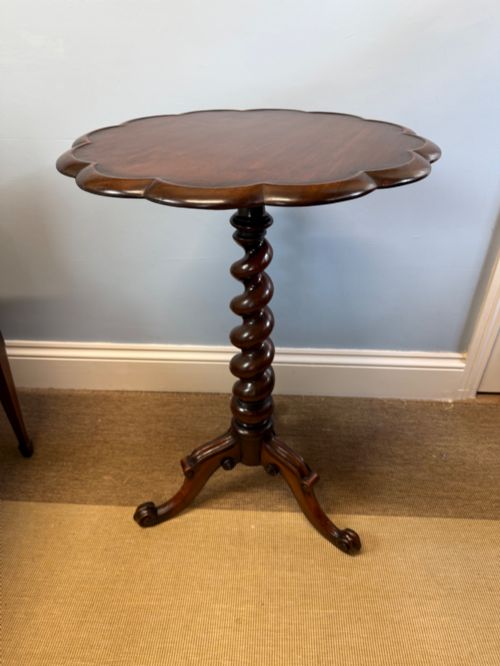
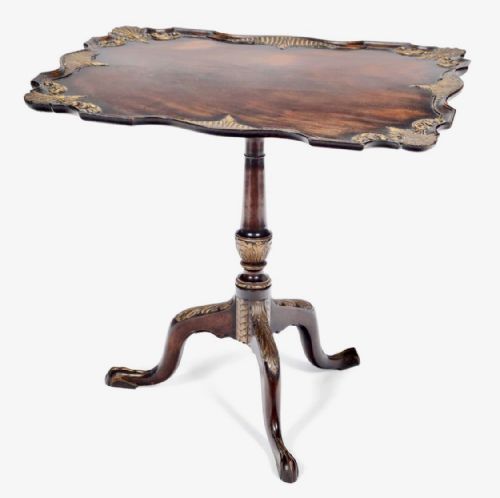
Cabinetmakers worked primarily in solid hardwoods such as mahogany, walnut, and oak, often selecting burr veneers or pollard growth for figured surfaces. The top connects to a turned pillar column, which descends into three carved legs terminating in pad, claw and ball, or plain feet.
Tilt-top variants utilise a wooden catch or a revolving birdcage mechanism fitted beneath the surface to permit the table to be stored flat against a wall when not in use. Carving is executed directly into the solid timber of the rim, pillar, or knees, occasionally complemented by parcel gilding or marquetry inlay.
An eighteenth-century conversation piece occasionally doubles as an elephant head table.
Evaluating the Workmanship
Quality rests in the crispness of the carving and the selection of timber, where rich natural grain and deep patination elevate a piece above standard domestic production. The joinery between the central column and the three splayed legs determines the structural stability of the entire frame.
Proportion and restraint in the carved details distinguish finer cabinetwork from heavier, later revivals. Original mechanisms, such as operational birdcage pivots and intact tilt catches, separate untouched examples from altered or repaired furniture.
The Carved Tripod Tea Table Glossary
- Tilt top table
- A table with a hinged surface that rotates and folds into a vertical position. This mechanism saved floor space in smaller period rooms.
- Birdcage mechanism
- A revolving wooden frame fixed beneath the table top that permits the surface to turn as well as tilt. It sits between the column and the table top.
- Pie crust edge
- A raised, carved table rim shaped with alternating curves and indentations resembling pastry work. This decorative border is characteristic of Chippendale style and Georgian tables.
- Tripod base
- A support structure comprising three legs radiating from a central vertical pillar. It ensures stability on uneven floors by resting evenly on three points.
- Teapoy
- A small stand or box designed to hold tea canisters, frequently adapted into pedestal tables in Anglo-Indian and colonial workshops. These pieces often display dense carved ornamentation.
Carved Tripod Tea Table: Frequently Asked Questions
What is a birdcage mechanism?
A birdcage is a small revolving wooden construction fixed under the table top. It allows the surface to spin horizontally and tilt vertically.
Cabinetmakers introduced this device in the eighteenth century to make storage easier when the furniture was not in use.
How were these tables used originally?
These tables served primarily for serving tea, holding drinking vessels, or supporting lamps in domestic parlours and drawing rooms. Their portable nature meant servants moved them about the house as daily needs shifted.
Tilt-top versions stood flat against walls between uses to clear floor space.
How do I tell an 18th century table from a Victorian revival?
Eighteenth century examples rely on native timber selection, hand-cut joinery, and restrained carving with deep natural patination. Victorian revivals often exhibit heavier proportions, machine-assisted turning, and denser decorative flourishes.
Examining the underside reveals tool marks and construction methods specific to each period.
Are all tripod tables made of mahogany?
Mahogany is common, particularly in Georgian and Chippendale style pieces, but workshops also utilised walnut, burr walnut, oak, pollard oak, teak, and padouk. Anglo-Indian and colonial makers frequently employed dense exotic hardwoods suited to intricate carving.
Regional British furniture makers often used local oak or fruitwoods.