

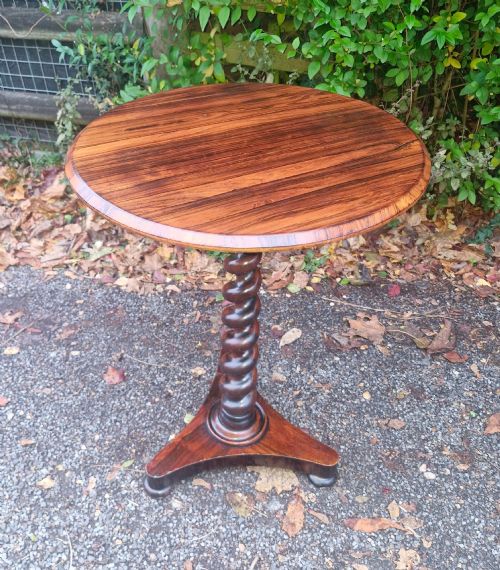
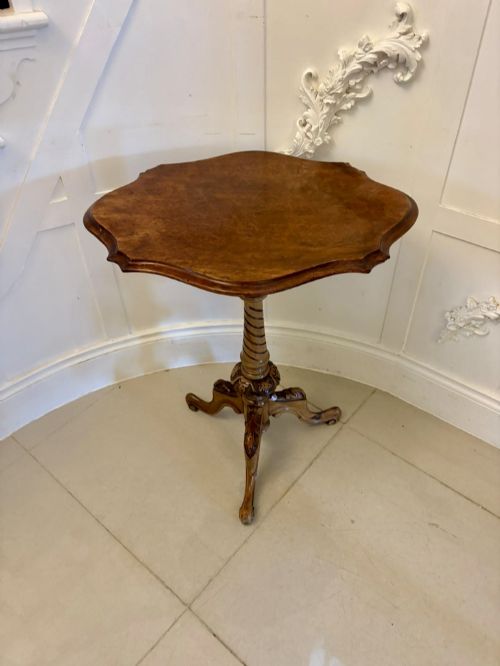
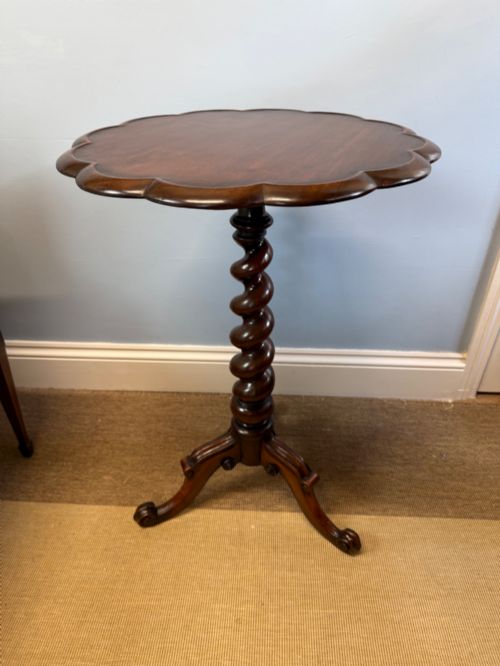
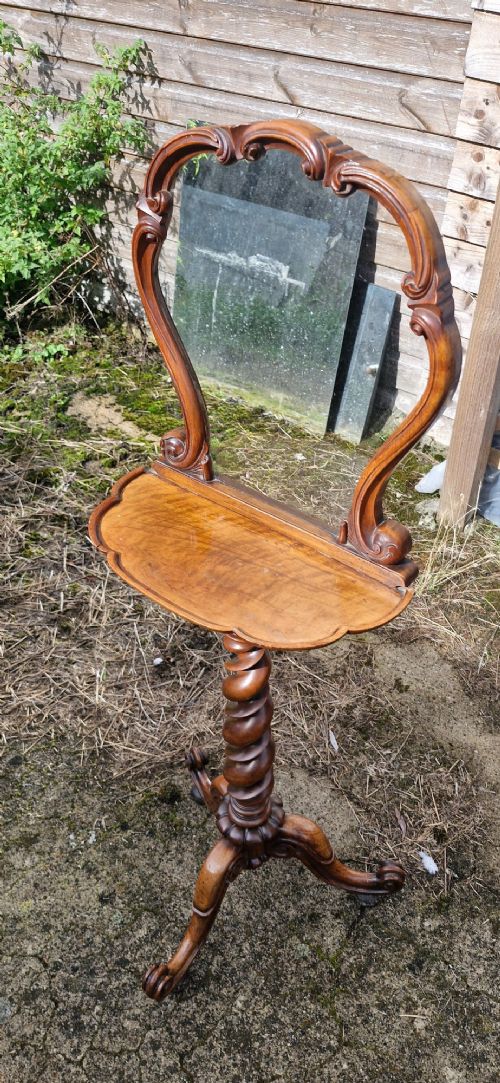




Spiral Column Occasional Table
A spiral column occasional table brings carved architectural movement and compact utility into a room, offering a sturdy surface supported by a distinctive twisted stem.
Spiral Column Occasional Table
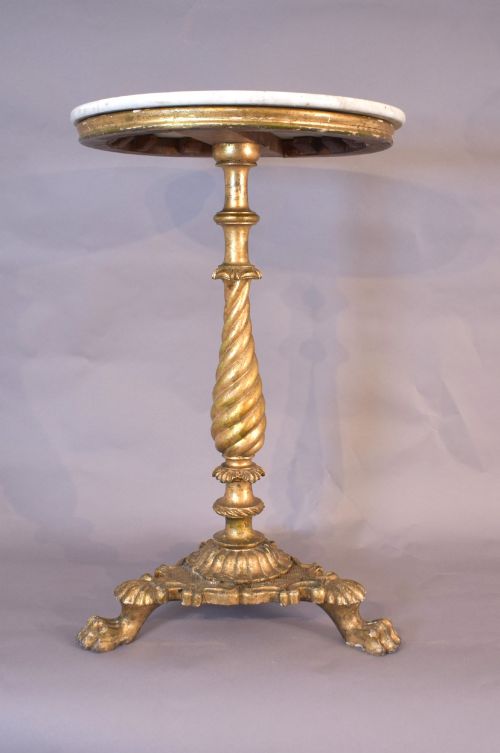
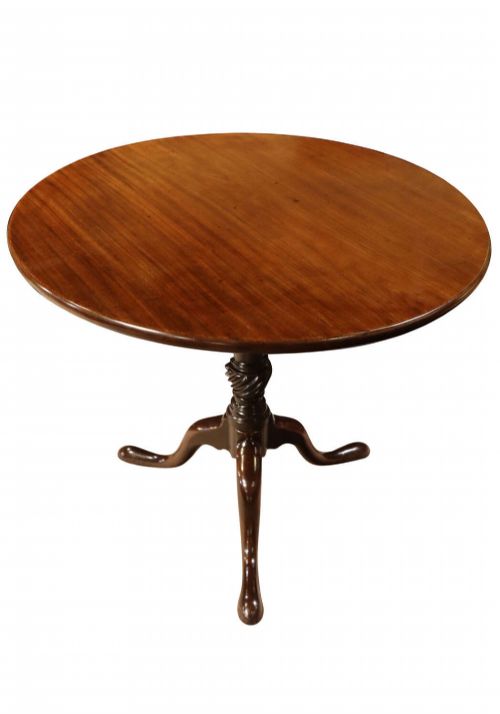
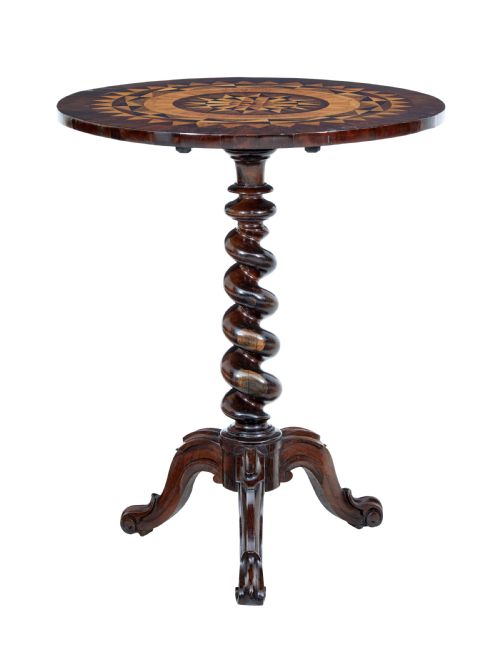
A spiral column occasional table represents a versatile form designed for domestic use as a lamp, wine, or tea table. The listings here span from the Georgian period through the Victorian era and into the twentieth century, showing remarkable persistence in domestic interiors.
The dominant material across these examples is mahogany, frequently accompanied by walnut and occasional decorative additions like boxwood stringing or marble. Forms include tripod bases, tilt-top mechanisms, and drop leaves, providing practical surfaces for daily use.
Buyers will encounter distinct stylistic interpretations, ranging from restrained Georgian proportions to elaborate Victorian expressions and Venetian Revival painted pieces. Each variant retains the signature twisted pillar that defines the group.
Construction and materials
Cabinetmakers constructed these tables using dense timbers such as mahogany and walnut, often turning solid stock on a lathe to create the characteristic spiral twist column. Tripod bases required precise joinery to ensure the three legs met the central pillar securely and maintained stability on uneven floors.
Surface decoration involved careful hand-polishing of the timber to reveal the grain, alongside specialist techniques like boxwood stringing or giltwood accents. Tilt-top mechanisms relied on well-fitted brass catches to allow the table top to pivot and lock safely into position.
Spiral Column Occasional Table Retail Price Guide 2026
Typical asking prices for spiral column occasional table among the pieces listed under this phrase on Sellingantiques today, from the lower quarter to the upper quarter. They describe what is for sale here now, not the wider market.
Mahogany and walnut dominate the timber selections across these listings, appearing alongside decorative touches of boxwood, giltwood, and marble.
Distinctions in quality
Quality in these tables rests upon the crispness of the hand-carved spiral twist and the selection of figured timber for the top. A superior piece displays fluent carving along the column without sanding blunts, paired with well-proportioned tripod legs that terminate in clean feet.
The integrity of mechanical elements such as tilt-top pivots or drop-leaf hinges also separates better examples from standard production. Original surfaces with rich patination command greater appreciation than heavily stripped or over-restored timber.
The Spiral Column Occasional Table Glossary
- Tripod table
- A small standalone table supported by a central pillar resting on three legs. This construction prevented wobbling on uneven floors before modern leveling feet existed.
- Tilt-top mechanism
- A hinged fitting under the tabletop that allowed the surface to pivot vertically when not in use. This clever design meant tables could be stored flat against a wall to save floor space.
- Boxwood stringing
- Fine inlaid lines of pale boxwood set into contrasting darker timber like mahogany. Cabinetmakers used this technique to delineate borders and add geometric refinement.
- Drop leaf
- A hinged section of the tabletop that can be folded down to reduce the footprint of the table. Brackets or swing legs support the leaf when raised.
- Tea poy
- A small cabinet or table originally designed to store loose tea leaves. These often double as occasional tables in modern settings.
Spiral Column Occasional Table: Frequently Asked Questions
What is a spiral column occasional table used for?
These tables served historically for holding small items like wine glasses, tea equipment, or lamps in entertaining rooms. Today they function as compact side surfaces beside armchairs or sofas.
Their modest footprint allows them to fit easily into tight corners or beside furniture where larger surfaces would overwhelm the space.
How do I spot a tilt-top mechanism?
Look underneath the tabletop for a wooden or brass block fitted with a pivot pin and a small catch. When released, the top tips ninety degrees so the table stands flat.
This practical feature was especially common on nineteenth-century examples intended for flexible domestic spaces.
Are these tables sturdy enough for daily use?
Most tripod designs offer reliable stability provided the leg joints remain tight and secure. The three-legged construction naturally accommodates uneven antique floorboards.
Care should be taken not to overload the edges of tilt-top versions unless the locking catch is fully engaged.
How do I tell a Georgian table from a Victorian one?
Georgian examples tend to display lighter proportions, restrained carving, and simpler tripod leg profiles. Victorian pieces often feature heavier timber sections, bolder turning on the columns, and more decorative additions like inlay.
Examining the grain, colour, and construction joints helps clarify the period of manufacture.