

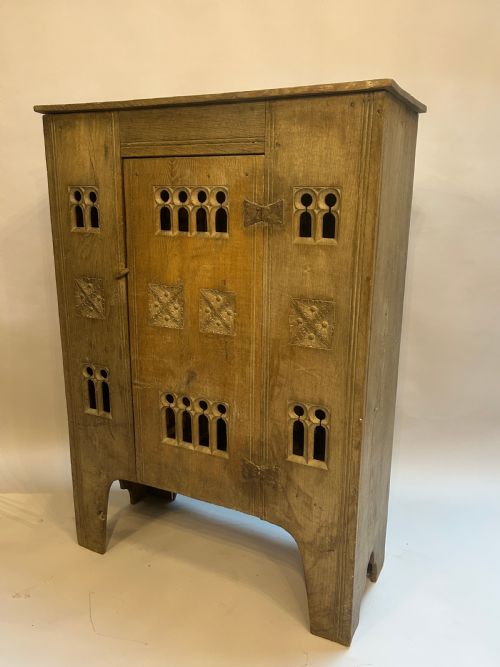
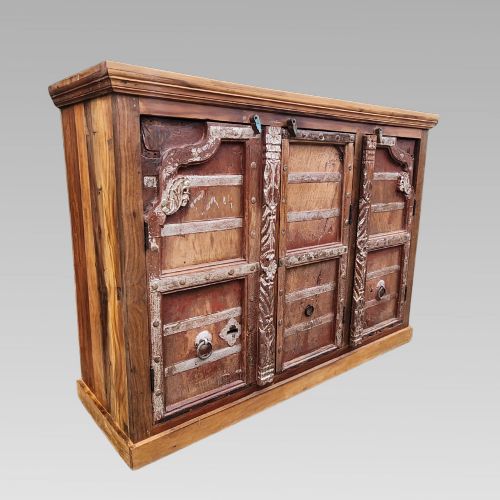
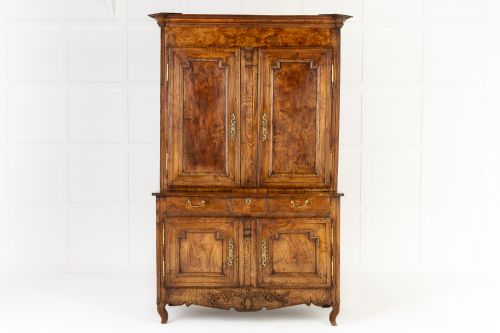


Carved Timber Sideboard
A carved timber sideboard brings robust storage and deep grain character to a dining room or hallway.
Carved Timber Sideboard
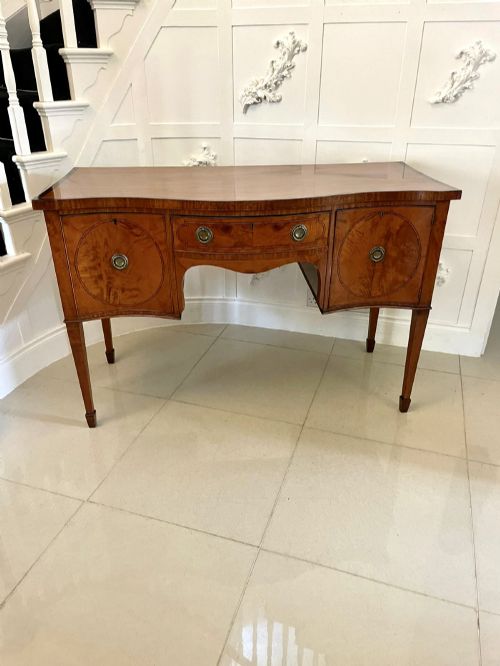
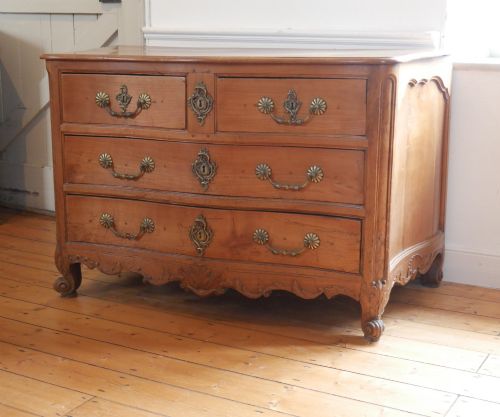
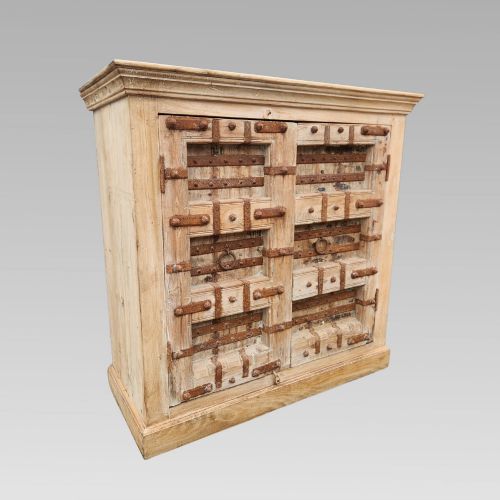
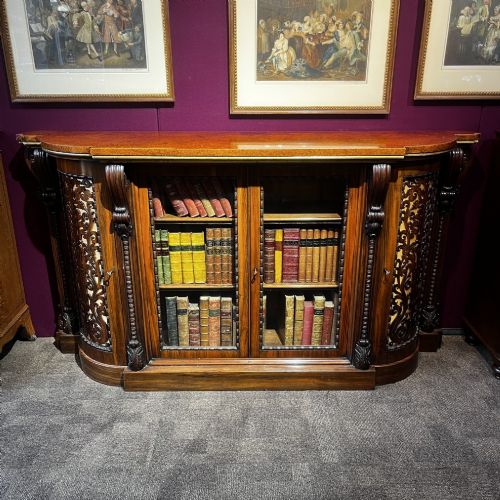
A carved timber sideboard serves as a substantial storage piece, taking forms such as pedestals, bow fronts, and mirror-backed servers. These items originate across diverse traditions, spanning English country houses, French provinces, and Indian workshops.
The selection here encompasses periods from the eighteenth century through the Victorian era and into the early twentieth century. Buyers will find woods ranging from native oak and mahogany to exotic padauk, teak, and walnut.
How they were made
Cabinet makers utilised solid timbers alongside fine veneers like flame mahogany and pollard oak, constructing carcases with traditional joinery. Surfaces display hand-carved detailing, panel work, and occasionally boxwood inlay or painted finishes.
Hardware typically includes brass handles, escutcheons, and hinges that complement the underlying wood tone. Structural support relies on sturdy timber feet, pedestals, or integrated plinths designed to bear heavy loads of tableware.
Some nineteenth-century sideboards spent decades holding heavy silver soup tureens before finding retirement in modern hallways.
What varies in quality
The standard of carving determines much of the visual distinction, moving from simple linear mouldings to deeply articulated foliage, figures, and panels. Crisp hand-chiselling reflects the time and skill invested by the original maker.
Timber selection and grain matching separate standard utility items from important commission pieces. Superior examples exhibit well-figured veneers, dense native hardwoods, and intact original structural integrity without heavy restoration.
Gillows
The Carved Timber Sideboard Glossary
- Bow front
- A curved convex front cabinet shape popular in Georgian and Victorian furniture design. This contour softens the profile of large timber storage units.
- Pedestal sideboard
- A heavy form featuring two flanking cupboard columns connected by a central recess or board. These substantial items anchor large dining spaces.
- Chiffonier
- A compact low sideboard or cabinet developed during the nineteenth century. It frequently includes enclosed shelving behind doors and a mirror superstructure above.
- Padauk
- A dense tropical hardwood displaying rich reddish-brown tones. Makers utilised this durable timber for export furniture destined for European markets.
Carved Timber Sideboard: Frequently Asked Questions
Where do I put a sideboard?
These large storage pieces suit dining rooms, wide hallways, or spacious living areas where they provide both surface space and internal capacity.
Ensure adequate clearance for doors and drawers to open fully against surrounding walls and furniture.
How do I clean timber surfaces?
Dust regularly with a soft, dry cloth to prevent grit accumulation on carved details and polished panels.
Apply a traditional beeswax polish occasionally to nourish the wood and maintain a natural lustre without building up heavy chemical residues.
How do I date a sideboard?
Examine the secondary woods inside drawers, the style of carving, and construction techniques such as hand-cut dovetails.
Hardware styles and overarching design movements like Victorian or Georgian provide further chronological markers.