
Carved Study Desk
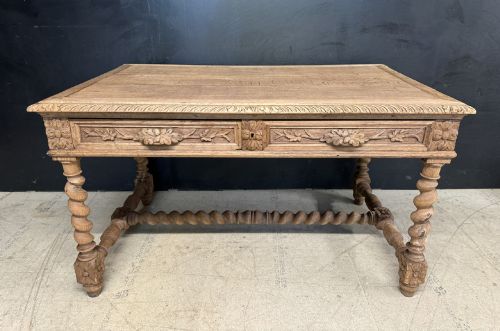
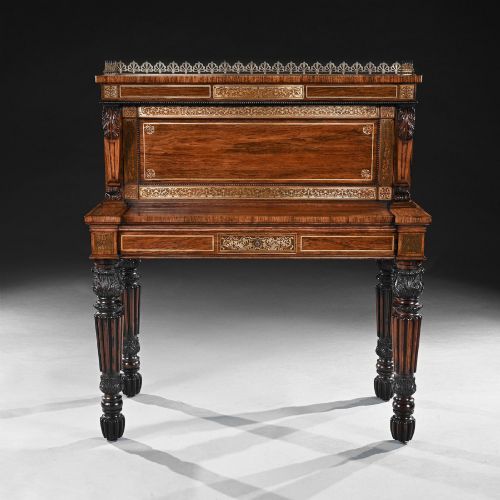
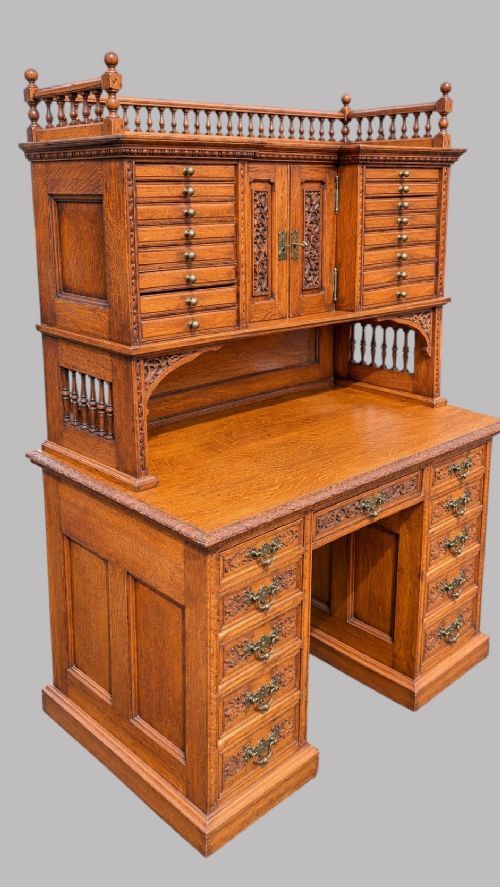
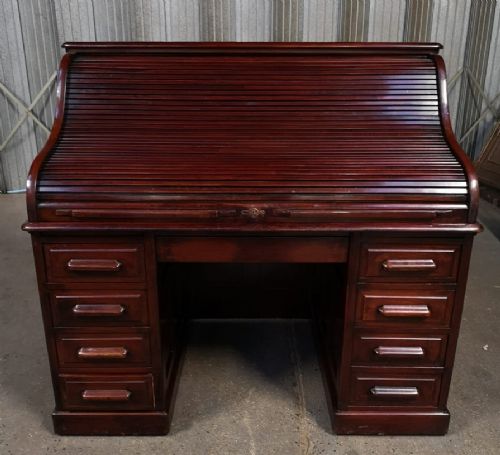
A carved study desk brings presence to a room, offering solid timber surfaces and compartments built for writing.
Carved Study Desk
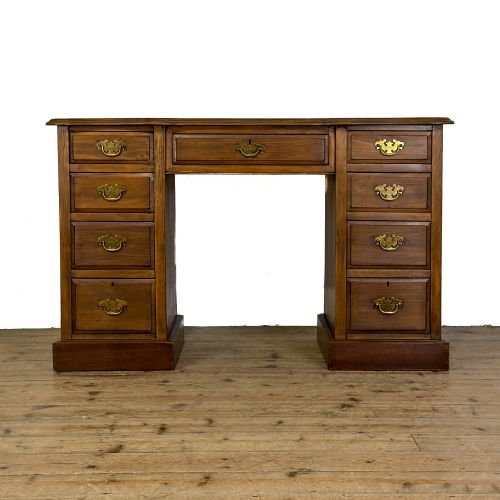
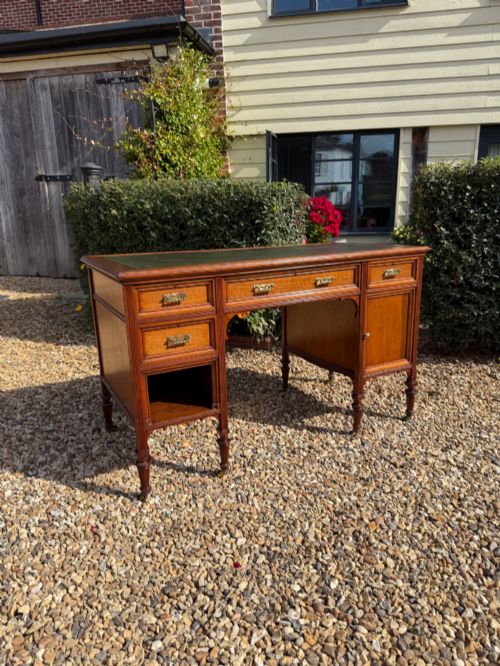
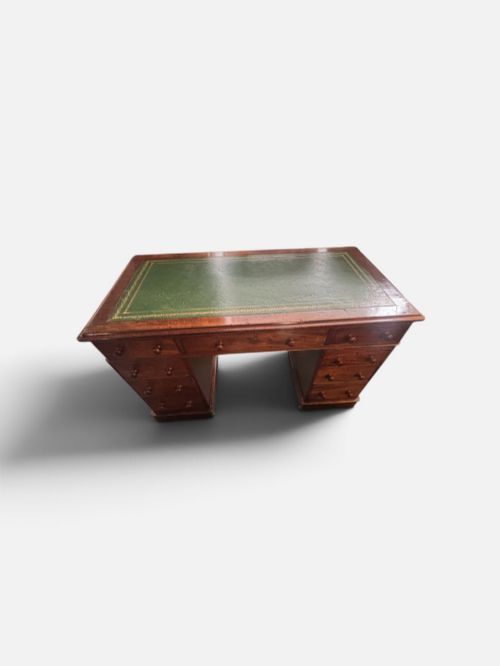
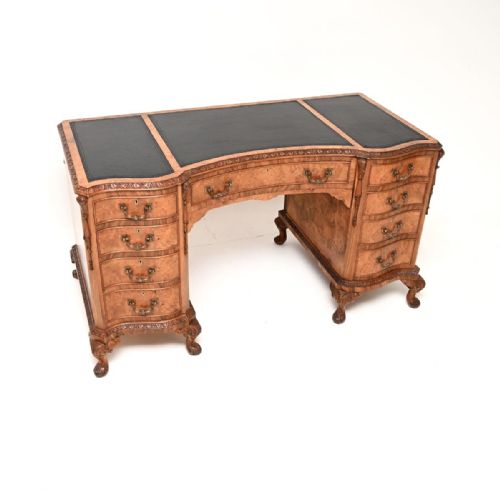
A carved study desk encompasses writing tables, pedestals, and bureaus designed for workspace utility in domestic or library settings. When searching for a carved study desk, buyers encounter forms ranging from pedestal desks with leather writing surfaces to compact writing tables and bureau models.
The selection on this page draws from the Victorian, Edwardian, and Georgian periods, spanning the nineteenth and early twentieth centuries. Woods such as mahogany, walnut, and burr walnut dominate the construction, accompanied by styles like Chippendale Revival, Queen Anne Revival, and Gothic Revival.
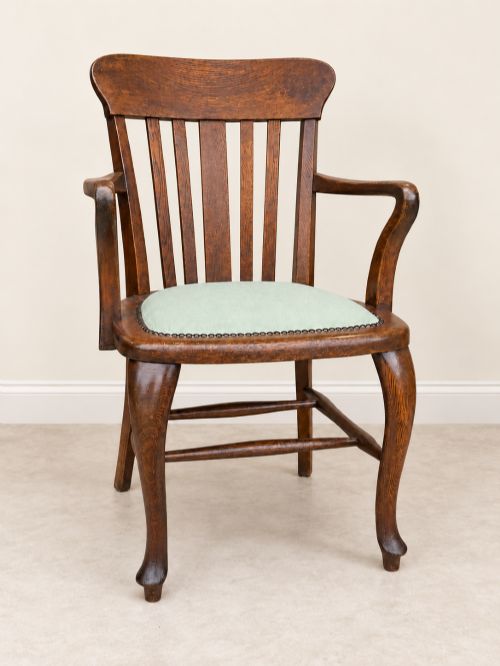
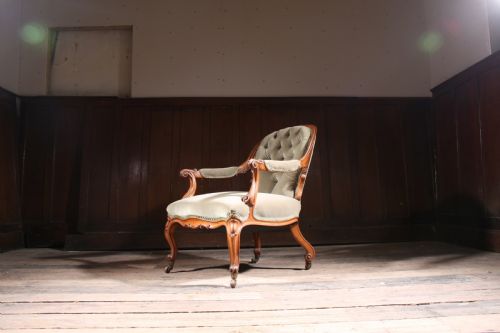
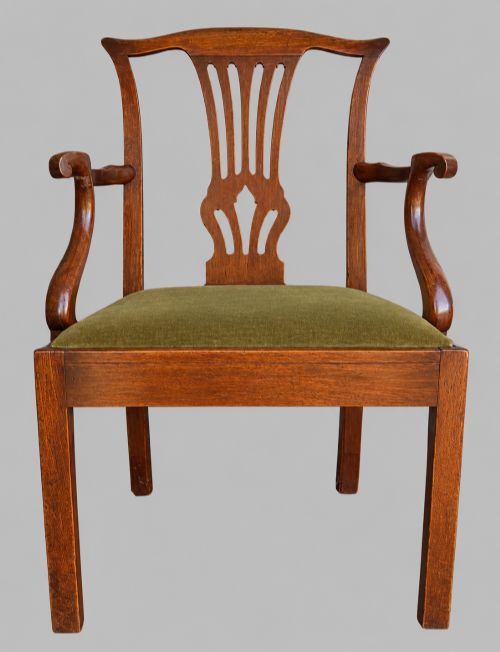
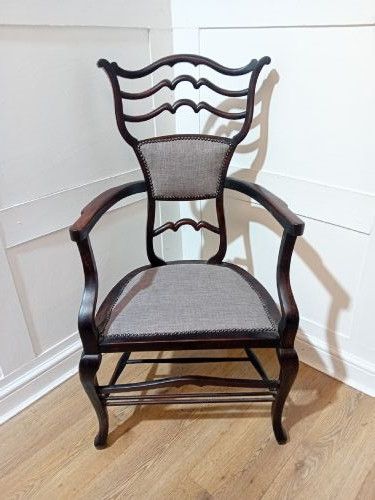
Associated seating and accessories appear alongside the desks themselves, including revolving desk chairs, armchairs, and carved bookends. These pieces reflect the varied domestic arrangements of past centuries, where study furniture required both durability and decorative detail.
How they were made
Cabinet makers utilised dense hardwoods including mahogany, walnut, burr walnut, rosewood, and oak for structural integrity and decorative grain patterns. These timbers formed the carcasses, drawers, and carved elements of writing furniture.
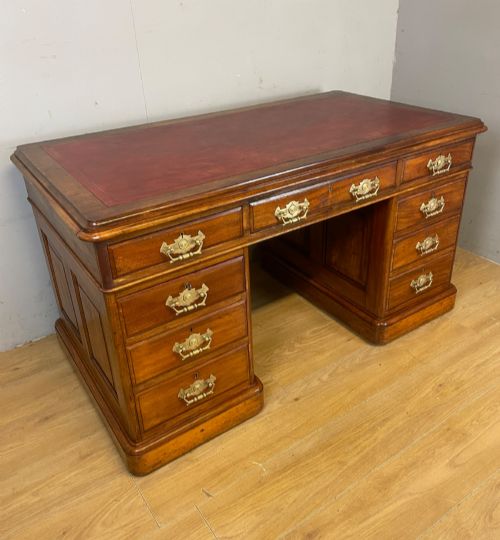
Surfaces frequently integrated inset leather panels, often tooled with gilt or blind stamps, providing a durable writing medium. Brass hardware, handles, and occasional inlay work added functional metal components to the timber structures.
Black Forest carved wooden owls peer out from nineteenth century bookends, keeping watch over stray paperwork.
What varies in quality
The distinction between tiers rests upon the depth of the carving and the selection of timber veneers, such as figured burr walnut or rosewood. Secondary timbers inside drawer linings and the precision of dovetail joinery separate standard production from superior workshop output.
Attribution to documented makers or specific retail houses elevates a piece through evidence of superior design execution and finishing details. The integration of specialised mechanisms, such as revolving seats or fitted bureau interiors, also influences the standing of a desk.
Gillows Oxford Street Workshop·Maple and Co·Wylie and Lochhead Glasgow·Mein of Kelso
The Carved Study Desk Glossary
- Pedestal desk
- A freestanding desk comprising two supporting pedestals of drawers beneath a main writing surface. This form allows storage on both sides in partners variants.
- Writing table
- A freestanding table with one or more drawers designed primarily for correspondence rather than heavy clerical storage. These pieces often feature slender legs and finished backs.
- Bureau
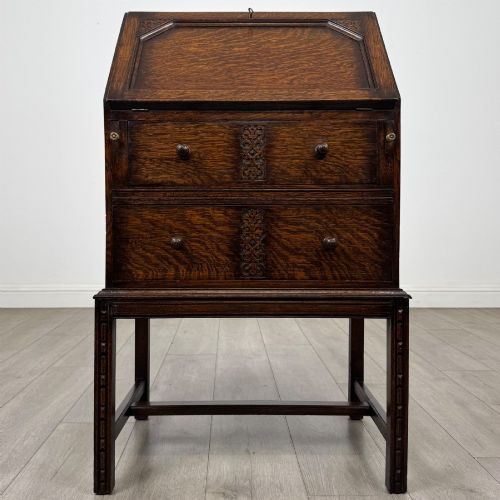
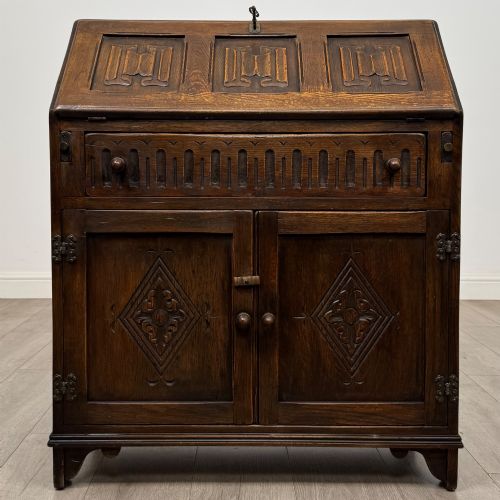
- A desk featuring a sloping fall-front lid that opens to reveal internal pigeonholes and small drawers. Examples in this category frequently display carved linenfold panels.
- Kneehole desk
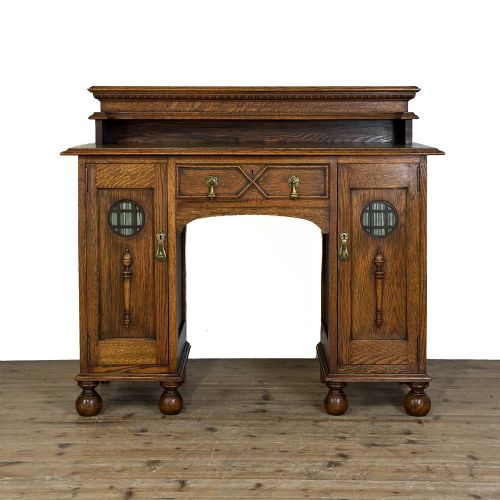
- A compact desk configuration featuring a central recess for the user's legs, flanked by banks of smaller drawers. This layout maximises storage within a restricted footprint.
- Linenfold
- A style of carved wooden panelling resembling folded vertical linen fabric. This decorative motif appears on Edwardian oak bureau and desk fronts.
Carved Study Desk: Frequently Asked Questions
What is a partner's desk?
A partner's desk is a large pedestal format designed with drawers and cupboards on both sides, allowing two people to work face to face.
These pieces typically date to the Victorian era and served administrative or domestic library functions in large households.
How do I care for leather desk tops?
Leather writing surfaces benefit from occasional cleaning with a damp cloth and treatment with appropriate neutral leather balms to prevent drying.
Avoiding direct sunlight and excessive heat preserves the gilt tooling and suppleness of the hide.
What is burr walnut?
Burr walnut is a timber harvested from walnut tree growths that produce intricate, swirling grain patterns. Cabinet makers prized this wood for decorative veneers on high-status Victorian and Edwardian desks.
How do I distinguish Edwardian from Victorian desks?
Edwardian desks, dating from around nineteen hundred to nineteen twenty, generally feature lighter proportions and simpler revival styles. Victorian pieces, spanning earlier in the nineteenth century, often display heavier timbers and deeper carving.