



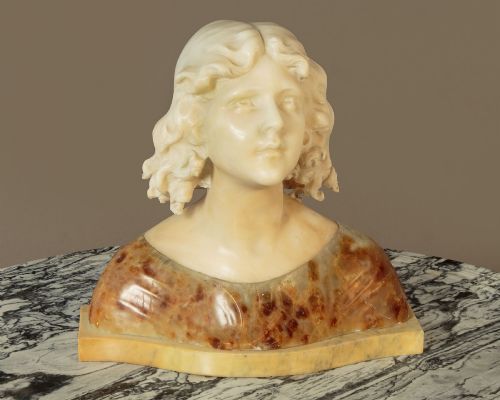

Carved Stone Female Figure
A carved stone female figure brings classical poise and tactile weight into a room, spanning neoclassical muses to art deco dancers.
Carved Stone Female Figure
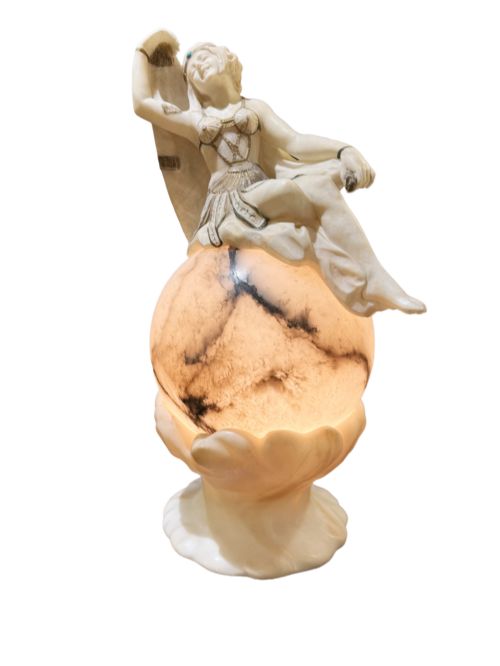
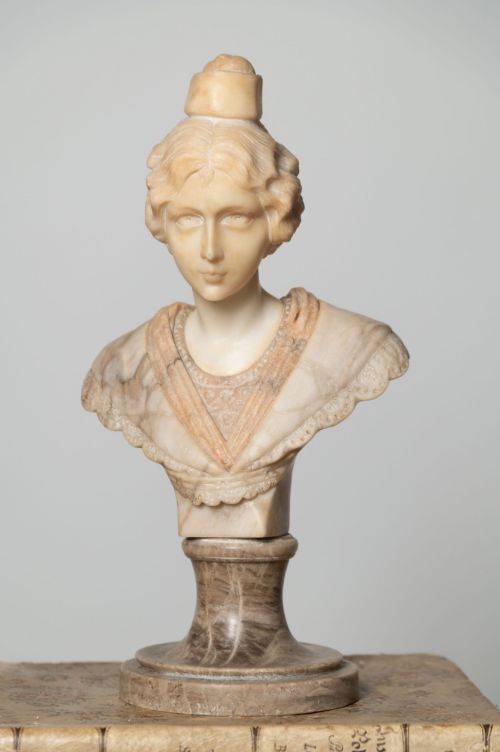
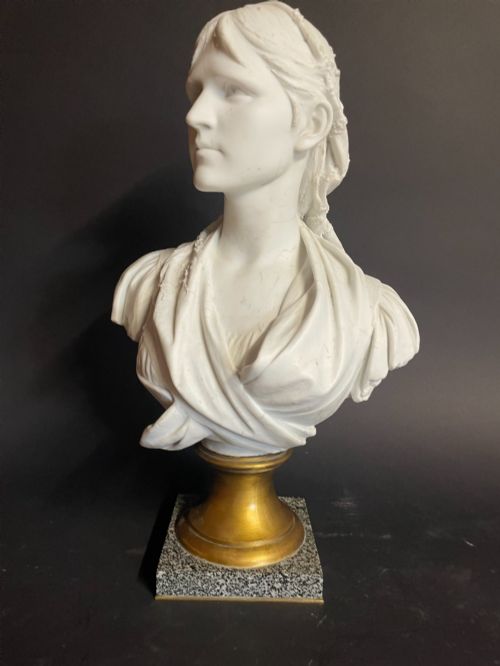
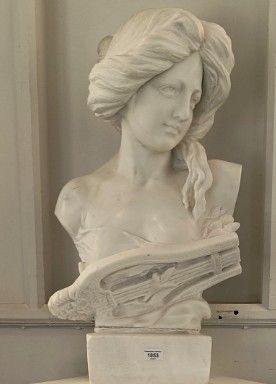
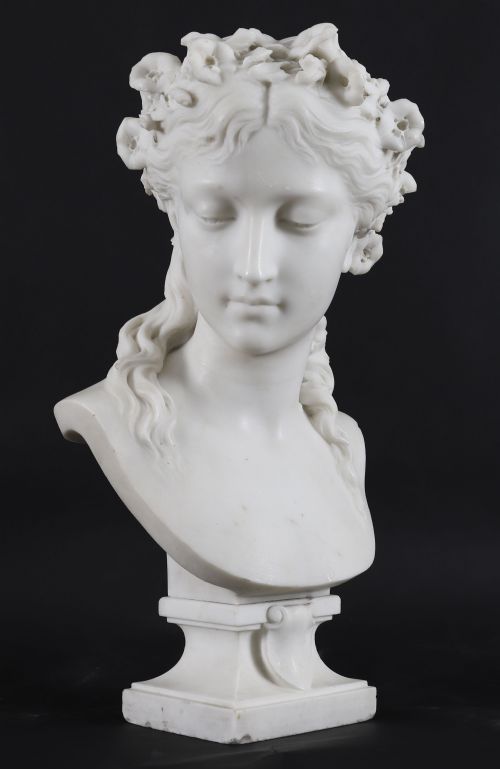
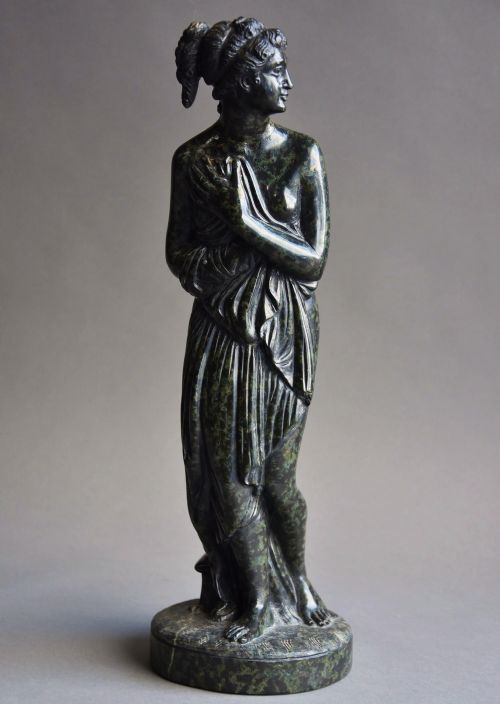
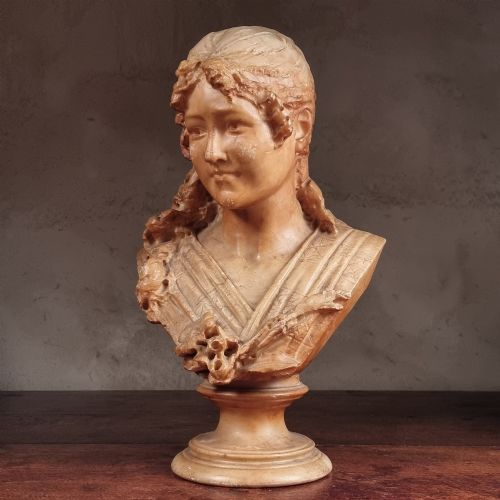
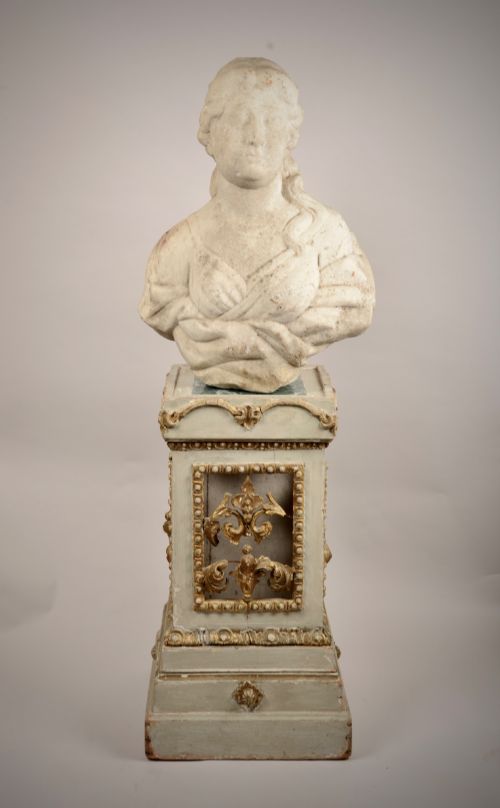
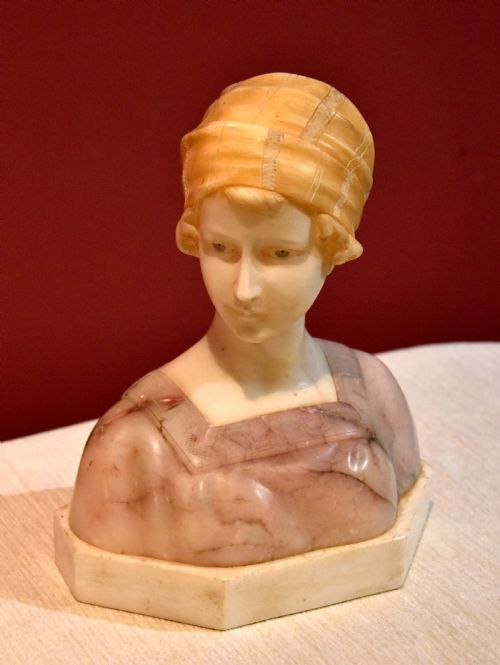
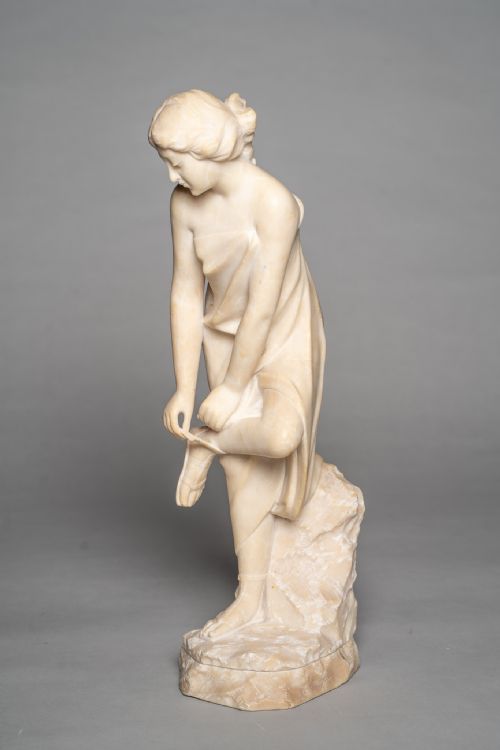
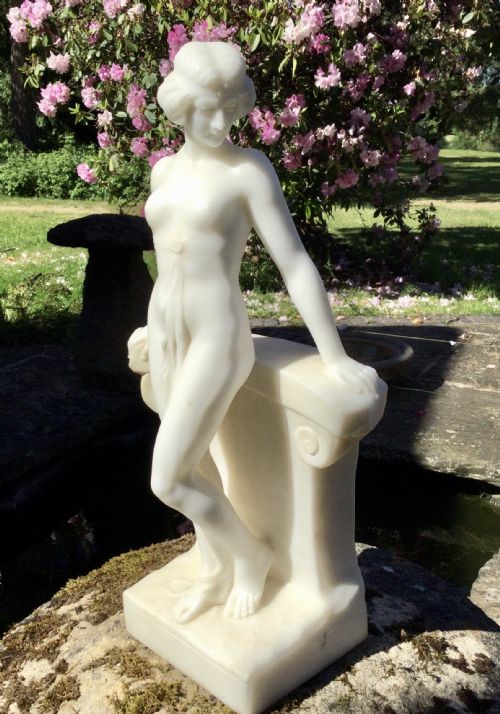
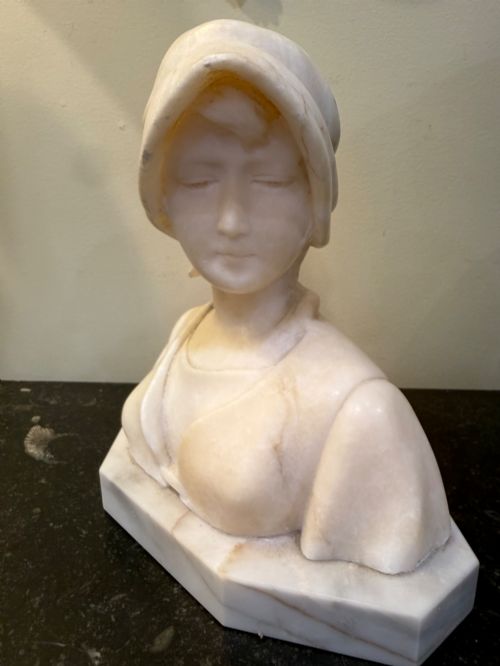
A carved stone female figure encompasses sculptural works, portrait busts, and allegorical statues produced across the nineteenth and early twentieth centuries. These pieces take the form of classical maidens, mythological goddesses, dancers, and historical subjects shaped by European makers.
The version most commonly met on this page is the nineteenth-century alabaster or marble bust, alongside full-length figures influenced by French classical revival and art nouveau aesthetics. Pieces range from grand tour souvenirs to signed exhibition-scale statues originating primarily from Italy and France.
Subjects frequently draw on classical mythology and historical themes, depicting figures such as Venus, Hestia, or the muses. Alongside sculptural works, the selection includes related decorative objects such as table lamps, garden statues, and figural rings.
Materials and Technique
Makers utilised fine-grained stones, predominantly alabaster and varieties of marble including Carrara white marble, shaping them through traditional chisel and rasp techniques. Sculptors employed multi-part assembly for larger compositions, combining carved stone elements with supporting structures like cast iron stands or integrating secondary media such as brass.
Surface finish defines the tactile quality of these works, ranging from highly polished neoclassical skin tones to two-tone alabaster treatments that contrast matte drapery with smooth flesh. Details such as hair, drapery folds, and floral attributes were rendered by hand, often reflecting the distinct stylistic idiom of the workshop.
Carved Stone Female Figure Retail Price Guide 2026
Typical asking prices for carved stone female figure among the pieces listed under this phrase on Sellingantiques today, from the lower quarter to the upper quarter. They describe what is for sale here now, not the wider market.
The sculptural forms range from large mythological statues and classical portrait busts to table lamps and decorative rings.
Evaluating Execution
Quality in a carved stone female figure rests on the sensitivity of the carving and the anatomical precision of the form. Superior examples display subtle modulation in the musculature and facial expression, whereas lesser pieces rely on mechanical repetition and simplified detailing.
The grade of the raw stone heavily influences the finished piece, with unblemished alabaster and high-grade white marble commanding greater sculptural depth. Signed works by recognised modellers demonstrate a higher degree of individual artistry in the drapery and textural contrasts compared to anonymous workshop productions.
Antonio Canova·Eugene Aizelin·Auguste Henri Carli·Carrier-Belleuse·Fritz Kochendorfer·Gugielmo Pugi·R. Lusili
The Carved Stone Female Figure Glossary
- Alabaster
- A soft, fine-grained stone prized for its translucency and ease of carving. It allows sculptors to achieve delicate effects of light passing through drapery and skin.
- Grand Tour
- A cultural journey undertaken by wealthy Europeans in the eighteenth and nineteenth centuries, resulting in smaller copies of classical sculptures brought back as mementos.
- Neoclassical
- An artistic movement reviving the styles and subjects of ancient Greece and Rome. Works in this idiom emphasise orderly composition, restraint, and classical dress.
- Carrara Marble
- A type of white or blue-grey marble quarried in the city of Carrara in Tuscany, Italy. It served as the primary material for major European sculptors.
- Bust
- A sculpted representation of a person from the chest up. This format focuses attention on facial expression, hairstyle, and upper garment detailing.
Carved Stone Female Figure: Frequently Asked Questions
How do I care for alabaster?
Alabaster is a relatively soft and water-soluble stone that requires dry dusting with a soft brush. Keep these pieces away from moisture and direct heat sources to preserve the surface.
Avoid using liquid cleaners or chemical polishes, as they can permanently etch or dissolve the fine outer layer of the stone.
Where should I display a marble bust?
Marble busts require a sturdy, stable surface such as a heavy console table, a dedicated pedestal, or a sturdy desk. Because of their significant weight, ensure the placement is secure and away from high-traffic edges.
Position the piece where natural or directional lighting can catch the contours of the carving and highlight the subtle tones of the stone.
What is a grand tour sculpture?
Grand tour sculptures are smaller-scale replicas of famous classical antiquities collected by travellers touring European cultural centres during the nineteenth century. These objects served as sophisticated educational and decorative pieces for domestic display.
They often replicate renowned museum pieces, such as works after Antonio Canova, rendered in high-quality marble or alabaster.
How can I tell the period?
Dating relies on stylistic clues, such as the flowing organic lines of art nouveau or the austere drapery of neoclassical revival. Material treatment, mounting hardware, and any inscribed signatures or foundry marks also provide chronological markers.
Comparing the treatment of hair and clothing against dated benchmark works helps narrow the decade of production.