
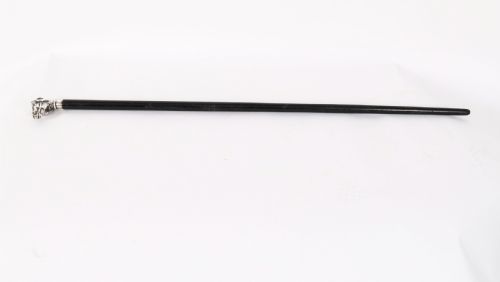
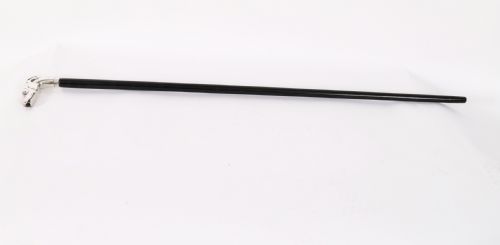


Carved Silver Walking Cane
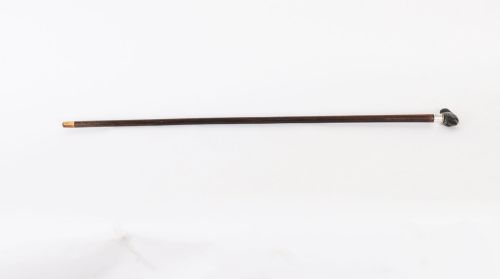
A carved silver walking cane combines solid metal work with fine timber to provide a smart support.
Carved Silver Walking Cane
A carved silver walking cane is a supportive stick fitted with a metal handle or mount. The pieces on this page span the nineteenth century, the Edwardian era, and the nineteen-thirties.
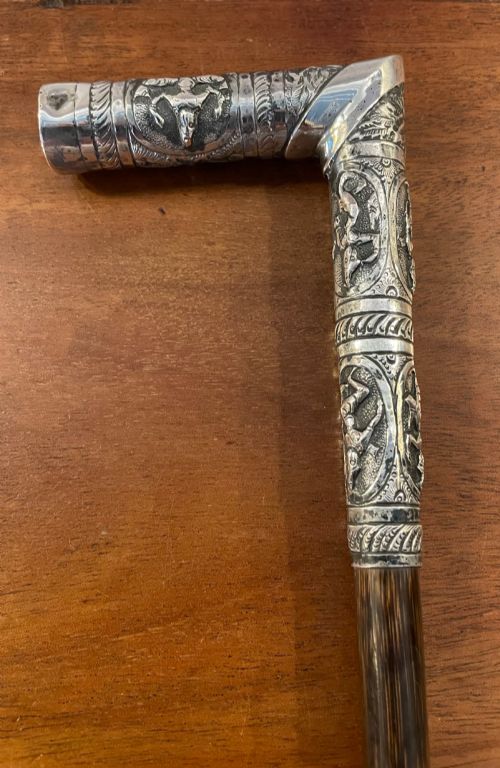
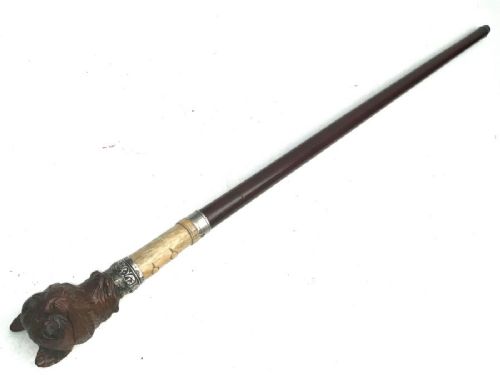
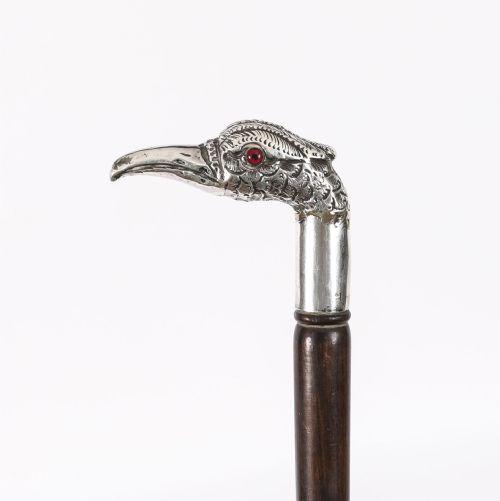
Makers shaped silver into animal heads, novelty shapes, and embossed patterns atop shafts of wood, bamboo, and horn. French, Asian export, and British styles appear regularly across the inventory.
Buyers choose these items for their blend of functional support and decorative metalwork. Novelty handles depicting birds, horses, and hounds are particularly common among the surviving examples.
Materials and construction methods
Silver mounts and handles were shaped by hand, often utilising casting, embossing, and chasing techniques to render fine details on animal forms. These metal sections were then secured to shafts of hardwood, bamboo, ebonised wood, or horn.
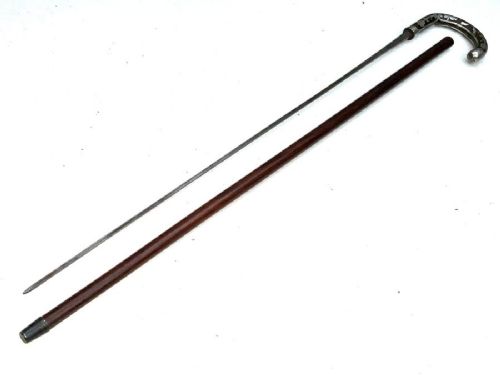
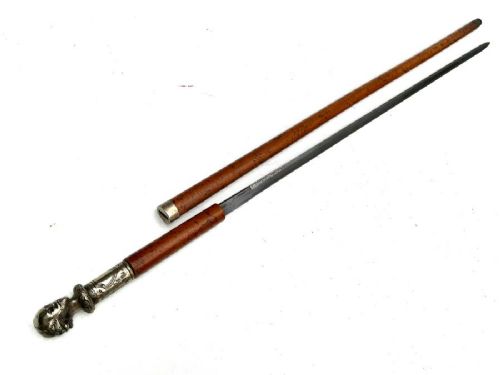
Many items incorporated hidden functions, combining the walking cane structure with internal sword blades, snuff boxes, or corkscrews. Materials such as steel blades and glass elements were integrated directly into the timber shafts.
Handle shapes range from standard curves to rabbits, greyhounds, and golf clubs.
Assessing quality in silver canes
Quality rests upon the crispness of the silver modeling and the integrity of the join between handle and shaft. Superior pieces display deep, detailed chasing on animal motifs rather than shallow pressing.
The choice of materials also dictates the standard of the piece, with dense hardwoods and substantial silver mounts representing the higher end of historical production. Well-balanced proportions and intact mechanical elements elevate individual items.
BRIGG·Henry Borlase Stevens
The Carved Silver Walking Cane Glossary
- Chasing
- A metalworking technique where details are hammered into the front surface of silver rather than carved away. This method gives texture to animal fur and plumage on cane handles.
- Malacca
- A prized type of rattan stem known for its brown mottled skin and durability. It forms the flexible yet sturdy shaft on several Asian export canes.
- Gadget stick
- A walking cane that conceals a secondary function, such as a blade, corkscrew, or snuff box within its structure.
- Ebonised wood
- Timber treated to imitate the dark, dense appearance of ebony. It provides a stark contrast against bright silver handles.
Carved Silver Walking Cane: Frequently Asked Questions
What is a carved silver walking cane?
A carved silver walking cane is a traditional walking stick featuring a metal handle shaped into animal heads, figures, or decorative patterns. These items date primarily from the nineteenth and early twentieth centuries.
They served as gentleman's or lady's accessories, combining practical support with distinct personal style and status.
How were concealed swords used?
Sword sticks housed a steel blade securely inside the wooden shaft, protected by a locking mechanism or screw fit. They offered personal defence during travel.
Owners drew the blade quickly by separating the handle from the body of the cane.
How do I identify the period?
Dating relies on the style of the silver ornamentation, the timber species, and any hallmarks stamped onto the metal. Victorian pieces often display ornate animal carving, while Art Deco items lean towards geometric styling.
Comparing the manufacturing techniques to documented eras helps narrow down the decade of production.
Were these canes used daily?
Historical owners carried them regularly as part of standard outdoor attire. The inclusion of durable woods and solid silver ensured they withstood daily movement.
Today, collectors appreciate them both as historical artefacts and as usable items.