
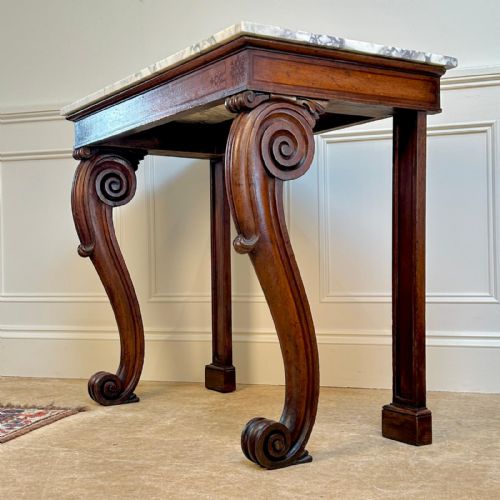
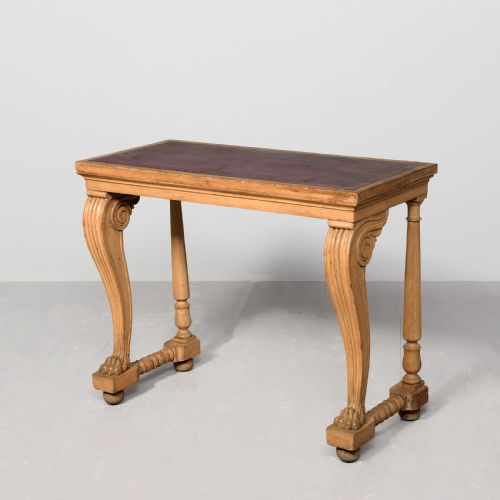
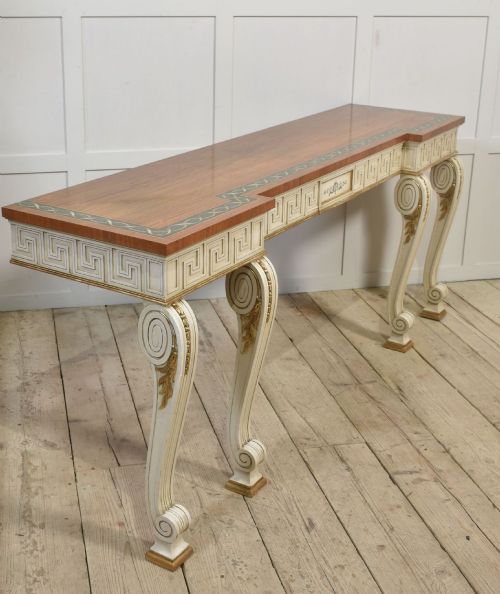
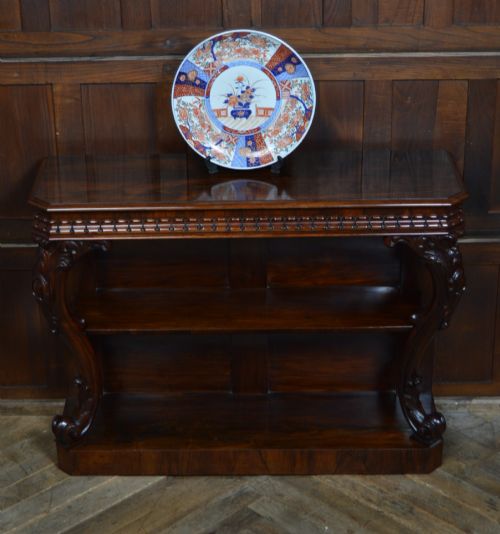




Carved Scroll Console
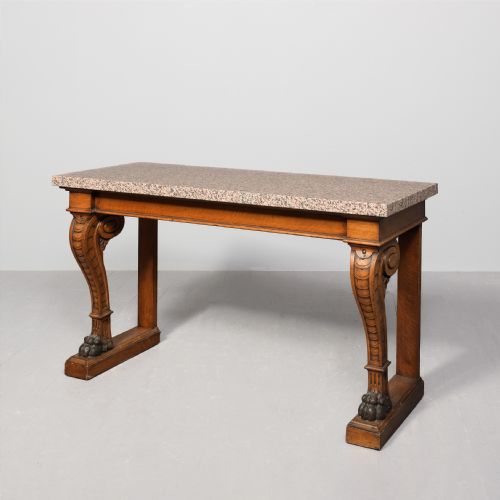
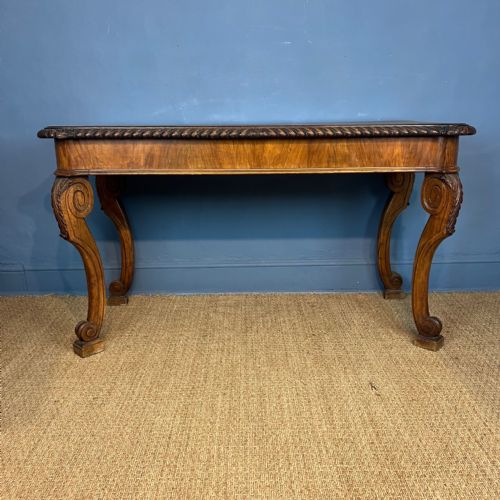
A carved scroll console delivers dramatic architectural silhouette and practical surface space, making it a focal point in any hallway or reception room.
Carved Scroll Console
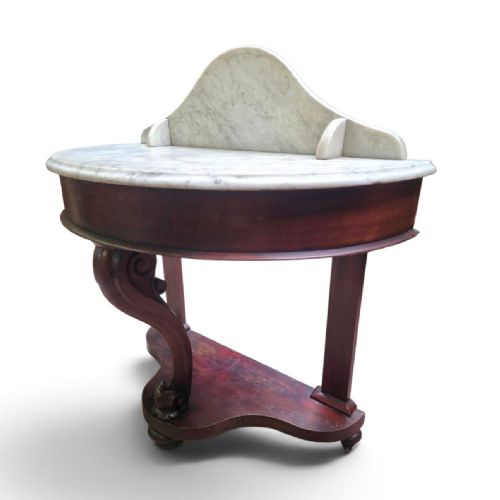
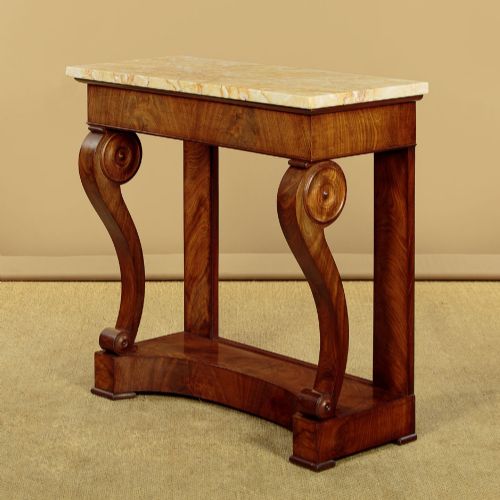
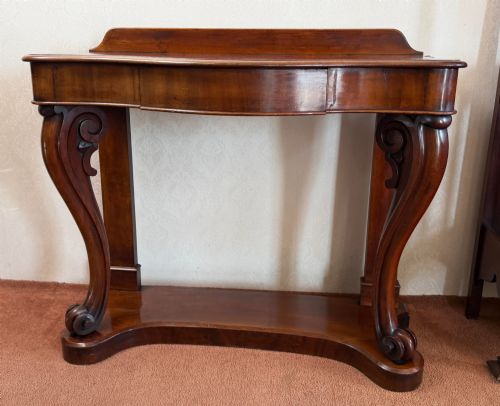
A carved scroll console brings substantial architectural presence to an interior, functioning primarily as a wall-mounted pier table or a freestanding centre table. When exploring this selection, buyers encounter formats ranging from compact nineteenth century examples to grander William IV and Victorian iterations.
The material palette is anchored in dense timbers such as mahogany, rosewood, and oak, frequently paired with contrasting marble or granite tops. Alongside standard console configurations, the inventory includes related forms like chiffoniers, altar tables, and side tables incorporating distinctive scrollwork.
How they were made
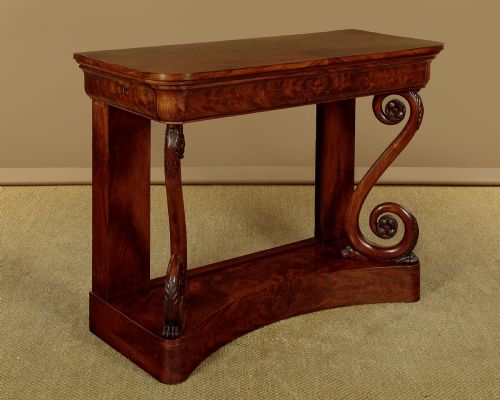
Construction relies upon heavy hardwoods like mahogany, rosewood, walnut, and oak, often enhanced with flame mahogany veneer or burr walnut to create rich surface grain patterns. Workshops utilised solid joinery techniques alongside detailed hand-carving for the characteristic scroll supports and leg motifs.
Many structural tops incorporate heavy slabs of white or coloured marble, while other variations feature gilded accents, painted finishes, or ebonised details applied to the timber substrate.
What varies in quality
The standard of a carved scroll console is defined by the crispness of the timber carving and the architectural ambition of its scroll legs and brackets. Finer examples display deeply undercut foliage and organic scrollwork rather than shallow, machine-tooled detailing.
Material selection significantly influences the tier of the piece, with dense Brazilian mahogany, highly figured rosewood, or substantial inset marble slabs marking out superior cabinet-making traditions.
James Mein of Kelso·Robert Strahan·Alexander McKenzie of Glasgow·Whytock and Reid
The Carved Scroll Console Glossary
- Console table
- A table designed to stand against a wall, traditionally secured with brackets or legs at the front. These pieces frequently feature decorative scrollwork beneath the apron.
- Pier table
- A low table designed to fit against the wall space between two windows, often paired with a matching wall mirror above. They share many structural similarities with console tables.
- Flame mahogany veneer
- A thin slice of mahogany timber cut from the fork of the tree where the branch meets the trunk, displaying a distinctive flamelike pattern. Cabinet-makers applied this to prominent surfaces for visual impact.
- Chiffonier
- A low sideboard or cabinet developed in the nineteenth century, equipped with shelving or enclosed cupboards. Several variations incorporate scroll details on their upright supports.
Carved Scroll Console: Frequently Asked Questions
Where should I place a console table?
These tables traditionally anchor narrow entrance hallways, living rooms, or dining spaces where depth is restricted. Their flat surfaces suit lamps, mirrors, and decorative objects without blocking interior traffic paths.
Because many nineteenth-century versions were designed to stand against walls, pairing them with a matching mirror creates a traditional architectural display.
How do I care for a marble top?
Marble surfaces require gentle cleaning with warm water and a soft cloth to avoid scratching the polished finish. Acidic liquids like wine or citrus juice can etch the stone if left standing.
Applying a specialist stone sealer periodically helps protect the porous surface from accidental staining while preserving the natural grain.
What is the difference between a console and a centre table?
A console table is designed with a flat back to sit flush against a wall, often featuring finished carving only on the front and sides. Centre tables are finished on all four sides to stand freely in the middle of a room.
Both forms frequently share scroll-carved supports and similar timber constructions, but their intended placement dictates how the base is detailed.
How do I identify a William IV piece?
William IV furniture from the 1830s typically exhibits heavy, robust proportions utilising dark timbers such as rosewood and mahogany. Look for bold architectural scrolls, recessed paneling, and heavy paw feet.
These pieces often feature thick marble tops and generous scroll brackets that reflect the classical revival styles of the period.