
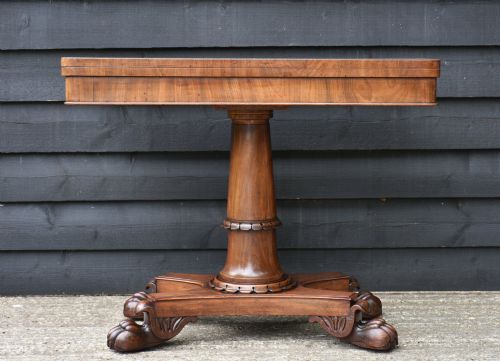
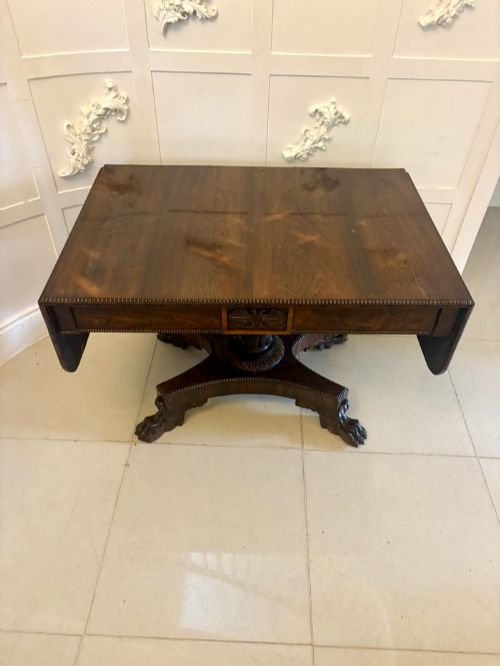
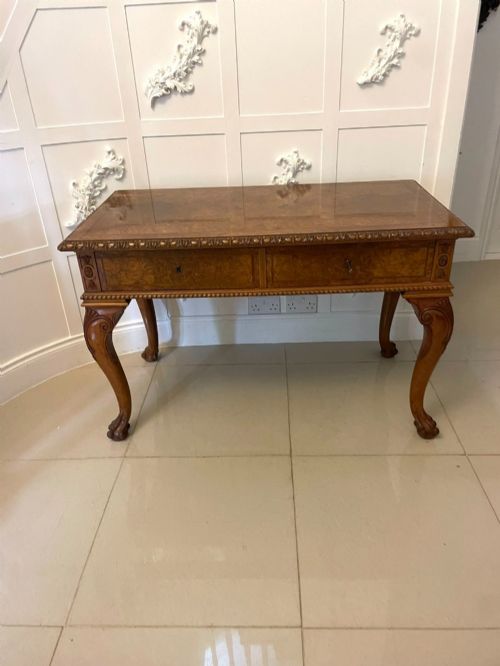

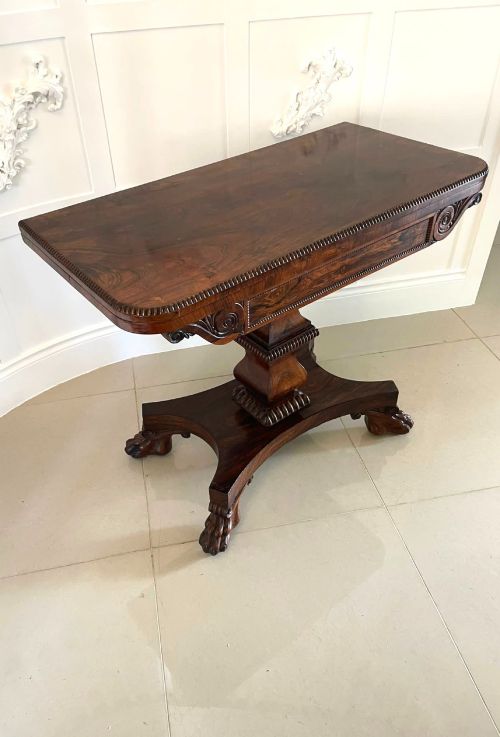
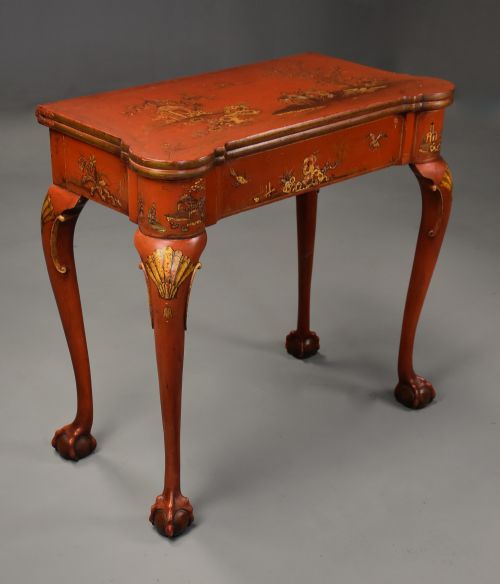
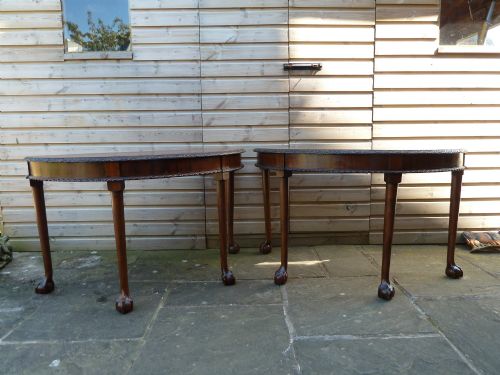
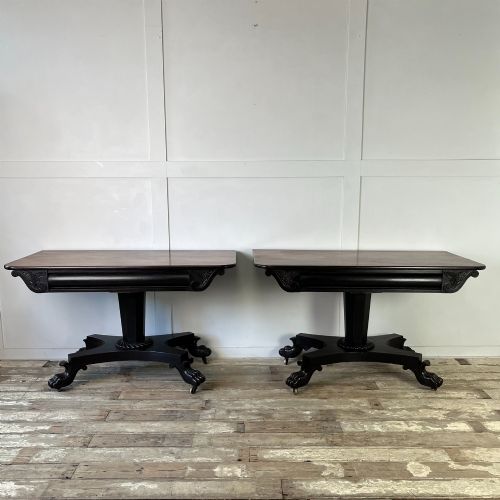

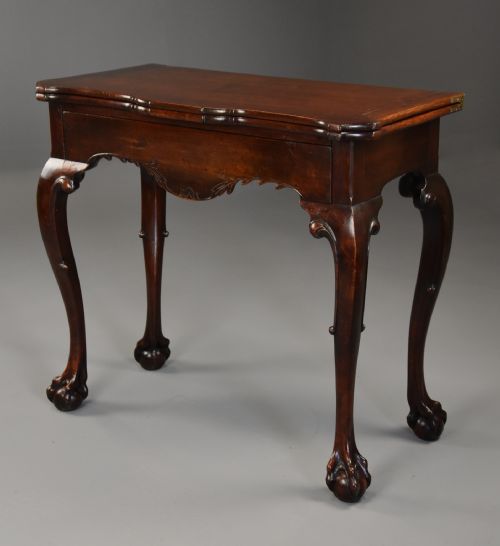


Claw Foot Console
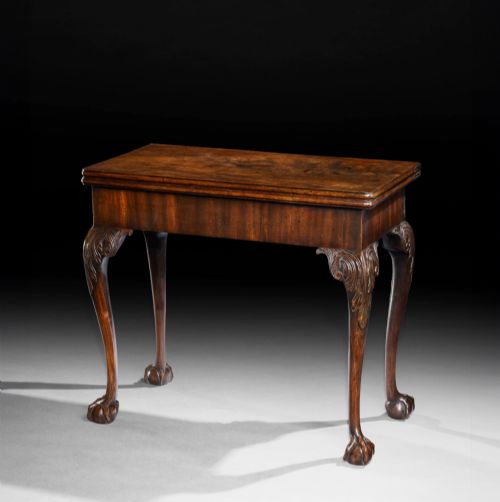
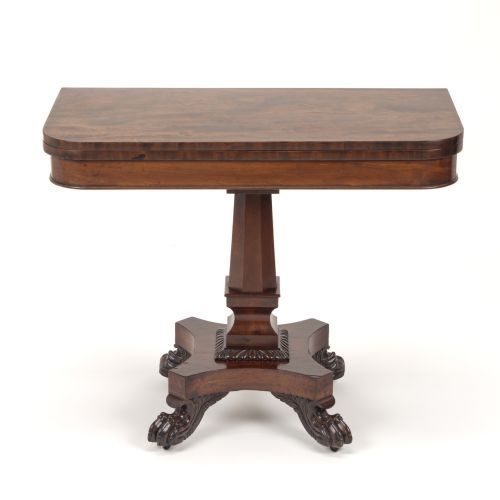
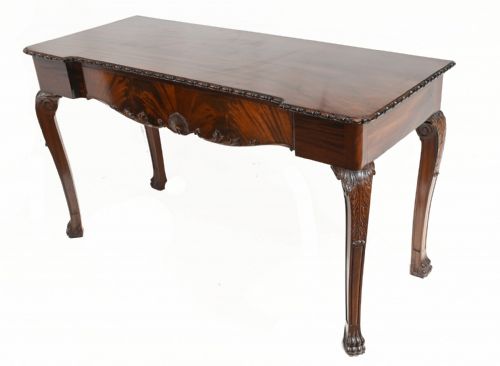
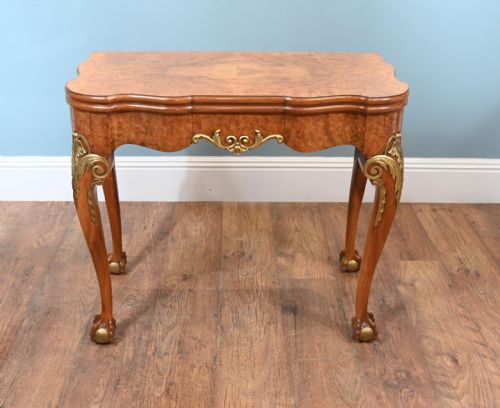
A claw foot console brings solid timber and carved animal paws together, offering a sturdy yet graceful surface for a hallway or living room.
Claw Foot Console
A claw foot console typically takes the form of a console table, card table, games table, or serving table, resting on distinctive carved paw feet. These pieces span several centuries, appearing frequently in 19th Century, 18th Century, and 1920 designs, drawing on Regency, William IV, Georgian, and Victorian influences.
The most common forms on this page include fold-over card tables and serving tables, alongside freestanding sofa tables and side tables. Makers adapted these versatile surfaces for multiple uses in period interiors, from card games to hallway displays.
Materials and construction methods
Cabinet makers utilised dense, durable timbers such as mahogany, rosewood, burr walnut, and oak to build these tables, frequently applying flame mahogany veneer to visible surfaces. Many incorporate brass inlay, ormolu mounts, and hand-carved details on the wooden paw feet.
Joinery techniques varied from concertina actions on card tables to sturdy stretcher supports and fold-over tops. Timber selection dictated the weight and finish, with contrasting woods and polished veneers providing decorative depth.
Listings feature mahogany, rosewood, burr walnut, and oak across 18th Century, 19th Century, and 1920 periods.
Distinguishing quality in design and execution
Quality rests in the crispness of the hand-carved paw feet and the selection of figured timbers like flame mahogany and burr walnut. Finer examples display precise brass inlay, well-matched veneer grains, and robust internal mechanisms for fold-over leaves.
Proportion and execution set apart standard pieces from those attributed to notable makers. The integration of mounts, ormolu, and secondary woods reveals the level of workshop care invested in the construction.
George Bullock·Gillows·Epstein and Co·Robert Strahan and Co
The Claw Foot Console Glossary
- Console table
- A table designed to stand against a wall, sometimes secured to it with brackets.
- Concertina action
- An expandable frame mechanism used on card tables that pulls out to support a folding top.
- Ormolu
- Gilded bronze or brass mounts applied as decorative ornaments to furniture.
- Flame mahogany veneer
- A thinly sliced section of mahogany timber exhibiting a fiery, undulating grain pattern.
- Freestanding
- Finished on all sides so the piece can sit away from a wall in the middle of a room.
Claw Foot Console: Frequently Asked Questions
What is a claw foot console?
A claw foot console is a supportive surface featuring carved animal paw feet at the base of the legs. These tables serve multiple functions in domestic spaces.
They appear as card tables, serving tables, and side tables across various historical periods.
How were these tables used originally?
These tables served as versatile furniture for entertaining, dining, and display in period homes. Fold-over tops allowed them to convert from compact side units to larger card or games surfaces.
Larger serving tables supported food and silver during meals in formal dining rooms.
How do I identify a Regency period piece?
Regency tables often feature dark tropical hardwoods like rosewood and mahogany, sometimes paired with brass inlay or ormolu mounts. The carved paw feet reflect classical revival motifs popular in the early nineteenth century.
Construction details and secondary timbers also help confirm the period of manufacture.
Where should I place a console table?
These tables suit hallways, living rooms, and dining spaces where surface area and display are required. Freestanding versions work well away from walls in larger rooms.
Against a wall, a console table anchors mirrors, lamps, and decorative objects.