

Gothic Carved Table
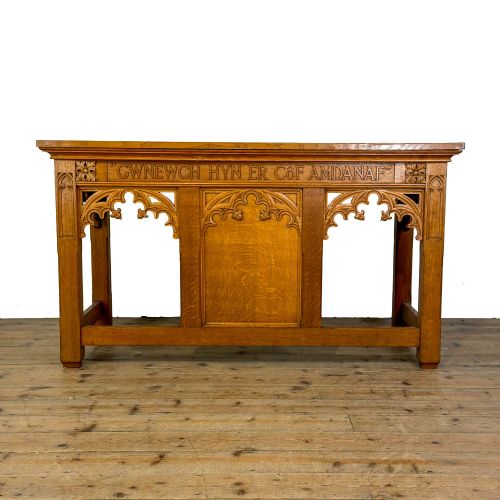
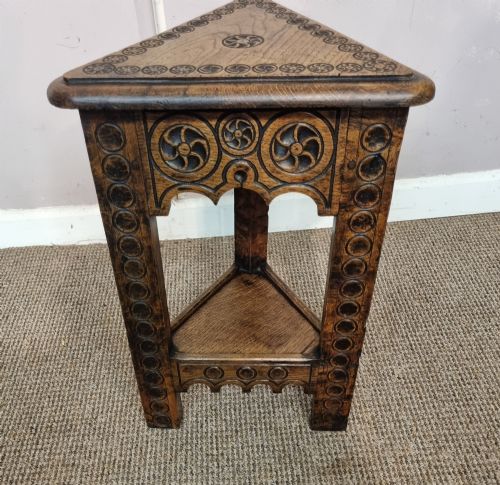
When you want a gothic carved table, you are looking for solid oak and heavy architectural ornament built to echo medieval stone.
Gothic Carved Table
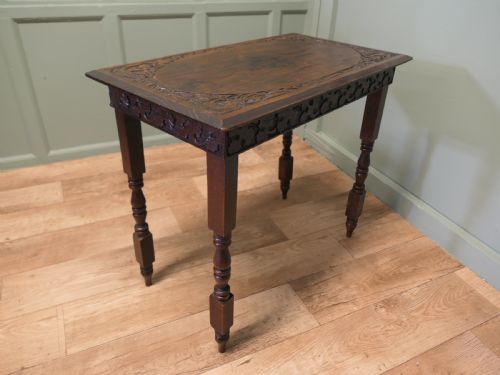
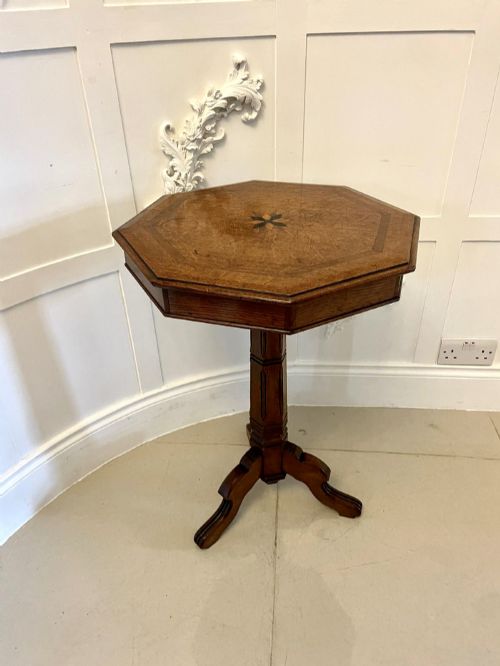
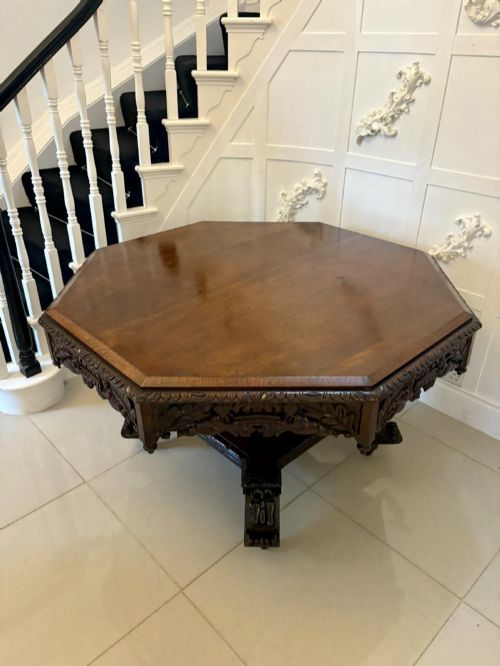
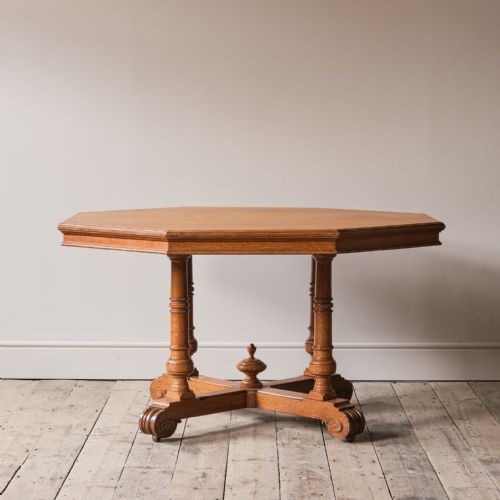
A gothic carved table brings medieval architectural motifs into domestic furniture, drawing heavily on nineteenth-century revivals of pointed arches, tracery, and linenfold panels. These pieces range from compact side tables and octagonal occasional forms to large centre and writing tables intended for libraries and halls.
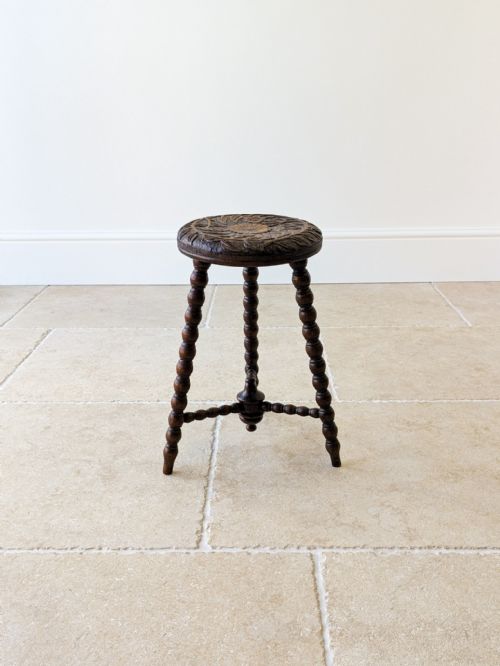
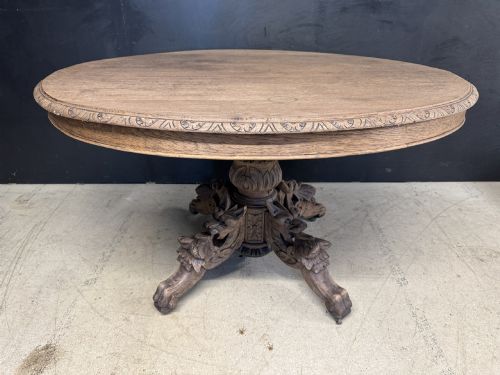
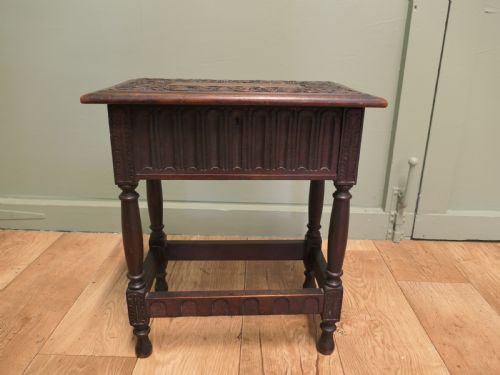
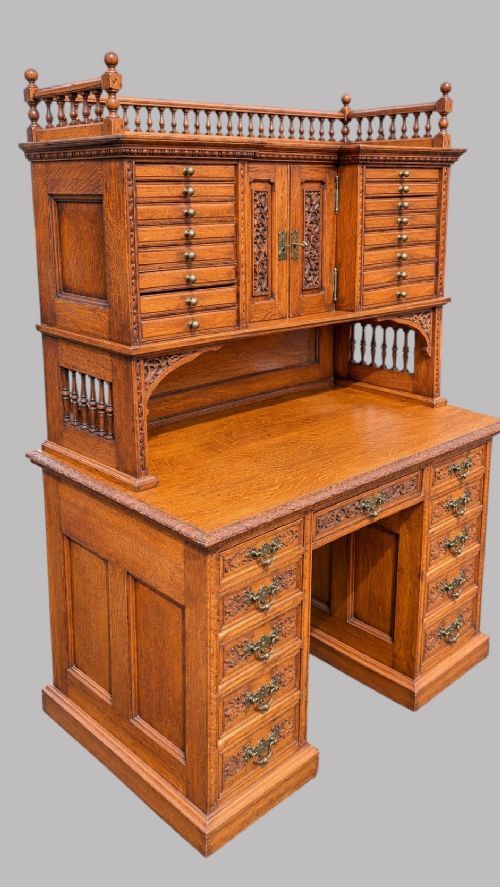
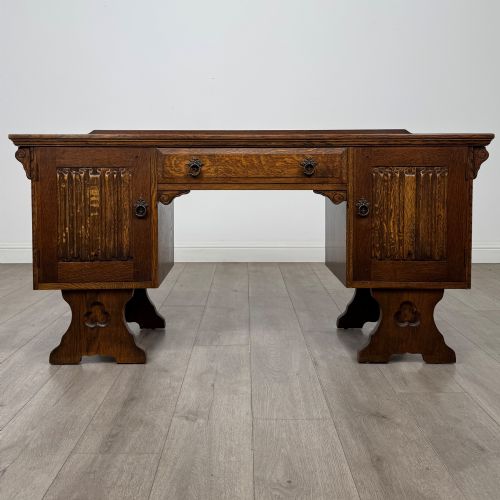
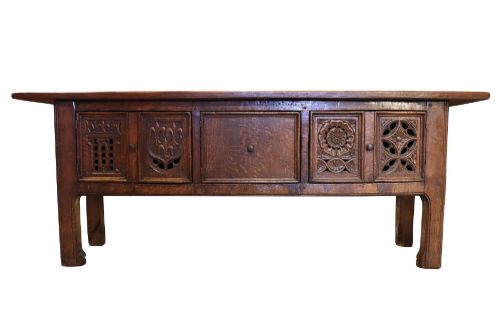
The heavy presence of oak dominates the selection, frequently paired with vernacular forms or formal revival styles produced across the Victorian and Edwardian eras. Buyers encounter side tables and desks bearing deep relief carvings of foliage, grotesques, and geometric strapwork.
Makers drew on Romanesque, Jacobean, and Renaissance revival idioms to construct pieces that served both domestic utility and dramatic display. The surviving inventory reflects a steady production of church-influenced altar tables, library desks, and small lamp stands.
How they were made
Carpenters relied primarily on solid oak, utilising mortise and tenon joints to build stable frames capable of supporting heavy relief carving. Surfaces were chip-carved, pierced, or moulded by hand, with occasional use of ebonised hardwood, brass fittings, and inset leather writing surfaces.
Construction methods prioritized durability and weight, utilising heavy pedestals, turned legs, and stretchers to anchor large centre tables and writing desks. Secondary woods like pine appear in concealed structural components, while decorative iron and brass hardware secure drawers and folding leaves.
Listings feature oak predominantly, supported by occasional brass, iron, glass, and ebonised hardwood across Victorian and Edwardian periods.
What varies in quality
The depth and crispness of the chisel work define the upper tier of these pieces, separating sharp, undercut foliage from shallow, mechanical stamping. Grain selection in the oak and the integration of structural joints into the decorative scheme signal the maker's competence.
Proportion and scale dictate the success of the design, where heavier architectural elements balance against the functional requirements of a desk or side table. Finer examples retain original hardware, harmonious patination, and thoughtful execution of complex motifs such as Green Man masks.
George Wadham·Winterhalder and Hofmeier·Arthur Simpson of Kendal
The Gothic Carved Table Glossary
- Linenfold
- A style of relief carving used on panels to imitate folded fabric, popular in gothic revival furniture. This technique creates a textured surface resembling vertical rolls of linen.
- Green Man
- A sculptural motif depicting a human face emerging from or entwined with foliage. It symbolizes rebirth and appears frequently on Victorian oak carvings.
- Tracery
- Openwork ornamentation based on the stonework patterns found in gothic church windows. Carpenters adapted these geometric curves for table aprons and cabinet doors.
- Strapwork
- A decorative scheme composed of flat, interlaced bands resembling leather straps. It provides a formal border framing deep relief panels.
- Fusee
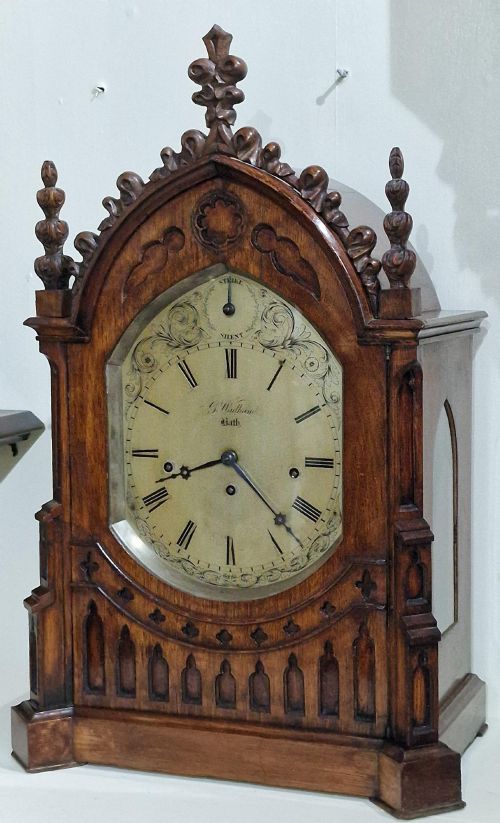
- A conical pulley used in clock movements to maintain even power as the mainspring unwinds. This mechanism appears in the table clocks associated with period cabinetwork.
Gothic Carved Table: Frequently Asked Questions
How do I identify a gothic revival table?
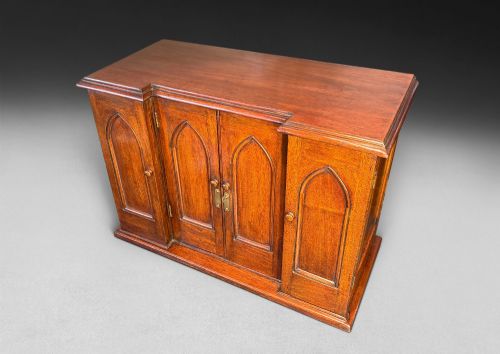
Look for structural use of pointed arches, heavy oak framing, and deep relief carving depicting motifs like trefoils and tracery. These design choices directly mimic medieval ecclesiastical architecture.
Examine the joinery and hardware to confirm period construction methods typical of nineteenth-century workshops.
Were these tables used in churches or homes?
While some examples originate as chapel altar tables or lecterns, the vast majority were built for Victorian and Edwardian domestic halls, libraries, and studies. Domestic pieces adapted ecclesiastical motifs for everyday writing and display.
Scale and internal drawer configurations usually indicate whether a piece belonged in a secular room or an institutional space.
What wood was used for these tables?
Solid oak serves as the primary material across nearly all examples, valued for its strength and ability to hold sharp chisel details. Secondary woods like pine appear in hidden structural areas.
Occasional pieces incorporate ebonised hardwood, walnut, or applied brass and iron hardware to accent the dark timber.
How do I care for an antique oak table?
Keep the timber away from direct heat sources and sudden humidity shifts to prevent the solid oak panels from splitting or warping. Dust regularly with a dry cloth and apply a traditional beeswax polish sparingly to nourish the grain.
Avoid commercial liquid cleaners that can strip the historic patination accumulated over generations.