


Red Brown Console
These red brown console tables and related side, writing, and serving surfaces offer rich timber tones and practical forms for any room.
Red Brown Console
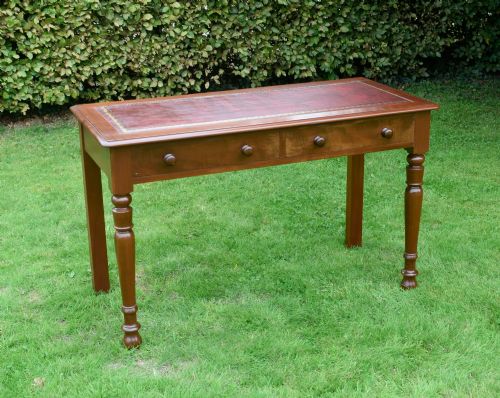
Buyers meet variations that range from simple two-drawer side tables to elaborate French console tables and Arts and Crafts writing desks. Many pieces double as writing tables or games tables, showing the multi-purpose nature of domestic furniture across the eighteenth and nineteenth centuries. The shared characteristic across these objects is the deep red brown warmth of the primary timber used in their construction.
What varies in quality
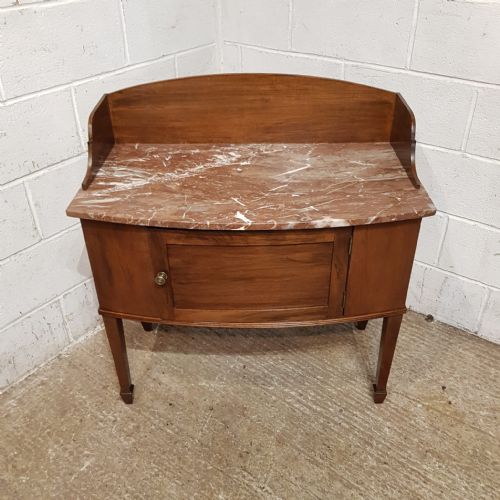
Quality rests in the selection of figured mahogany veneers and the crispness of boxwood inlay work, where superior examples display striking grain patterns and precise geometric detailing. The handling of serpentine and bow-fronted curves also distinguishes finer pieces from simpler, straight-lined variants.
The choice of secondary woods, the integration of solid marble tops, and the retention of original brass hardware elevate certain items above standard utilitarian tables.
Listings span the Georgian, Victorian, and Edwardian eras, predominantly featuring mahogany with marble, brass, and boxwood inlay.
The Red Brown Console Glossary
- Serpentine
- A curved shape curving outward at the ends and inward in the centre. This undulating line appears frequently on the front edges of better tables.
- Bow front
- A convex curved front projecting outward in an arc. It softens the profile of side tables and washstands.
- Pier table
- A table designed to stand against a wall between two windows, often paired with a mirror above. These serve a decorative function in formal reception rooms.
- D end
- A table section shaped like the letter D, allowing multiple sections to join into a larger dining table or function independently as a console.
Red Brown Console: Frequently Asked Questions
How do I style a console table?
Place a console table against a hallway or living room wall to anchor the space and create a surface for lamps or decorative objects. Their slim depths make them suitable for narrow circulation areas without blocking pathways.
Pair the timber tones with complementary lighting and mirrors to enhance the rich red brown hues of the mahogany. They also adapt well behind sofas or in dining rooms as serving surfaces.
Can these tables be used for writing?
Many console and side tables in this selection double as writing desks, incorporating single or multiple drawers for storage. The inclusion of leather inserts on specific examples indicates a primary use for correspondence.
Check the height and knee clearance of individual pieces to ensure comfortable seating if intended for regular desk work. Simple single-drawer models offer a compact footprint for home studies.
What is the difference between a console and a side table?
Console tables traditionally stood against walls, sometimes supported by brackets or legs, and often featured decorative designs like French pier tables. Side tables served more utilitarian roles around the home for holding objects or serving food.
Over time, the terms overlapped significantly, particularly with adaptable designs like D-end tables that function in both capacities.
How do I care for antique mahogany?
Dust regularly with a soft, dry cloth to prevent particulate build-up on the polished timber surfaces. Avoid placing wooden tables in direct sunlight or near heat sources to prevent the mahogany from drying out.
Apply a quality beeswax periodically to nourish the grain and maintain the deep red brown lustre without creating a heavy buildup.