

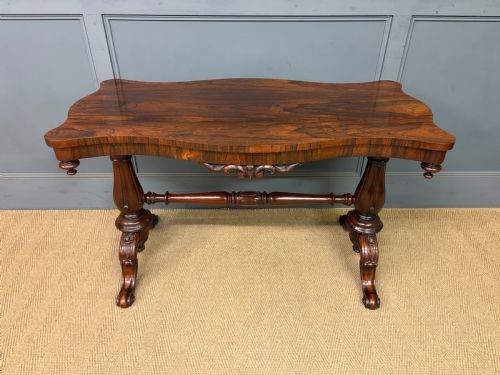
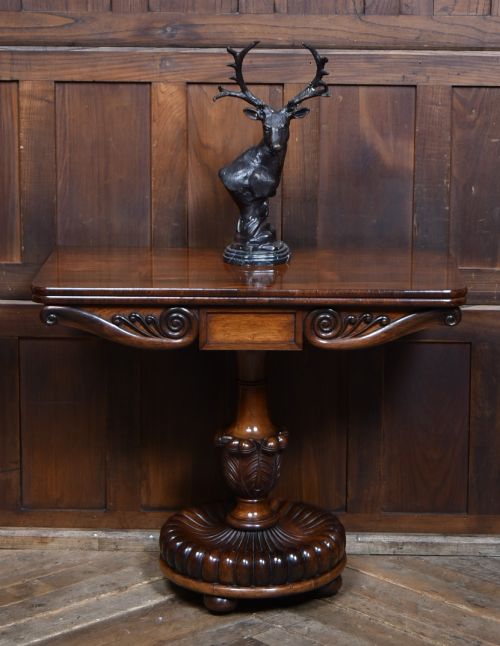
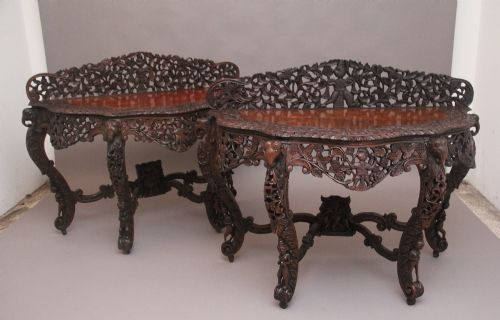
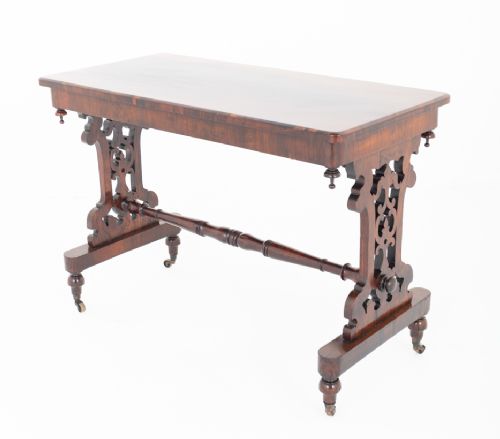
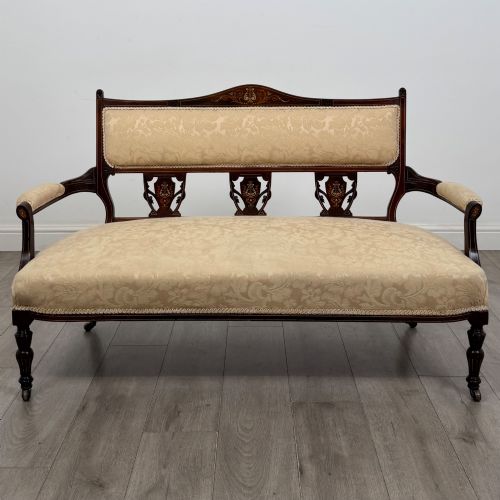
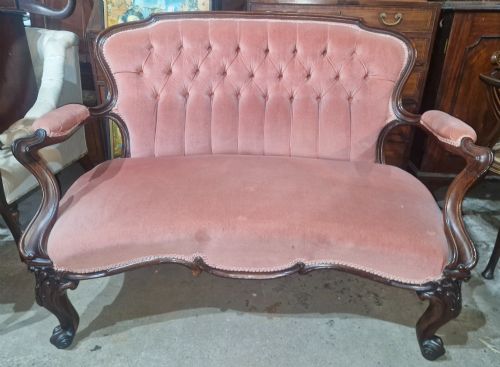
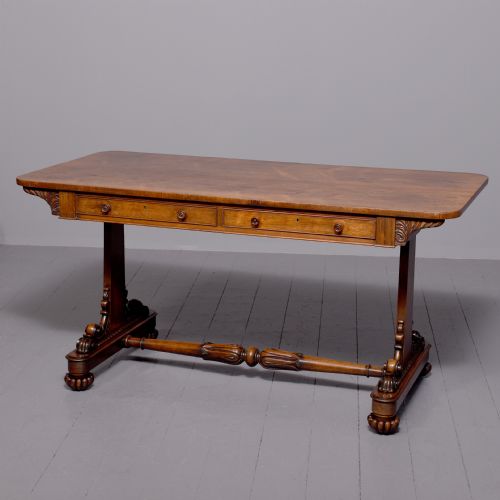
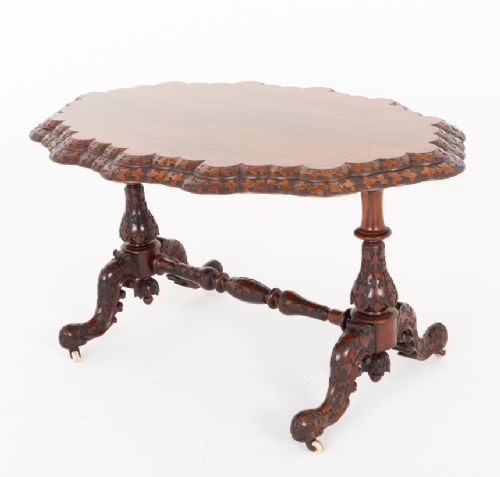
Carved Rosewood Sofa
A carved rosewood sofa brings substantial nineteenth-century timber and deep carving into a room, offering both historic seating and a commanding decorative presence.
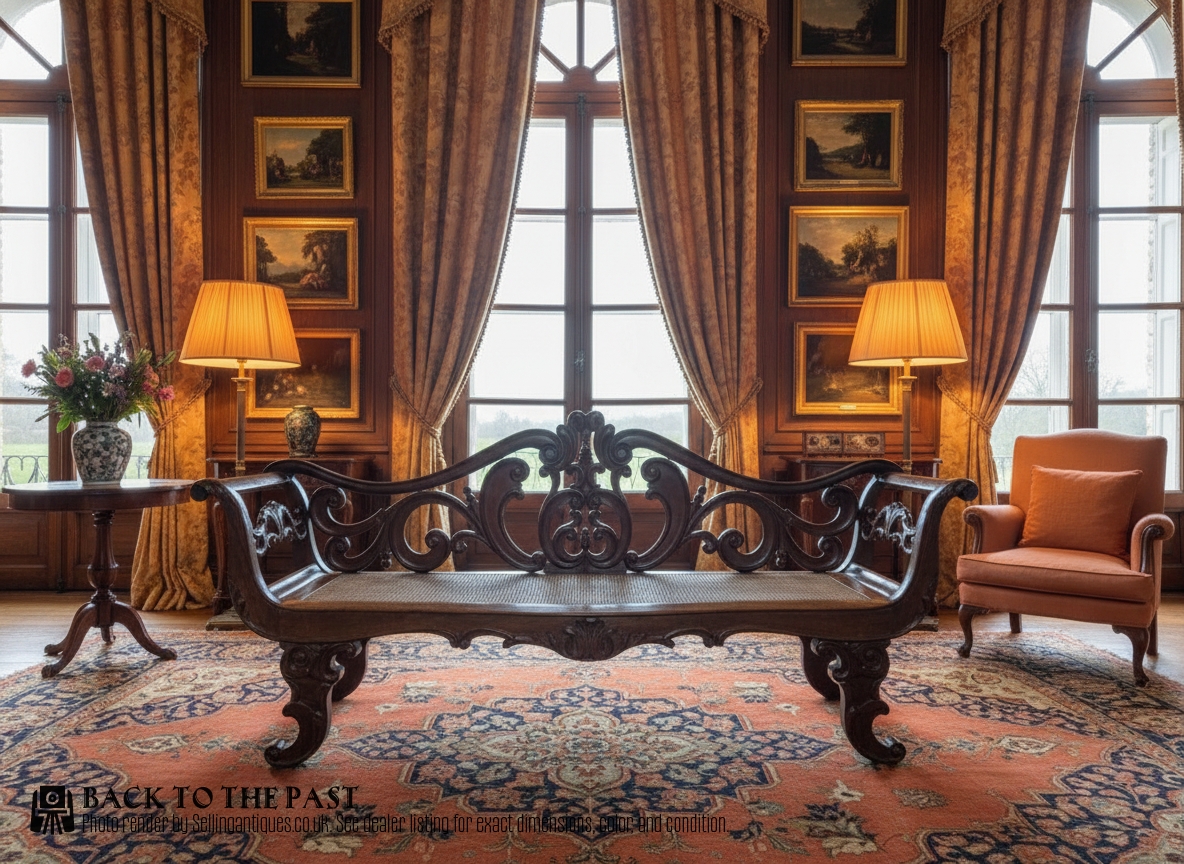
Carved Rosewood Sofa
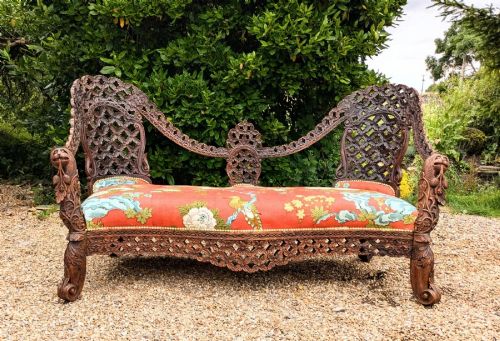
A carved rosewood sofa represents a major nineteenth-century seating form, spanning periods from Regency and William IV through to Victorian and Anglo-Indian designs. Buyers seeking this phrase encounter heavily timbered frames, scroll ends, cabriole legs, and upholstered elements designed for formal reception rooms.
The selections available range from expansive country house sofas and day beds to chaise longues and framed window seats. Victorian and mid-nineteenth-century examples dominate the offerings, frequently displaying intricate carved woodwork alongside fabric or velvet upholstery.
How They Were Made
Cabinet makers utilised dense rosewood and simulated rosewood timbers, frequently combining the dark grain with secondary hardwoods, brass fittings, and detailed hand-carved motifs. Frames often feature structural elements shaped into scroll ends, lion paws, or barley twist supports.
Upholstery techniques applied traditional padding and fabric or velvet coverings to substantial wooden frameworks. Joinery methods relied on robust nineteenth-century workshop practices to support heavy timber sections and extensive decorative carving.
Carved Rosewood Sofa Retail Price Guide 2026
Typical asking prices for carved rosewood sofa among the pieces listed under this phrase on Sellingantiques today, from the lower quarter to the upper quarter. They describe what is for sale here now, not the wider market.
The listings span multiple nineteenth-century periods, incorporating Regency, William IV, and Victorian designs alongside Anglo-Indian and Chinese export variants.
What Varies in Quality
The definition of quality rests in the crispness and depth of the timber carving, alongside the structural integrity of the rosewood frame. Superior examples display fluent hand-chiselled details on scroll ends and legs rather than soft or shallow moulding.
Proportion and scale distinguish finer pieces from standard workshop output. Well-resolved designs maintain balance between the heavy dark wood and the upholstered seating areas without appearing cumbersome.
Gillows·Mein of Kelso·H Goodall And Sons
The Carved Rosewood Sofa Glossary
- Rosewood
- A heavy, dense tropical timber prized for its dark grain and deep colour. It takes a high polish and forms the primary structural and decorative material for these pieces.
- Chaise Longue
- An upholstered couch or day bed with a backrest at one end, designed for reclining. Nineteenth-century examples often feature carved rosewood frames and scrolled ends.
- Regency
- An English design period spanning the early nineteenth century. Pieces from this era typically exhibit classical restraint combined with decorative wood veneers and carved supports.
- William IV
- A transitional design style from the 1830s characterised by robust proportions and bold carved details. Furniture from this period frequently utilises heavy rosewood timber.
Carved Rosewood Sofa: Frequently Asked Questions
How do I care for rosewood furniture?
Keep nineteenth-century rosewood away from direct sunlight and heat sources to prevent the dense timber and polished surfaces from drying out. Dust regularly with a dry cloth and avoid harsh chemical polishes.
Upholstery requires gentle vacuuming with a soft brush attachment. Professional cleaning is recommended for period fabric and velvet covers.
Are these sofas suitable for daily sitting?
Period frames provide solid seating support, but nineteenth-century internal webbing and padding vary in condition. Many pieces function well for regular use once any necessary structural or upholstery conservation is complete.
Heavier frames benefit from placement in lower-traffic rooms to preserve the historic joinery and carved wooden elements.
How do I identify a Victorian piece?
Victorian examples typically display heavier proportions, darker rosewood tones, and characteristic carved scroll ends or cabriole legs. Stylistic influences often lean toward revivalism, including Rococo details.
Construction methods from this era involve machine-assisted preparation combined with detailed hand-carving. Upholstery configurations frequently feature sprung interiors developed during the mid-nineteenth century.