
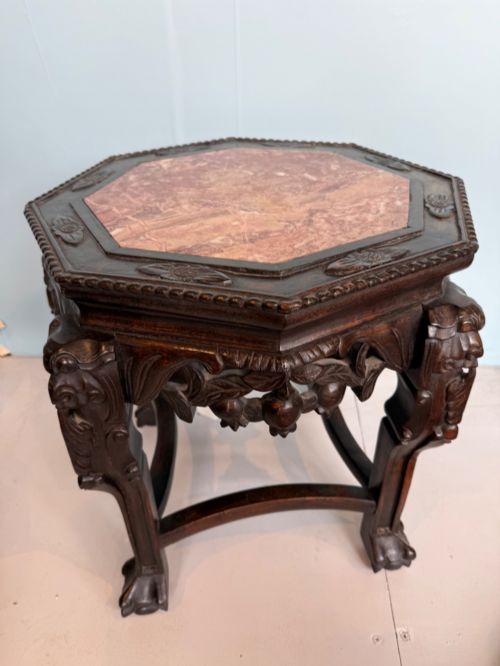
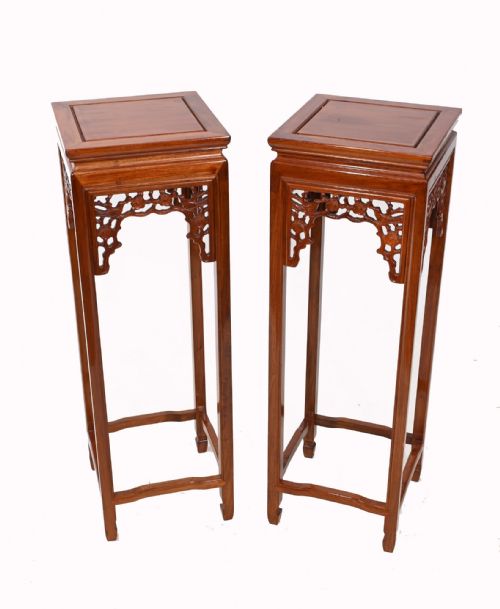


Carved Rosewood Flower Stand
A carved rosewood flower stand brings architectural form and polished grain to a corner, supporting plants or urns with carved wooden weight.
Carved Rosewood Flower Stand
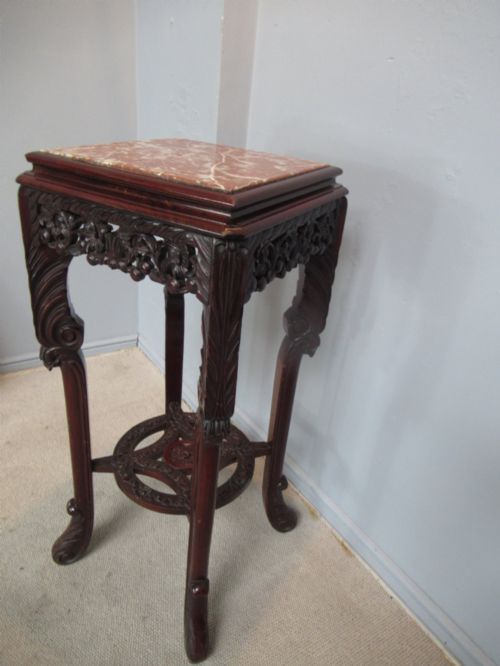
A carved rosewood flower stand is primarily encountered as a nineteenth-century Chinese export piece, often associated with Qing Dynasty styles and traditional craftsmanship. These items serve as plant stands, jardiniere stands, pedestal tables, and occasional side tables to hold decorative vessels.
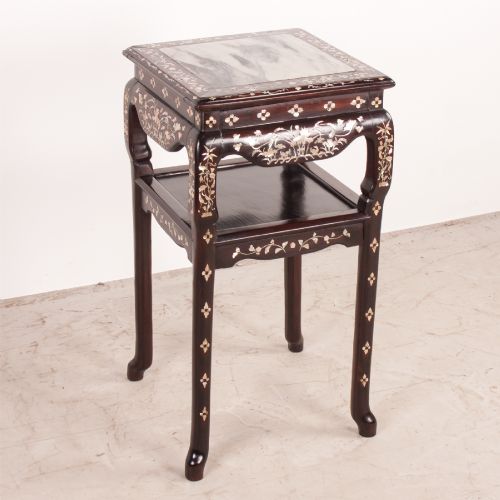
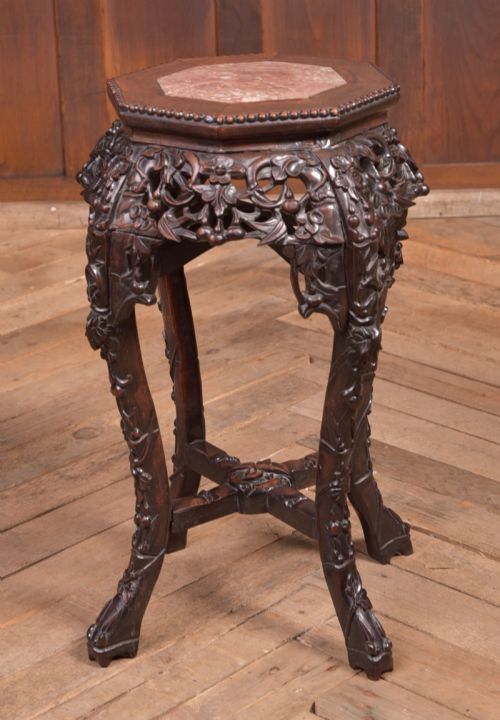
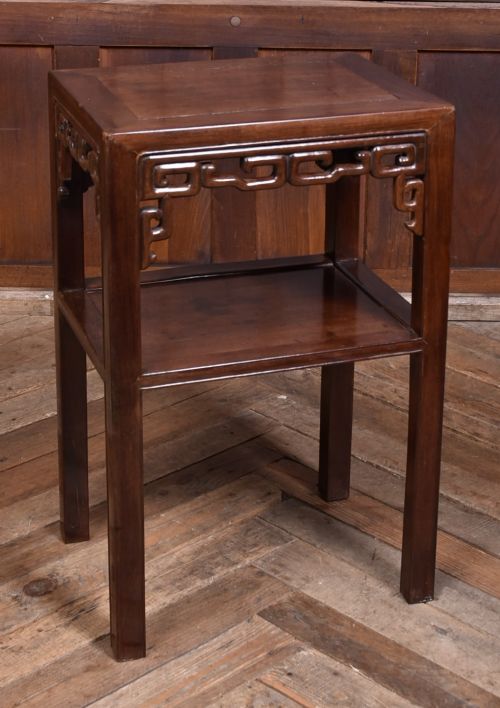
The objects appearing on this page span the Victorian era through to the early twentieth century, taking forms such as square coffee table stands, tall torchères, and two-tier pedestal urn stands. Many examples incorporate inset marble tops designed to protect the wooden surface from moisture.
Originating largely from Chinese export workshops, these pieces bring dense tropical timbers and intricate carving into domestic interiors. Buyers typically meet rectangular, round, or multi-tiered variants designed to display porcelain, plants, or lamps.
How they were made
Craftsmen utilised dense tropical timbers including rosewood, huali hardwood, padouk, and hongmu, selecting them for their heavy weight and deep, polished grain. These dark woods provide the rigid structure necessary for intricate pierced carving without compromising the load-bearing capacity of the legs and aprons.
Many tables incorporate inset discs of rouge or neutral marble, fitted flush into the wooden top to provide a cool, stable surface for heavy ceramic pots. Workshops also applied mother-of-pearl inlay in delicate floral or geometric patterns directly into the dark hardwood ground.
Joinery relied on traditional framing and mortise-and-tenon construction, allowing the dense timbers to expand and contract within stable joints. Carvers worked the dense material by hand, producing high-relief foliage, scrollwork, and panelled skirts around the upper frame.
Some nineteenth-century makers inlaid delicate mother-of-pearl blossoms that catch the lamplight long after the plants have gone to sleep.
What varies in quality
Quality rests principally in the depth and crispness of the carving, where deeper undercut foliage and sharply defined motifs demonstrate superior handwork. Plain or shallowly scratched surfaces indicate hurried production, whereas well-modelled claws, leaves, and scrollwork show disciplined workshop execution.
The choice and preparation of the timber dictate the visual weight of the piece, with richly figured rosewood, padouk, and hongmu commanding attention through natural grain patterns alone. Poorly matched timber sections or dull, lifeless finishes diminish the impact of the design.
The integration of the marble insert matters greatly, as precise fitting into the hardwood rebate separates refined tables from crude assemblages. Complete mother-of-pearl inlay without missing tesserae distinguishes the finest decorative examples from plain utility stands.
The Carved Rosewood Flower Stand Glossary
- Hongmu
- A dense, heavy Chinese hardwood often translated as red wood, highly valued for furniture and plant stands due to its deep colour.
- Padouk
- A durable tropical timber with a reddish-brown hue used extensively in nineteenth-century export furniture and stands.
- Jardiniere stand
- A tall or low table specifically proportioned to hold a ceramic flower pot or plant container.
- Torchere
- A tall pedestal stand originally designed to support a candle lamp, now frequently utilised for vases and trailing plants.
- Huali
- A fragrant and highly figured Chinese hardwood prized for high-status Qing Dynasty furnishings and occasional tables.
Carved Rosewood Flower Stand: Frequently Asked Questions
What is the difference between a plant stand and a jardiniere stand?
Plant stands and jardiniere stands both elevate greenery, but jardiniere stands are typically built with water-resistant inset tops like marble to accommodate heavy, damp ceramic pots.
Both forms share similar nineteenth-century Chinese export origins, though jardiniere stands often feature deeper recessed tops and sturdier frames.
How do I identify a Qing Dynasty flower stand?
Qing Dynasty stands display traditional Chinese carving motifs, such as prunus blossom, scrollwork, and key-fret borders, executed in dense hardwoods like hongmu or rosewood.
They frequently incorporate inset marble panels and robust joinery typical of nineteenth-century export production for Western and Asian markets.
Are these stands strong enough for heavy plants?
These pieces are constructed from exceptionally dense tropical hardwoods like padouk and rosewood, engineered to support heavy bronze vessels and large ceramic planters.
The rigid mortise-and-tenon frames and solid marble inserts provide substantial weight-bearing capacity for daily domestic use.
What maintenance do rosewood stands need?
Polished tropical hardwoods require minimal upkeep beyond occasional dusting with a dry, soft cloth to preserve the natural lustre of the grain.
Avoiding direct sunlight and excessive humidity prevents timber movement and protects the traditional wax or shellac finishes.