



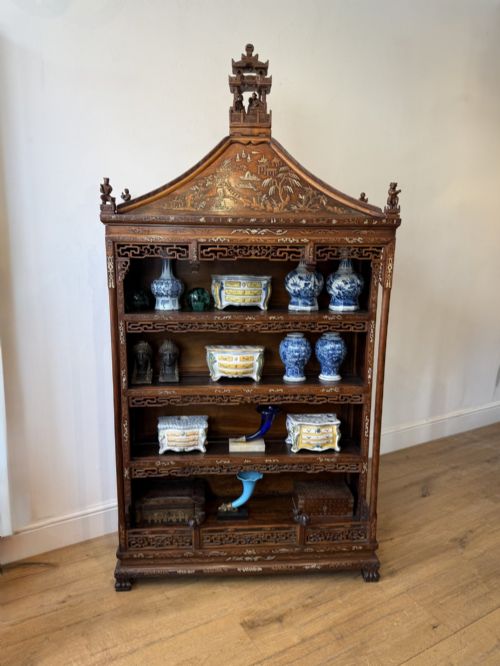


Carved Rosewood Etagere
A carved rosewood etagere brings tiered display and rich grain together, offering a stately way to exhibit fine small objects.
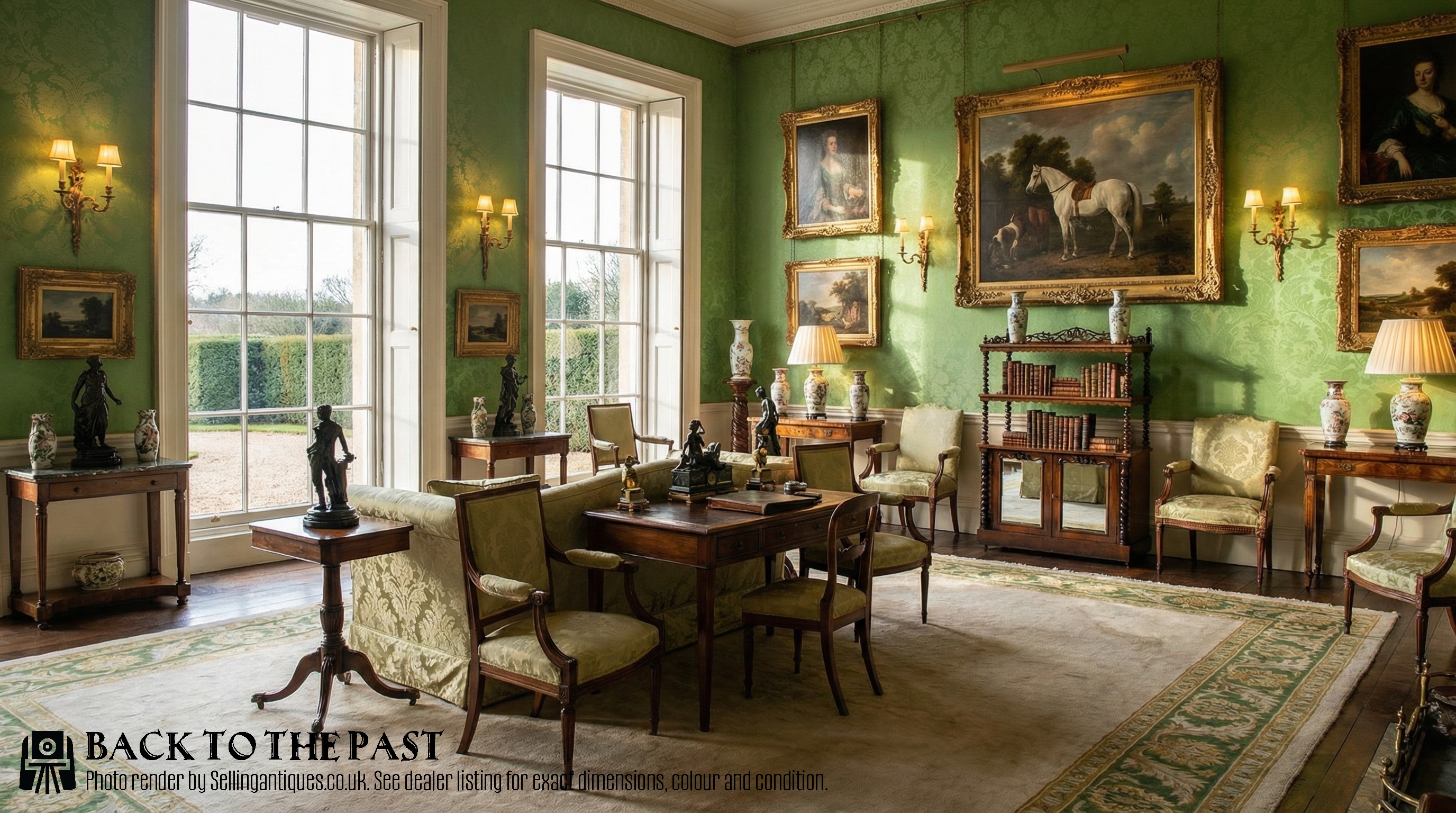
Carved Rosewood Etagere
A carved rosewood etagere provides open shelving and tiered platforms designed specifically for the display of ornaments, books, and curiosities. These pieces emerge primarily from the nineteenth century, encompassing Victorian, Regency, and diverse international aesthetics.
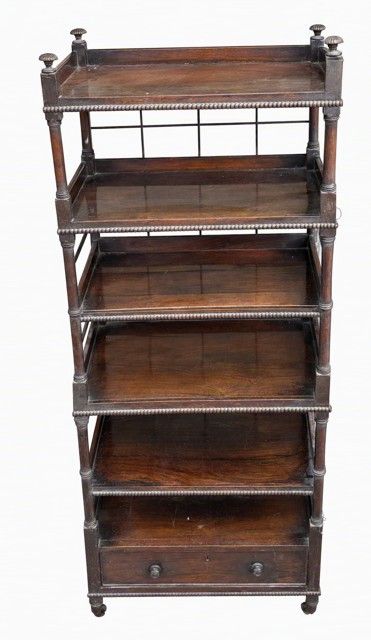
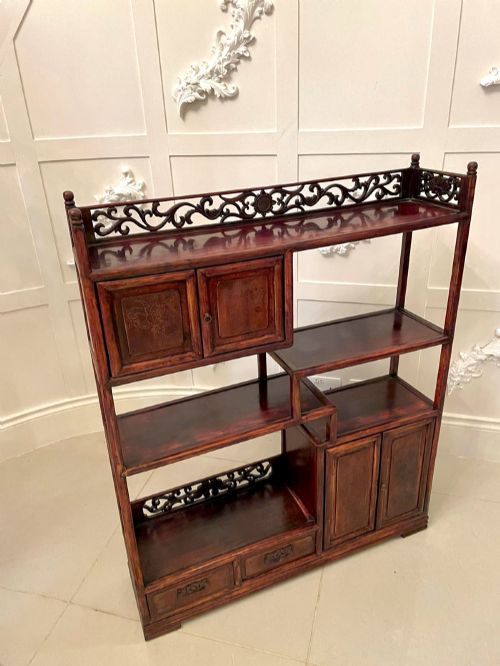
The version most commonly met on this page is the multi-tiered Victorian whatnot or corner whatnot, executed in rich rosewood and featuring turned supports alongside open shelves. Alongside these stand Chinese export cabinets and Anglo-Indian variants, reflecting global craftsmanship in dense hardwoods.
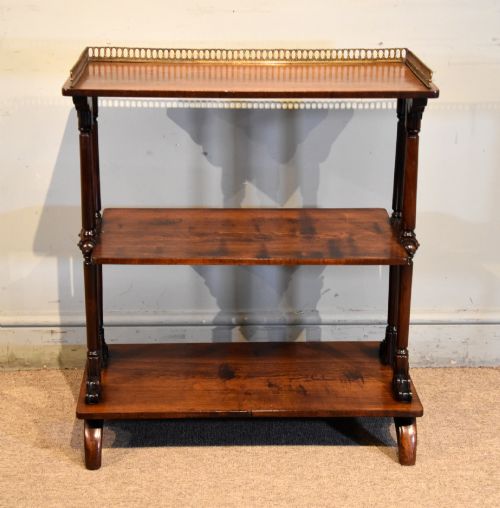
Forms range from central standing buffet shelves and dumb waiters to dwarf side-cabinets and pagoda display cabinets. Each variation serves the core purpose of elevating domestic display through tiered architecture and decorative carving.

How they were made
Construction relies heavily upon dense rosewood and related hardwoods, selected for their deep colour and capacity to hold intricate carved detail. Cabinetmakers utilised sturdy joinery to support multiple tiers, often incorporating brass fixtures and turned uprights.
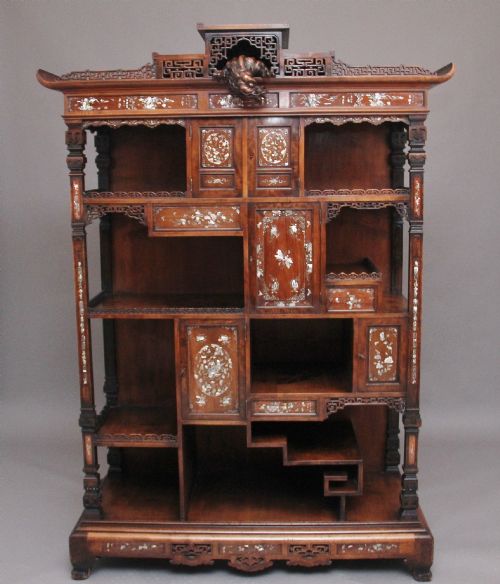
Surface elaboration frequently involves profuse carving, alongside occasional decorative additions such as mother of pearl, bone inlay, or mirrored backs. These decorative techniques draw upon Victorian, Regency, Chinoiserie, and Japonisme traditions to shape the final silhouette.
Carved Rosewood Etagere Retail Price Guide 2026
Typical asking prices for carved rosewood etagere among the pieces listed under this phrase on Sellingantiques today, from the lower quarter to the upper quarter. They describe what is for sale here now, not the wider market.
Some nineteenth-century makers could not resist adding tiny pagoda roofs to otherwise sensible display shelves, just to keep things interesting.
What varies in quality
The distinction between standard and superior pieces rests upon the crispness of the carving and the selection of the timber. Dense, well-figured rosewood with deep, hand-chased detail distinguishes finer workshops from more routine production.
Proportion and structural integrity also define the upper tier of the range. Pieces that maintain balanced tiers, harmonious turning, and integrated decorative elements without heavy restoration demonstrate superior original design.
The Carved Rosewood Etagere Glossary
- Etagere
- A piece of furniture consisting of a set of open shelves for displaying small objects. This form became particularly popular during the nineteenth century for parlour and drawing room display.
- Whatnot
- A multi-tiered shelving unit used for books, ornaments, or general display. Victorian examples frequently appear in rosewood with three or four tiers.
- Shodana
- An Asian multi-tiered display cabinet featuring asymmetrical shelving and compartments. Nineteenth-century examples often reflect Japanese or Chinese export design.
- Hongmu
- A category of dense, dark Chinese hardwoods often translated as red wood. These timbers are prized for heavy carved furniture and display cabinets.
- Dumb waiter
- A piece of furniture with multiple tiers used to serve or hold items. In nineteenth-century contexts, these function similarly to open shelving units.
Carved Rosewood Etagere: Frequently Asked Questions
What is an etagere?
An etagere is a piece of furniture made up of multiple open shelves designed for displaying ornaments, ceramics, and small decorative objects.
Originating in France, the form gained popularity in Britain during the nineteenth century as drawing rooms became spaces for exhibiting curated collections.
How were these pieces used?
They served as prominent display furniture in parlours and reception rooms, holding everything from porcelain figures to small books.
Certain variations, such as dumb waiters or corner units, were also adapted to hold serving items or fit into domestic layouts economically.
How do I live with rosewood?
Rosewood requires stable indoor humidity and protection from direct sunlight to preserve its deep colour and prevent timber movement.
Regular dusting with a soft cloth maintains the polished surface without the need for heavy modern polishes.
How do I tell styles apart?
Victorian and Regency pieces generally rely on classical turnings and symmetrical tiers, while Chinoiserie and Japonisme examples incorporate asymmetrical shelving and motifs.
Anglo-Indian and Chinese export pieces reveal themselves through dense, deep carving and regional cabinetmaking techniques distinct from standard British production.