


Carved Rosewood Card Table
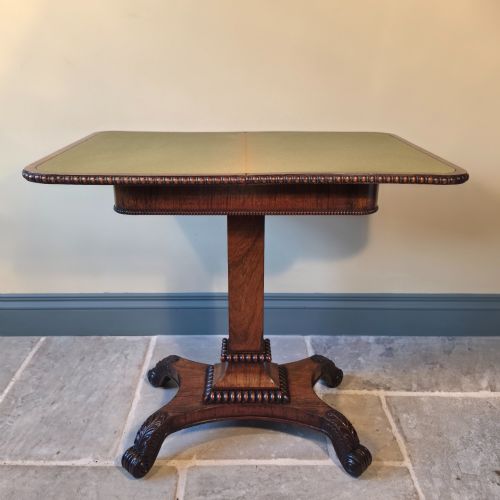
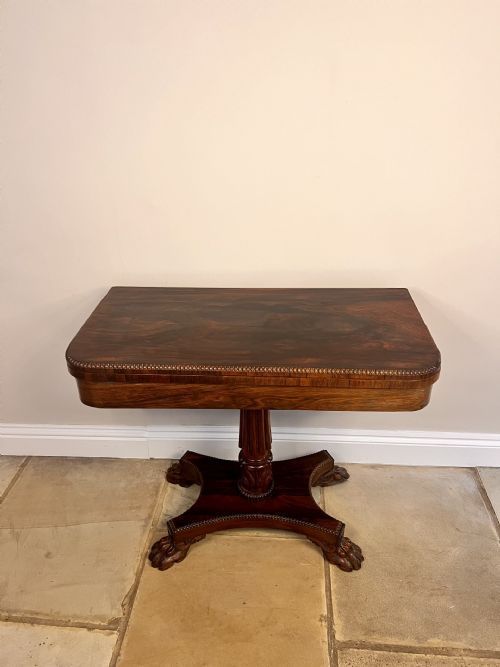
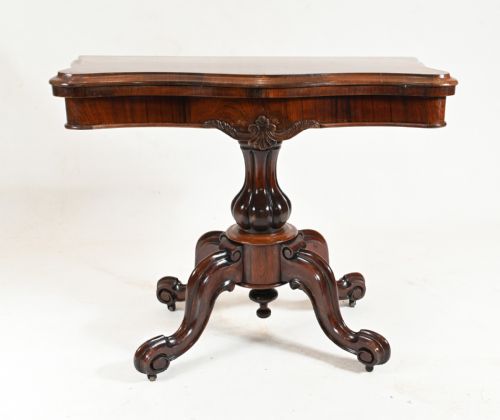
A carved rosewood card table brings a rich, dark timber and a folding top into a room, offering both a functional surface and a piece of period craftsmanship.
Carved Rosewood Card Table
Most examples found in trade belong to the Regency, William IV, and Victorian periods, spanning the nineteenth century. Alongside standard card tables, the selection includes related forms such as tea tables, games tables, and pedestal side pieces.
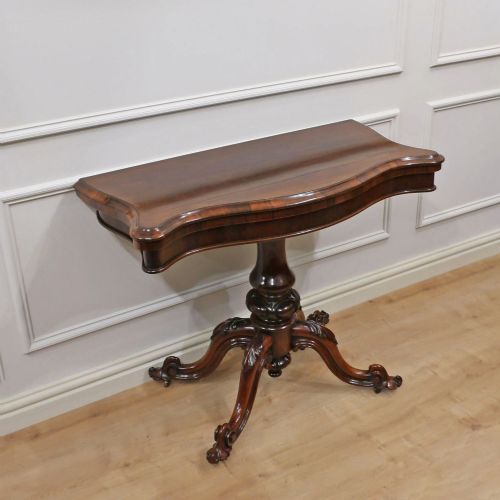
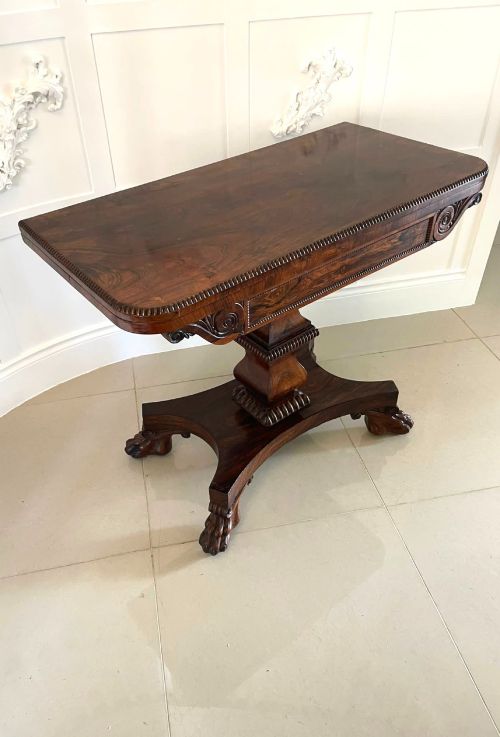
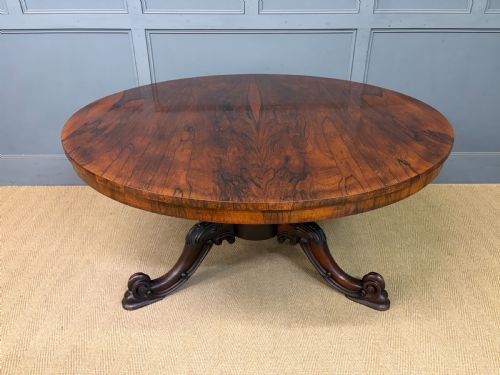
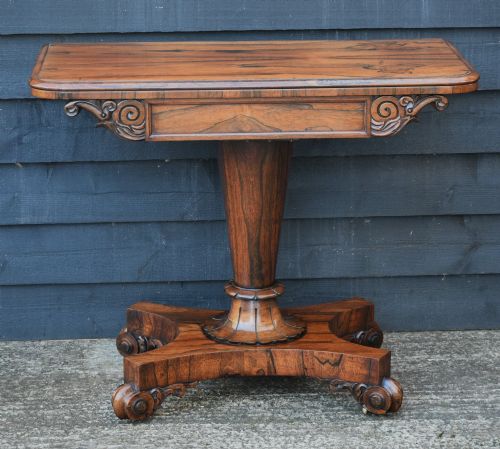
The defining characteristic across the group is the use of dense rosewood timber paired with carved details, often supported on central pedestals or carved dolphin bases. They served as versatile items in period drawing rooms.
Distinctions in Quality
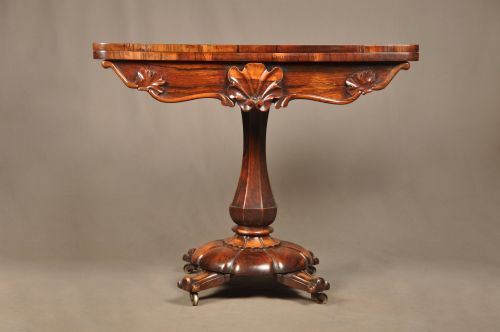
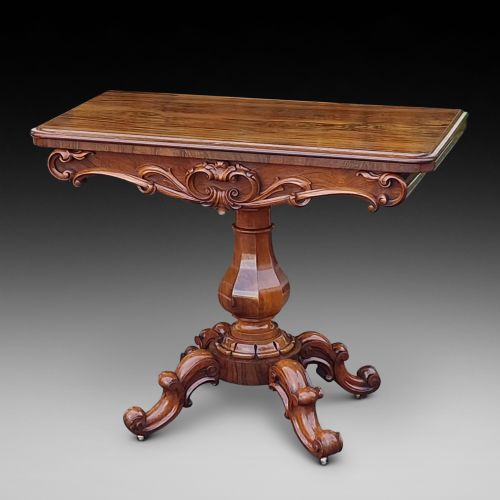
The standard of a carved rosewood card table rests upon the crispness of the hand carving and the selection of the timber grain. Better examples display deep, well-defined motifs rather than soft or shallow tooling.
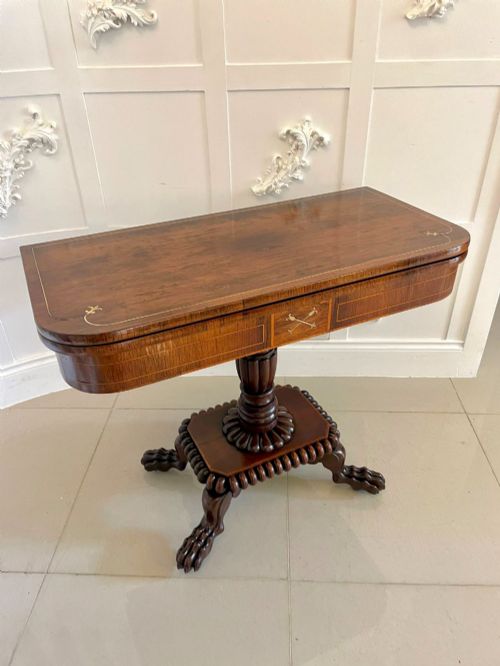
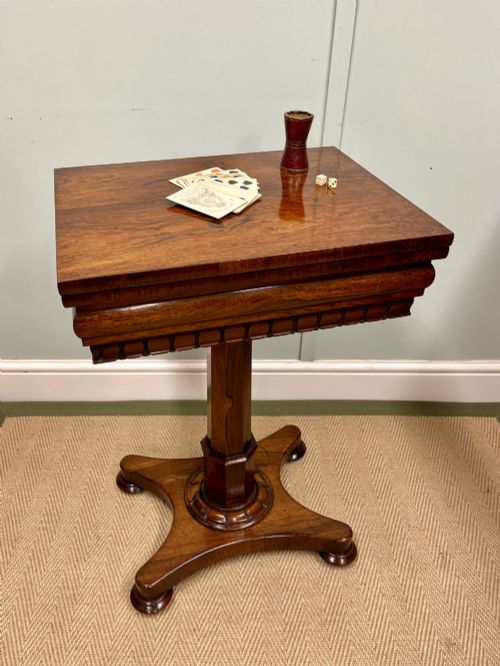
Proportion and stability also mark out superior pieces, particularly in the construction of the pivoting or folding top and the rigidity of the pedestal base. Subtle brass inlay work and the retention of original internal materials further elevate certain pieces.
Carved Rosewood Card Table Retail Price Guide 2026
Typical asking prices for carved rosewood card table among the pieces listed under this phrase on Sellingantiques today, from the lower quarter to the upper quarter. They describe what is for sale here now, not the wider market.
Secondary timbers and contrasting details incorporate brass, satinwood, boxwood, leather, and birdseye maple.
Gillows·William Trotter
The Carved Rosewood Card Table Glossary
- Rosewood
- A dense, dark timber with a pronounced grain pattern, widely utilised for high-end nineteenth-century cabinet work.
- Baize
- A coarse woolen material traditionally used to line the playing surfaces of card and games tables.
- Demi Lune
- A half-moon shape characteristic of certain tea and card tables designed to sit flush against a wall.
- Tilt-Top
- A table mechanism allowing the surface to pivot to a vertical position for storage when not in use.
- Pedestal
- A central column support resting on a platform base, common in Regency and Victorian designs.
Carved Rosewood Card Table: Frequently Asked Questions
What is a card table used for?
These tables were designed primarily for evening parlour games, offering a folded surface that opened out to reveal a baize or leather playing area.
Between games, the top folded back down so the piece could function as a side or console table against a wall.
How do I tell Regency from Victorian tables?
Regency tables often display cleaner architectural lines, brass inlay, and carved details like dolphin bases reflecting earlier classical influences.
Victorian pieces tend to be heavier, featuring darker timber finishes and more exuberant carved pedestal supports.
What is the difference between a card table and a tea table?
Card tables generally feature a lined interior surface intended for playing cards, often with a swivel or fold-over mechanism.
Tea tables share the folding top construction but are typically designed to hold tea service equipment in the drawing room.
How should I care for rosewood furniture?
Rosewood benefits from being kept away from direct sunlight and steady heat sources to prevent the timber and veneer from drying out.
Regular dusting with a soft cloth preserves the polish without the need for heavy modern cleaning products.