
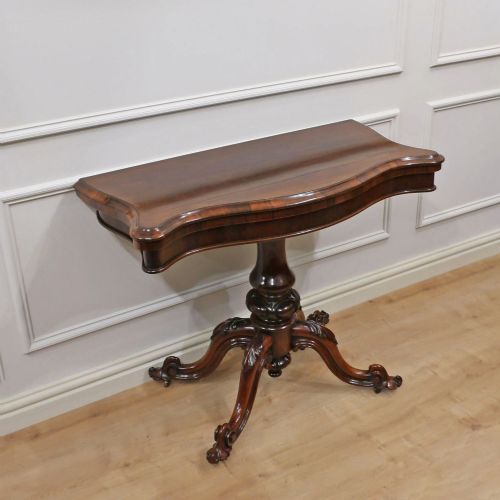
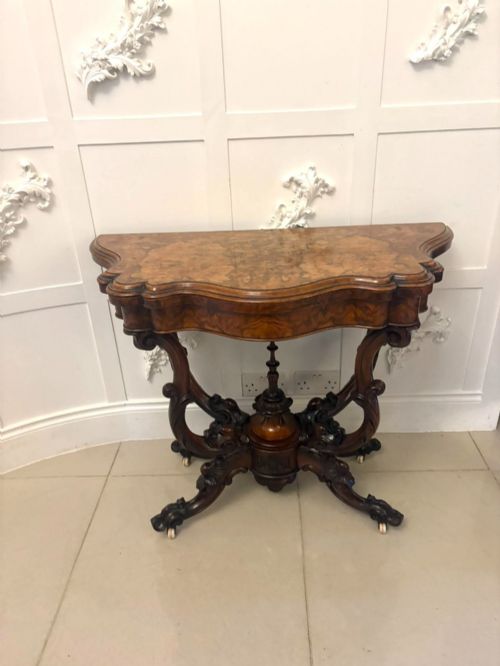
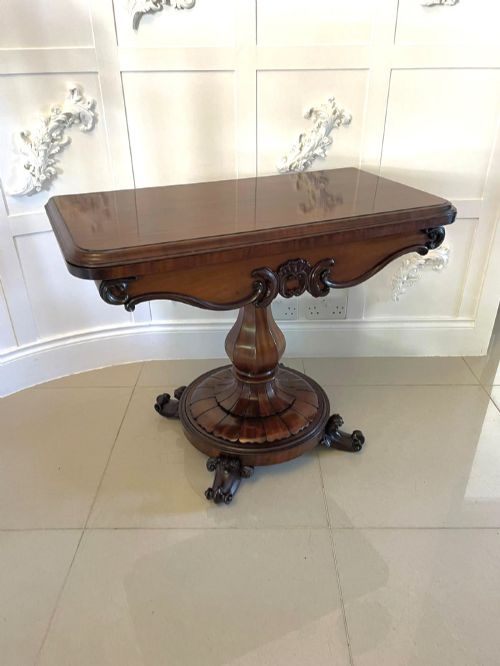

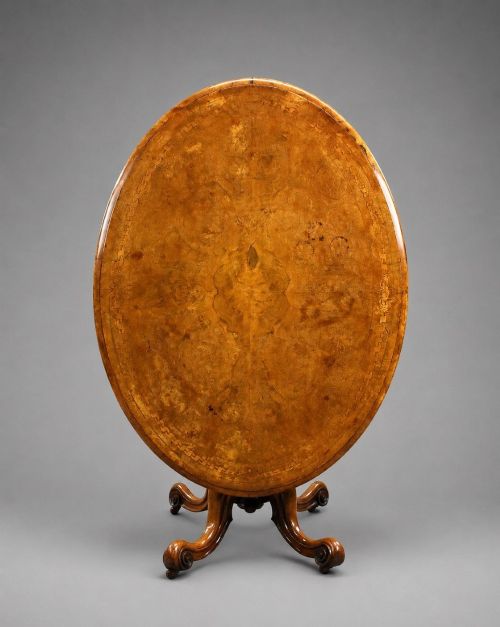
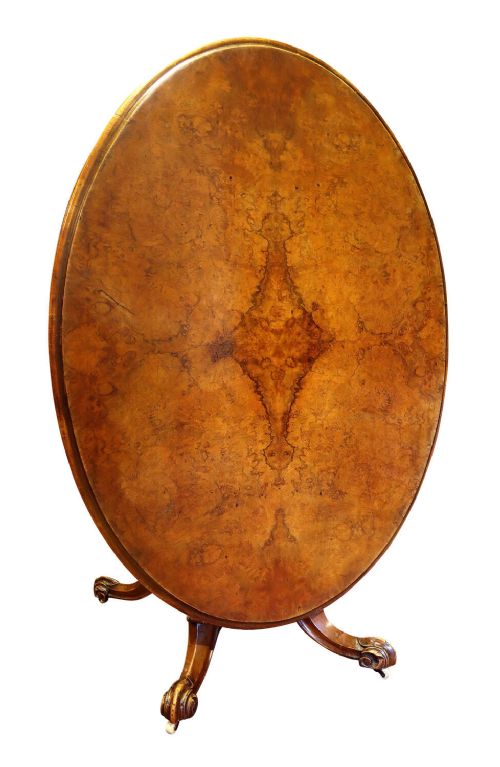
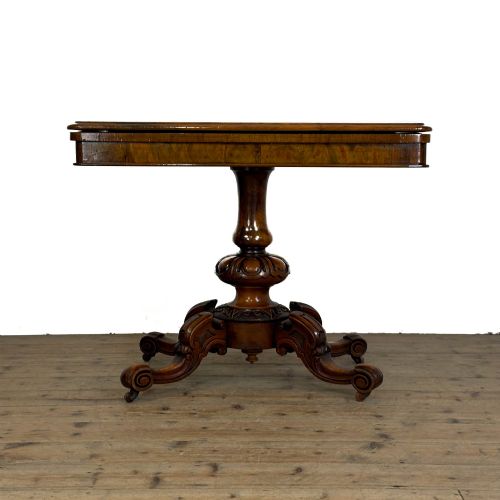
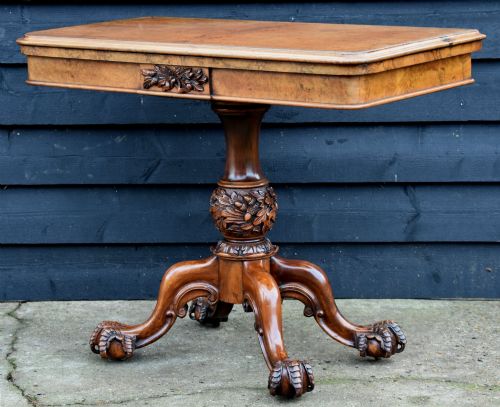
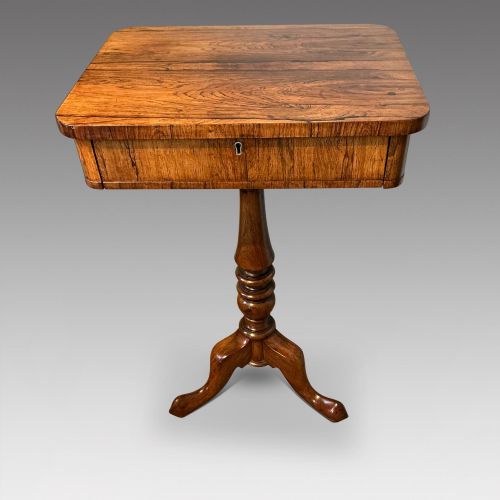

Victorian Pedestal Card Table
A victorian pedestal card table brings the warmth of figured timber and a clever pivoting top into a modern room.
Victorian Pedestal Card Table
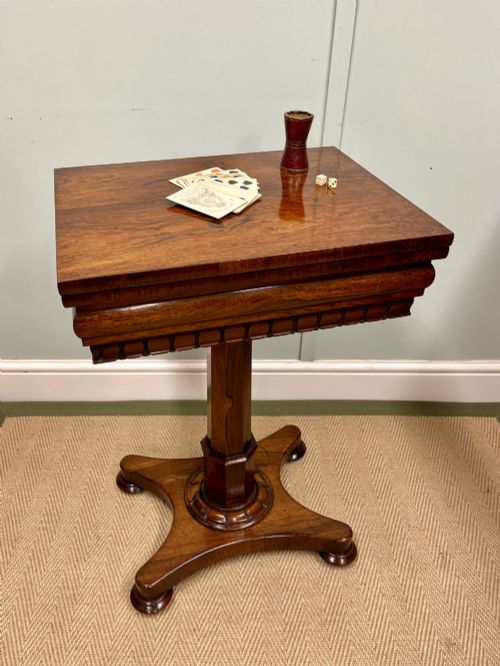
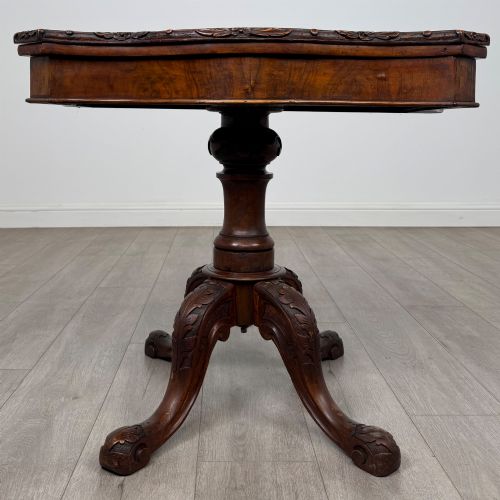
A victorian pedestal card table combines a central column support with a hinged, foldover top designed to open for evening games or close against the wall as a console. These pieces date across the nineteenth century, with examples spanning the 1840s to the 1880s, reflecting the social habits of the period.
The selection here encompasses various stylistic influences from the era, including Early Victorian, Victorian Rococo Revival, Aesthetic Movement, and Reformed Gothic designs. Alongside the standard card and games tables, related forms like loo tables, tea tables, and side tables appear across the listings.
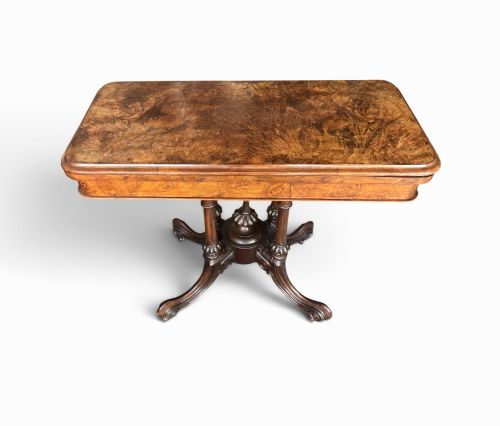
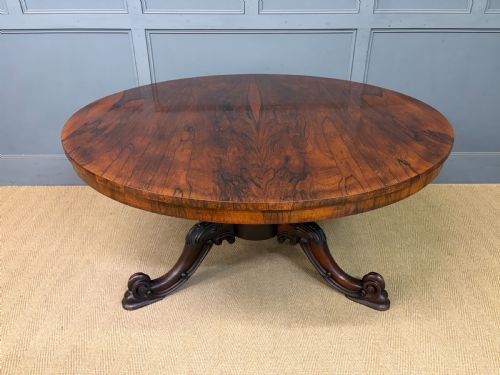
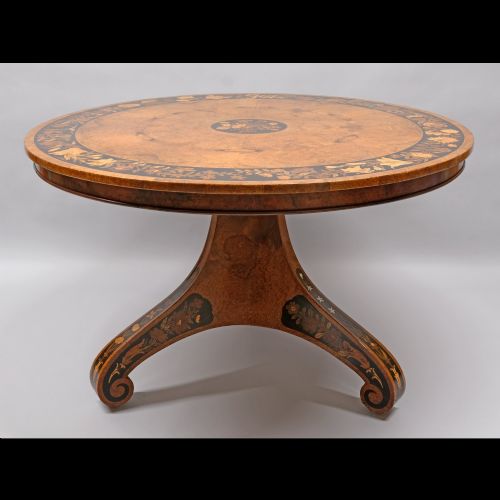
Burr walnut and rosewood dominate the selection, complemented by figured mahogany. Many feature specialised surfaces, such as inlaid chess boards, boxwood inlay, marquetry, and green or red leather playing surfaces revealed when the top is unfolded.
How They Were Made
Cabinet makers utilised dense hardwoods like mahogany and rosewood for structural stability, applying finely figured veneers of burr walnut to the visible surfaces of the tops and friezes. These timber veneers were hand-cut and laid onto solid secondary woods, often accented with delicate boxwood inlay or marquetry.
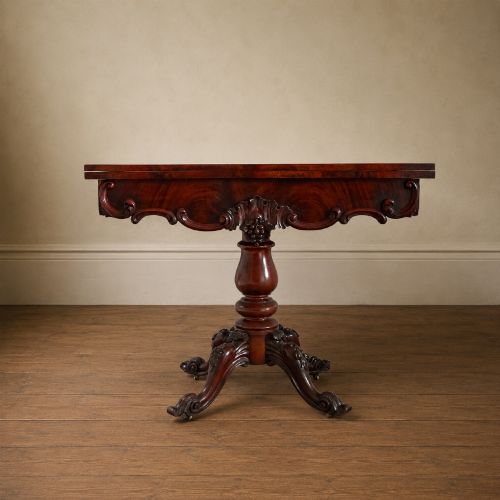
The central pedestal typically stands on a platform base supported by carved feet, frequently featuring detailed scrollwork or foliage. Brass mechanisms and hinges allow the heavy turnover tops to swivel and fold flat safely without straining the joints.
Victorian Pedestal Card Table Retail Price Guide 2026
Typical asking prices for victorian pedestal card table among the pieces listed under this phrase on Sellingantiques today, from the lower quarter to the upper quarter. They describe what is for sale here now, not the wider market.
Pedestal card tables span multiple nineteenth-century styles, including Aesthetic Movement and Rococo Revival.
What Varies in Quality
The choice of timber grain sets the visual standard, with richly figured burr walnut and deeply coloured rosewood commanding attention above plain mahogany. The depth and crispness of the hand-carved details on the pedestal supports and basket bases distinguish standard workshop output from finer craftsmanship.
Structural integrity in the pivoting mechanism ensures the folded top rests level and secure when closed, while precise alignment of inlaid chess boards or boxwood details reveals the maker's hand.
Holmes Baldock
The Victorian Pedestal Card Table Glossary
- Burr Walnut
- A mottled timber grain obtained from the wart-like growths on walnut trees. It creates intricate, swirling patterns across the tabletop.
- Turnover Top
- A hinged tabletop design that rotates on a central pivot and folds open to double its surface area. This mechanism conceals a concealed well for storing cards and counters.
- Console Table
- A side table placed flat against a wall. Foldover tables often serve this function when closed.
- Marquetry
- Decorative patterns created by fitting small pieces of veneer into a background timber. It frequently appears on mid-nineteenth-century walnut surfaces.
- Serpentine
- A gently undulating curved edge shape. It provides a softer silhouette than straight rectangular forms on nineteenth-century tables.
Victorian Pedestal Card Table: Frequently Asked Questions
How did people use a victorian pedestal card table?
These tables served a dual purpose in nineteenth-century drawing rooms, operating as compact console or side tables against the wall during the day. In the evening, the hinged top unfolded to provide a stable surface for card games, chess, or tea.
The interior compartments often stored playing cards, ivory counters, and gaming accessories. When closed, the finished timber top displayed the figured grain to visitors.
What is the difference between rosewood and walnut models?
Rosewood tables generally date to the earlier part of the nineteenth century, displaying a dark, dense grain with reddish-brown tones. Walnut and burr walnut gained popularity by mid-century, offering lighter, highly figured patterns.
Craftsmen often paired walnut with boxwood inlay and marquetry, whereas rosewood versions tended to rely on carved pedestal bases and simpler moulded edges.
How do I care for the timber surface?
Keep the wood away from direct sunlight and strong heat sources to prevent the burr walnut or rosewood veneers from drying out or cracking. Regular dusting with a soft, dry cloth maintains the polish without building up residue.
Avoid placing damp items or unsealed drinks directly onto the polished wood or leather playing surfaces.
Can I use it as a desk?
The standing height often suits casual writing, and the foldover top provides a broad surface when opened. However, the internal depth and knee clearance beneath the pedestal vary depending on the specific nineteenth-century design.
Consider the height of your chair against the fixed frieze rail underneath the tabletop before using it regularly for writing.