




Carved Rosewood Bench
A carved rosewood bench brings heavy timber and fine seating together in a room, offering sturdy utility with rich grain.

What a carved rosewood bench is
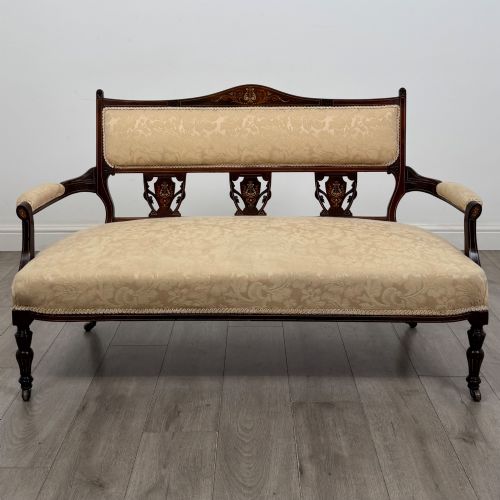
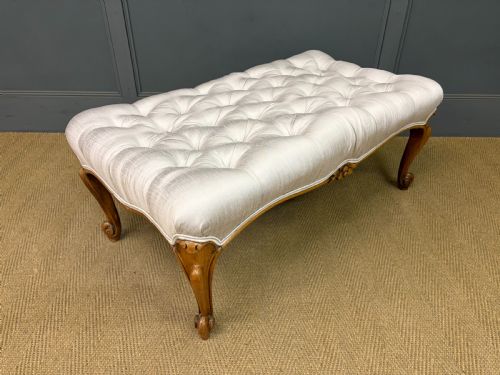
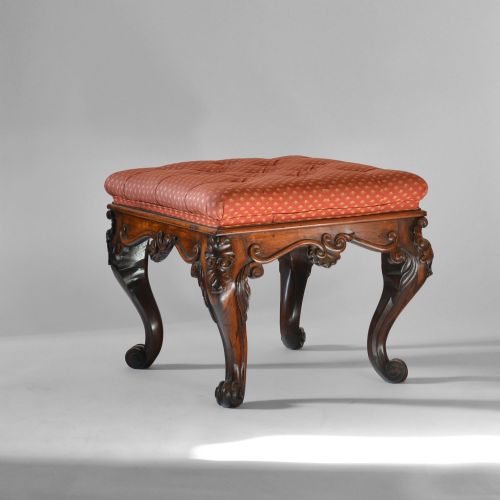
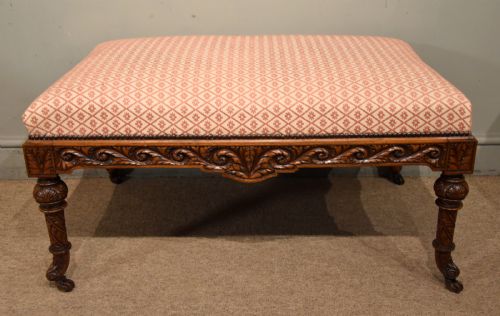
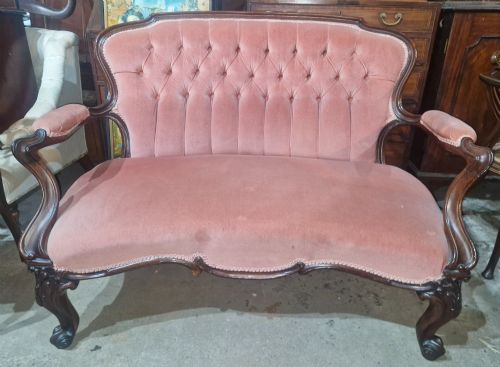
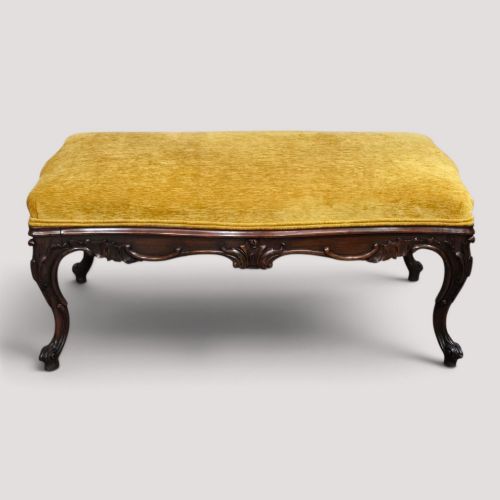
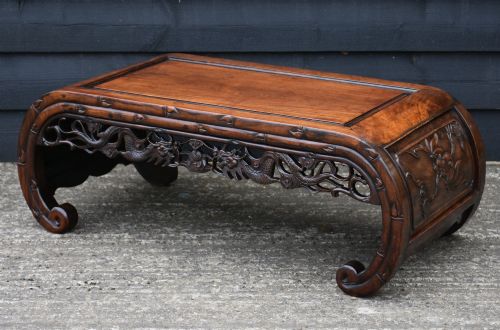
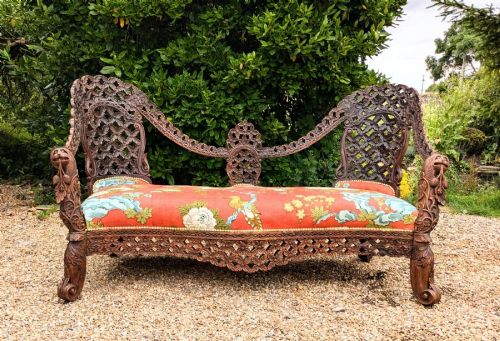
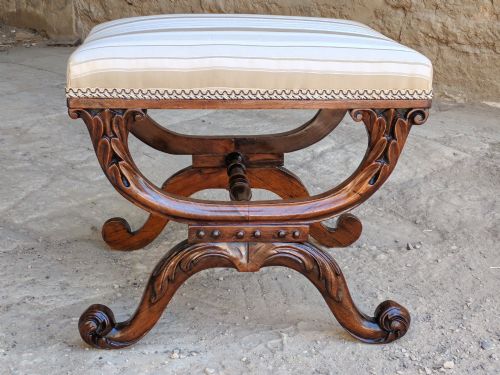
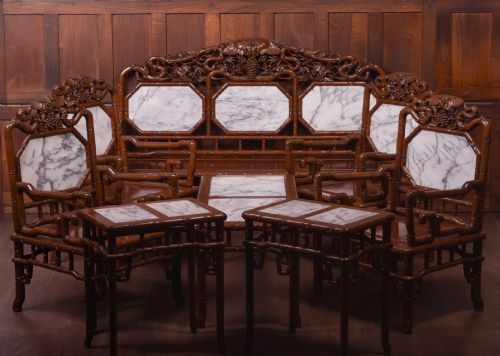
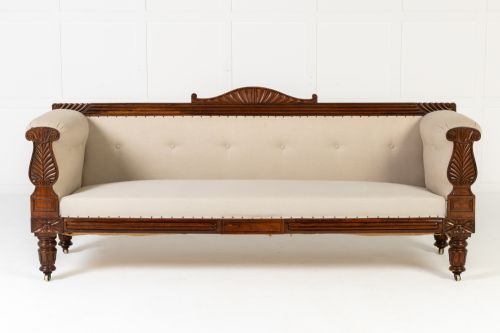
When you search for a carved rosewood bench, you are looking at substantial timber seating produced across the nineteenth century, including Victorian, George IV, and Qing Dynasty pieces. The forms on this page span window seats, ottomans, centre stools, footstools, and hall seats.
You are most likely to meet Victorian examples fashioned from heavy rosewood and hardwood, often designed for reupholstering or featuring existing fabric and velvet covers. These seating items combine dense dark timber with carved details.
Origins stretch from British workshops of the mid-nineteenth century to Chinese Qing Dynasty production, reflecting diverse carving traditions on the same dense tropical timber. Some pieces connect to specific design sources such as Rudolph Ackermann.
Materials and construction
Maker's hands shaped dense rosewood and hardwood into robust frames, often pairing the dark timber with brass fittings and ceramic castors for movement. Carved ornament appears directly on the structural wood of the frame and legs.
Upholstered versions combine the timber frame with internal padding and fabrics such as velvet, requiring webbing and traditional stuffing techniques beneath the top cover.
Retail Price Guide 2026
Typical UK retail prices for carved rosewood bench, calculated from the Sellingantiques database of over a million retail prices indexed since 2003. This retail price guide relies exclusively on Sellingantiques data; no external sources or auction records are used, so the figures do not describe the wider market.
Listings feature rosewood, hardwood, fabric, velvet, brass, timber, and ceramic across the nineteenth-century pieces.
Distinctions in quality
Quality rests on the crispness of the timber carving and the architectural proportion of the frame, separating standard production from pieces with deeply articulated ornament. The density and grain pattern of the rosewood itself also signal higher grade material.
Integrity of the original timber structure and the success of any historic upholstery scheme determine how well a piece holds its character over time.
The Carved Rosewood Bench Glossary
- Rosewood
- A heavy, dense tropical timber with a dark grain and natural oiliness, prized for fine furniture. It takes a high polish and supports intricate carving.
- Ottoman
- A padded seat without a back or arms, often built with internal storage or supported on sturdy timber legs. These large stools function as flexible seating in a room.
- Window seat
- A long, narrow bench designed specifically to fit within a window recess. They often feature carved ends or scroll arms.
- Centre stool
- A freestanding piece designed to be viewed from all sides, placed in the middle of a room rather than against a wall. Victorian examples frequently utilise rosewood frames.
- Qing Dynasty
- The final imperial dynasty of China, lasting from the seventeenth to the early twentieth century. Furniture from this period utilises dense hardwoods with elaborate carving.
Frequently Asked Questions
Where should I put a carved rosewood bench?
These benches fit well at the foot of a bed, beneath a window, or as a freestanding centre piece in a principal room. Their finished timber backs and sides allow flexible placement away from walls.
Ensure the dimensions suit the chosen spot so the carved details remain visible rather than obscured by other furniture.
How do I care for rosewood furniture?
Maintain the timber by keeping it away from direct heat sources and strong sunlight, which can dry out dense tropical woods. Dust regularly with a soft, dry cloth.
Avoid silicon-based polishes that build up a film over the carved areas and dull the natural grain of the rosewood.
Are these benches comfortable to sit on?
Upholstered versions provide padded support through traditional sprung or stuffed seats covered in fabric or velvet. Centre stools and window seats were built for sitting during conversation or while changing shoes.
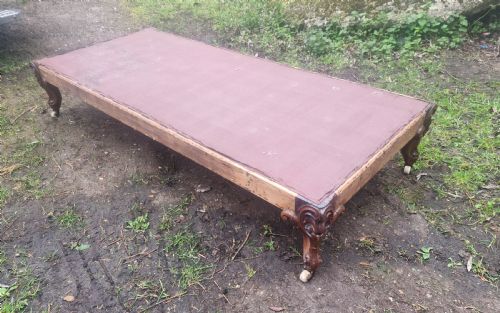
Some un-upholstered or project pieces require new webbing and padding before regular use.
How do I distinguish Victorian from Qing Dynasty pieces?
Victorian rosewood benches typically display European revivalist carving styles from the nineteenth century, sometimes incorporating brass castors or ceramic elements. They align with British seating forms like window seats and ottomans.
Chinese Qing Dynasty pieces utilise native hardwoods with distinct joinery traditions and decorative motifs characteristic of East Asian craftsmanship.