


Carved Renaissance Cabinet
A carved renaissance cabinet brings solid timber and centuries of ornament into a room, offering deep storage with historic presence.
Carved Renaissance Cabinet
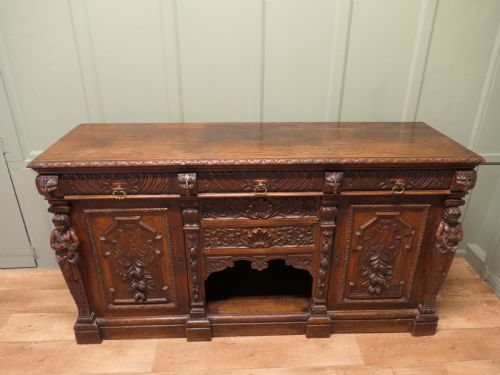
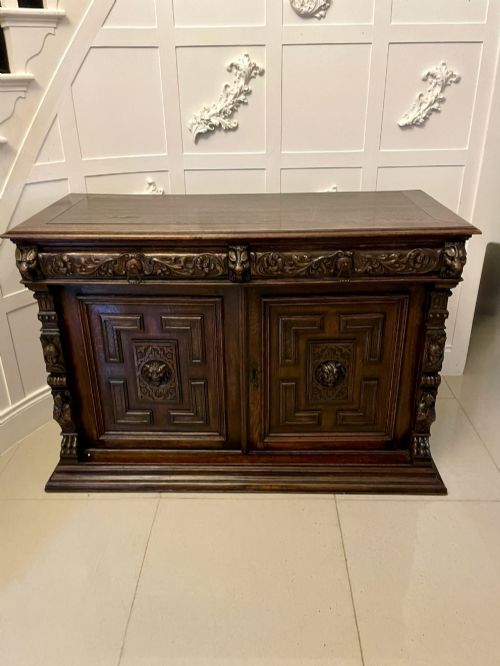
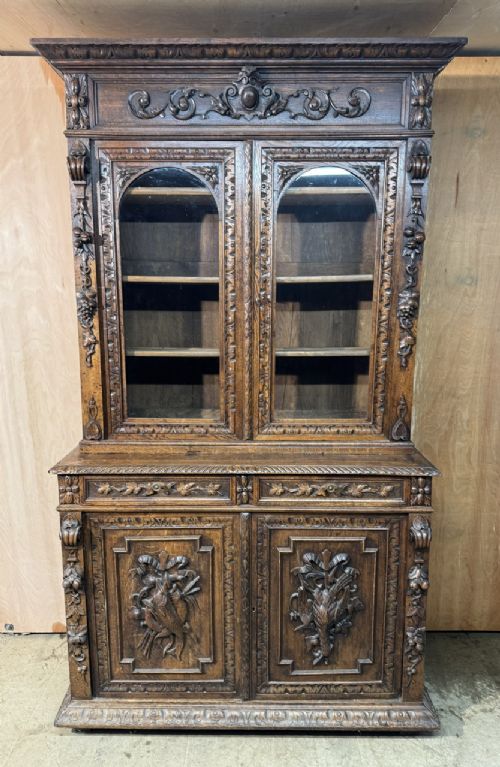
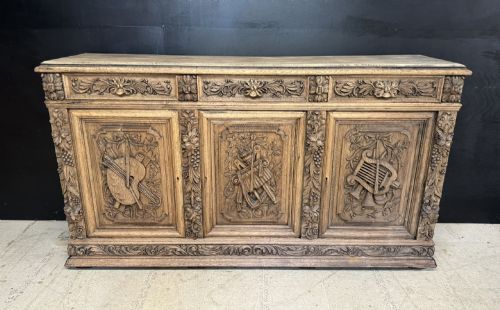
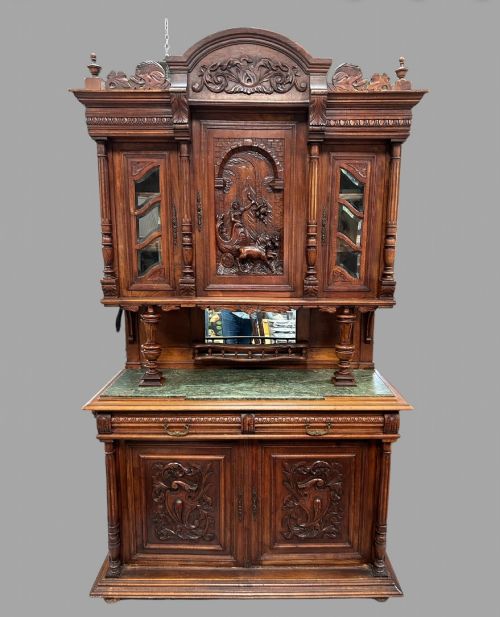
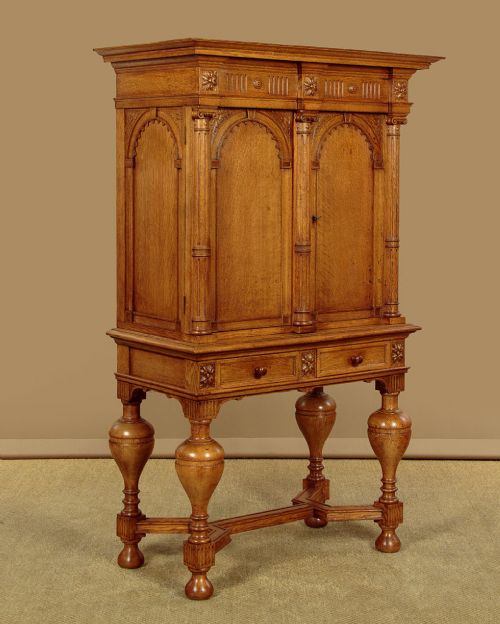
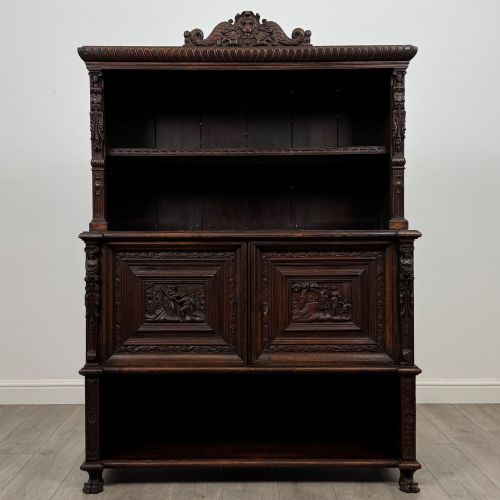
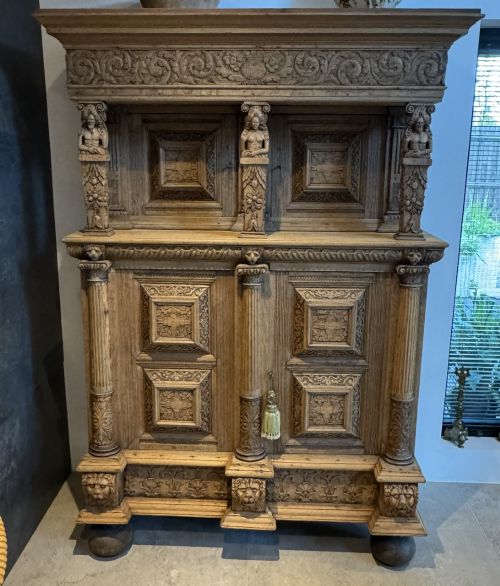
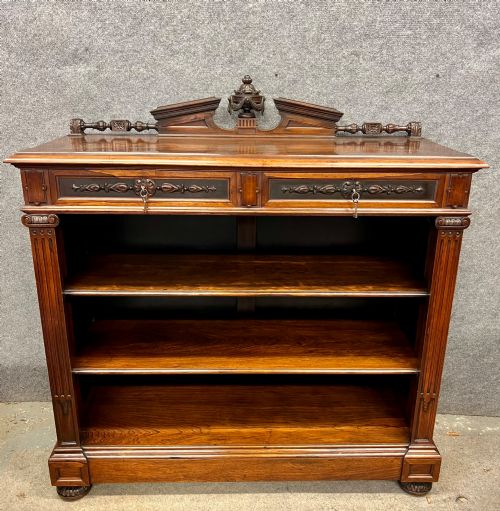
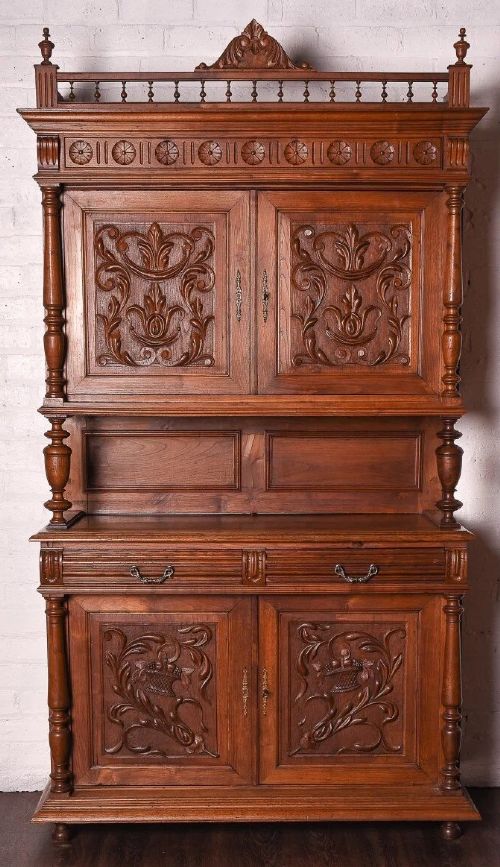
A carved renaissance cabinet is a substantial storage piece built from oak or walnut, often featuring revival styling from the nineteenth century alongside genuine seventeenth-century examples. These items include sideboards, buffets, bookcases, and cupboards that anchor a room with architectural proportion and sculptural depth.
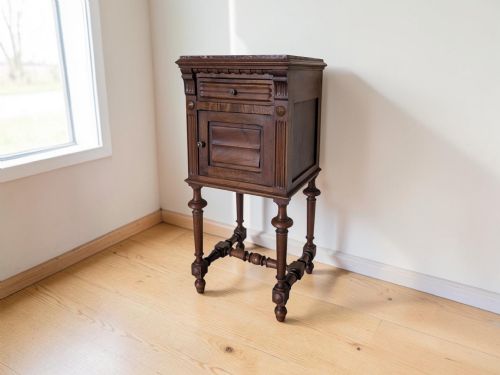
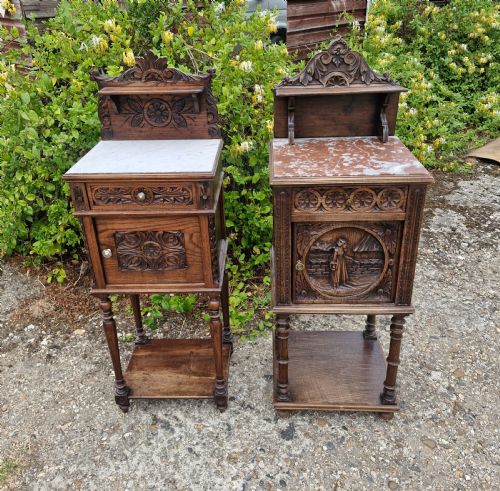
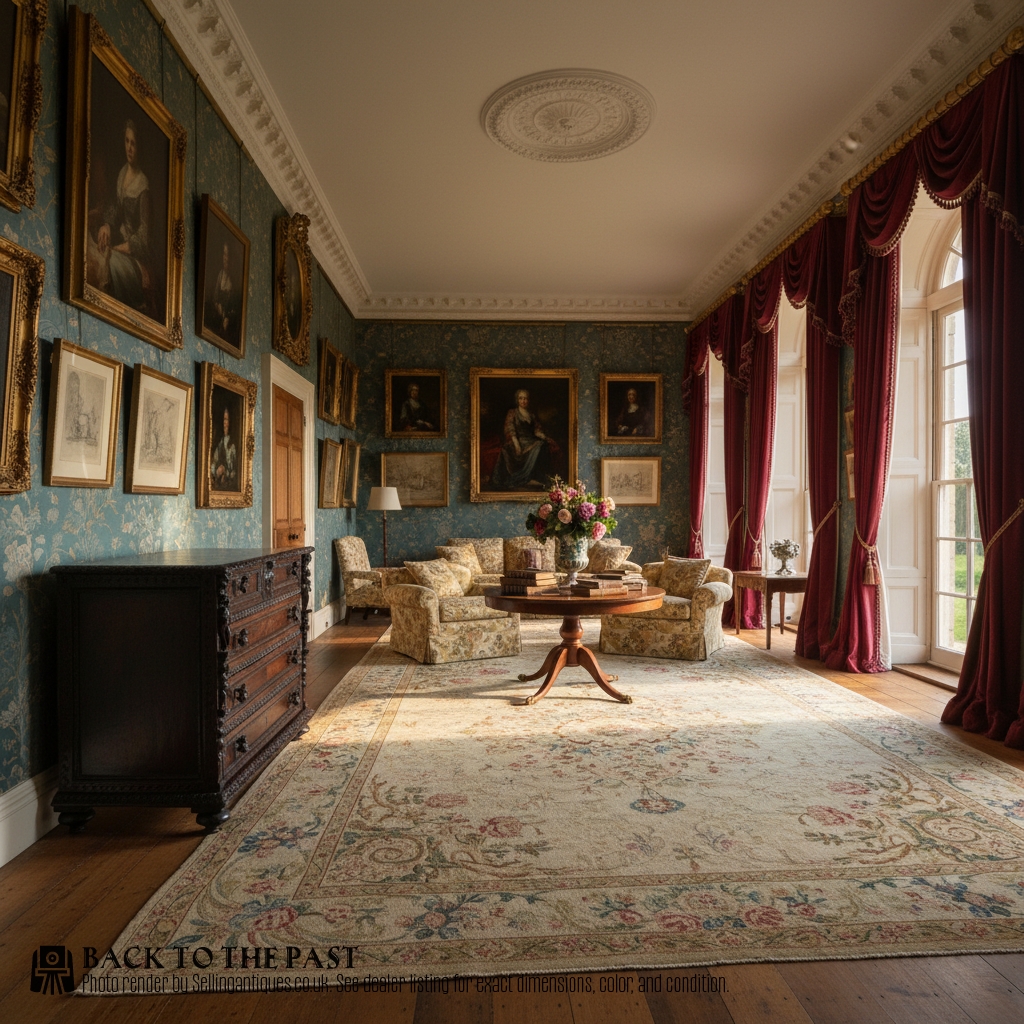
The version most commonly met on this page is the nineteenth-century revival piece, particularly French and Victorian interpretations executed in heavy carved oak or rich walnut. These range from imposing sideboards with mirror backs and green man motifs to smaller bedside cupboards and display cabinets on stands.
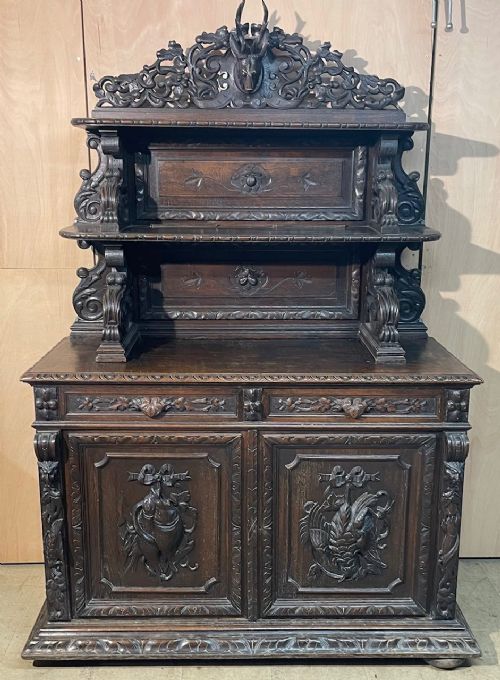
Originating across England, France, Italy, Flanders, and Germany, these pieces incorporate regional motifs such as lion masks, hunting scenes, and architectural panels. Buyers encounter everything from tall bookcases to low cupboards, each sharing a heavy reliance on deep wood carving.
What varies in quality
Quality rests in the depth, crispness, and ambition of the carved ornament, separating simple production furniture from exhibition-grade showpieces. Sharp undercutting in foliage and expressive detailing in faces indicate superior craftsmanship by skilled carvers.
The selection of timber grain and the integrity of the structural joinery dictate longevity and presence. Superior examples display carefully chosen quarter-sawn oak or figured walnut that holds crisp edges and resists warping over centuries.
Object forms span sideboards, bookcases, vitrines, and chimneypine cupboards reflecting French, Italian, Flemish, and English workshops.
The Carved Renaissance Cabinet Glossary
- Renaissance Revival
- A nineteenth-century design movement that reinterpreted sixteenth-century classical and Mannerist motifs. It dominated cabinetmaking across Europe during the Victorian era.
- Green Man
- A sculptural architectural ornament depicting a human face emerging from or entwined with foliage. It appears frequently on nineteenth-century oak furniture.
- Bargueño
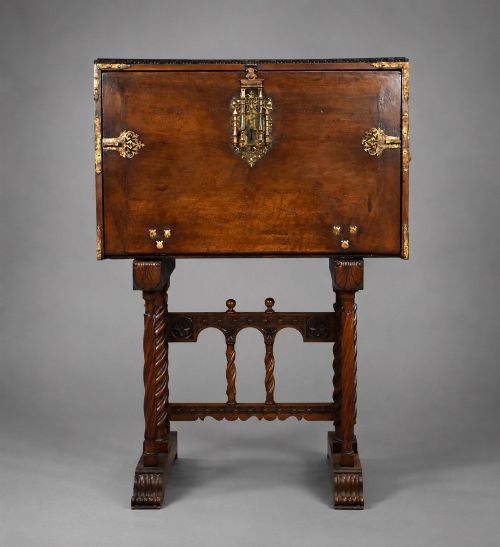
- A type of portable writing cabinet originating in Spain during the sixteenth century. These pieces feature drop fronts and elaborate interior drawers.
- Vitrine
- A glass-fronted cabinet designed for the display of fine objects or porcelain. Italian and French examples often incorporate fine wood carving.
- Buffet de Corps
- A large two-tier French dining room cupboard or sideboard. These pieces provide extensive enclosed storage behind heavy carved doors.
Carved Renaissance Cabinet: Frequently Asked Questions
Where should I place a heavy oak sideboard?
These substantial pieces require a wall capable of supporting significant weight, ideally in a dining room, hallway, or large living space where their proportions balance the room.
Ensure the floor is level and keep the timber away from direct heat sources to prevent the heavy oak panels from drying out.
How do I clean carved wooden panels?
Dust the deep recesses regularly with a soft-bristled brush or a dry cloth to prevent grime accumulation in the carved details.
Apply a quality beeswax periodically to nourish the timber and maintain a soft sheen without building up heavy wax layers.
Are nineteenth-century revival cabinets authentic antiques?
Nineteenth-century revival pieces are authentic antiques in their own right, dating from the Victorian era when craftsmen deliberately copied sixteenth- and seventeenth-century styles.
These pieces reflect the historicism and high-skill woodworking of the eighteen-hundreds rather than the Tudor or Renaissance periods themselves.
What is the difference between a buffet and a sideboard?
Sideboards generally feature longer horizontal surfaces with a mix of drawers and cupboards, often paired with mirror backs or raised plate racks in later Victorian designs.
Buffets tend to be taller, sturdier storage units with enclosed upper and lower compartments designed for serving food and storing heavy dining ware.