
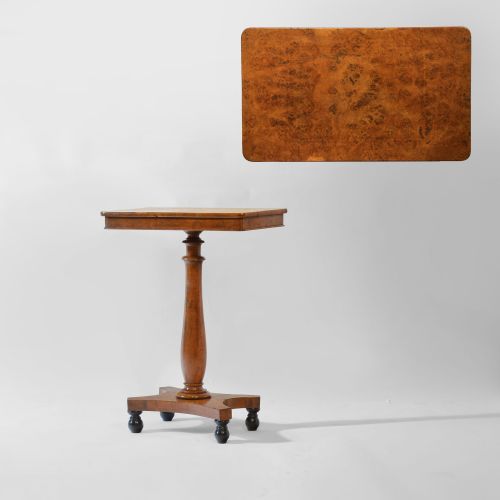


Carved Pollard Oak
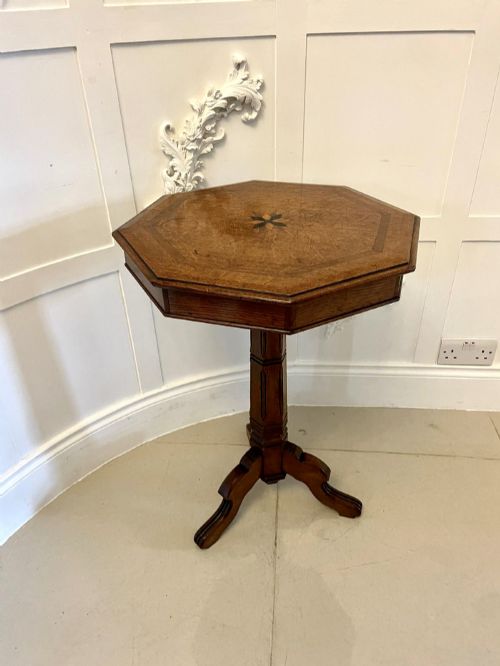
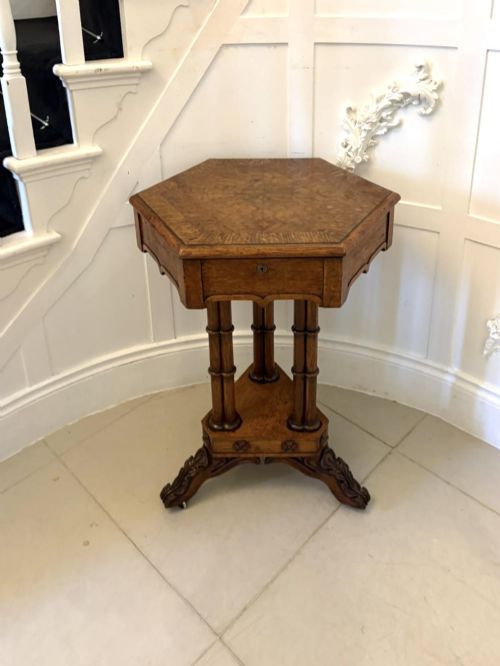
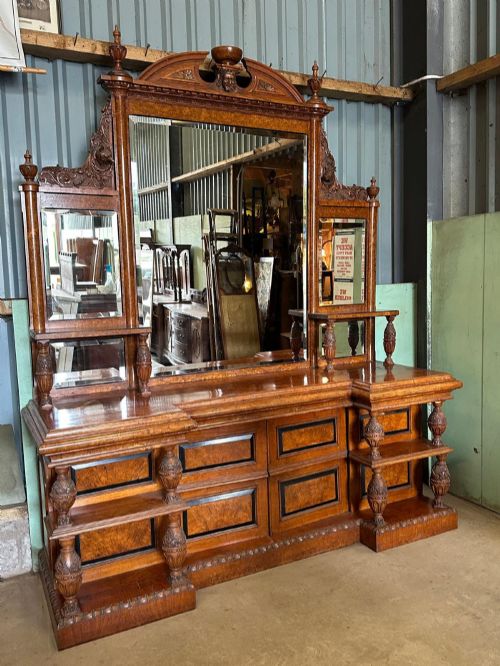
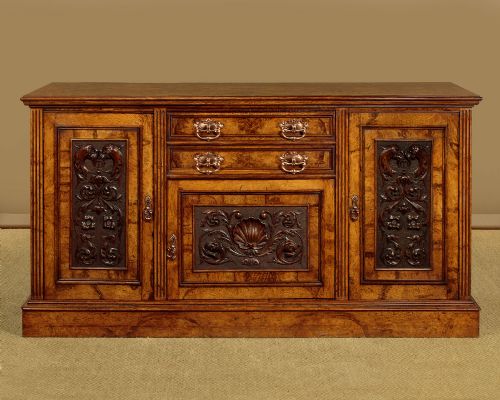
Carved pollard oak pieces bring mottled knotty grain and deep timber figure into furniture, prized for rich visual movement.
Carved Pollard Oak
When you search for carved pollard oak, you encounter dense timber formed from trees pruned closely to the trunk, producing clustered knots and swirling rings.
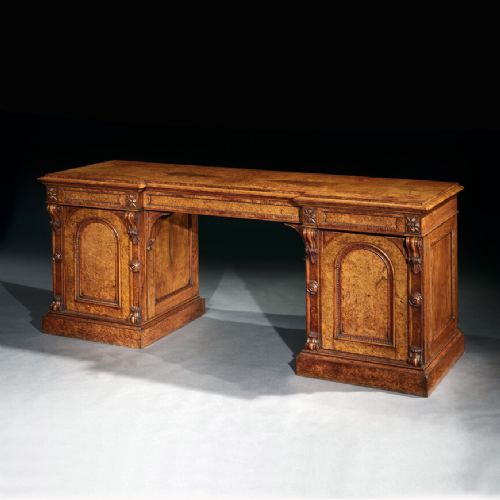
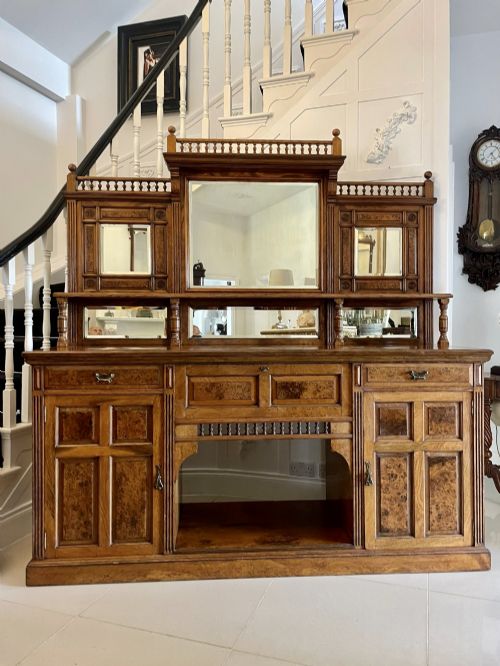
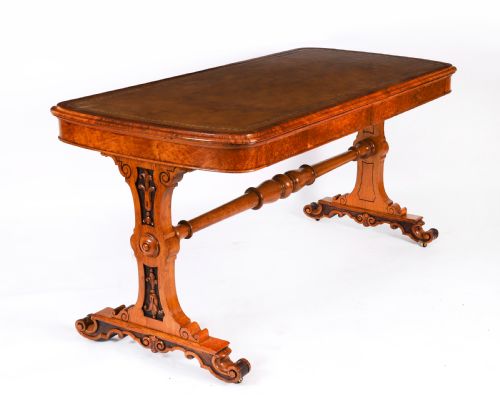
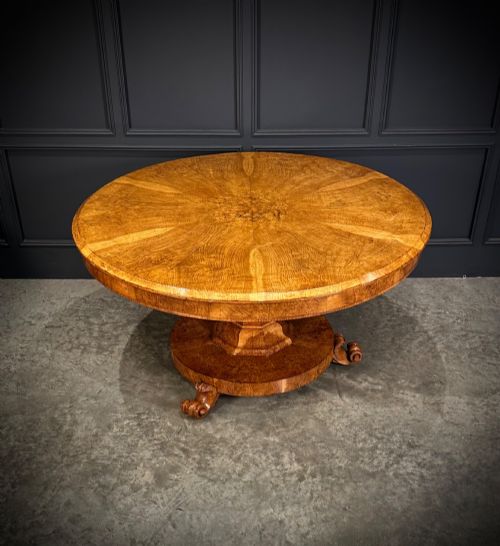
The pieces appearing most frequently across this selection are large functional items like sideboards, writing desks, centre tables, and bookcases.
Originating predominantly from the nineteenth century, including Regency, Victorian, and Edwardian eras, these forms utilise the striking grain for prominent rooms.
How they were made
Cabinetmakers combined pollard oak veneer and solid timber with supplementary materials such as brass fittings, leather writing surfaces, and glass panel doors.
Makers exploited the naturally erratic grain patterns of pollard and burr oak, framing swirling clusters with straight-grained borders and structural oakcarvings.
The materials in these listings combine pollard oak and burr oak with brass hardware, leather panels, and occasional giltwood details.
What varies in quality
Quality rests in the density and dramatic movement of the burr figure across large expanses like sideboard doors and partner desk tops.
The crispness of carved details, structural stability of framing timber, and integration of secondary woods dictate the standing of each piece.
Jack Grimble·James Winter and Sons·Boothroyd Sons and Rimmer·Williams and Gibton·Thomas Turner·Howard and Sons
The Carved Pollard Oak Glossary
- Pollard oak
- Timber harvested from trees that were pollarded, a pruning method that forces dense branching and creates clustered knot formations.
- Credenza
- A large sideboard or cabinet used for storage and display, frequently executed in heavily figured woods.
- Purdonium
- A specialised coal box or cabinet designed to sit by a fireplace, often matching the surrounding furniture timber.
- Secretaire
- A desk or bookcase featuring a drop-front writing flap that conceals internal compartments and small drawers.
- Giltwood
- Wood that has been treated with gold leaf or gold paint, utilised on console tables and decorative accents.
Carved Pollard Oak: Frequently Asked Questions
What is pollard oak?
Pollard oak comes from trees cut back deliberately above livestock height to encourage dense branching. This process generates complex, swirling grain patterns filled with tiny knots.
Cabinetmakers sliced this timber into decorative veneers for prominent furniture surfaces during the nineteenth century.
How do I date pollard oak furniture?
Dating relies on stylistic clues like Regency classical lines, Victorian gothic revival carving, or Edwardian proportions. Secondary woods and construction methods also clarify the era of manufacture.
Most pieces belong to the nineteenth century, though occasional twentieth-century examples like Arts and Crafts items appear.
Where should I place a pollard oak piece?
These pieces suit libraries, dining rooms, and studies where their dark, figured surfaces can anchor a room. Sideboards, desks, and centre tables work best away from direct sunlight to protect the polished finish.
Pair them with neutral backgrounds to let the dramatic timber grain remain the focal point.
How do I care for pollard oak?
Maintain the finish with occasional wax polish applied sparingly and buffed gently with a soft cloth. Avoid placing wooden furniture near heat sources that cause timber to dry and split.
Protect leather inserts on desks using specialised balms rather than standard household cleaners.